

Visa-Free Travel to China from Serbia (2026 Guide)
Serbian citizens can enter China visa-free for up to 30 days. Requirements, allowed purposes, stay rules, and practical flight tips.
Serbian citizens can travel to China visa-free for up to 30 days.
Serbia and China signed a mutual visa-exemption agreement in November 2016 that took effect on January 15, 2017, making Serbia the first European country to reach a full mutual visa-exemption arrangement with China for ordinary passports. This guide explains how the policy works as of August 2026.
The short answer
As a Serbian passport holder, you can enter mainland China without a visa for stays of up to 30 days for tourism, business, visiting family or friends, and exchange visits. Unlike several visa-free policies that China has introduced on a temporary, one-way basis, the Serbia–China agreement is a standing bilateral treaty with no announced expiry date — though entry rules can still change, so it is always worth re-confirming before you book.
What the mutual agreement means for Serbian travelers
Before January 2017, Serbian citizens needed a visa for almost any trip to mainland China. The mutual visa-exemption agreement removed that requirement for short visits. For China-bound travelers, the practical effect is that a trip from Belgrade no longer demands weeks of paperwork, an embassy appointment, and a visa sticker in your passport — you can decide on a trip and fly within days.
The arrangement is genuinely mutual: Chinese citizens holding ordinary passports can likewise enter Serbia visa-free for up to 30 days. That symmetry is a meaningful difference from the one-way, time-limited visa-free schemes China has extended to dozens of other nationalities, and it means the rules for Serbia have been relatively stable since 2017. That said, immigration enforcement details can still shift, so it remains sensible to confirm the current situation with the Chinese Embassy in Serbia before you travel. For broader context on how the rules differ by passport, see our full list of visa-free countries.
Getting there from Serbia
Most Serbian travelers reach China by air from Belgrade Nikola Tesla Airport. Belgrade’s main gateway for long-haul departures has direct service to several Chinese cities:
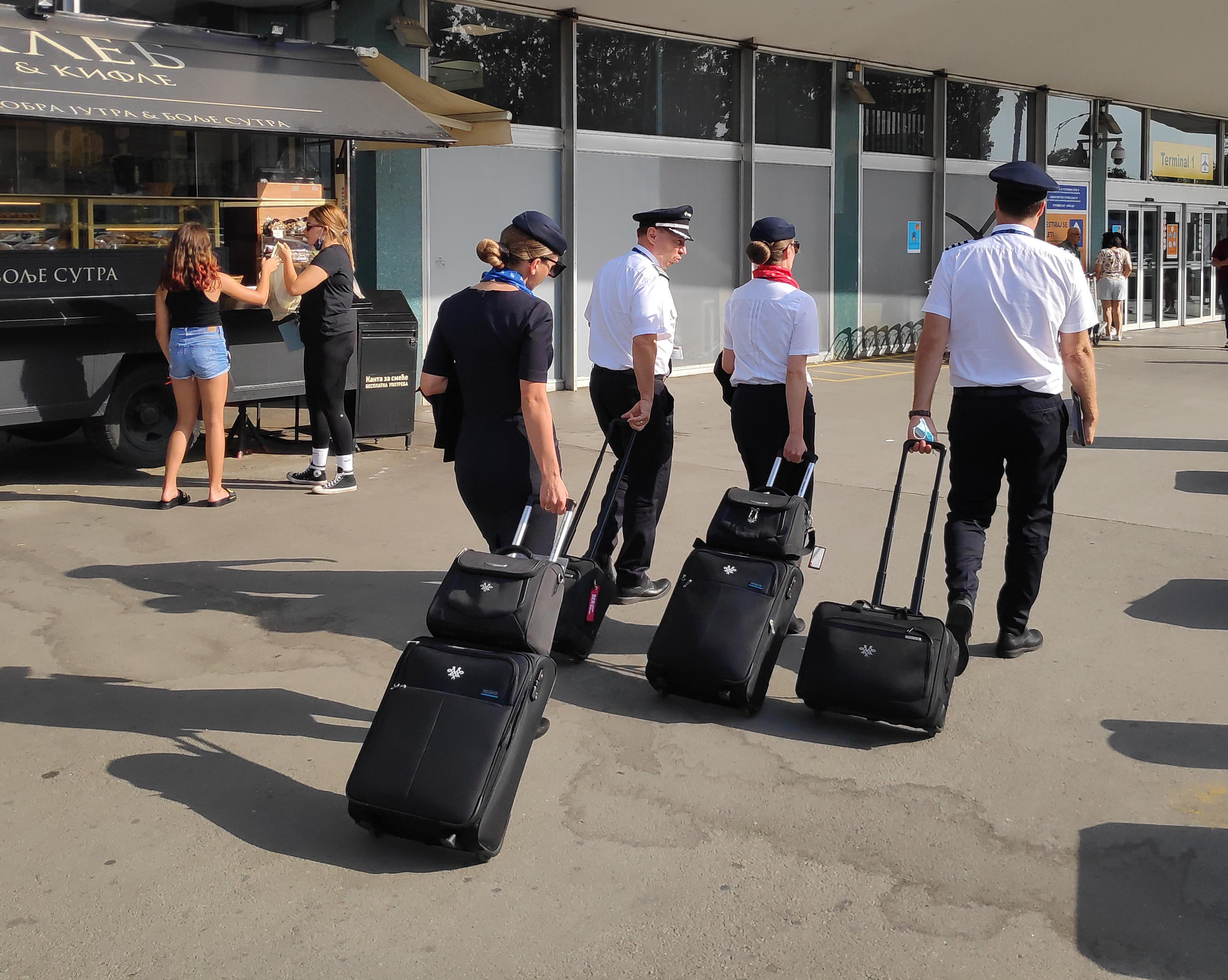
- Air Serbia operates direct flights to Shanghai Pudong and Guangzhou, typically on the Airbus A330.
- Hainan Airlines operates a direct route between Belgrade and Beijing Capital.
- Flight times from Belgrade to Chinese cities run roughly 10 to 11 hours nonstop.
If your preferred date or destination lacks a direct flight, connecting options through hubs such as Istanbul, Dubai, Doha, or Amsterdam are usually available and can be price-competitive — worth comparing when you book. Note that schedules change seasonally, so check current frequencies on the airline’s website or a flight-search engine rather than relying on memory.
The 30-day visa-free clock starts the day after you clear Chinese immigration, so a direct evening flight from Belgrade that lands the next morning effectively gives you the full first day on the ground.
Who is eligible
You qualify if you hold a valid ordinary Serbian passport, your purpose is tourism, business, visiting family or friends, or an exchange visit, and your stay is no longer than 30 days.
Work, study, residence, and journalism or media work are not covered — those need the appropriate visa, arranged before travel. The same applies if you want to stay longer than 30 days: visa-free entry is not extendable at the border, so you must apply for a proper tourist (L) or other visa in advance. If that is your situation, start with our overview of China visa types and how to apply for a China visa.
How long can you stay?
- 30 days maximum, counted from the day after arrival.
- Enter through any open port in mainland China — air, land or sea.
- No stated limit on the number of entries, although border officials may look more closely at frequent back-to-back visits.
Because the 30-day window is generous compared with the typical one- or two-week vacation, most Serbian visitors do not come close to the limit. Still, if you plan to combine China with nearby destinations such as Hong Kong or Macao, remember that a separate entry regime applies to those Special Administrative Regions — the visa-free days you spend in mainland China are counted separately from your time there.
What you can and can’t do
| Allowed | Not allowed |
|---|---|
| Tourism and sightseeing | Working (including most remote-work arrangements) |
| Business meetings | Studying |
| Visiting family / friends | Journalism / media work |
| Exchange visits and short courses (non-accredited) | Stays beyond 30 days |
| Transit |
If your purpose is not on the allowed list, or you are unsure, do not assume visa-free entry will be accepted at the border. Border officials can refuse entry if your stated purpose does not match the rules, and there is no on-the-spot upgrade path — the fallback is to exit and re-enter under a different scheme or to obtain the right visa before travel.
The backup: 240-hour visa-free transit
If you are only passing through China on the way to a third country, the 240-hour visa-free transit scheme may also be relevant. It allows eligible travelers to stay in certain Chinese cities for up to 10 days when transiting to or from a third country or region. The rules are quite different from the Serbia mutual exemption: they are limited to specific ports and areas, and transit conditions apply. For most Serbia-to-China visits, the 30-day mutual exemption is the better fit, but it is worth understanding the difference in case a short stopover fits your itinerary better. See our 240-hour transit guide and the visa-free versus 240-hour transit comparison for the details.
Pre-travel checklist
- Check your passport — valid for your entire stay and ideally a few months beyond.
- Confirm the policy is still active — as of August 2026 the mutual agreement stands, but verify before you book.
- Have return/onward travel details handy — border officials may ask about your plans and may ask to see evidence of your onward or return journey.
- Know your purpose — tourism, business or family visits qualify; work and study do not.
- Sort out money and phone before you fly — set up Alipay or WeChat Pay for day-to-day payments, and consider an eSIM for connectivity on arrival.
- Know the registration rule — hotels register foreign guests automatically at check-in, but if you stay in a private home the stay should be registered with the local police within 24 hours (roughly, and rules vary by city). Carry your passport, or a photo of the info page, when you go out.
Common mistakes to avoid
- Overstaying the 30 days — the count starts the day after arrival; overstaying risks fines and problems at exit.
- Assuming the policy applies to work or study — it does not, and it is not extendable at the border.
- Forgetting that Hong Kong and Macao are separate — they have their own entry rules and are not covered by the mutual exemption.
- Confusing the 30-day exemption with the 240-hour transit scheme — they are separate policies with different conditions; the comparison guide covers when each one applies.
Making the most of your 30 days
Thirty days is more than most visitors use, which is good news — you can slow down. A classic first-timer route through Beijing, Xi’an, and Shanghai, plus one more stop such as Chengdu or Zhangjiajie, fits comfortably inside two weeks, leaving room for a relaxed pace or a side trip. If you will travel between cities, book high-speed rail tickets in advance — they sell out on popular routes, especially around Chinese holidays such as National Day (early October) and Spring Festival.
Belgrade’s strong people-to-people ties with China — the Chinese community in Serbia is one of the largest in Europe, and Serbia was among the first European countries to lift visa requirements for Chinese tourists in return — mean many Serbian visitors already have friends or family to visit. If you are combining a family visit with tourism, remember that the purpose of the visit should still fall within the agreement’s scope, and that private accommodation stays must be registered with the local police.
Is this policy permanent?
As of August 2026, the mutual visa-exemption agreement between Serbia and China is still in force with no announced expiry date. That makes it more stable than the temporary unilateral visa-free policies China has applied to many other nationalities, some of which are currently valid only until the end of 2026. Still, immigration rules can be adjusted at short notice, so the responsible move before any big trip is to confirm the current status with the Chinese Embassy in Serbia or the National Immigration Administration. We update this page whenever the status changes.
Where to verify the current rules
- National Immigration Administration (NIA) — en.nia.gov.cn
- Chinese Embassy in Serbia — visa and consular notices
- Ministry of Foreign Affairs of Serbia — travel advice for China
- See also the general China visa-free requirements and the 240-hour transit guide.
Last updated: August 2026. Policies and prices change often — confirm before you go.
Frequently Asked Questions
Do Serbian citizens need a visa to travel to China?
No. Serbia and China have a mutual visa-exemption agreement for ordinary passports, so Serbian passport holders can enter mainland China for up to 30 days for tourism, business, family visits or exchange visits — no advance visa application needed.
When did the Serbia–China visa-exemption agreement take effect?
The agreement was signed on 5 November 2016 and took effect on 15 January 2017. Serbia was the first European country to reach a full mutual visa-exemption arrangement with China covering ordinary passports.
Can I work or study during my visa-free stay?
No. Work, study, residence, and journalism/media activity are not covered by the agreement. Those require the appropriate visa arranged before travel, and stays longer than 30 days are not extendable at the border.
How is the 30 days counted?
From the day after you enter China. Arrive on 1 August and your visa-free stay ends on 31 August. Overstaying can mean fines or problems at the border.
Does visa-free entry cover Hong Kong or Macao?
No. The 30-day visa-free arrangement applies to mainland China only. Hong Kong, Macao and Taiwan have separate entry arrangements.
Is the Serbia–China visa exemption permanent?
It is a standing bilateral agreement with no announced expiry date as of August 2026, which makes it more stable than the temporary unilateral visa-free policies China has applied to many other nationalities. Still, always confirm the current rules before booking.