
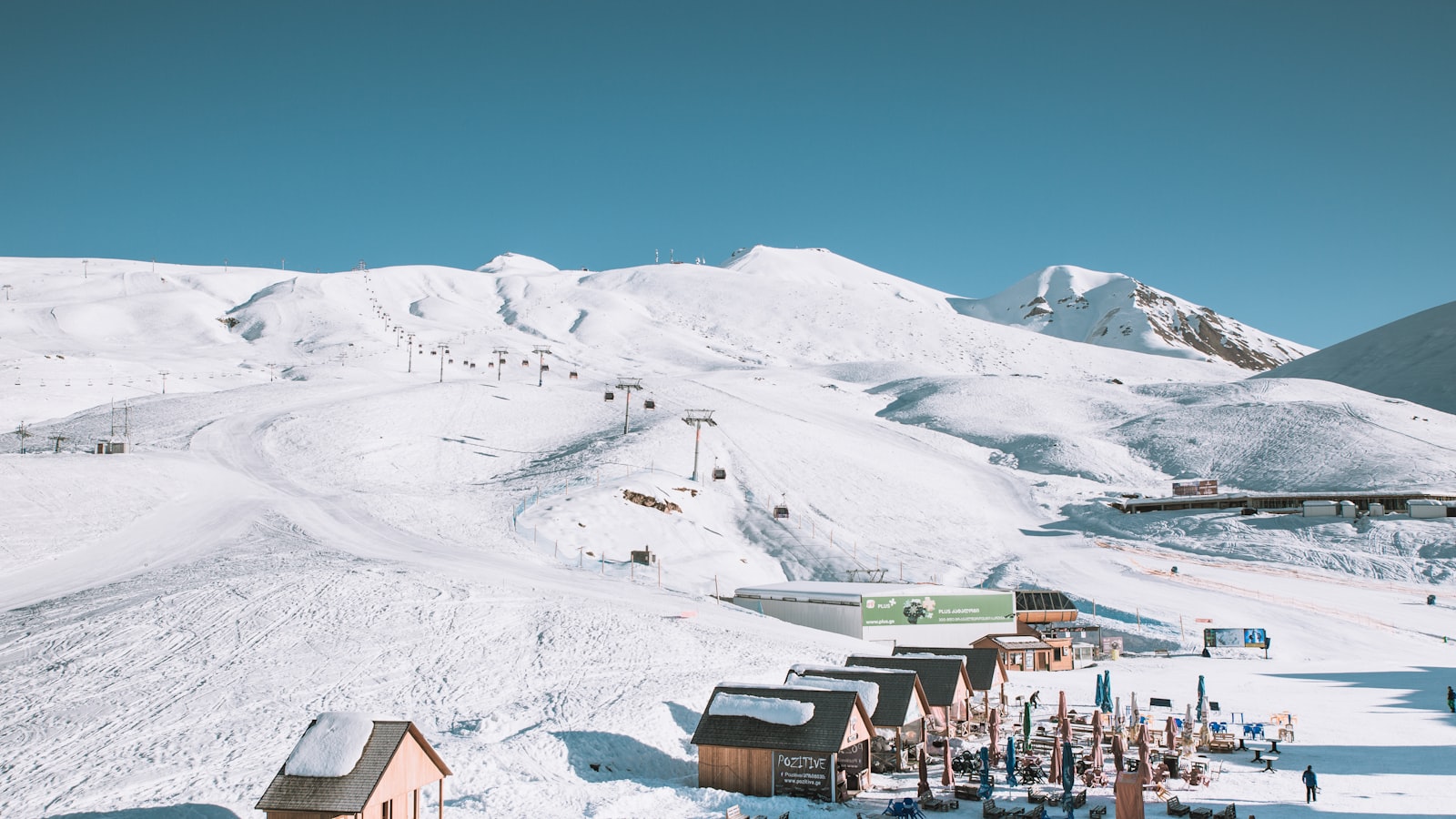
Yabuli & Changbaishan Ski Resorts: The Deep Guide (2026)
China's two great ski resorts compared — Yabuli's big mountain vs Changbaishan's volcanic scenery. Lifts, runs, lessons, lodging and how to plan a ski trip to the northeast.
Yabuli and Changbaishan are China’s two great ski destinations — the biggest mountain in the country, and the volcanic-scenery resort with the hot springs. Here’s the deep comparison: terrain, getting there, lodging, and how to plan the trip.
If you’re skiing in China, it’s almost certainly at one of two places. Yabuli, in the far northeast of Heilongjiang, is China’s largest ski resort — a big mountain with a long, cold season and reliable snow. Changbaishan, in Jilin, sits under an active volcano’s crater, combining good skiing with spectacular scenery, hot springs and Korean-border culture. They’re different experiences, and this guide helps you pick and plan.
Yabuli: the big mountain
- Scale — China’s largest resort, with the longest season and the most reliable snow in the country.
- Terrain — real vertical, well-groomed pistes from beginner to serious, and the most alpine feel in China.
- The vibe — a skier’s resort: serious, cold, and increasingly well set up for international visitors.
- Best for — experienced and intermediate skiers who want the biggest mountain.
Yabuli is the answer if your trip is about the skiing itself — the most substantial resort in China, with the terrain to match.
Changbaishan: the scenery resort
- The backdrop — skiing under the volcanic mass of Changbaishan, with the crater lake at the summit (when weather allows).
- The vibe — an internationalized resort area with hotels, restaurants, hot springs and a relaxed, all-round atmosphere.
- Terrain — good beginner-to-intermediate slopes, gentler than Yabuli, with a ski school that suits newcomers.
- Around it — the hot springs, the Korean-border culture of the nearby towns, and the volcano itself.
Changbaishan is the all-rounder — a resort that works as a ski trip and a mountain getaway even if someone in the group doesn’t ski.
Comparing them
| Yabuli | Changbaishan | |
|---|---|---|
| Location | Heilongjiang, near Harbin | Jilin, near the N. Korea border |
| Character | Big mountain, serious skiing | Scenery, hot springs, culture |
| Terrain | Broad, from beginner to expert | Gentler, beginner-friendly |
| Season | Longest in China | Slightly shorter, good snowmaking |
| Best for | Skiiers wanting the biggest | Groups, beginners, scenery-lovers |
| Getting there | 2–3h from Harbin | From Changchun / Yanji / small airport |
Both are cold, affordable and improving. The choice is really about whether you want the biggest mountain or the fullest resort experience.
Skiing for families and beginners
Both resorts welcome families and newcomers:
- Beginner areas — both have dedicated beginner slopes with gentle gradients and ski schools.
- Lessons — affordable (¥150–300/hour) and worth taking; a couple of hours transforms a first day.
- Changbaishan’s edge — the resort area is more internationalized, with more beginner-friendly amenities, hot springs for après and a gentler overall vibe.
- Yabuli’s edge — the ski school is established and the beginner slopes are separate from the advanced terrain, so newcomers aren’t intimidated.
- Non-skiers — Changbaishan is the better mixed-group choice: hot springs, the volcano viewpoint and the town’s culture give non-skiers plenty to do while the skiers ski.
For a family or a mixed group, Changbaishan is usually the easier sell; for a committed ski trip, Yabuli delivers the bigger mountain.
Common mistakes to avoid
- Underdressing — the northeast winter is genuinely cold; thermal layers, a warm coat and good gloves are not optional.
- Booking peak late — Chinese New Year and winter weekends fill the resorts; book lodging and lessons ahead.
- Skipping lessons — they’re cheap and hugely helpful for first-timers on unfamiliar terrain.
- One-day wonder — a single day barely scratches the surface; both resorts reward two to three days.
- Ignoring transport time — the resorts are real journeys from the cities; build the travel into the plan.
Planning the trip
- Yabuli itinerary — fly or train to Harbin, add the Ice Festival, then 1–2 days at Yabuli. A classic northeast winter trip.
- Changbaishan itinerary — 2–3 days at the resort: a day or two of skiing, an afternoon in the hot springs, and a crack at the volcano’s crater if the weather opens.
- Book ahead — peak season (especially Chinese New Year) fills resorts and hotels.
- Lessons — cheap and worth it, particularly at Changbaishan for beginners.
- Gear — rent at the resort or bring your own; rentals are affordable.
Both resorts reward a couple of days rather than one — the skiing, the cold, the food and (at Changbaishan) the springs make it a real destination.
Where to stay and eat
- Yabuli — the resort hotels are the main option, ranging from mid-range to the flagship hotels on the slopes. Eat at the hotel restaurants or the small town’s eateries; the region’s northeastern food (hearty stews, dumplings, hotpot) is perfect après-ski fuel.
- Changbaishan — the resort area has the widest range, from international chain hotels to ski-in/ski-out properties, plus restaurants, cafés and the hot springs. The nearby town adds local Korean-influenced options — the region borders the Korean culture area, and the food reflects it.
Both areas price accommodation at ¥300–800 a night for the resort hotels. Booking early — especially for the Chinese New Year week — is the difference between a good room and a scramble.
Renting gear and equipment
Gear rental is straightforward at both resorts: skis, boots and poles rent for roughly ¥100–300 a day, and helmets, goggles and clothing are available too. Rentals are quality but not high-end — bring your own boots if you’re particular. For beginners, rental gear plus a lesson is the standard and sensible package. If you’re flying in from abroad, renting locally beats hauling ski bags through the airports.
Getting around the resorts
Inside both resorts, the lifts and gondolas connect the terrain, and shuttle buses or resort transport cover the rest. English signage is limited but improving; the ski schools and front desks are the best sources of help. Outside the resorts, hire a driver or use a ride-hailing app for the transfer legs — the resorts are self-contained, so once you’re checked in you mostly won’t need external transport until departure.
The practical basics
- The cold is real — the northeast is genuinely cold in winter; thermal layers, a warm coat and good gloves are essential.
- Set up payment and connectivity — Alipay and an eSIM for tickets, rentals and booking.
- Dress in layers — cold lift rides, warm lodges; layers solve both.
- Combine with the region — Yabuli pairs with Harbin; Changbaishan with the Korean-border culture and hot springs.
Expect a learning curve with English at the resorts, but they’re increasingly set up for international visitors.
The bottom line
For the biggest mountain and the longest season, Yabuli is China’s answer — a proper ski resort with serious terrain at a fraction of Western prices. For the fullest experience — skiing, hot springs, volcanic scenery and border culture — Changbaishan wins. Both are cold, affordable, improving and genuinely worth the trip north. Pick the mountain that fits your trip, book ahead, dress for the cold, and enjoy some of the best-value skiing in Asia.
Last updated: August 2026. Resort seasons, lifts and prices change — confirm current details before you go.
Frequently Asked Questions
Which is better: Yabuli or Changbaishan?
Choose **Yabuli** for the biggest, most serious mountain — China's largest resort with the longest season and most reliable snow, and a proper alpine feel. Choose **Changbaishan** for scenery and culture — skiing under a volcanic mountain, with the Korean-border vibe, hot springs and good beginner-to-intermediate terrain. Yabuli is the skier's resort; Changbaishan is the all-rounder with more around it.
Is skiing in northeast China good?
It's genuinely good and improving fast — cold, reliable snow, well-groomed pistes, and prices far below Europe or North America. Yabuli and Changbaishan are serious resorts with real vertical and long seasons. It's not yet on the level of the Alps or Japan, but as a ski trip combined with a China visit, it's excellent value and a genuine experience.
When is the ski season at Yabuli and Changbaishan?
**December to March** is the general season, with the best conditions in January–February — the coldest, snowiest stretch. Yabuli's season runs longest (the coldest part of Heilongjiang); Changbaishan is slightly shorter but has good snowmaking. Check each resort's exact dates for your travel year, and note that peak holiday periods (Chinese New Year) get busy and pricier.
How do I get to Yabuli?
**Yabuli** is about 2–3 hours from Harbin by train or car — most visitors fly or take the high-speed rail to Harbin, then continue to Yabuli. It pairs naturally with the [Harbin Ice Festival](https://chinotrips.com/destinations/winter-harbin-ice-festival/). See our [winter skiing guide](https://chinotrips.com/destinations/winter-skiing-china/) for the wider picture of China's ski options.
How do I get to Changbaishan?
**Changbaishan** is reachable from Changchun or Yanji (about 2–3 hours by car), with a small airport nearby that connects in winter. The resort area sits at the foot of the volcano, near the famous crater lake. It's more of a destination than a day trip — plan 2–3 days to combine skiing with the mountain and the hot springs.
What does a ski trip to northeast China cost?
Rough guidance (per person, CNY, prices change): **lift tickets** ¥200–500 a day; **lessons** ¥150–300 an hour; **gear rental** ¥100–300 a day; **lodging** ¥300–800 a night at the resort hotels. Add transport from the cities. Compared to the Alps or North America it's a fraction of the cost, which is the main draw for most visiting skiers.
Can beginners ski at these resorts?
Yes — both resorts have dedicated **beginner areas and ski schools**, and lessons are cheap. Changbaishan is arguably the friendlier beginner resort (gentler terrain, an internationalized resort area); Yabuli has beginner slopes too but its reputation is the big mountain. Either works for first-timers, especially with a couple of hours of lessons.