
The Lantern Festival in China: Lights, Riddles & Tangyuan (2026)
What the Lantern Festival is, when it falls, the lantern displays, tangyuan and riddles, and how to experience it as an international visitor.
The Lantern Festival is the bright, joyful close to Chinese New Year — a night of lanterns, tangyuan and riddles. Here’s what it is and how to experience it.
For international visitors, the Lantern Festival is one of the most accessible and photogenic Chinese holidays: a single night (the 15th day after New Year’s Eve) when the country glows with lanterns and celebrates the end of the New Year season. It’s a warm, family-friendly festival that’s easy to join.
What the festival is
The Lantern Festival marks the 15th day of the first lunar month — 15 days after Chinese New Year’s Eve, so usually mid to late February. It closes the New Year season with a burst of light and festivity. The traditions:
- Lanterns everywhere — red lanterns on streets and homes, and elaborate illuminated displays in parks.
- Tangyuan — sweet glutinous rice balls, the festival’s signature food.
- Lantern riddles — written on the lanterns; solving them is a traditional game.
- Dragon and lion dances — performances in many cities.
The lanterns
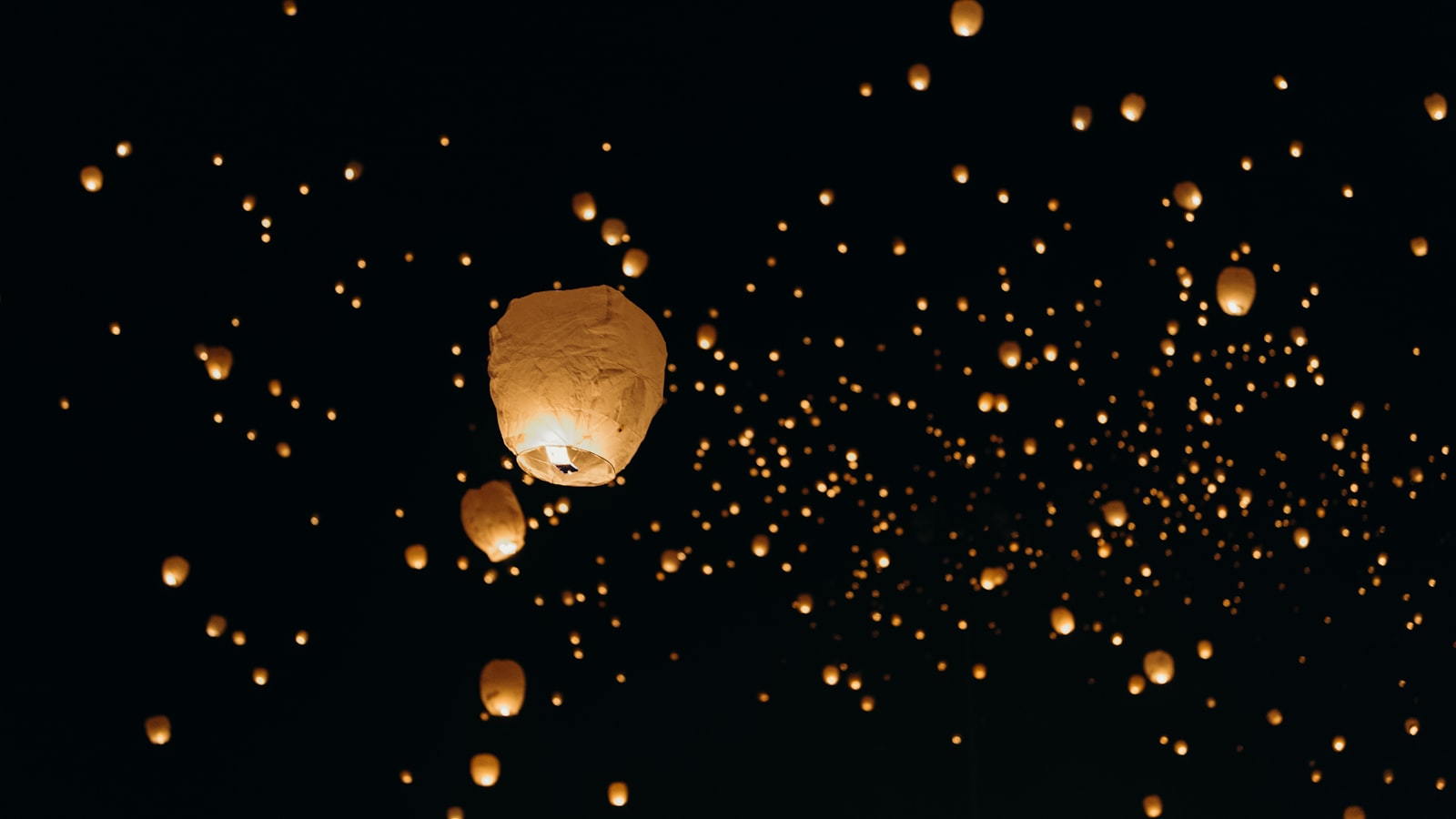
The lanterns are the heart of it. Beyond the red lanterns everywhere, many cities mount elaborate illuminated displays — enormous scenes, figures and structures lit up in parks and along rivers. Chengdu’s lantern festival is one of the most famous; Beijing, Xi’an and Nanjing all have strong displays. The atmosphere is festive and family-oriented, and the displays are genuinely beautiful at night.
The tangyuan
Tangyuan are small, round glutinous rice balls in a sweet syrup, often filled with black sesame, red bean or peanut paste. Their roundness symbolizes family reunion and completeness — the festival’s central meaning. They’re sweet, warm and comforting, and they’re everywhere during the festival, at home and in shops.
A tip for visitors: tangyuan are best eaten warm, and they’re a gentle, approachable festival food — much easier for a foreign palate than mooncakes. Try them at a restaurant or from a shop that makes them fresh.
The lantern riddles
A traditional part of the festival: riddles written on the lanterns, and solving them is a game for families and friends. If you can read Chinese, give it a try; if not, watching others solve them (and the laughter when they get it wrong) is part of the fun. It’s a glimpse into a genuinely popular, playful tradition.
When it falls and the travel effect
The Lantern Festival falls 15 days after Chinese New Year’s Eve — usually mid to late February. The travel effect is minimal: it’s not a major holiday itself, so trains and hotels are usually normal. The crowds concentrate at the evening lantern displays, not across the transport network. It’s a calm, pleasant time to be in China.
How to experience it as a visitor
- See the lantern displays — the parks and streets glow at night.
- Try tangyuan — warm, sweet and comforting.
- Watch a dragon or lion dance — performances in many cities.
- Try a lantern riddle — even attempting one is fun.
- Enjoy the festive streets — the whole country feels bright and celebratory.
Practical notes
- Set up Alipay and an eSIM.
- Check local listings for the best lantern display in your city.
- Dress warm — February evenings are cold in most of China.
The bottom line
The Lantern Festival is the bright, joyful end of the Chinese New Year season — a night of lanterns, tangyuan and riddles that’s easy and wonderful for visitors. It’s less crowded than the big holidays, the displays are beautiful, and the food is gentle and delicious. See the lanterns, try the tangyuan, and watch China close out its biggest celebration.
The end of Chinese New Year
The Lantern Festival closes the Chinese New Year season — the 15th day after New Year’s Eve, when the two-week holiday formally ends. For Chinese families, it’s the last big celebration of the season: the lanterns are the bright finale, and after it, the country returns fully to work. For a visitor who’s been in China over the New Year period, it’s a perfect note to end on — the whole season’s energy concentrated into one glowing night.
The regional lantern traditions
The displays vary across China: Chengdu is famous for its enormous, elaborate International Lantern Festival; Nanjing holds the grand Qinhuai River lantern fair, one of the country’s oldest; Xi’an mounts displays in its ancient city walls; Hong Kong puts on modern lantern carnivals. Each is a different scale and style, but all share the same core: lanterns, tangyuan and the celebratory close to the season. Ask locally for the best display in your city.
A realistic budget
The Lantern Festival is inexpensive to experience. Rough guidance for planning (per person, CNY, and prices change): the lantern displays are mostly free or cheap (some major ones have modest entry); tangyuan are a few yuan a bowl at a shop or restaurant; hotels and trains are at normal rates (it’s not a travel holiday); festival snacks at the displays are affordable. It’s one of the most budget-friendly festivals to enjoy.
Common mistakes to avoid
- Missing the evening displays — the festival is at night; the lanterns need dark.
- Eating only the supermarket tangyuan — the fresh-made ones from a shop are far better.
- Dressing too lightly — February evenings are cold in most of China; bring a warm layer.
- Skipping the riddles — even trying one is fun, and locals love explaining them.
- Confusing it with Mid-Autumn — that’s the autumn moon festival; this is the winter close to CNY.
The bottom line
The Lantern Festival is the bright, joyful end of Chinese New Year — a single glowing night of lanterns, tangyuan and riddles. It’s easy, affordable and photogenic for visitors, and it captures the festival spirit at its warmest. See the lanterns, try the tangyuan, and watch China close out its biggest celebration. It’s a single night that captures the entire New Year season in light — not to be missed if you’re in China in February.
Planning the festival visit
A few practical notes: see the displays at night (the lanterns need dark); try fresh tangyuan from a shop, not a supermarket (far better); dress warm (February evenings are cold in most of China); and check local listings for the best display in your city. The festival is inexpensive — most displays are free or cheap, and tangyuan are a few yuan a bowl.
The bottom line
The Lantern Festival is the bright, joyful end of Chinese New Year — a single glowing night of lanterns, tangyuan and riddles. It’s easy, affordable and photogenic for visitors, and it captures the festival spirit at its warmest. See the lanterns, try the tangyuan, and watch China close out its biggest celebration.
A note for first-timers
The Lantern Festival is one of the easiest Chinese festivals to enjoy — the lanterns are beautiful without context, and the tangyuan are gentle on a foreign palate. The riddles and dances add depth if you’re curious, and the displays are genuinely spectacular. It’s a single night that captures the whole New Year season’s energy — not to be missed if you’re in China in February.
The festival falls on the 15th day of the first lunar month — usually mid to late February. Check exact dates for your travel year.
Frequently Asked Questions
When is the Lantern Festival?
It falls on the 15th day of the first lunar month — 15 days after Chinese New Year's Eve — so usually mid to late February. It marks the end of the Chinese New Year season. The exact date shifts yearly with the lunar calendar.
What happens during the Lantern Festival?
The night is filled with lantern displays — red lanterns everywhere, and in many cities elaborate illuminated scenes. Families eat tangyuan (sweet rice balls), and there are lantern riddles, dragon and lion dances, and firework displays. It's the bright, festive close to the New Year season.
What are tangyuan and should I try them?
Tangyuan are small, round glutinous rice balls in a sweet syrup, often filled with black sesame, red bean or peanut paste. They're round, symbolizing family reunion and completeness — the same symbolism as the festival itself. Yes, try them; they're sweet, comforting and a genuine festival food.
Where are the best lantern displays?
Most Chinese cities put on lantern displays in parks and along rivers or streets — some with enormous, elaborate illuminated scenes (Chengdu's lantern festival is especially famous). Beijing, Xi'an, Nanjing and the big tourist cities all have strong displays. Ask your hotel or check local listings for the best one.
Is the Lantern Festival crowded?
The lantern displays themselves are festive and can be busy — that's part of the charm. The wider holiday is calm: it's not a major travel period like Chinese New Year itself, so trains and hotels are usually normal. The crowds concentrate at the evening displays, not across the travel network.