Dragon Boat Festival in China: Races, Zongzi & Summer (2026)
What the Dragon Boat Festival is, when it falls, the dragon boat races and zongzi, and how to experience it as an international visitor.
The Dragon Boat Festival is China’s summer celebration — dragon boat races, sticky-rice zongzi and a history that goes back thousands of years. Here’s what it is and how to experience it.
For international visitors, the Dragon Boat Festival is a lively, accessible introduction to China’s traditional festivals: dramatic boat races, a distinctive food, and a three-day holiday that’s far calmer than the winter festivals. It’s a great time to be in China if you’re flexible with the short holiday peak.
What the festival is
The Dragon Boat Festival (Duanwu) falls on the 5th day of the 5th lunar month — usually May or June. It’s a summer festival with ancient roots, tied to the poet Qu Yuan and to seasonal traditions of warding off summer illness. The two signatures:
- Dragon boat races — the spectacle.
- Zongzi — the food.
- Herbal traditions — hanging mugwort and calamus, drinking realgar wine.
The dragon boat races
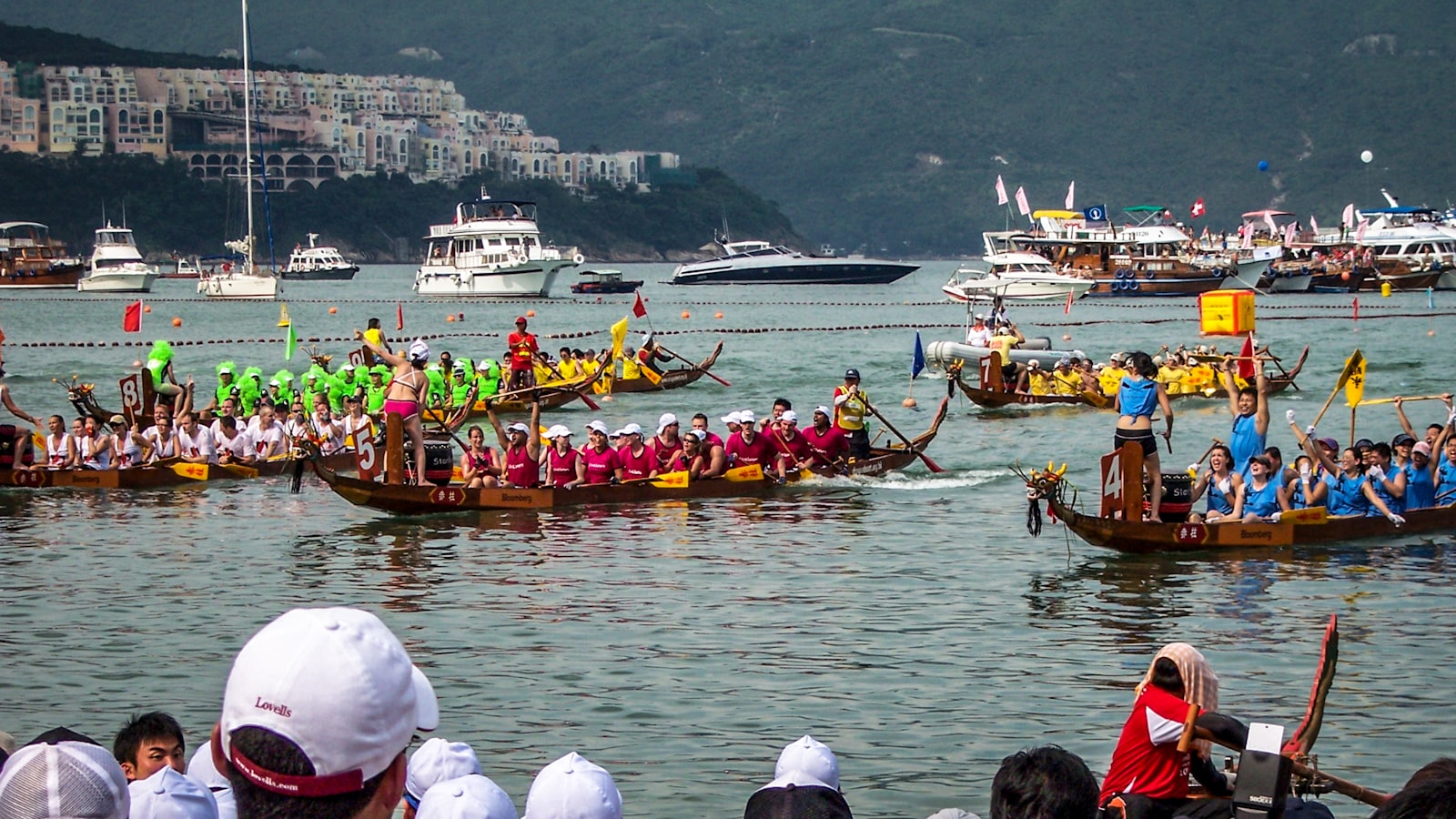
The races are the festival’s drama: long, narrow boats with carved dragon heads, paddled in unison to the beat of a drum, racing on rivers and lakes. The best displays are in cities with strong water traditions — Guangzhou, Hong Kong, Hangzhou and many others. Major cities put on organized races during the festival, and even a small local race is a genuine, exciting cultural experience.
The zongzi
Zongzi are pyramids of sticky rice wrapped in bamboo or reed leaves and steamed. The fillings vary by region: pork and salted egg yolk (the classic savory), red bean or dates (sweet), and many others. They’re the festival’s signature food, eaten at home and sold everywhere during the holiday.
A tip for visitors: zongzi are hearty and filling — try the savory pork-and-egg-yolk version for the classic taste. They’re usually eaten warm, and they make a great on-the-go festival snack.
The herbal traditions
The festival has roots in warding off summer illness: homes hang mugwort and calamus at the door, and there are traditions around realgar wine and fragrant sachets. These are more visible in traditional homes and markets than in tourist areas, but they add depth to understanding the festival’s origins.
When it falls and the travel effect
Dragon Boat falls on the 5th day of the 5th lunar month — usually May or June. It’s a three-day holiday, so:
- Book trains and hotels ahead for the holiday days.
- Expect a short domestic peak — calmer than the big winter holidays.
- Check the date for your travel year.
See our festivals calendar for how it fits the year.
How to experience it as a visitor
- See a dragon boat race — the festival’s highlight.
- Try zongzi — the savory pork-and-egg-yolk version is the classic.
- Watch the herbal traditions — mugwort and sachets at homes and markets.
- Enjoy the summer start — warm weather and a festive mood.
Practical notes
- Set up Alipay and an eSIM.
- Check local listings for the best race in your city.
- Book ahead for the three holiday days if your dates overlap.
The bottom line
The Dragon Boat Festival is a lively, accessible summer celebration — dramatic boat races, the distinctive zongzi, and a three-day holiday that’s manageable for travel. It’s a great time to see a genuine Chinese tradition in action and to try one of the country’s most distinctive festival foods. See a race, try a zongzi, and enjoy China at the start of summer.
The story of Qu Yuan
The festival’s origin story: Qu Yuan, a beloved poet and minister of the ancient Chu state, drowned himself in the Miluo River in despair over his kingdom’s fate. The people, to save him and keep fish from his body, threw rice into the river and beat drums — the origins of both the zongzi (the rice) and the dragon boat races (the drums and the search). It’s a story of loyalty and remembrance, and it gives the festival its emotional depth beyond the spectacle.
The regional variations
The festival looks different across China: Guangzhou and the south are famous for the most dramatic dragon boat races; Hong Kong hosts major international racing events; Hangzhou and the eastern lakes have strong racing traditions; Hunan (Qu Yuan’s region) emphasizes the festival’s memorial character. Zongzi fillings vary too — the south favors the savory pork-and-egg-yolk, while the north leans sweeter with dates and red bean. The core is the same: races, zongzi and the summer holiday.
A realistic budget
Dragon Boat pricing is moderate. Rough guidance for planning (per person, CNY, and prices change): hotels and trains are standard except around the three holiday days (a modest spike, book ahead); dragon boat races are free to watch from the banks; zongzi are a few yuan each; festival events are mostly free. It’s an affordable festival, and the races are the free spectacle.
Common mistakes to avoid
- Booking the three holiday days late — they book up; reserve ahead.
- Missing the races — check local listings; the big races are the highlight.
- Eating only supermarket zongzi — the fresh-steamed ones are far better.
- Skipping the savory version — the pork-and-egg-yolk zongzi is the classic taste.
- Confusing the date — it’s the 5th day of the 5th lunar month (May–June), not a fixed date.
The bottom line
The Dragon Boat Festival is a lively, accessible summer celebration — dramatic races, the distinctive zongzi, and a three-day holiday that’s manageable for travel. It’s a great time to see a genuine Chinese tradition in action and try one of the country’s most distinctive festival foods. See a race, try a zongzi, and enjoy China at the start of summer. The races are a genuine spectacle, and the zongzi are a real taste of the culture — the festival is one of the most fun ways to experience Chinese tradition.
Planning the festival visit
A few practical notes: check local listings for the best race (the big cities put on the most dramatic events); try a fresh zongzi, not a supermarket one (far better); book the three holiday days ahead if your dates overlap; and watch from the riverbank — the races are free and the atmosphere is electric.
The bottom line
The Dragon Boat Festival is a lively, accessible summer celebration — dramatic races, the distinctive zongzi, and a three-day holiday that’s manageable for travel. It’s a great time to see a genuine Chinese tradition in action and try one of the country’s most distinctive festival foods. See a race, try a zongzi, and enjoy China at the start of summer.
A note for first-timers
The Dragon Boat Festival is lively and accessible — the races are spectacular without explanation, and the zongzi are a distinctive taste worth trying. The three-day holiday is manageable for travel, and the summer setting is pleasant. For a first taste of China’s traditional festivals beyond the famous ones, it’s a great pick. Enjoy the races!
The festival falls on the 5th day of the 5th lunar month — usually May or June. Check exact dates for your travel year.
Zongzi all year round
You can find zongzi year-round at breakfast stalls and convenience stores, especially in the south, but they are everywhere and at their freshest during the festival season. The best are made fresh by local vendors in the weeks around Duanwu, often still warm. Outside the holiday, supermarket and chain-store versions remain easy to find if you want to try one.
Frequently Asked Questions
When is the Dragon Boat Festival?
It falls on the 5th day of the 5th lunar month, which is usually May or June. It's a three-day public holiday in China. The exact date shifts yearly with the lunar calendar — check for your travel year.
What happens during the Dragon Boat Festival?
The centerpiece is the dragon boat races — long, narrow boats paddled in unison to drums, racing on rivers and lakes. The other signature is zongzi, sticky rice wrapped in bamboo leaves. There are also herbal traditions (hanging mugwort, drinking realgar wine) tied to the festival's origins in warding off summer illness.
What are zongzi and should I try them?
Zongzi are pyramids of sticky rice wrapped in bamboo (or reed) leaves and steamed — filled with pork, egg yolk, red bean or dates, sweet or savory depending on the region. They're the festival's signature food. Yes, definitely try them; the savory pork-and-egg-yolk version is the classic.
Where can I see dragon boat races?
The best races are in cities with strong water traditions — Guangzhou, Hong Kong, Hangzhou, and many others along the rivers and lakes. Major cities put on organized races during the festival; ask your hotel or check local listings for the best spot. Even a small local race is a genuine cultural experience.
Is it crowded during the Dragon Boat Festival?
It's a three-day holiday, so there's a short domestic travel peak — book trains and hotels ahead if your dates overlap. The races themselves are festive and can be busy, but the wider travel effect is modest compared to the big holidays. It's a manageable, pleasant time to travel.