
Avoiding Chinese New Year Crowds: Smart Timing & Routes
How to travel China during Chinese New Year without the worst crowds — the quiet middle days, going with the migration, choosing the right cities and routes.
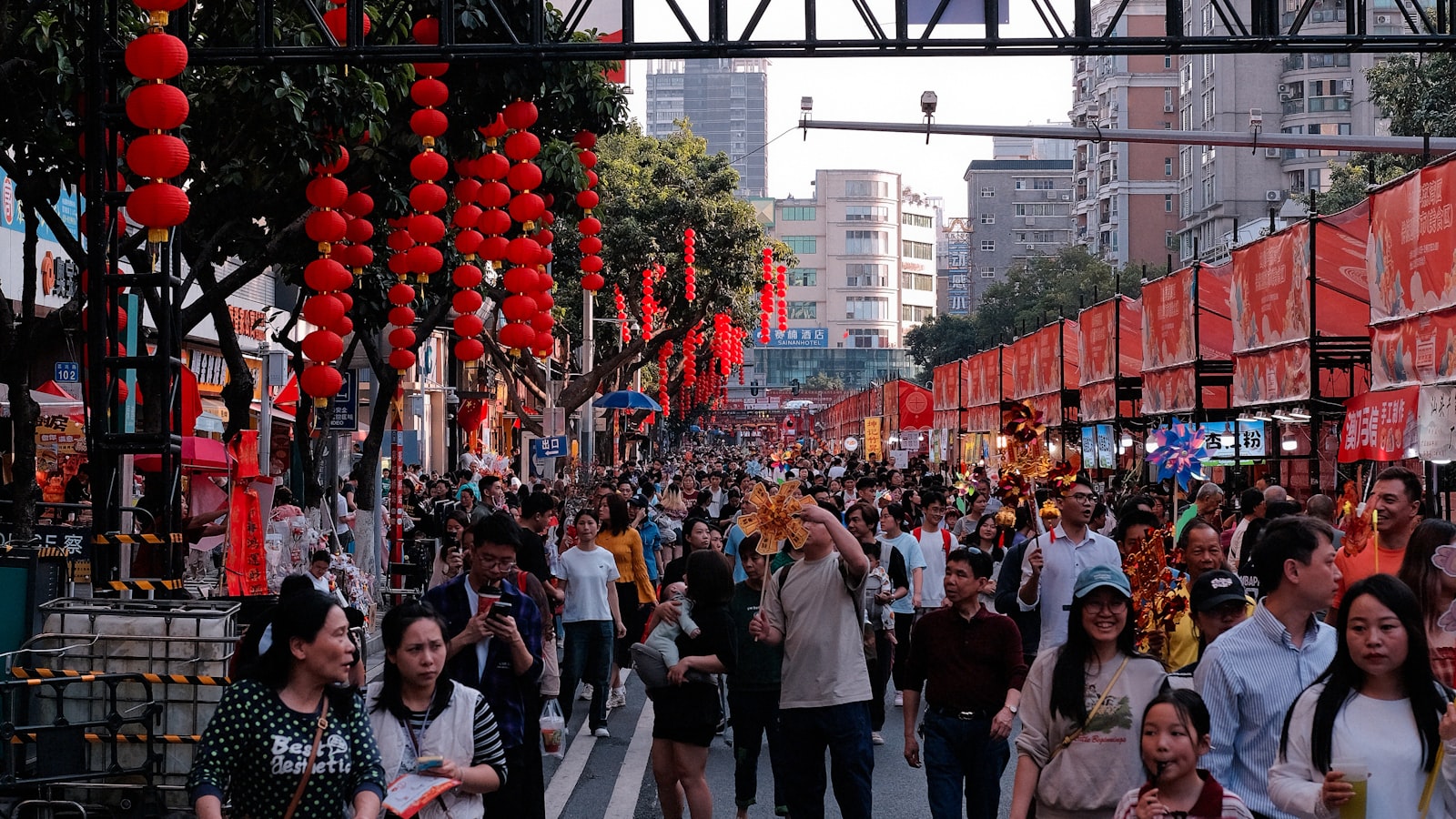
The Chinese New Year crowds aren’t where you’d expect — the streets can be quiet while the trains are packed. Here’s how to time and route your trip to dodge the worst of it.
Everyone assumes Chinese New Year means crowds everywhere. The reality is more interesting: the country’s biggest migration means cities empty out while trains and homecoming routes fill up. For a smart traveler, that opens a counterintuitive play: the festival’s middle days can be among the most peaceful to be in a big city. This guide shows you how to time it.
The crowd map: where they really are
- On trains — the migration is a rail event; the homecoming corridors are jammed.
- At famous sights — the Forbidden City, Terracotta Army and West Lake get busy.
- On streets — actually quieter than normal; locals are home or traveling.
- In tourist cities — hotels and open restaurants are ready, and festive but not chaotic.
Understanding this map changes your planning: you’re dodging train crowds and sight lines, not the whole country.
The quiet middle
The festival breaks into three phases:
- The rush in (week before): everyone heads home — trains out of cities packed.
- The quiet middle (New Year’s Eve through the first days): cities calm, streets peaceful, festive displays at their peak. The easiest window.
- The rush back (week after): everyone returns — the direction flips.
If your dates are flexible, travel the middle and travel with the migration (arrive as people leave).
Choosing the right cities
Tourist-ready cities handle the holiday best: Beijing, Shanghai, Chengdu, Xi’an, Guangzhou — big sights stay open, international hotels and tourist restaurants remain, and the festive scene is strong. Smaller towns fill with returning families and can be harder for tourists. Pick the big, tourist-ready cities and you dodge most of the chaos.
Timing the famous sights
- Go at opening time — before the day’s crowds build.
- Book timed entry online — Forbidden City, Terracotta Army, and the big museums.
- Save the icons for morning, use quieter options (parks, neighborhoods, smaller sights) for mid-day.
- Accept the icons will be busy — the festive atmosphere is partly the point.
The route strategy
- Travel with the crowd direction, not against it.
- Use non-peak days — adjacent to the exact peak days are far easier.
- Consider a buffer day — it turns a booking gap into a minor adjustment.
- Book trains at sales-open — see our CNY train guide.
The honest trade-off
CNY is not a crowd-free time — it’s a differently-crowded time. The streets are quieter, the trains busier, the sights busier but festive. If you want the festival experience with the least stress, travel the quiet middle in a tourist-ready city. If you want genuinely empty sights, the shoulder weeks are the better bet — but you’d miss the festival itself.
The hidden quiet spots
Even at the famous sights, there are quiet corners: the Forbidden City’s side galleries are calmer than the central axis; the Temple of Heaven park (beyond the main hall) is where locals gather; museum side halls and parks offer festive atmosphere without the crush. A small tip: ask a hotel concierge or local where they’d go — they know the quiet festive spots tourists miss.
The weekday advantage
CNY’s quiet middle days often fall on weekdays (the festival shifts yearly), and weekdays are calmer than weekends at every sight. If you can plan your big-sight visits for a weekday in the festival’s middle, you combine the quietest time of year with the quietest day of the week. It’s the single most effective crowd-avoidance move.
Comparing CNY to Golden Week
Both are busy, but differently. Golden Week (October) is a travel holiday — everyone goes on vacation, so tourist destinations fill. CNY is a homecoming — cities empty, families gather, and the crowds are on the way home. For avoiding crowds, CNY’s quiet middle in a big city is actually easier than Golden Week’s anywhere. See our Golden Week guide for the October comparison.
A pocket plan for the festival
- Days 1–2: the big sights at opening time, timed tickets booked.
- Day 3: a temple fair and the hutongs — festive but local.
- Day 4: a day trip out of the city (quieter) or a park morning.
- Day 5: the return — travel with the migration direction.
The mindset shift
The biggest improvement comes from understanding that CNY crowds are localized — they’re on specific trains and at specific sights at specific times, not everywhere. Choose the quiet middle, the right cities, and the right hours, and you’ll find the festival remarkably enjoyable. The streets may even feel peaceful.
A realistic expectation
It’s worth being honest about what ‘avoiding crowds’ means during CNY: you can avoid the worst of it (the migration corridors, the exact peak sight hours, the rush windows), but the festival is fundamentally busy. The goal isn’t empty streets — it’s a comfortable, enjoyable trip where the crowds are manageable and the festive atmosphere is the reward. Set that expectation and the trip is far more pleasant.
The tools that help
- Timed sight tickets — book the Forbidden City, Terracotta Army and big museums online; they control entry and cap crowds.
- Metro and walking — the subway is quieter than normal (locals are off) and the best way to move.
- Off-peak hours — early morning for the icons, late afternoon for the streets.
- Local advice — ask your hotel or a local where they’d go; they know the quiet festive spots.
If the festival is too much
There’s no shame in choosing the shoulder weeks instead — see our Golden Week guide for the October comparison and the festivals overview for the full calendar. The same cities and sights are there year-round; only the atmosphere and the crowds change. For a first trip, the shoulder season is often the wiser choice; CNY is for repeat visitors who want the cultural peak.
The travel-day rule
The single most useful habit for a CNY trip: never travel on the two exact peak days (the day before New Year’s Eve and the last day of the holiday) unless you must. Everything else is flexible. If your itinerary can avoid those two days, you dodge the worst of the rail and flight crush, and the rest of the trip becomes dramatically easier. It’s a small scheduling change with an outsized payoff. With those habits in place, the festival is less a crowd problem than a scheduling one — and scheduling is something you control. And remember, the festival’s quiet middle is one of the most peaceful times to be in a Chinese city — the crowds are elsewhere. Enjoy the festival — you’ve earned it by planning smartly. And if the festival energy is what you’re after, you’ll find it — just with room to breathe. Safe travels, and happy New Year!
Dates as of August 2026. Chinese New Year follows the lunar calendar — confirm exact dates for your travel year.
Book transport first
If you book only one thing ahead for Spring Festival, make it transport. Train tickets release 15 days out and vanish in seconds on popular routes, so have your 12306 or Trip.com account ready and book the moment they go on sale. Flights need booking months ahead. Hotels can sometimes be found last-minute in big cities, but a train or flight cannot be conjured out of nowhere.
Frequently Asked Questions
Is it possible to travel China during CNY without huge crowds?
Yes — the crowds are concentrated in specific places and times. The migration means big cities actually empty out (locals go home), so streets can be quieter than normal. The real crowds are on trains, at the famous sights, and in the week before and after the festival. Choose the quiet middle, go with the migration, and pick tourist-ready cities.
What are the quiet middle days of Chinese New Year?
The middle of the festival — roughly New Year's Eve through the first few days, before the return rush — is when cities are at their calmest: locals are home with family, offices are closed, and streets are peaceful. It's the easiest window to be in a big city as a tourist, with festive displays at their peak.
How do I avoid the crowds at famous sights during CNY?
Go at opening time, book timed entry online (Forbidden City, Terracotta Army), and accept that the icons will be busy while finding quieter alternatives for mid-day — parks, museums, neighborhoods. The famous sights are crowded but manageable; the streets around them are often calmer than a normal tourist season.
Which routes should I avoid during CNY?
The homecoming corridors — the direct rail lines from big cities to small towns — are the worst. Tourist routes between big cities (Beijing–Xi'an–Shanghai) are easier because they don't overlap the migration as much. If you can, travel after the main return rush or on non-peak days.
Is it worth traveling during CNY at all to avoid crowds?
It's a different experience, not a crowd-free one. The festival is genuinely quieter on the streets (cities empty) and genuinely busier on trains and at famous sights. If you want the festive atmosphere with less chaos, choose the quiet middle days and tourist-ready cities; if you want zero crowds, travel in the shoulder weeks instead.