
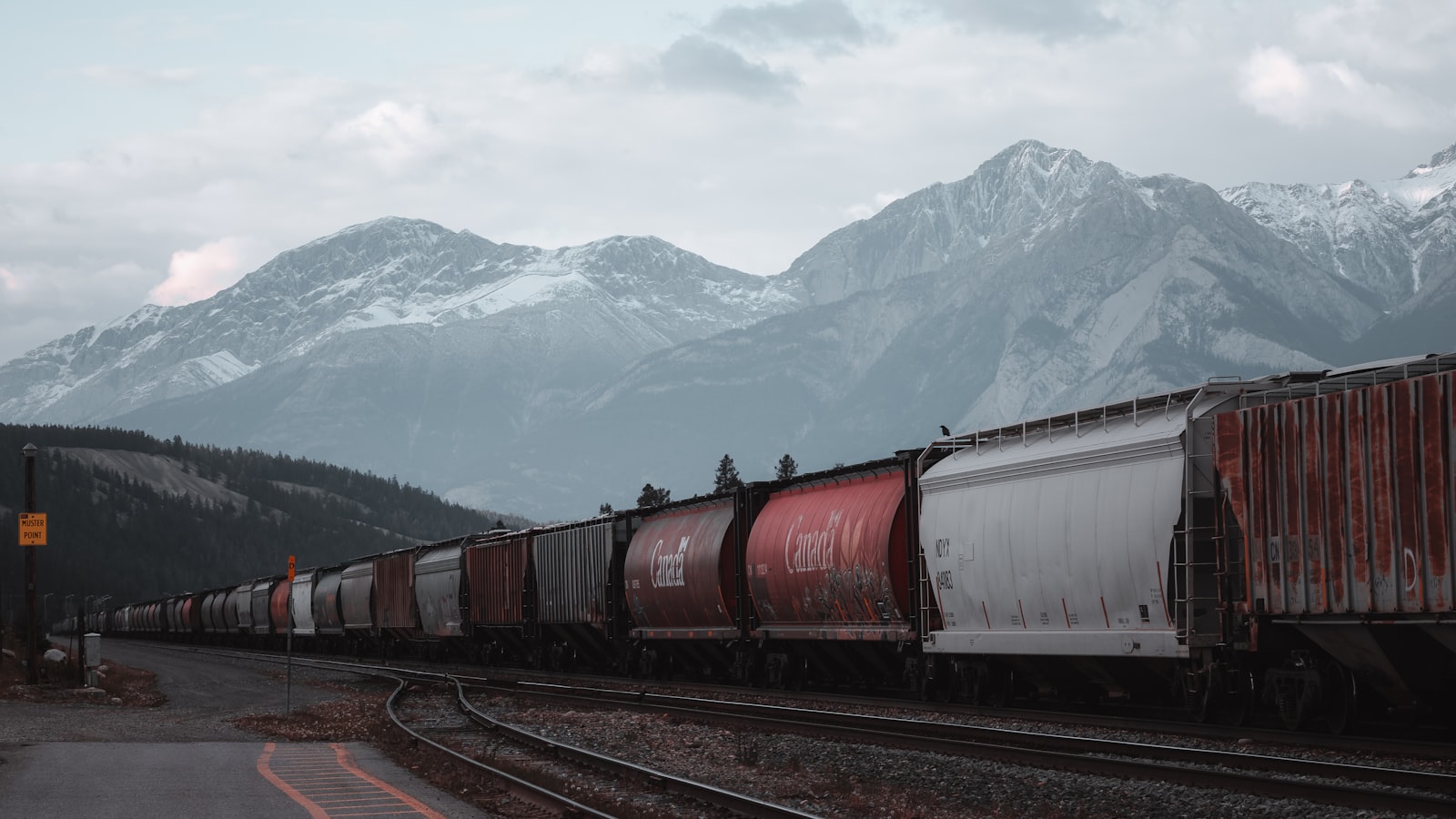
China's Most Scenic Rail Routes: The Best Train Journeys (2026)
China's most scenic train journeys — the Qinghai-Tibet line to Lhasa, the high-speed routes through the mountains, and how to ride the great railways of China.
China’s railways are among the world’s best — and a few routes are journeys in themselves: the Qinghai–Tibet line to the roof of the world, the mountain line to Kunming, and the high-speed routes through the karst. Here’s the guide to the great train journeys.
China is a country built for the railway — vast distances, dramatic landscapes and one of the world’s best rail networks. Some journeys are more than transport: the Qinghai–Tibet line climbing to the roof of the world, the Chengdu–Kunming route through the mountains of the southwest, and the high-speed lines threading through the karst and the hills. This guide covers China’s most scenic rail routes and how to ride them.
The great one: the Qinghai–Tibet line
- The highest railway on earth — climbing from Xining across the plateau to Lhasa.
- The landscapes — the plateau, the lakes, the snow mountains at the window.
- The altitude — over 5,000 meters at the highest point; the journey itself is an experience.
- The permits — handled through the organized Tibet structure. See our Tibet guide.
The Qinghai–Tibet line is one of the great train journeys of the world — the railway to the roof of Tibet.
The classic: Chengdu–Kunming
- The dramatic southwest — the mountains, the gorges and the rivers between the two cities.
- The bridges and the tunnels — the engineering of the great line.
- A day-long journey — the topography of Yunnan and Sichuan at the window.
- Pairs with the region — a Yunnan route or a Sichuan trip.
The Chengdu–Kunming line is the classic mountain journey — the drama of the southwest by rail.
The modern: the high-speed lines
- The karst and the hills — the high-speed routes through the southwest’s scenery.
- The big windows and the smooth ride — the modern travel experience.
- The efficiency — the fast, punctual way across China.
- The scenic surprises — many lines are genuinely beautiful.
The high-speed lines are both the practical backbone of Chinese travel and, on the right routes, a scenic journey.
Slow trains vs high-speed
- High-speed — fast, comfortable and efficient; the practical choice.
- The sleepers — the scenic, atmospheric choice for the big routes.
- The overnight berths — part of the travel experience across Tibet, the northwest and the southwest.
- The big windows — the slow trains let the landscape in.
The choice is the journey: efficiency on the high-speed, or the landscape on the slow sleepers.
The train classes explained
Riding China’s great scenic routes means choosing your class, and the choices matter more than on most rail systems. Hard seat is the basic class — fine for short hops, brutal for overnight journeys. Hard sleeper is the classic budget choice for the long routes: open compartments with three tiers of bunks, no door, and a pillow and blanket provided. Soft sleeper is the upgrade — four bunks to a closed, lockable compartment, wider beds, and a quieter, more comfortable night. On the Tibet line, the carriages are pressurized and equipped with oxygen outlets, which makes the class choice less about comfort and more about the sensible way to cross the plateau.
- Hard seat — the basic class; fine for the day journeys, not for the nights.
- Hard sleeper — the open six-berth compartments, the classic budget sleeper.
- Soft sleeper — the closed four-berth compartments, the comfortable upgrade.
- The Tibet line — pressurized carriages with oxygen outlets on the plateau service.
A night on a sleeper
An overnight sleeper in China is an experience in itself, and for many travelers it is one of the memories of the trip. You board in the evening, settle into your bunk, and the train carries you through the night — the rhythm of the rails, the passing stations, the tea sellers in the corridor. The dining car serves simple meals, and the station platforms along the way are a rolling cross-section of Chinese life. By morning you are a thousand kilometers on, rested enough, and the landscape outside has changed completely. Change into comfortable clothes, keep your valuables in the locker or close at hand, and let the rhythm of the rails do its work.
- The rhythm — the night train’s gentle motion and the passing stations.
- The dining car — simple, hearty meals and tea for the journey.
- The morning — waking to a completely new landscape.
- The etiquette — comfortable clothes, valuables close, and a good night’s sleep.
The sleeper is also the social hour of Chinese rail travel — the berths open onto the corridor, strangers share tea and instant noodles, and the card games and the conversation roll on into the night. For solo travelers it is one of the easiest places in China to meet people, whatever the language barrier.
Other great routes
Beyond the three headline journeys, China holds a deep bench of scenic rail routes. The Lanzhou–Urumqi line runs the length of the Hexi Corridor past the Great Wall and the Silk Road oases. The Kunming–Lijiang line climbs through the dramatic gorges and valleys of Yunnan toward the old town. And the high-speed line from Guiyang to Guangzhou threads through the karst peaks of the southwest in a landscape of towers and rivers. Each is a journey worth taking for its own sake — the network is full of them, and the right window seat on the right line is one of the great bargains of Chinese travel.
- Lanzhou–Urumqi — the Hexi Corridor, the Great Wall and the Silk Road oases.
- Kunming–Lijiang — the gorges and the high valleys of Yunnan.
- Guiyang–Guangzhou — the high-speed thread through the karst.
- The deep bench — the network is full of scenic surprises.
Planning and booking
The practical rules for the scenic routes are simple but important. Book through the official rail app or at the station — the popular sleepers and the Tibet line sell out, especially in the season. Bring your passport, which is tied to the ticket. Arrive with time at the station, where the security checks are routine but busy. And check the class carefully when you book: the soft sleeper compartments sell out first, and on the long mountain lines the window seat on the river side is often the scenic side.
- Book ahead — the Tibet line and the sleepers sell out in the season.
- Your passport — tied to the ticket; carry it for the checks.
- The class — book the berths early; they go first.
- The season — spring and autumn for the clearest mountain views.
Practical notes
- Book through the official app or the station — the popular routes sell out.
- Bring your passport — tied to the ticket.
- Choose the class — the berths for the overnight journeys, the seats for the days.
- Best season — spring and autumn for the mountain and plateau lines. See our train guide for booking.
The bottom line
China’s railways are among the world’s best — and the great routes are journeys in themselves. Ride the Qinghai–Tibet line to the roof of the world, take the mountain line to Kunming, and watch the karst pass the high-speed window. Book the sleepers ahead, choose your season, and let the railway show you the landscapes of China.
Last updated: August 2026. Routes, timetables and access change — confirm current details before you go.
Frequently Asked Questions
What are China's most scenic rail routes?
The standouts: **the Qinghai–Tibet line to Lhasa** — the highest railway in the world, climbing across the plateau to the roof of Tibet; **the Chengdu–Kunming line** — the dramatic southwest route through the mountains and the gorges; and the **high-speed lines** that thread through the karst and the hills. China's rail network is among the world's best, and a few routes are journeys in themselves. See our [train guide](https://chinotrips.com/how-to/train-tickets/) for booking.
Is the Qinghai–Tibet railway worth taking?
Yes — it's one of the great train journeys of the world: the line climbs from Xining across the Tibetan Plateau to Lhasa, over 5,000 meters at its highest, with the plateau, the lakes and the snow mountains passing the window. It's the highest railway on earth, and the experience is extraordinary. It also handles the **Tibet permit** requirements through the organized structure. See our [Tibet guide](https://chinotrips.com/tibet/) for the permits.
What is the Chengdu–Kunming line like?
The **Chengdu–Kunming railway** is the classic southwest route — one of China's most dramatic lines, crossing the mountains and the gorges between the two great cities of the southwest, with the bridges, the tunnels and the riverside scenery. It's a day-long journey that shows the dramatic topography of Yunnan and Sichuan. It pairs naturally with a [Yunnan route](https://chinotrips.com/itineraries/yunnan-classic-route/) or a Sichuan trip.
Are the high-speed trains scenic?
Many are surprisingly scenic — the high-speed lines thread through the mountains, the karst and the countryside, and the modern trains have big windows and a smooth, quiet ride. The routes through the karst of the southwest (around Guilin, for example), the hills of the southeast and the mountain corridors are genuinely beautiful. High-speed rail is both the practical way to travel China and, on the right lines, a scenic journey in itself.
Should I take a slow train or high-speed?
It depends on the journey. **High-speed** is fast, comfortable and punctual — the practical choice for covering distance. **The slow trains and sleepers** are the scenic, atmospheric choice — the overnight berths across the big routes (Tibet, the northwest, the southwest) are part of the travel experience, and the big windows let the landscape in. For a scenic journey, the slow sleeper is often the reward; for efficiency, high-speed wins.
How do I book the scenic rail routes?
Book through the **official rail app or the station** — the popular routes (the Tibet line, the sleepers) sell out, especially in the season. Book ahead, bring your passport (tied to the ticket), and choose your class: the sleeper berths for the overnight journeys, the seat classes for the day runs. See our [train guide](https://chinotrips.com/how-to/train-tickets/) for the full booking details.
When is the best time for the scenic routes?
**Spring and autumn** are the best for most of the mountain and plateau lines — clear skies, comfortable weather and the landscapes at their best. The Tibet line and the southwest routes reward the clearer seasons. The high-speed lines work year-round. Avoid the holiday peaks, when the trains fill. For the plateau and the mountains, the shoulder seasons are the sweet spot.