
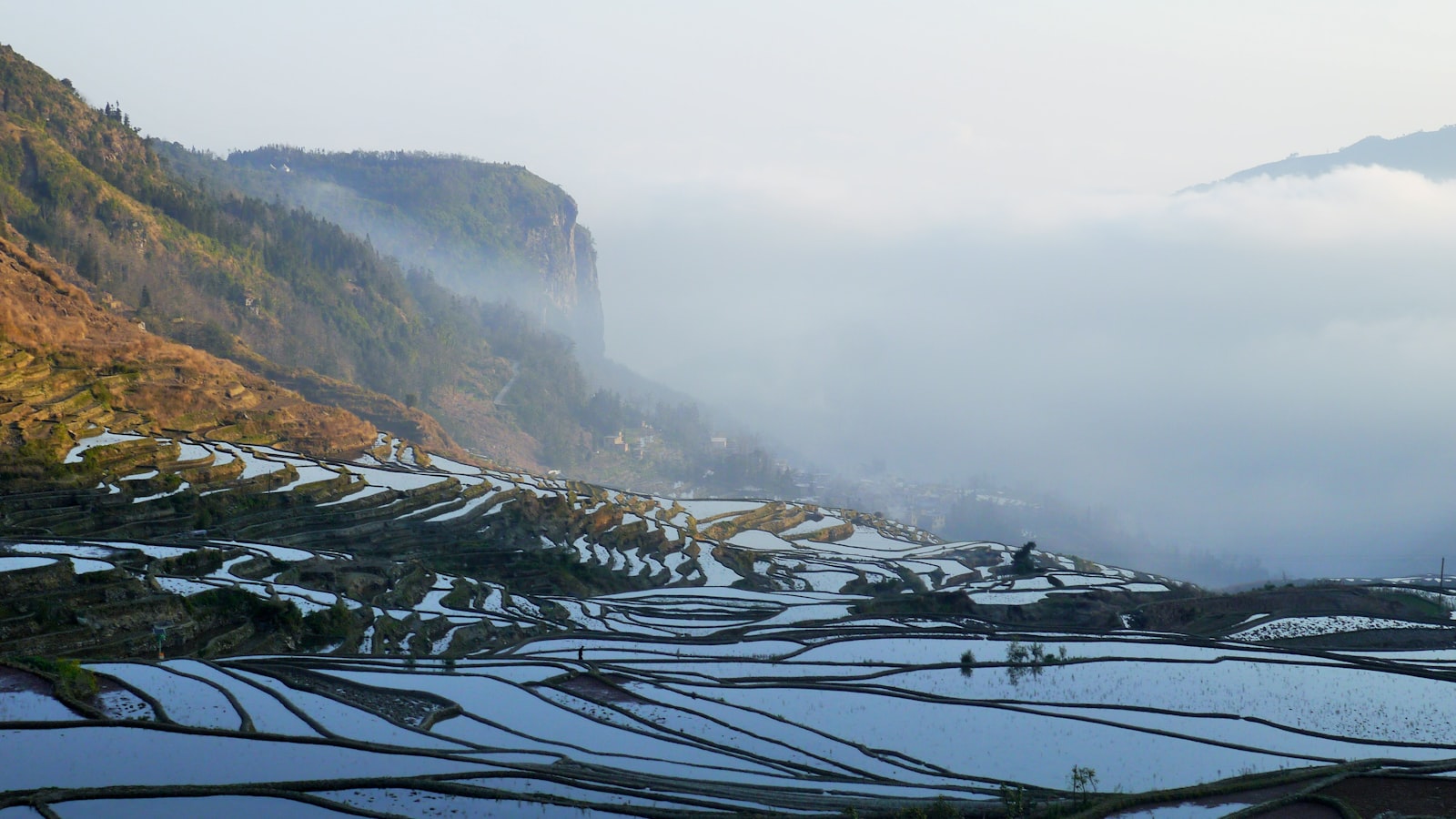
Yunnan Classic Route: Kunming, Dali & Lijiang in 7 Days
The classic southwest loop — Kunming's lakes, Dali's old town and Erhai, then Lijiang's ancient lanes and Jade Dragon Snow Mountain. A day-by-day 7-day plan.
OpenStreetMap Google Maps (opens externally)
Yunnan is China’s most laid-back province — mild weather, minority cultures, and a route that rewards slow travel. This seven-day plan takes you through the classic trio: Kunming’s lakes, Dali’s Erhai, and Lijiang’s ancient town beneath the snow mountain.
The route at a glance
| Day | City | Focus |
|---|---|---|
| 1 | Kunming | Dianchi Lake, arrival |
| 2 | Kunming → Dali | Stone Forest (or head straight to Dali) |
| 3 | Dali | Erhai Lake, old town |
| 4 | Dali → Lijiang | Cangshan, evening train |
| 5 | Lijiang | Dayan & Shuhe old towns |
| 6 | Lijiang | Jade Dragon Snow Mountain |
| 7 | Lijiang | Depart or add Tiger Leaping Gorge |
Day 1 — Arrive in Kunming
Kunming is China’s “spring city” — mild and easy. On arrival, walk Green Lake Park and the Flower and Bird Market, then dinner at a local restaurant. If you land early, take the lakeside path around Dianchi Lake for sunset. Full guide: Kunming.
Day 2 — The Stone Forest, or straight to Dali
- Option A (the full experience): a day trip to the Stone Forest (Shilin) — karst pillars you can walk among — then take an evening train to Dali.
- Option B (relaxed): skip the detour and take a morning train to Dali, arriving in time for an afternoon by Erhai Lake.
Day 3 — Dali: Erhai & the old town
- Morning: cycle or drive the west shore of Erhai Lake through Xizhou and the fishermen’s villages.
- Afternoon: Dali Old Town — its lanes, walls and the view up to Cangshan.
- Evening: dinner and people-watching in the old town. Full guide: Dali.

The west shore of Erhai Lake, with the Cangshan range behind, is where Yunnan’s slow-travel reputation is actually lived — best explored by e-bike or bicycle.
Day 4 — Cangshan, then onward to Lijiang
- Morning: the Three Pagodas and the Cangshan cable car for the panorama over the lake.
- Afternoon: the train to Lijiang (about 2 hours), then settle into the old town.
Day 5 — Lijiang’s old towns
- Morning: Dayan Old Town before the crowds — the ancient lanes, canals and the sound of the jade water.
- Afternoon: the quieter Shuhe Old Town, ten minutes away, and a late lunch there.
- Evening: back in Dayan for the night market. Full guide: Lijiang.
Day 6 — Jade Dragon Snow Mountain
A full day on Yulong Xueshan — the cable car up toward the glacier, the boardwalk views, and Blue Moon Valley on the way back. Book the cable car ahead; it sells out, especially on weekends.
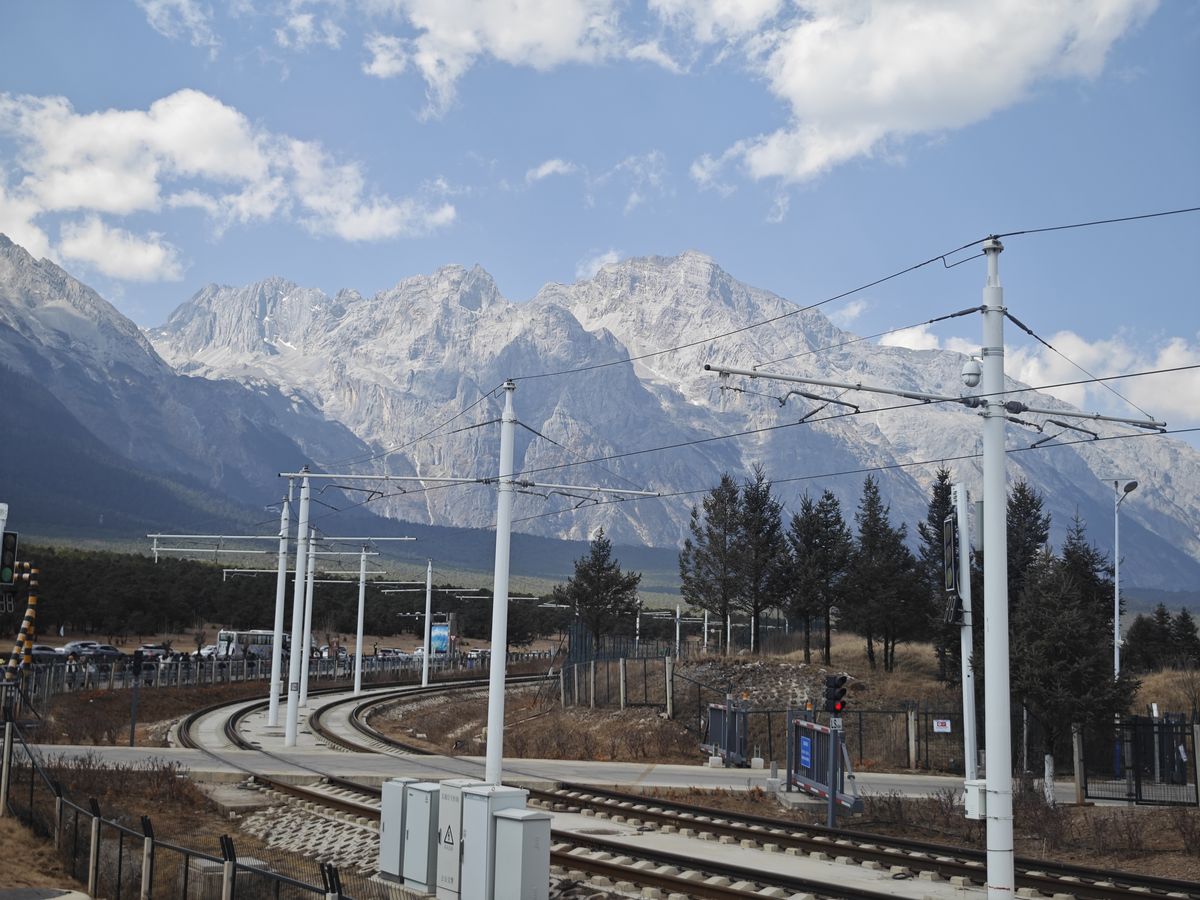
Jade Dragon Snow Mountain towers over Lijiang at about 5,600 meters — take the glacier cable car early, since real-name tickets cap out in peak season.
Alternative: if the cable car is booked or you prefer something gentler, spend the day at Baisha Village and its frescoes instead.
Day 7 — Depart or add a day
- Morning: one last wander through the old town, or the Black Dragon Pool for the classic snow-mountain reflection photo.
- Onward: fly out of Lijiang, or add a day for Tiger Leaping Gorge or Shangri-La if you’re going deeper.
Short on time? The essentials can be compressed to five days — one in Kunming, two in Dali and two in Lijiang — by skipping the Stone Forest.
The old towns in depth
The old towns are the heart of this route, and each has its own character. Dali Old Town is Bai-minority country: the town sits below the Cangshan range, its walls and gate towers framed by the mountains and its lanes lined with white-walled, grey-tiled Bai houses. The Three Pagodas of the Chongsheng Temple, at the foot of Cangshan, are the classic photo — three slim pagodas built in the Tang and Song dynasties, the oldest surviving structures of their kind in the region. Around the lake, Xizhou town holds the finest Bai courtyard architecture and a famous morning market; nearby, the west-shore villages of Erhai are where the “slow travel” reputation of Yunnan is actually lived.
Lijiang’s Dayan Old Town is a UNESCO World Heritage Site (listed 1997) and one of the most carefully preserved ancient towns in China.

Lijiang’s Dayan Old Town is a UNESCO World Heritage Site — its stone lanes and canal network look best at dawn, before the day-trippers arrive. It was built by the Naxi people, whose culture — including the world’s only surviving pictographic script, Dongba — is woven through the town’s museums and the Mu Palace. The genius of the layout is the water: canals fed by Jade Dragon Snow Mountain run through every lane, and the town was designed so the water carries a different character through each district — the sound of it is the town’s soundtrack, especially late at night when the day-trippers leave. Shuhe, ten minutes away, is the quieter satellite with the same architecture and a fraction of the crowd; Baisha, further out, holds the famous Ming-dynasty murals and the village atmosphere Dayan has lost.
Both old towns reward an early start and a late night — the streets are loveliest before the tour groups arrive and after they leave. Note that the stone lanes are genuinely hard on wheeled luggage; a backpack or a packable duffel is the smarter choice.
When to go, season by season
Yunnan’s selling point is that it is mild almost year-round, but each season has a character:
- Spring (March–May): the sweet spot — wildflowers, clear skies and the lakes at their best. March–April brings the peach and plum blossom around Erhai; this is also the busiest window, so book ahead.
- Summer (June–August): the rainy season in the highlands — afternoon showers and green-everything. Cooler than the rest of China, which makes it a good summer escape, but the mountains can be clouded.
- Autumn (September–November): the other sweet spot — dry, crisp and clear, with the best chances of a clean view of Jade Dragon Snow Mountain. October’s National Day week is the one crowd to dodge.
- Winter (December–February): dry and sunny, with cold nights; Lijiang can drop near freezing at night but days are pleasant. The snow mountain is at its most visible, and it’s the quietest, cheapest time. Avoid Chinese New Year.
A realistic budget
Yunnan is one of China’s better-value regions, and the costs are easy to predict.
- Hotels: ¥250–500 per night inside the old towns; lakeside Erhai rooms and boutique courtyards run higher (¥400–900). Seven nights roughly ¥2,500–5,000.
- Sights: the Stone Forest about ¥130; the Three Pagodas about ¥75; the Cangshan cable car ¥100–170 depending on route; Jade Dragon Snow Mountain entry about ¥100 plus the glacier cable car ¥120–180. Allow ¥500–800 total.
- Trains: Kunming–Dali ¥100–150; Dali–Lijiang ¥100–150 (second class). Intercity rail under ¥350.
- Food and local transport: ¥100–200 per day covers meals, e-bike rental and the odd taxi; the old towns’ cafés and night markets are the pleasant splurge.
A realistic 7-day mid-range total, excluding flights into and out of the region, is roughly ¥4,000–7,000 per person. All figures are estimates — confirm current cable-car and park prices.
Common mistakes to avoid
- Booking the Jade Dragon cable car too late. The glacier cable car is real-name and capped; in spring and autumn it sells out, and a sunny day with no ticket is the classic disappointment.
- Walking the old towns at midday. Dayan and Dali are transformed by crowds from mid-morning; do the main lanes at dawn or dusk instead.
- Forgetting the altitude in Lijiang. At about 2,400m, the first day should be gentle; heading straight up the mountain on arrival day is asking for a headache.
- Dragging a suitcase over the stone lanes. The old towns are pedestrian and cobbled; a backpack or soft duffel saves hours of frustration.
- Trying to fit the Stone Forest into a tight day. It’s 90 minutes each way from Kunming — a full day by itself; skipping it is a perfectly good choice if you’re heading to Guilin’s karst later.
- Assuming the weather on the mountain matches the town. Jade Dragon Snow Mountain makes its own microclimate; check the cable-car status and be ready to swap days if the summit is clouded.
Getting around
The high-speed rail line Kunming–Dali–Lijiang ties the route together: about 2 hours between Kunming and Dali and another 2 hours to Lijiang, with frequent services. Book with your passport via Trip.com or 12306. How to book trains.
Inside the region, Dali is best explored on two wheels — renting an e-bike or bicycle and riding the flat west shore of Erhai past Xizhou and the villages is the highlight for many travelers; a car with a driver is the comfortable alternative if you’d rather not pedal. Lijiang’s Dayan and Shuhe are walkable, and taxis or Didi cover the longer hops (to Baisha, the Black Dragon Pool, or the snow mountain). The old towns themselves are pedestrian zones — leave the car at the edge and walk in.
Practical tips
- Altitude: Lijiang sits at about 2,400m and the mountain higher. Go slowly the first day, drink water, and skip alcohol until you’re adjusted.
- Book trains with your passport on the Kunming–Dali–Lijiang line — how to book.
- Payment and data: set up Alipay and an eSIM before you fly. Alipay · eSIM.
- Hotels: stay inside the old towns in Dali and Lijiang for the atmosphere, but note the lanes can be noisy — ask for a quiet room.
Where this route fits
Yunnan works as a relaxing add-on to a longer China trip or as a destination in its own right — the mild weather makes it a good first stop, and it pairs well with the Sichuan route to the north. Start from the first-timer planner to see where it fits your overall plan.
FAQ highlights
- Is Yunnan safe and easy for a first-timer? Yes — it’s tourist-friendly with a slower pace than the east.
- Do I need to speak Chinese? Old towns are used to foreigners; a translation app covers everything else.
- Can I ride horses or rafts in the countryside? Yes, at Erhai and near Lijiang — agree the price before you go.
Last updated: August 2026. Train times and cable car availability change — confirm before you travel.
Frequently Asked Questions
How many days do I need for the Yunnan classic route?
Seven days is comfortable: one or two in Kunming, two in Dali and three in Lijiang. If you're short on time, cut Kunming to a day and do the Stone Forest as an optional day trip.
Which direction should I do the route in?
Kunming → Dali → Lijiang works northward and is the standard flow. The trains are short and frequent, so the order doesn't matter much — many travelers also fly straight into Lijiang and work south.
Is the Stone Forest worth a full day?
It's striking — a huge karst forest of limestone pillars — but it's a 90-minute trip each way from Kunming, so it costs a full day. If you're heading to Guilin's karst later, you can skip it. See our [Kunming guide](https://chinotrips.com/kunming/).
Can I do Dali and Lijiang without rushing?
Yes — two days in Dali (Erhai Lake, old town, Cangshan) and two or three in Lijiang (old town, Jade Dragon Snow Mountain) is the relaxed way to do it. That's the point of this route.
What's the best season for Yunnan?
Yunnan is mild almost year-round, but spring (March–May) and autumn (September–November) are the sweet spots. Summer brings rain to the highlands; winter is dry and crisp. See our [weather guide](https://chinotrips.com/how-to/weather-packing-by-season/).