Tibet: Lhasa, Namtso & Nyingchi in 8 Days
A deep Tibet itinerary beyond the first visit — the Potala and Jokhang in Lhasa, the sacred lake at Namtso, and Nyingchi's green valleys.
OpenStreetMap Google Maps (opens externally)
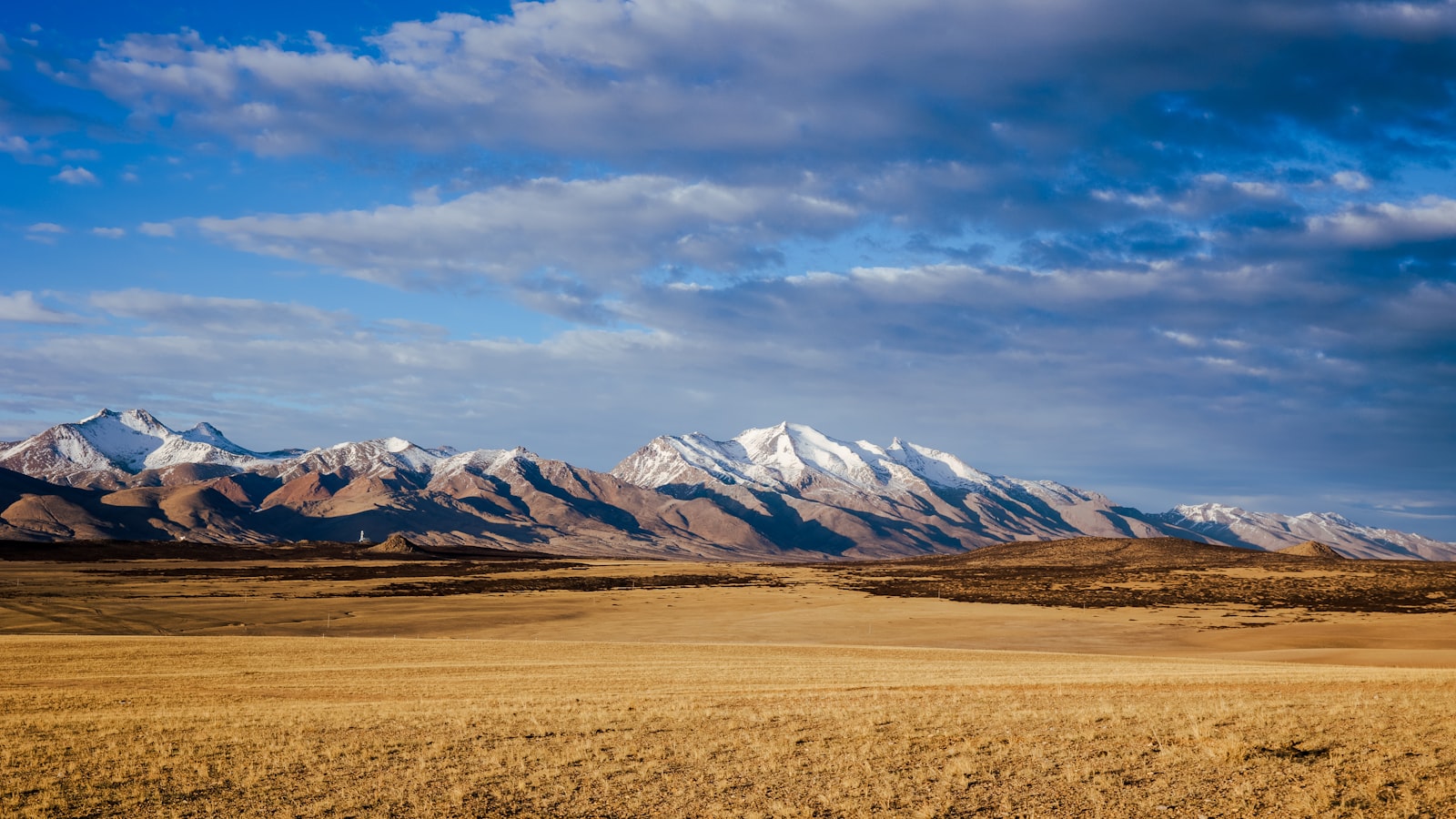
Tibet is the trip that changes how you see China — an entire world of monasteries, lakes and mountains that feels a country away from Beijing or Shanghai. This eight-day route covers the essential Lhasa, the sacred lake at Namtso, and the gentler green valleys of Nyingchi, with the permit and altitude questions answered up front.
The route at a glance
| Day | Stop | Focus |
|---|---|---|
| 1 | Lhasa | Arrive, acclimatize |
| 2 | Lhasa | Potala, Jokhang, Barkhor |
| 3 | Lhasa | Sera & Drepung monasteries |
| 4 | Yamdrok Lake | Day trip from Lhasa |
| 5 | Namtso | The sacred lake |
| 6 | Lhasa → Nyingchi | Fly or drive |
| 7 | Nyingchi | Peach valleys & the gorge |
| 8 | Nyingchi → depart | Fly out via Lhasa |
Before you book — the permit
Foreign travelers need a Tibet Travel Permit, arranged through a registered agency and usually tied to your tour or transport booking. Leave 3–5 days for the paperwork and carry it with your passport at all times. Full details: Lhasa & Tibet guide.
Days 1–3 — Lhasa
- Day 1: land, check in, and do almost nothing — altitude is the only boss today.
- Day 2: the Potala Palace in the morning (book the timed slot early), then the Jokhang Temple and the pilgrim circuit of Barkhor Street.
- Day 3: the Sera Monastery debating monks in the afternoon and the Drepung Monastery — Tibet’s largest — for the morning.
Day 4 — Yamdrok Lake
A day trip to Yamdrok Lake (羊卓雍措) — one of Tibet’s three great sacred lakes, turquoise and ringed by snow peaks. A relaxed drive-and-stop day that eases you into higher ground.
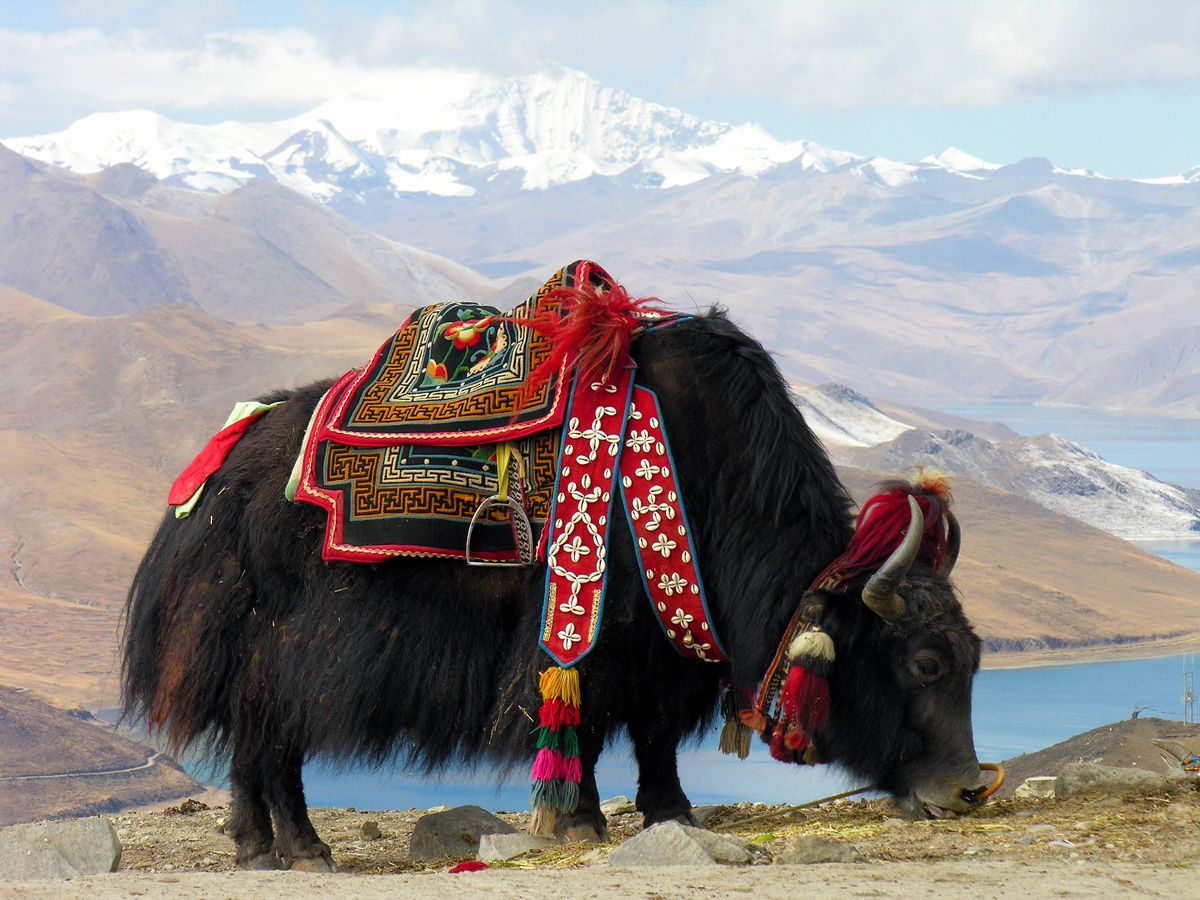
Yamdrok Lake’s turquoise water and ring of snow peaks are the classic half-day trip from Lhasa — a gentle introduction to the plateau’s altitude.
Day 5 — Namtso
Drive to Namtso — the highest great salt lake in the world (4,700m), with the Tashi Dor peninsula. Go slow, breathe, and let the lake do the talking. Some travelers return to Lhasa the same day; an overnight near the lake is unforgettable but tougher at this altitude.
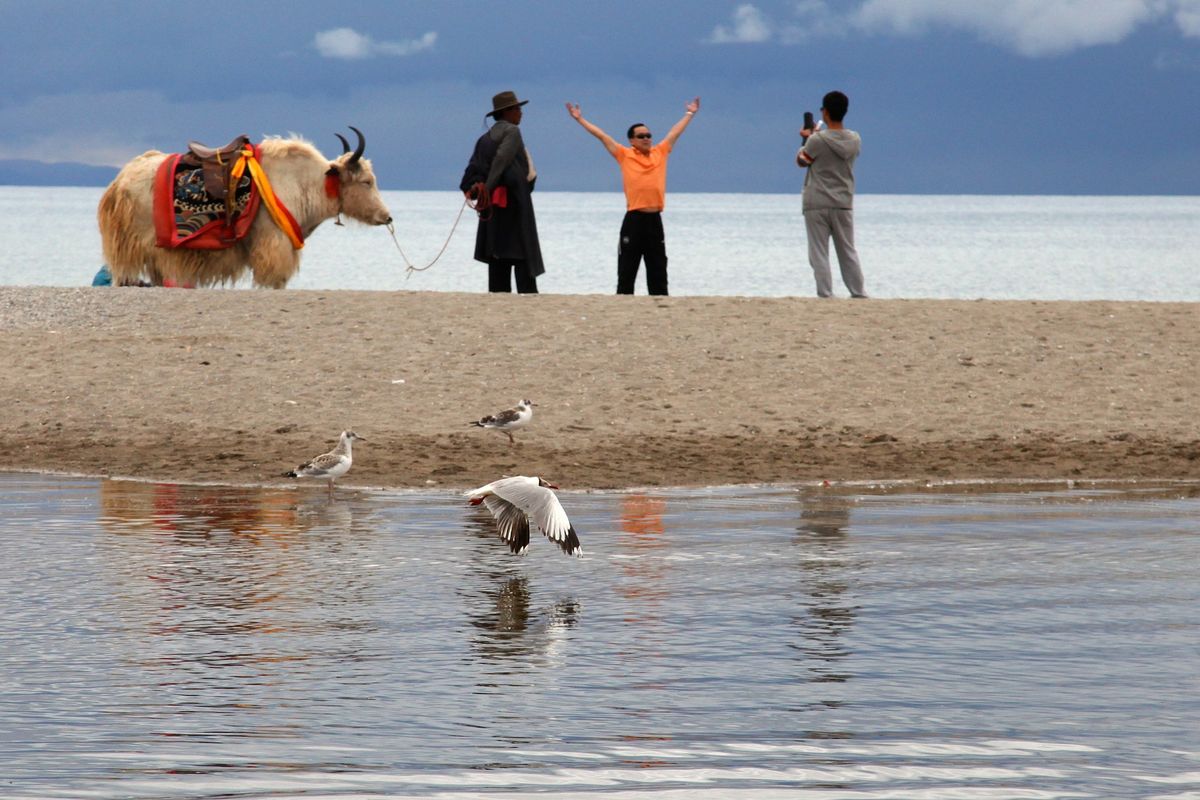
Namtso, the world’s highest great salt lake at 4,700 meters, is the route’s most remote stop — many travelers wisely take it as a long day trip rather than an overnight.
Days 6–8 — Nyingchi
Fly or drive to Nyingchi, Tibet’s greenest corner — lower altitude, pine forests, and the Yarlung Tsangpo Grand Canyon. In late March to April, the peach blossom valleys are world-class. Days 6–8 are the calm finale: a river gorge walk, a forest monastery, and the flight out (via Lhasa or direct from Nyingchi’s new airport).
More time? Add Mount Kailash on the pilgrimage circuit for the full epic — a longer, harder trip best saved for a second Tibet visit.
Altitude in depth
Altitude is the defining practical reality of a Tibet trip, and it deserves a proper plan rather than crossed fingers. Lhasa sits at 3,650 meters, Yamdrok Lake around 4,400, Namtso at about 4,700, and Nyingchi drops to a friendlier 2,800–3,000. The rule of thumb is to gain altitude gradually and give your body a full day to adjust at each new level — which is exactly why this route builds in a rest day one and keeps Nyingchi for the finish.
Expect some symptoms even if you’re fit: headache, fatigue, disturbed sleep and reduced appetite are all normal in the first 24–48 hours. What helps: land and go slowly, sleep early, drink far more water than feels natural, avoid alcohol and heavy meals, and keep the first day’s walking minimal. Diamox (acetazolamide) is commonly used by first-timers to ease acclimatization — talk to a doctor before you travel, as it needs a prescription and has side effects. If symptoms are severe, or you develop breathlessness at rest, confusion or a persistent cough, that is a medical emergency (possible HAPE/HACE) — descend immediately and get to a hospital. Lhasa has a good People’s Hospital with an emergency department experienced in altitude illness.
Most travelers acclimatize fine on this route’s gentle arc. The mistake is doing too much too fast: going straight from arrival to a high pass, or sleeping at Namtso’s 4,700m on day two. This itinerary deliberately fronts-loads the easy days and leaves the highest overnight as an option, not a requirement.
Lhasa in depth
The three classic Lhasa sights reward more than a photo stop. The Potala Palace began as a 7th-century fort of the first great Tibetan king, Songtsen Gampo, and took its present form in the 17th century when the Fifth Dalai Lama built the White Palace and the Red Palace above it. It is effectively a vertical museum: more than a thousand rooms stacked over 13 stories, housing the tombs of past Dalai Lamas, thousands of murals and the treasures of Tibetan Buddhism. Entry is strictly timed and capacity-limited, slots can sell out days ahead, and you climb a long ramp to the entrance — at 3,650m, take it slowly.
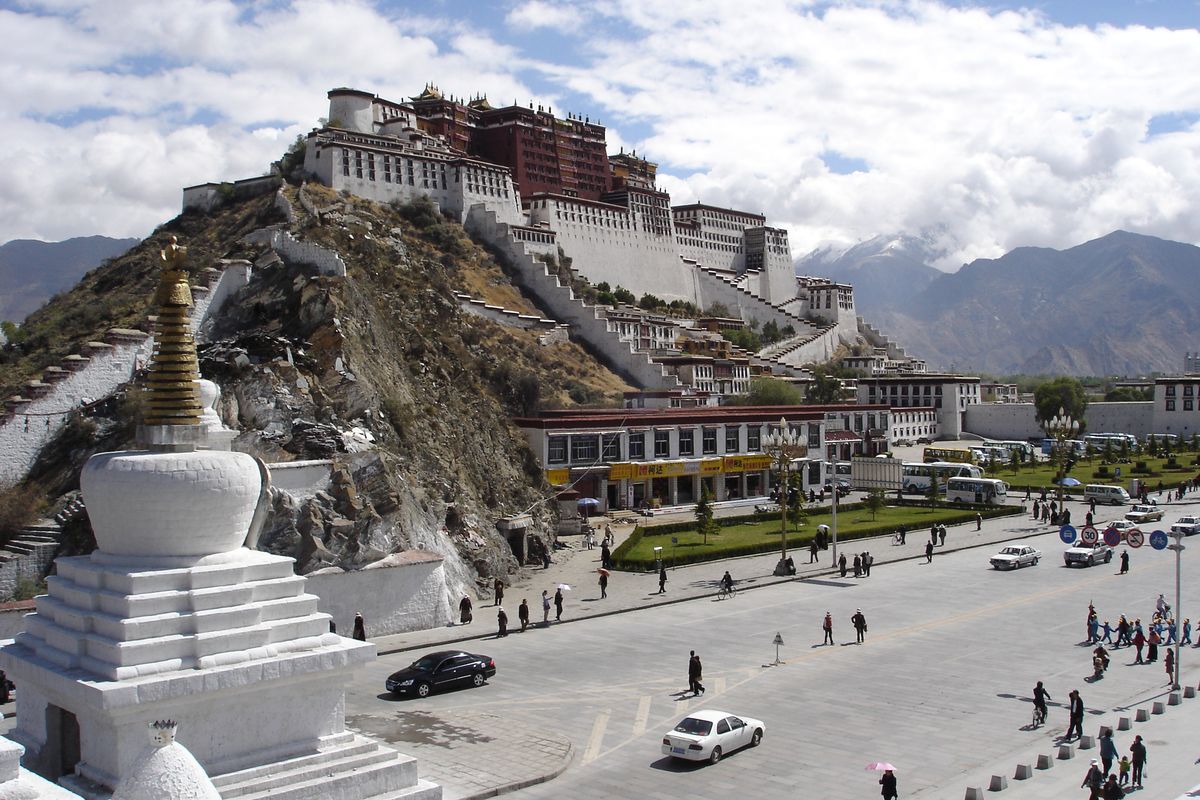
The Potala Palace, the 13-story heart of Lhasa, is the symbol of Tibet — book the timed entry slot well ahead, because it sells out in season.
The Jokhang Temple, founded in the 7th century, is the holiest shrine in Tibet, and its gold-roofed main hall is the destination of pilgrims who prostrate the entire way across the Barkhor. Barkhor Street — the pilgrim circuit that rings the temple — is where you see Tibetan devotion at its most direct: the crowd moving clockwise, prayer wheels spinning, incense rising from the rooftop shrines. Allow the whole circuit plus a rooftop visit.
The two great Gelug monasteries sit on the outskirts. Drepung, once Tibet’s largest monastery with up to 10,000 monks, spreads across a hillside west of the city; Sera, to the north, is the home of the famous monks’ debates in its courtyard in the afternoon — the best-known single spectacle of Tibetan monastic life. Both are about 30–40 minutes from the center, and both need a couple of hours.
When to go, season by season
- May–June: the sweet spot for clear skies, green valleys and moderate crowds. The weather is warm by day, cool at night, and the passes are usually open.
- July–August: the warmest and wettest months. Afternoon rain is common and the roads can be affected, but the valleys are at their greenest and this is peak (and most crowded) season.
- September–October: the other sweet spot — dry, clear and crisp, with autumn color in Nyingchi. October is popular, so book ahead.
- November–April: cold, with Lhasa hovering near freezing at night and some high passes or sites limited by snow. Far fewer travelers, cheaper hotels — and the Potala and Jokhang are as powerful in winter light. Check with your agency that all planned routes are open.
A realistic budget
Tibet is one of the more expensive corners of China to travel, mainly because of permits, transport and the required use of agencies. These are planning estimates:
- Permits and agency arrangements: a Tibet Travel Permit is arranged through a registered agency, usually bundled with your transport and often a driver. The full-service 8-day package (permit, private vehicle, driver, hotels) typically runs ¥8,000–15,000 per person depending on standard and group size; joining a small group tour is cheaper, a private vehicle for a couple is at the higher end.
- Hotels (if booked separately): Lhasa mid-range ¥300–600 per night; Nyingchi similar.
- Sights: Potala about ¥200 in season (confirm; it has tiered pricing); Jokhang about ¥85; Sera and Drepung about ¥50 each; Namtso and Yamdrok have entry and sometimes environmental fees of roughly ¥50–120.
- Flights: Lhasa–Nyingchi ¥600–1,000 if you fly rather than drive.
All figures change with season and demand — confirm current pricing with your agency.
Common mistakes to avoid
- Skipping the acclimatization day. The route exists because the first 24 hours matter; arriving and driving straight to a 4,700m lake is how travelers end up miserable or worse.
- Booking the Potala slot too late. Timed tickets for the palace sell out; your agency or hotel should book it the moment your dates are confirmed.
- Drinking alcohol in Lhasa. The altitude amplifies everything; most people regret even one beer on the first night.
- Underestimating sun and dryness. The high-altitude sun burns fast and the air is arid — sunscreen, lip balm and sunglasses belong in your day bag.
- Planning Namtso as a mandatory overnight. The sunset near the lake is unforgettable, but at 4,700m a bad night ruins the next day; many travelers sensibly choose the day-trip version.
- Traveling without the permit “because it’s cheaper.” It isn’t — checkpoints are common and the consequences of being caught without the permit are serious. Always travel with it and your passport.
Getting around Tibet
Outside Lhasa, travel is by private vehicle with a driver, arranged through your agency — the roads are good but long, the passes are high, and having a driver who knows the weather is part of the safety system. Lhasa to Yamdrok is a half-day loop; Lhasa to Namtso about four hours each way; Lhasa to Nyingchi a full day by road, or a short flight if you’d rather save the time. Within Lhasa, taxis and Didi cover everything; the city’s streets are flat enough to walk between the Jokhang area and the old quarter.
The other classic option is the Qinghai–Tibet Railway from Xining — about 20 hours on the world’s highest rail line, with the advantage of gradual acclimatization and scenery (grasslands, the Tanggula Pass, wildlife) that flights skip over. Book rail with your passport. How to book trains.
Practical tips
- Book Lhasa hotels and the Potala slot well ahead — they sell out, especially May–October.
- Money: cards are hit-and-miss; carry some cash and set up Alipay for most payments. Payment guide.
- Dress for four seasons in one day — sun, wind, rain and cold all happen. Layers and sunscreen are essential.
- The Qinghai–Tibet Railway is the scenic way in — the high passes and grasslands from Xining to Lhasa are part of the experience.
Where this route fits
Tibet is a serious, once-in-a-lifetime trip — most travelers do it as a standalone journey rather than bolting it onto a first China visit. Start from the first-timer planner for the overall plan.
FAQ highlights
- Can I travel Tibet independently? Increasingly, yes with the permit, but most first-timers use an agency for transport and permits.
- Is the Potala Palace worth it? It’s the symbol of Tibet — the morning light on the red-and-white palace is unforgettable, and the interior is stunning.
- What should I bring? Sunscreen, lip balm, warm layers, a scarf for temple visits, and a sense of patience with the altitude.
Last updated: August 2026. Permit rules and flight schedules change — confirm with your agency before you travel.
Frequently Asked Questions
Do I need a permit to travel in Tibet?
Yes — foreign travelers need a Tibet Travel Permit, arranged through a registered agency (usually bundled with your tour or transport). Some regions need additional permits. Budget a few days for the paperwork and never travel without it. Read our [Lhasa & Tibet guide](https://chinotrips.com/lhasa-tibet/) carefully before booking.
How many days should I spend in Lhasa?
At least three full days to acclimatize and see the main sights: the Potala Palace, Jokhang Temple and Barkhor Street, plus a monastery or two (Sera's debating monks are the classic). Our [Lhasa guide](https://chinotrips.com/lhasa-tibet/) has the day-by-day.
How do I deal with the altitude?
Take it slow: land in Lhasa, sleep early, no alcohol, drink water, and give yourself a full rest day before any hiking. Namtso at 4,700m is the highest stop — consider a day trip rather than an overnight if you feel it. Diamox (acetazolamide) is common for first-timers; check with a doctor.
How do I get to Tibet?
Fly into Lhasa Gonggar Airport, or take the Qinghai–Tibet Railway from Xining — one of the world's great train journeys. Flying is faster but the train lets you acclimatize gradually. Book rail with your passport. [How to book trains](https://chinotrips.com/how-to/train-tickets/).
Is Nyingchi worth the extra days?
Nyingchi is Tibet's gentlest corner — lower altitude, forests, the Yarlung Tsangpo gorge and, in late March–April, the famous peach blossom valley. If you have eight days, it's the perfect calm finish after Lhasa and the lakes.