
Huangshan Deep Guide: Sunrise, Cloud Sea & the Five Peaks (2026)
The deep guide to Huangshan — the sunrise above the sea of clouds, the famous pines, the five peaks and the West Sea Canyon, plus the two-day hiking plan.
OpenStreetMap Google Maps (opens externally)
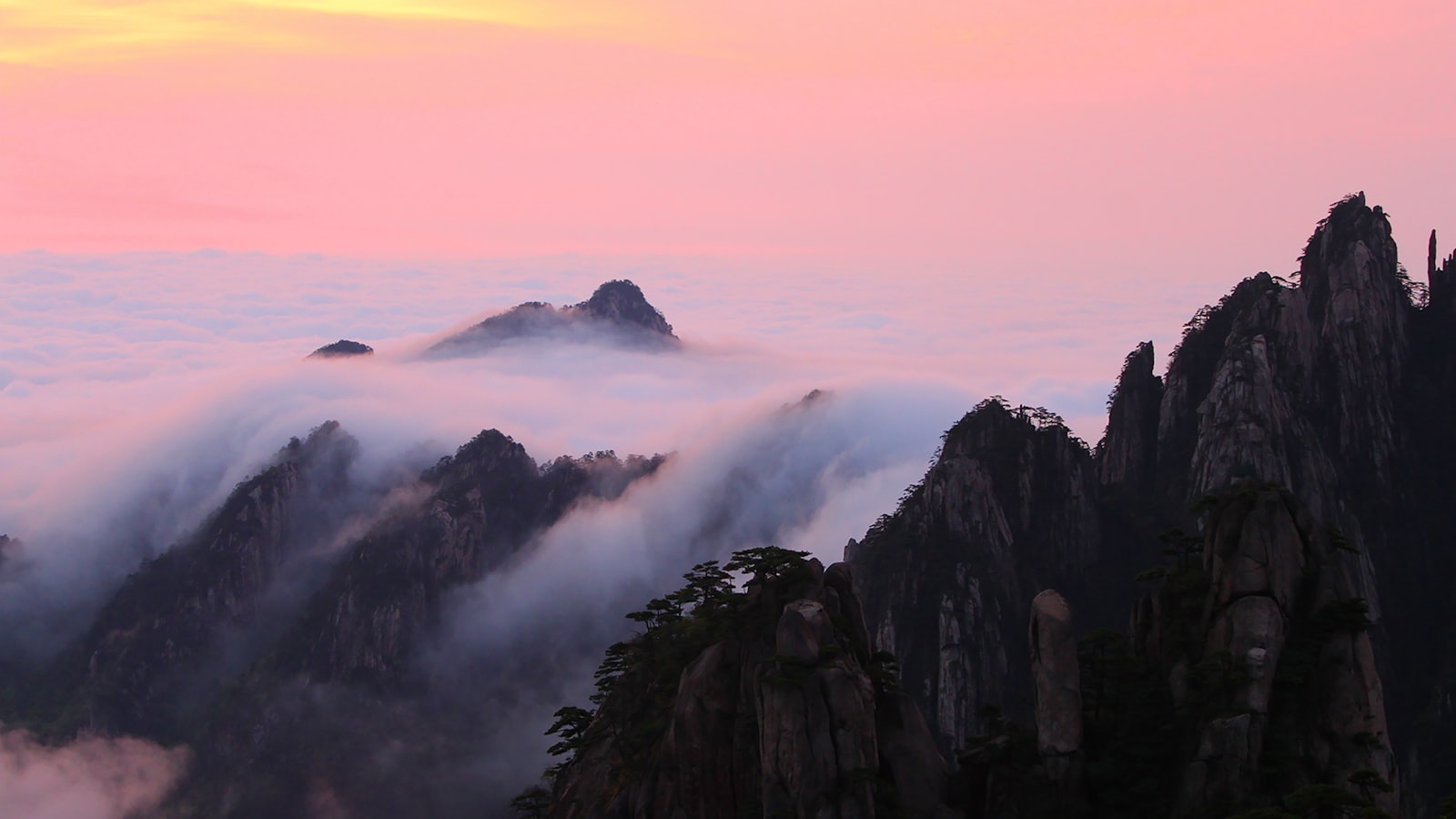
Huangshan — the ‘Yellow Mountain’ — is the mountain of Chinese painting: granite peaks above a sea of clouds, wind-shaped pines, and the sunrise that turns it all golden. Here’s the deep guide to hiking it.
Huangshan has shaped Chinese art and travel for a thousand years. The granite peaks rising from the clouds, the pines shaped by the wind into their famous forms, and the sunrise over the sea of clouds — this is the landscape that created the visual tradition of East Asian painting, and walking it is like walking inside a painting. A visit combines the peaks, the stairways and the pines — and, for those who stay, the summit sunrise that defines the mountain.
The signature experience: sunrise over the cloud sea
- The summit overnight — the key to the sunrise, at the mountain’s hotels.
- The vantage points — the Bright Summit and the other viewpoints.
- The moment — the peaks emerging from the cloud sea as the sun rises.
- The reward — the image that defines Huangshan, worth the early start.
The sunrise is the signature — and the reason to spend the night on the mountain.
The peaks and the pines
- The named peaks — the Lotus Peak, the Bright Summit and the summit network.
- The pines — the wind-shaped trees, the ‘Welcoming Pine’ and the others.
- The stairways — the stone steps connecting the peaks, the walking of the mountain.
- The views — the peaks rising from the clouds in every direction.
The peaks and the pines are the classical Huangshan — the landscape of Chinese art.
The West Sea Canyon
- The modern loop — the walk through the western summit area.
- The cliffs and the views — the granite and the canyon below.
- Less crowded — the newer, quieter side of the mountain.
- A full afternoon — the best walking on Huangshan, worth the stairs.
The West Sea Canyon is the modern Huangshan — the spectacular walk that fewer visitors take.
The two-day plan
- Day one — cable car up, the peaks, the viewpoints and the canyon; overnight on the mountain.
- Day two — the sunrise, the remaining highlights, cable car down.
- Book the summit hotel ahead — it sells out, especially in season.
- The weather — check the forecast; the clearest days are the reward.
Two days is the right amount — the mountain deserves the time, and the sunrise needs the night.
The mountain in Chinese culture
Huangshan’s influence on Chinese culture is difficult to overstate. For a thousand years, its peaks, pines and mists have been the model for the shanshui (“mountain-water”) tradition of painting — the ink landscapes that defined East Asian art. The mountain’s name comes from a legend: it was said to be the mountain where the Yellow Emperor (Huangdi), the legendary ancestor of the Chinese people, sought the elixir of immortality. Artists and poets made the pilgrimage for centuries, and the mountain became the standard against which all other landscapes were measured. Walking its stairways is walking through the images that shaped how the world has imagined China.
- The shanshui tradition — the mountain as the model for the ink landscape painting of East Asia.
- The legend — the Yellow Emperor’s search for immortality on the peak.
- The pilgrims — the artists and the poets who made the journey for centuries.
- The standard — the mountain against which other landscapes were judged.
The cable cars and the route in practice
The practical geography of Huangshan is simple once you know the three cable cars. The Yungu cable car on the east side is the busiest and the most common choice for a first visit; the Ciguang cable car on the south side climbs toward the famous front peaks; the Taiping cable car on the north serves the West Sea side. For the classic two-day plan, most visitors take one cable car up, walk the summit network, stay the night near the Bright Summit, and take a different cable car down — so the walk does not retrace itself. The summit area is a compact network of stairways connecting the peaks, and the whole of it is walkable in a long day.
- The three cable cars — Yungu (east), Ciguang (south), Taiping (north).
- The loop — up one side, across the summit, down the other.
- The summit network — the peaks connected by the stairways, walkable in a long day.
- The overnight — the hotels cluster near the Bright Summit, for the sunrise.
What to pack for the summit
The mountain’s weather is a world of its own, and packing is a serious matter. Even in the warmer months, the summit runs cool, windy and changeable — a day that starts sunny can turn to mist and drizzle within the hour. The essentials: layers (a warm mid-layer and a windproof shell), a rain jacket, and good, broken-in walking shoes with grip for the wet stone stairs. For the sunrise, a headlamp or torch is genuinely useful for the pre-dawn walk to the viewpoint, and a lightweight walking pole helps the knees on the long descents.
- Layers and a shell — the summit is cool, windy and changeable year-round.
- Rain gear — the mist and the drizzle arrive fast.
- A headlamp — essential for the pre-dawn sunrise walk.
- Grippy shoes and a pole — the wet stone stairs and the long descents demand them.
Beyond the mountain: Huizhou villages and the old town
Huangshan sits in the heart of the old Huizhou region, and the lowlands around the mountain hold treasures of their own. The UNESCO villages of Hongcun and Xidi are the most famous — the white-walled, black-tiled Huizhou houses reflected in the water ponds, the landscape of the classic Chinese paintings. Tunxi old street, in the city of Huangshan itself, is a restored Ming-era street of tea houses, ink shops and food stalls. Together they round out a trip — the mountain in the sky, and the villages and the tea country below.
- Hongcun and Xidi — the UNESCO Huizhou villages, water and white walls.
- Tunxi old street — the restored Ming street of tea and food.
- The Huizhou architecture — the white walls and the black tiles, the classic style.
- Tea country — the hills around Huangshan grow some of China’s finest green tea.
Budget and practical planning
Huangshan is a moderately priced trip by Chinese standards, with the big costs being the cable cars, the summit accommodation and the transport. The summit hotels are the key planning point — they sell out far in advance in the seasons, and the prices reflect the logistics of running a hotel on top of a mountain. Getting to the mountain is easy by high-speed rail to Huangshan North station, followed by a shuttle to the cable-car base. Spring and autumn are the seasons for the clearest skies and the cloud sea.
- The summit hotels — book far ahead; they sell out and the prices are premium.
- The cable cars — the main transport cost on the mountain.
- Getting there — high-speed rail to Huangshan North, then the shuttle.
- The seasons — spring and autumn for the clearest skies and the best cloud sea.
Practical notes
- Getting there — high-speed rail to Huangshan, then a shuttle to the mountain.
- Best season — spring and autumn for the clearest skies.
- The walking — stairs and cable cars; good shoes and a pole help.
- Get connected — set up Alipay and an eSIM for tickets and booking. See our Huangshan guide for the logistics.
The bottom line
Huangshan is the mountain of Chinese painting — the granite peaks above the sea of clouds, the wind-shaped pines and the sunrise that turns it all golden. Spend two days on the mountain, stay the night for the sunrise, walk the peaks and the canyon — and you’ll understand why the ‘Yellow Mountain’ has inspired a thousand years of Chinese art.
Last updated: August 2026. Access and conditions change — confirm current details before you go.
Frequently Asked Questions
What makes Huangshan special?
Huangshan — the 'Yellow Mountain' — is the mountain of Chinese painting: the granite peaks rising from a **sea of clouds**, the **wind-shaped pines** clinging to the rock, and the **sunrise** that turns the whole scene golden. It's the landscape that inspired the 'shanshui' (mountain-water) tradition of East Asian art, and it's one of the most beautiful places in China. A visit combines the peaks, the stairways and — for those who stay — the summit sunrise.
Is the sunrise worth the summit overnight?
Yes — the **sunrise above the sea of clouds** is the signature Huangshan experience, and it requires staying on the mountain the night before. From the summit vantage points, the peaks emerge from the cloud sea below as the sun rises — the image that defines the mountain. The summit hotels are basic and book out early, but the early-morning reward is unforgettable. If you can stay one night on the mountain, it's the right call.
What are the five peaks?
Huangshan's famous named peaks include the **Lotus Peak** (the highest, 1,864 m), the **Bright Summit** (a viewing point famous for the sunrise and the cloud sea) and the other principal peaks around the summit area, connected by the network of stone stairways. 'Five peaks' evokes the classical naming of the mountain's principal summits; the practical thing is that the summit area is a walkable network of peaks, views and pines.
How do I plan the two-day visit?
**Day one**: cable car up (either side), walk the summit area — the peaks, the viewpoints, the West Sea Canyon — and stay overnight on the mountain. **Day two**: catch the sunrise, walk the remaining highlights, and cable car down. It's the classic two-day plan, and it gives the mountain the time it deserves. Book the summit hotel well ahead — it sells out. See our [Huangshan guide](https://chinotrips.com/huangshan/) for the logistics.
What is the West Sea Canyon?
The **West Sea Canyon** is Huangshan's modern loop — a spectacular walk through the western part of the summit area, with the granite cliffs, the pines and the views over the canyon below. It's newer than the classical peaks and less crowded, and it's often cited as the best walking on the mountain. It adds a full afternoon of walking to a two-day visit, and it's well worth the stairs.
How hard is the walking on Huangshan?
**Strenuous but manageable** — the mountain is a network of stone stairways connecting the peaks, and the walking is relentlessly up and down. The cable cars handle the big vertical moves, and the walks between the viewpoints are the exercise. Good fitness, comfortable shoes and walking poles make it far easier. It's not a wilderness trek — it's a stair-climbing day on the most beautiful staircase in China.
When is the best time to visit?
**Spring and autumn** are the best — clear skies, mild weather and the highest chance of the cloud sea. **Autumn** is the classic: the crisp air and the golden light. **Winter** is dramatic (the frozen pines and the snow) but cold and sometimes icy on the stairs. **Summer** is crowded and often cloudy. For the sunrise and the views, the shoulder seasons are the sweet spot.