
Huangshan Travel Guide (2026): Peaks, Clouds & Sunrise
Huangshan guide — granite peaks, sea of clouds, sunrise, cable cars and the West Sea Grand Canyon, plus a 2-day plan staying overnight on the mountain.
OpenStreetMap Google Maps (opens externally)
Huangshan — the Yellow Mountains — is China’s most famous mountain range: granite peaks, gnarled pines and a sea of clouds that has inspired painters for centuries.
This guide covers the essentials: the must-see sights, a 2-day plan with an overnight on the summit, how to get here, and what to know before you climb.
Overview
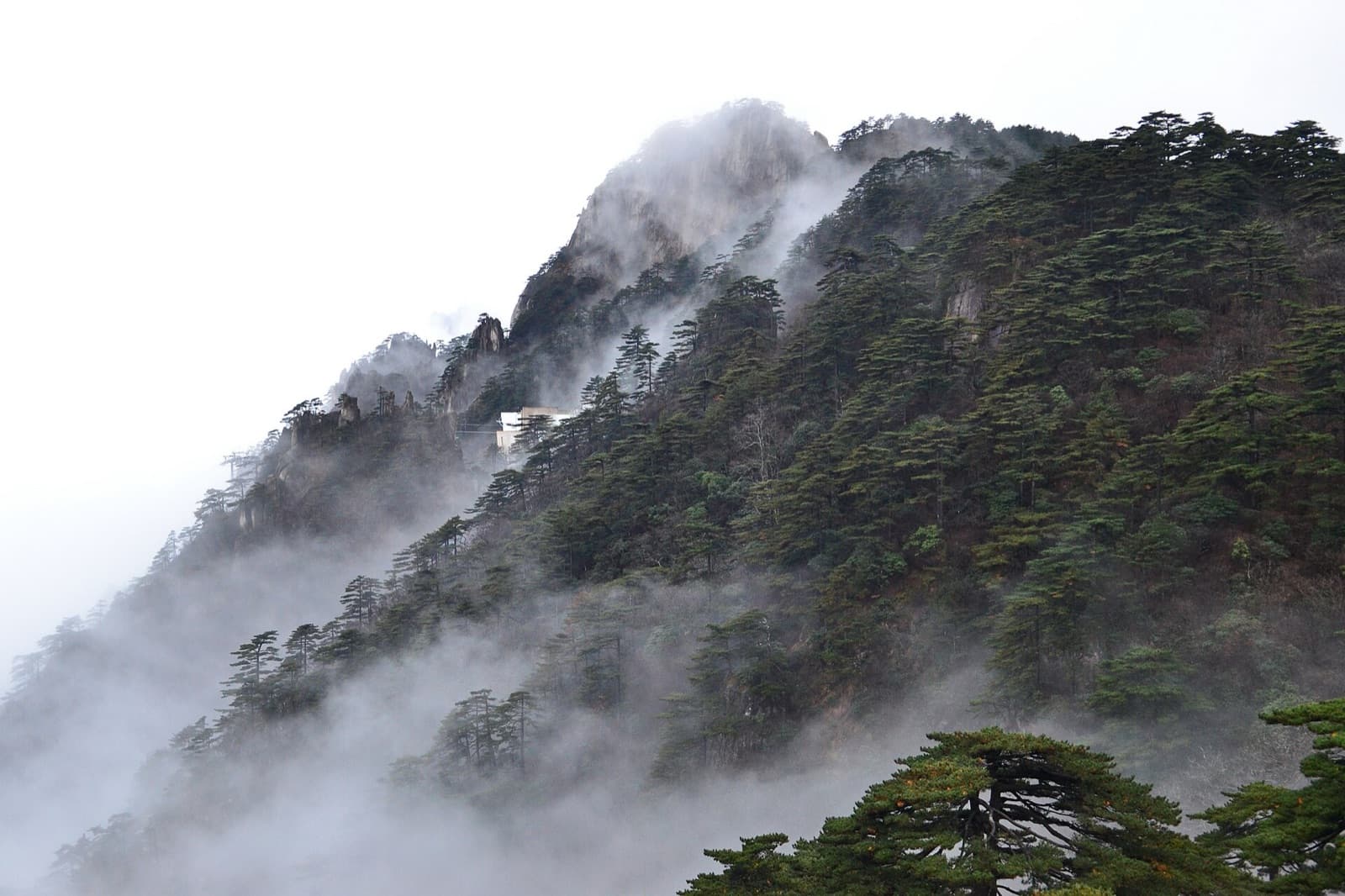
Huangshan (literally “Yellow Mountain”), in southern Anhui province, is the most famous mountain in Chinese art — its oddly shaped pines, dramatic granite peaks and swirling clouds appear in scroll paintings dating back over a thousand years. The UNESCO World Heritage Site, listed in 1990, is built around dozens of named peaks; the tallest, Lotus Peak, reaches about 1,864 meters. The mountain’s beauty changes hour by hour — sunrise, mist, and the famous sea of clouds, when the peaks poke through a white ocean of cloud below.
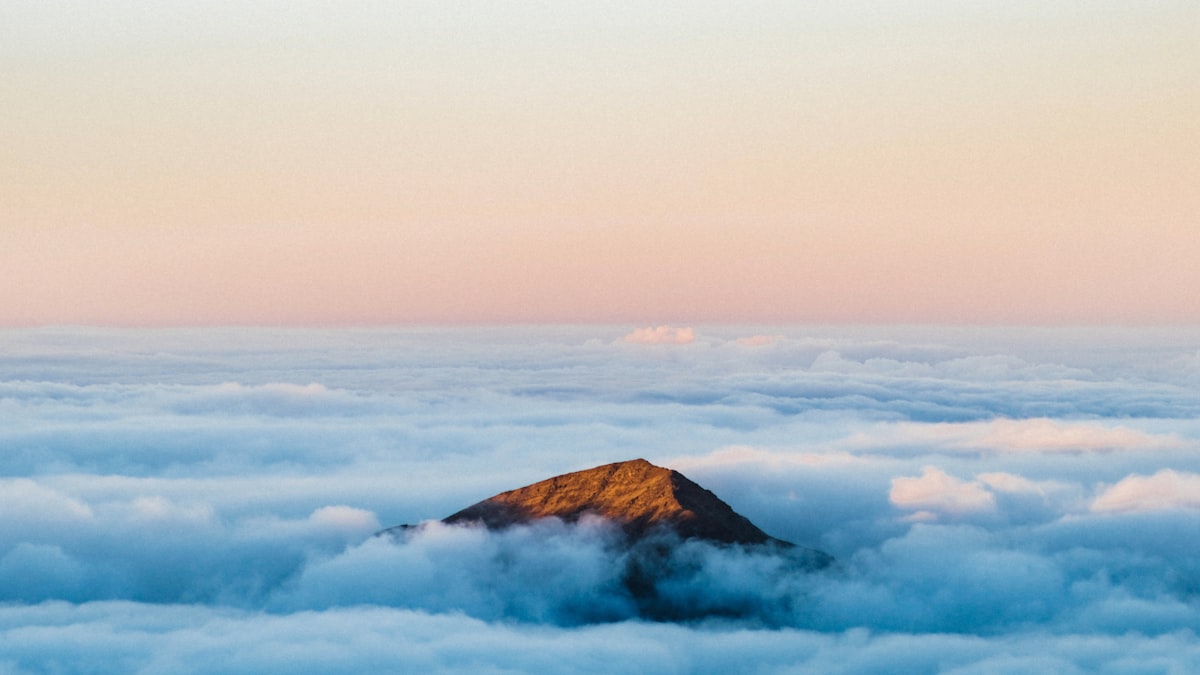
The sea of clouds rolling between Huangshan’s granite peaks is the mountain’s signature view — best seen at dawn in autumn.
Unlike many Chinese mountains, Huangshan rewards a proper visit. An overnight stay on the summit is almost essential if you want to catch sunrise and sunset, when the day-trip crowds thin out.
How many days
2 days is the standard plan, and it includes an overnight on the mountain. A workable route:
- Day 1: cable car up from the east (Yungu), walk to the Beihai area, explore the West Sea Grand Canyon, and stay overnight at a summit hotel.
- Day 2: sunrise at Guangmingding (Bright Top) or the Beihai viewpoints, then take the Yuping cable car down past the Welcoming Pine and the front-side peaks.
This keeps the walking within reach of average fitness, with cable cars doing the heavy lifting. Fit hikers can replace the cable cars with the two- to three-hour stone stair climbs instead.
Suggested itinerary
A 2-day plan:
- Day 1 — Up the mountain: take the cable car up, walk the West Sea Grand Canyon loop, and stay overnight in the Beihai area for the sunrise.
- Day 2 — Sunrise & the classics: dawn at Guangmingding for the sea of clouds, then the odd-shaped pines around Beihai before descending.
Have more time? Add Hongcun village at the base, one of the best-preserved Anhui villages. Huangshan is the anchor of an Anhui route.
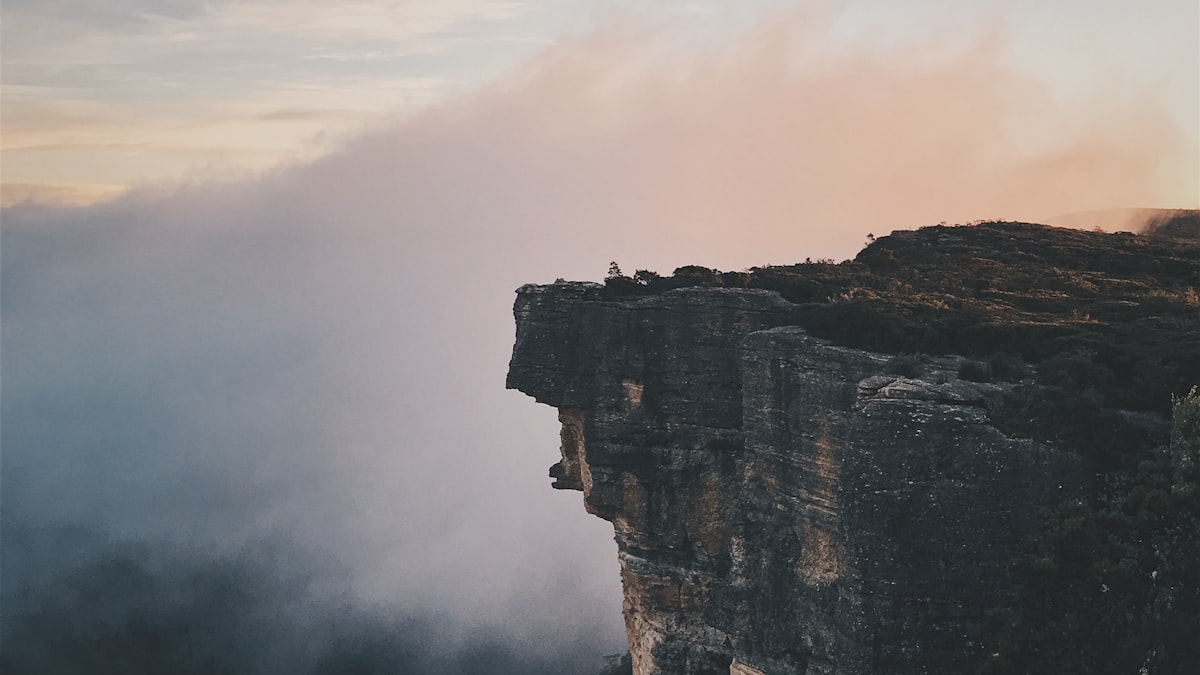
The West Sea Grand Canyon is Huangshan’s most dramatic trail — a loop of near-vertical stairs, ridgelines and suspension bridges (closed in winter).
Best time to visit
- Autumn (October–November): the classic — clear skies and the best odds of sunrise and a sea of clouds.
- Spring (April–May): fresh green and wildflowers, with more mist.
- Summer (June–August): busy and often cloudy or rainy; cooler than the plains below but still crowded.
- Winter (December–February): snow and rime ice make the peaks otherworldly and it’s quieter — but cold, and the West Sea Grand Canyon closes roughly December to March.
Top sights
- The sea of clouds — the signature Huangshan experience: from the peaks in early morning, cloud settles in the valleys below like an ocean. Best odds in autumn and after rain.
- West Sea Grand Canyon — the most dramatic trail on the mountain, a loop of near-vertical stairs, ridgelines and suspension bridges. Closed in winter (roughly December–March).
- Guangmingding (Bright Top) — one of the summit’s highest viewpoints and the classic sunrise spot, with a hotel nearby.
- Beihai & the odd-shaped pines — the North Sea area is famous for ancient pines named after their shapes, including the Welcoming Pine (Yingkesong).
- The cable cars — the Yungu, Yuping and Taiping cable cars offer their own vertiginous views over the granite towers.
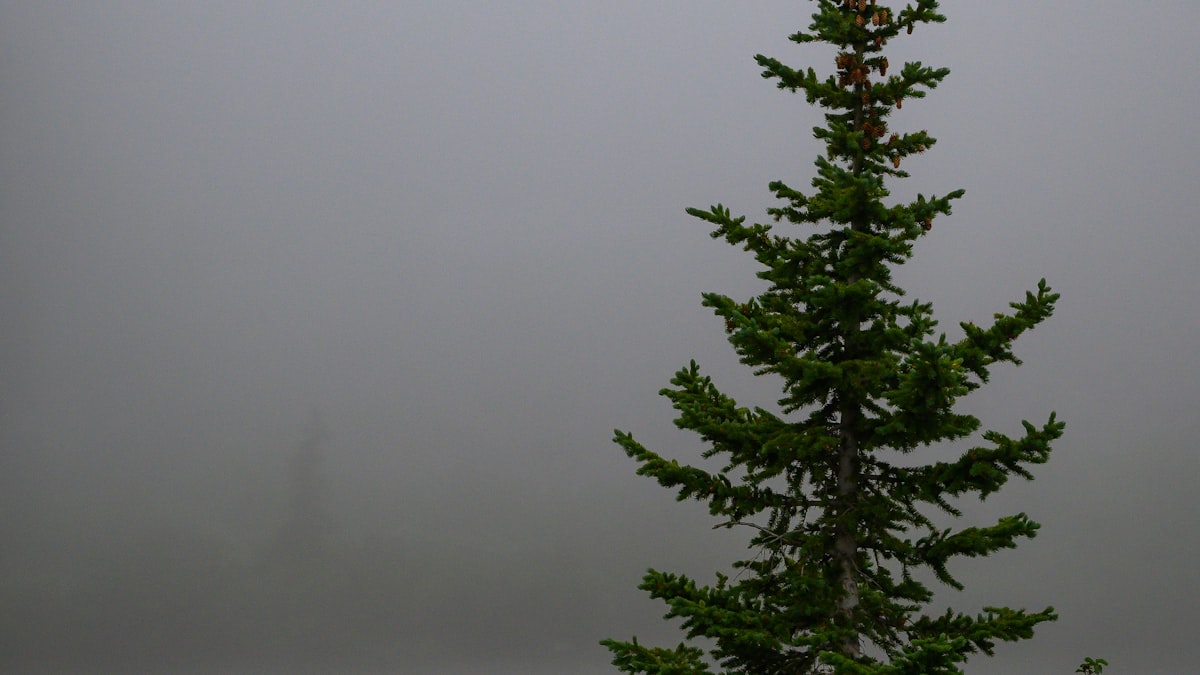
Gnarled pines — including the famous Welcoming Pine — cling to Huangshan’s granite faces, a motif in Chinese painting for a thousand years.
Getting there
- By high-speed rail: to Huangshan North station (黄山北) — about 2.5–3 hours from Shanghai, about 1.5 hours from Hangzhou, and about 1.5 hours from Nanjing.
- From the station: a shuttle bus or taxi (roughly 50 minutes) runs to Tangkou (汤口), the town at the foot of the park.
- Park entry: from Tangkou, take the park’s shuttle bus up to the cable-car stations (Yungu Temple or Ciguang Pavilion).
- Book rail tickets with your passport — see our train ticket guide.
Getting around
- Cable cars: three main routes — Yungu, Yuping and Taiping. Buy tickets online or at the stations; queues build from mid-morning.
- On the mountain: walking is the only way between viewpoints once you’re up — the paths are stone stairs, well-maintained but steep in places.
- Summit hotels: pick one at Beihai, Xihai or Guangmingding so you’re close to sunrise spots; book months ahead in peak season.
Huangshan in depth: the mountain in Chinese culture
Huangshan’s fame is not accidental — it is one of the most painted, photographed and written-about landscapes in China. For over a thousand years, the mountain’s oddly shaped pines, layered granite peaks and drifting cloud have stood in Chinese art as the ideal of wild, untamed nature. The “Huang” in the name is the same character as the Yellow Emperor (Huangdi), and legend says he ascended to immortality here, which gives the mountain a quasi-sacred status in addition to its beauty.
The reasons the scenery looks the way it does are geological. The peaks are granite, formed deep underground and exposed by uplift and erosion over millions of years. Rainwater working along vertical cracks created the sharp towers and gorges, while the gnarled pines — species that cling to bare rock and live for centuries — are adapted to the thin, acidic soil and harsh winds of the summit. The famous sea of clouds forms when moist air rises up the slopes and condenses, pooling in the valleys below the peaks; it is commonest in autumn and after rain, which is why the mountain’s classic views come with luck as well as planning.
A realistic budget
Huangshan is a moderately priced destination, with the biggest costs being the transport and the overnight hotel on the summit.
- Getting there: high-speed rail from Shanghai runs roughly ¥200–300 in second class; from Hangzhou about ¥100–150. The shuttle from Huangshan North station to Tangkou adds ¥30–50.
- Park and cable cars: the park entry ticket is around ¥190 (prices change); each cable car ride (Yungu, Yuping, Taiping) is roughly ¥80–100 one way. A typical two-day visit uses two or three rides.
- Summit hotel: the big cost — dormitory beds start around ¥150–300, private rooms run ¥600–1,500 and far higher in peak season. Book months ahead for October and weekends.
- Food: meals at the base in Tangkou are cheap (¥30–60); on the summit, prices climb sharply because everything is carried up — many travelers pack snacks.
- Sundries: a luggage-storage fee at Tangkou (a few yuan), shuttle buses and small purchases add a little more.
Common mistakes to avoid
- Trying to do Huangshan as a day trip. You will miss sunrise and rush the whole experience; the overnight is the entire point.
- Booking the summit hotel too late. October, weekends and holidays sell out weeks ahead; book before transport.
- Carrying a big suitcase to the summit. Leave luggage at Tangkou and carry a small daypack; the stairs and cable cars are no place for a roller bag.
- Wearing summer clothes at dawn. The summit is several degrees colder than the base, and dawn at 1,800 meters is cold in every season — a fleece and windproof layer are essential.
- Ignoring the forecast. Rain can close the trails and hide everything; check the summit weather and be flexible with your dates.
- Getting stuck at a cable-car queue at closing. Queues build from mid-morning and again at the end of the day; start early and keep an eye on the last-descent times.
The walking option: the front staircase
The classic cable-car route is not the only way up. Fit hikers can replace one or both cable cars with the stone staircases that generations of pilgrims used — the most famous is the eastern route from the Yungu area, a two-to-three-hour climb of roughly 1,500 steps that rewards early starters with the summit almost to themselves. The climb is demanding but not technical, and it is a genuine alternative to the queue at the cable-car station. If you are considering it, start before 7am, carry water and snacks, and check that the trail is open — in winter and after heavy rain, the stone stairs can be closed or dangerously icy.
Practical tips
- Book the mountain hotel first — summit rooms are limited and sell out, especially in October and on weekends. Everything else schedules around that date.
- Pack light but warm: it’s several degrees cooler on the summit than at the base; even in summer, a light jacket helps at dawn.
- Leave big luggage at Tangkou — most hotels at the foot will store bags while you’re up the mountain.
- Money & connectivity: set up Alipay before you arrive and check our payments guide.
- Check the summit forecast: rain means little to see, while the day after rain is often spectacular.
Where to go next
Huangshan sits neatly between Hangzhou and Shanghai on a high-speed rail line. The ancient villages of Hongcun and Xidi — themselves UNESCO-listed — are a short ride away and make a natural half-day add-on before or after the mountain.
Last updated: August 2026. Cable-car prices, winter closures and hotel availability change — confirm before you go.
Frequently Asked Questions
How many days should I spend on Huangshan?
Plan 2 days and stay overnight on the mountain. That gives you a full afternoon for the West Sea Grand Canyon and the summit viewpoints, a sunrise at Guangmingding or Beihai, and the descent via the Yuping cable car. A day trip is possible but you'll miss sunrise and rush everything.
Do I need to book a hotel on the mountain?
Yes, and early — summit rooms at Beihai, Xihai and Guangmingding are limited and sell out weeks ahead, especially in October, at weekends and on holidays. The summit is several degrees cooler than the base, and hotels on the mountain are basic but the only way to catch sunrise.
How do I get to Huangshan from Shanghai or Hangzhou?
Take the high-speed train to Huangshan North station (黄山北) — about 2.5–3 hours from Shanghai and about 1.5 hours from Hangzhou. From the station, a shuttle bus or taxi runs roughly 50 minutes to Tangkou at the foot of the park. Book rail tickets with your passport; see our [train ticket guide](https://chinotrips.com/how-to/train-tickets/).
Is the West Sea Grand Canyon always open?
No — the West Sea Grand Canyon, the mountain's most dramatic trail, closes in winter, roughly December through March. If it's open, it's a steep loop of stairs and suspension bridges that needs a couple of hours and good knees.
Do I need a visa to visit Huangshan?
Same as mainland China generally: citizens of 50 countries are visa-free for up to 30 days, and US citizens can use the 240-hour transit scheme for short trips. Check the [visa-free list](https://chinotrips.com/visa/visa-free-countries/) for your passport.
More in Anhui
Anhui Travel Guide (2026) — Anhui travel guide