
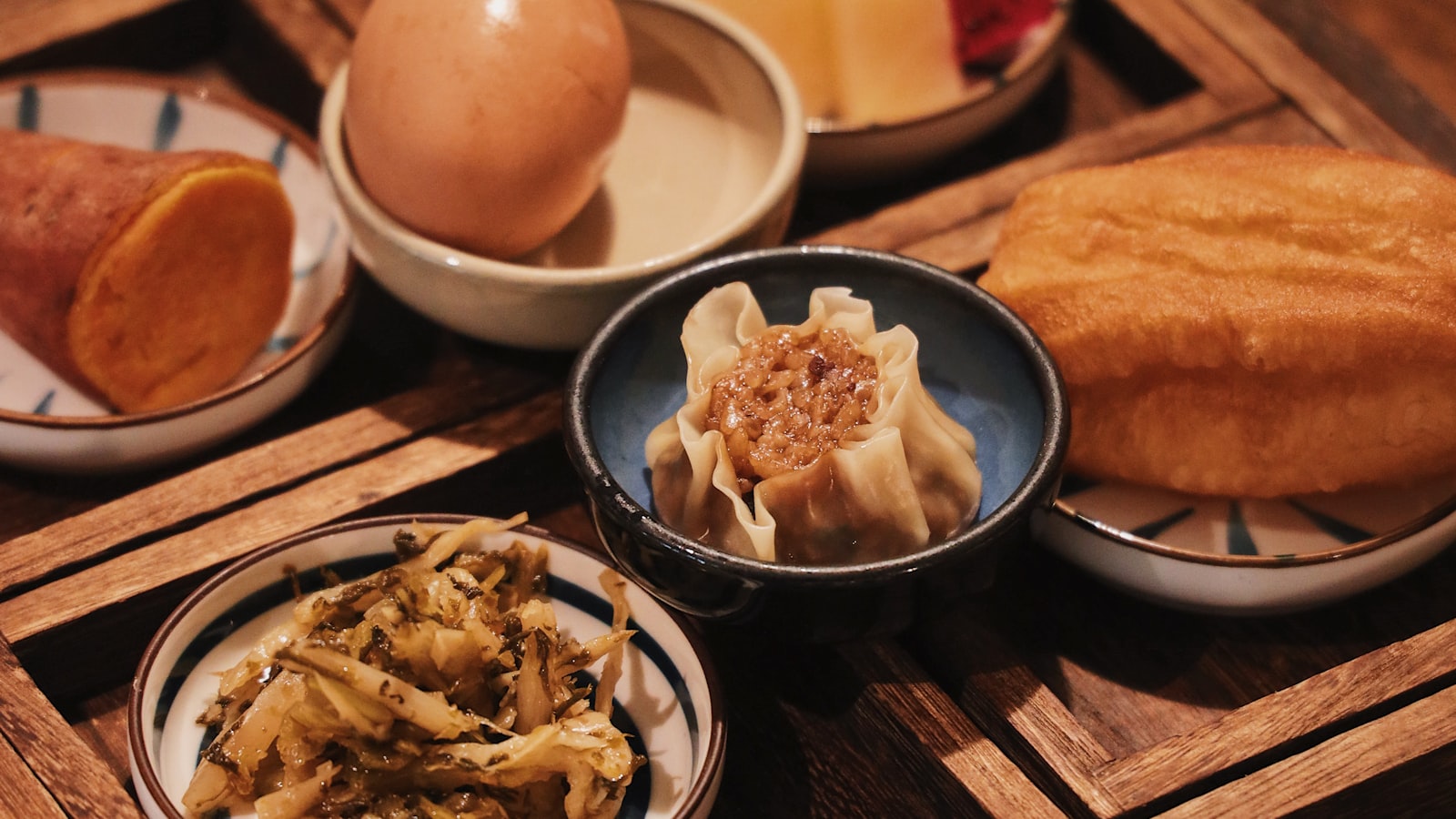
Chinese Breakfast Guide: What Locals Eat in the Morning
The Chinese breakfast — jianbing crêpes, congee, youtiao, baozi, soybean milk, and where to find a proper breakfast on the go.
China’s breakfast is savoury, fast and endlessly regional — from the jianbing crêpe on the street corner to a warm bowl of congee. Here’s what to look for.
For many visitors the hotel buffet is the easy default, but China’s real breakfast happens on the street and in small shops — and it’s worth getting out for. Savoury, cheap and made to order, it’s the most accessible introduction to everyday Chinese food. This guide covers the classics and where to find them.
The street star: jianbing
Jianbing (煎饼) is the breakfast you’ll see everywhere: a thin crêpe cooked on a flat iron, an egg spread across it, sprinkled with scallions and sesame, then folded around a crisp wafer and a sweet-chili sauce. Made to order in two minutes, eaten hot, and it costs a few yuan. Look for the flat-iron cart near metro exits and markets in the morning.
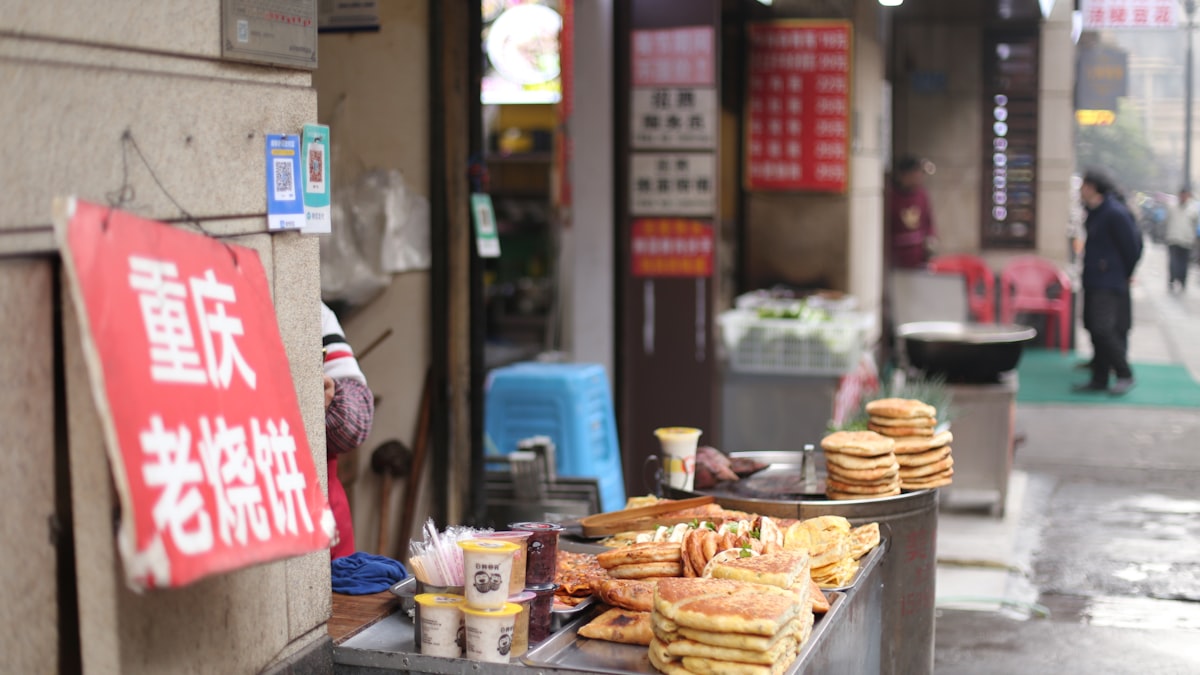
Jianbing is the classic street breakfast — a savory crêpe folded around egg, crisp cracker and sweet-chili sauce, made fresh in two minutes.
The hot bowl: congee
Congee (粥) — rice porridge — is the traditional hot breakfast, especially in the south. Served plain or with a choice of toppings: century egg and pork, chicken, or vegetables, with pickles and a boiled egg on the side. It’s mild, gentle and endlessly comforting — a perfect first-Chinese-breakfast if you’re not ready for street food.
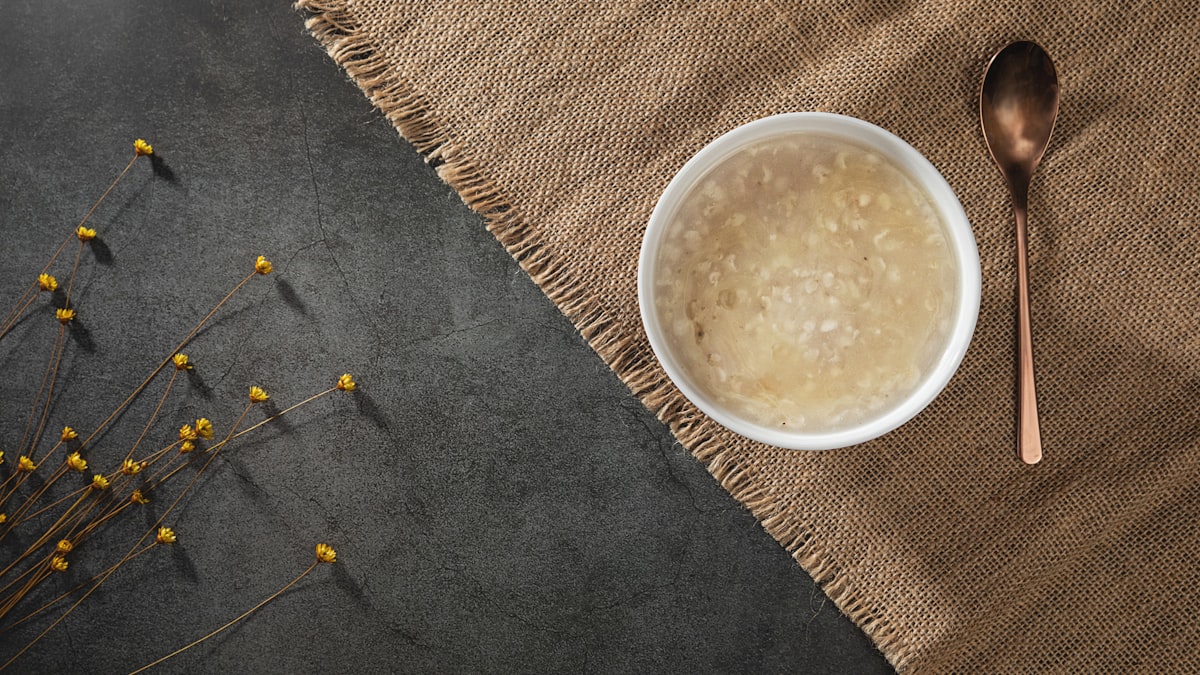
A warm bowl of congee — mild rice porridge with pickles and a boiled egg on the side — is the gentle, traditional hot breakfast.
The street staples
- Baozi (包子) — steamed buns, fluffy and filled (pork, vegetables or red bean paste). Find them in steaming baskets in shop windows.
- Youtiao (油条) — crispy fried dough sticks, eaten alone or dunked in congee or soy milk.
- Doujiang (豆浆) — soybean milk, hot or cold, sweet or plain.
- Danbing (蛋饼) — an egg-and-flour pancake, often with a filling.
- Noodles — in several regions (Wuhan, parts of the north), the morning meal is noodles, not porridge.
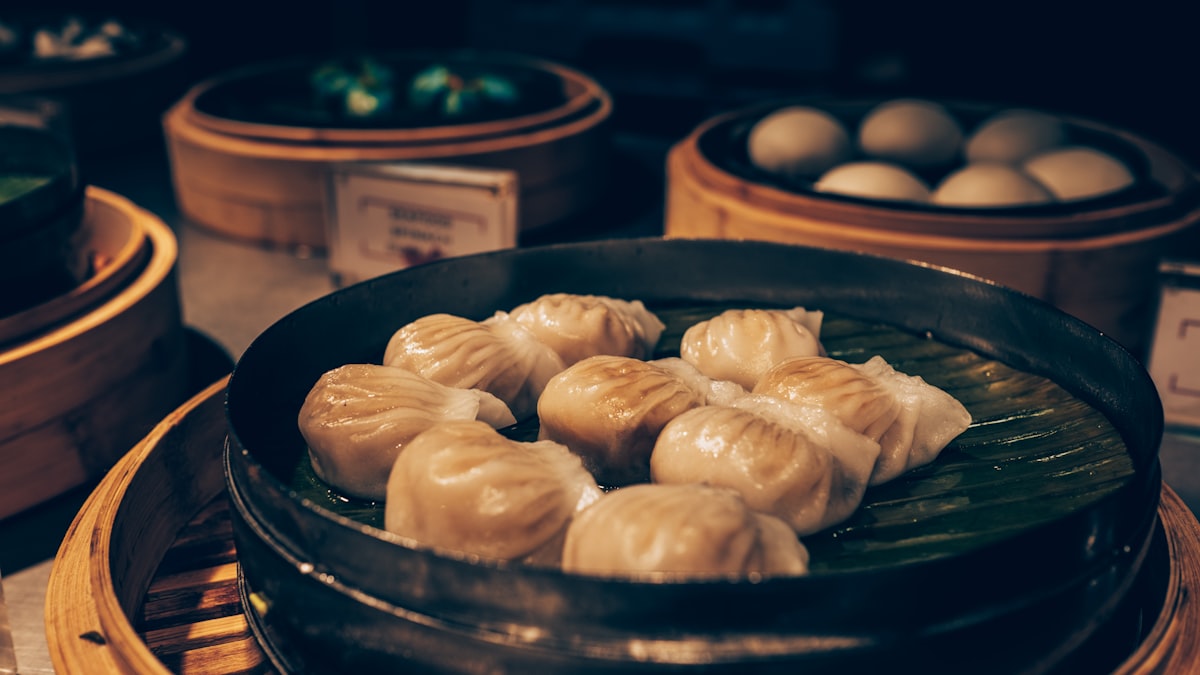
Baozi — fluffy steamed buns filled with pork, vegetables or red bean paste — are the grab-and-go breakfast staple, sold from steaming baskets.
Regional variations
Breakfast is proudly regional. Wuhan is famous for re’ganmian (hot dry sesame noodles) in the morning. The northeast leans on hearty congee and pickles. Shanghai breakfasts include the savoury shengjianbao (pan-fried pork buns) alongside the sweet. Guangzhou and the south do a lighter, soupier morning. Wherever you are, the morning street scene is half the experience — see our street food guide for the wider picture.
Vegetarian and allergy notes
Vegetarian breakfast is easy: plain congee, vegetable baozi, youtiao and soy milk are all meat-free. Watch that some baozi fillings and congee toppings include pork or dried shrimp. For allergies, carry a Chinese allergy card and confirm no pork stock in the congee.
Practical notes
- Timing: street breakfast is a morning thing — stalls wind down by 9–10am. Go early.
- Cost: ¥5–25 for a filling breakfast (estimate).
- Payment: cashless — Alipay is the norm.
- Coffee: if you need your caffeine, big-city chains and coffee shops open early; a jianbing plus a flat white is a legitimately good combination.
Why breakfast is savoury
The biggest surprise for many visitors is that Chinese breakfast is savoury, not sweet. There’s no toast-and-jam default: instead, warm congee, steamed buns, fried dough and savoury crêpes. The logic is practical — a hot, filling, savoury start to the day carries you further than sugar. Once you adjust, it’s deeply satisfying, and it’s one of the cheapest, most local experiences in any Chinese city.
A breakfast crawl, for the adventurous
The best way to experience it is a short breakfast crawl: a jianbing from a street cart to start, a baozi or two from a steaming shop for the savoury bite, a youtiao dunked in warm soy milk for the classic combination, and a bowl of congee with pickles if you’re still hungry. That’s four stalls, roughly ¥5–10 each, and a morning you’ll remember. In Shanghai, swap in a shengjianbao (pan-fried pork bun) for one of the stops.
Regional breakfasts
Breakfast varies more than lunch across China. Wuhan does the famous re’ganmian (hot dry sesame noodles) in the morning. Guangzhou and the south eat lighter — congee, rice noodle rolls, and the dim sum spread. Shanghai favours the pan-fried shengjianbao and savoury soybean milk. The northeast leans on hearty congee and pickles to face the cold. Wherever you are, the morning street scene is half the experience.
The essentials, at a glance
- Timing: street stalls wind down by 9–10am — go early.
- Cost: ¥5–25 for a filling breakfast (estimate).
- ‘Bu yao tang’ (no sugar) for plain soy milk if you prefer it.
- Coffee exists — big cities have plenty of cafés if you need a fix.
- Payment: cashless — Alipay.
The coffee alternative
If you need a caffeine fix, Chinese cities have you covered — but the options differ from home. Big-city coffee culture is strong: Starbucks and domestic chains (Luckin, Manner) are everywhere, and specialty roasters exist in Beijing, Shanghai and Chengdu. A flat white and a jianbing is a legitimately good combination. For a local touch, soy milk (doujiang) — warm and slightly sweet — is the traditional non-coffee morning drink. And of course, tea: a quick pot at a breakfast spot beats a coffee shop for the full experience.
A hotel breakfast worth choosing
If you’re based at a hotel, the buffet is a good way to sample the local spread without navigating street stalls. Most mid-range hotels offer a Chinese + Western buffet: congee, baozi, youtiao, noodles, eggs, toast and fruit. The trick is to skip the western section and load up on the Chinese side — it’s usually the fresher and more interesting half. A hotel breakfast also lets you try congee and baozi with zero pressure before you brave the street stalls.
Eating early on the go
For early-morning departures or tight itineraries, breakfast is easy to grab: a jianbing from a cart near a metro exit, a couple of baozi from a steaming shop, or a youbao (deep-fried dough) and soy milk. Everything is portable, cheap and made fresh. In a hurry, most convenience stores (FamilyMart, Lawson, 7-Eleven) have breakfast items too — a reliable fallback that’s open from early morning.
What a proper breakfast set looks like
If you want the full traditional spread rather than street grabs, order a breakfast set at a restaurant or hotel buffet: congee with pickles and a boiled egg, a baozi or two, a youtiao with a small bowl of soy milk to dunk it in, and maybe a jianbing to share. It’s a table of contrasts — hot and cool, soft and crisp, savoury and slightly sweet. Eating this way once is worth the experience even if you normally grab and go.
Breakfast and your itinerary
Breakfast shapes the day in China more than in many countries. A good one — street jianbing or a hotel congee — carries you through a morning of sightseeing without a lunch crisis. The practical rule: eat breakfast early and well, because the street stalls wind down by mid-morning and lunch can be late. Build breakfast into your plans, and use it to try something local you wouldn’t have otherwise. It’s the cheapest, most accessible taste of China there is. If you can manage it, breakfast is worth getting up for in China — it sets the tone for a day of eating.
Prices as of August 2026 — confirm current rates before you go.
Frequently Asked Questions
What do Chinese people actually eat for breakfast?
It's usually savoury, not sweet: congee (rice porridge) with pickles and eggs, baozi (steamed buns), youtiao (fried dough sticks), soybean milk, and on the street the jianbing — a savoury crêpe wrapped around egg, crisp cracker and sauce. Coffee and pastries are growing in cities, but the traditional breakfast is hot and savoury.
What is jianbing and where do I get it?
Jianbing is the classic street breakfast: a thin wheat-and-mung-bean crêpe cooked on a flat iron, topped with an egg, sprinkled with scallions and sesame, then folded around a crisp wafer and a sweet-chili sauce. You'll find street stalls near metro exits, offices and markets in the morning. Point and say 'zhe ge' (this one); it's made to order in a couple of minutes.
Is the Chinese breakfast spicy?
Generally not. Congee is mild, baozi are savoury but gentle, and youtiao are plain. The only heat comes from sauces you add yourself. If you're not used to Asian flavours, a plain congee or a steamed baozi is an easy, safe start.
Where can I get breakfast if my hotel doesn't have a buffet?
Every city has breakfast street stalls and small shops in the morning — look for a jianbing cart, a baozi shop with steaming baskets in the window, or a noodle shop (in some regions breakfast is noodles). Bigger convenience stores and coffee chains also serve breakfast. Payment is cashless; have [Alipay](https://chinotrips.com/how-to/set-up-alipay/) ready.
How much does breakfast cost in China?
A rough estimate: a jianbing is ¥5–15, baozi a few yuan each, a bowl of congee ¥10–20. A filling street breakfast runs ¥5–25 per person. Even at a proper restaurant, breakfast is one of the cheapest meals of the day.