
Chinese Street Food Guide: What to Try & Where to Find It
A practical guide to Chinese street food — dumplings, skewers, jianbing and xiaolongbao, what to order, where to find it and hygiene tips.
The best street food in the world, one stall at a time — here’s what to look for, how to order it, and how to eat safely.
Street food is where Chinese food culture is most alive. Breakfast crepes folded over egg and cracker, lamb skewers sizzling over charcoal, dumplings boiling in enormous steel pots, candied hawthorn on sticks. You don’t need a reservation or a table — just cash or a QR code, a finger to point with, and an appetite.
The classics to try
Jiaozi (饺子) — dumplings. Boiled, steamed or pan-fried, stuffed with pork-and-chive, lamb or vegetables. Dip in vinegar (with a little chili oil if you like). Found everywhere, especially in the north.
Jianbing (煎饼) — the breakfast crepe. A thin batter crepe griddled with egg, brushed with sweet bean and chili sauces, scattered with cracker, scallion and cilantro, then folded into a hot rectangle. Eat it right away, still crisp. The Beijing breakfast staple.
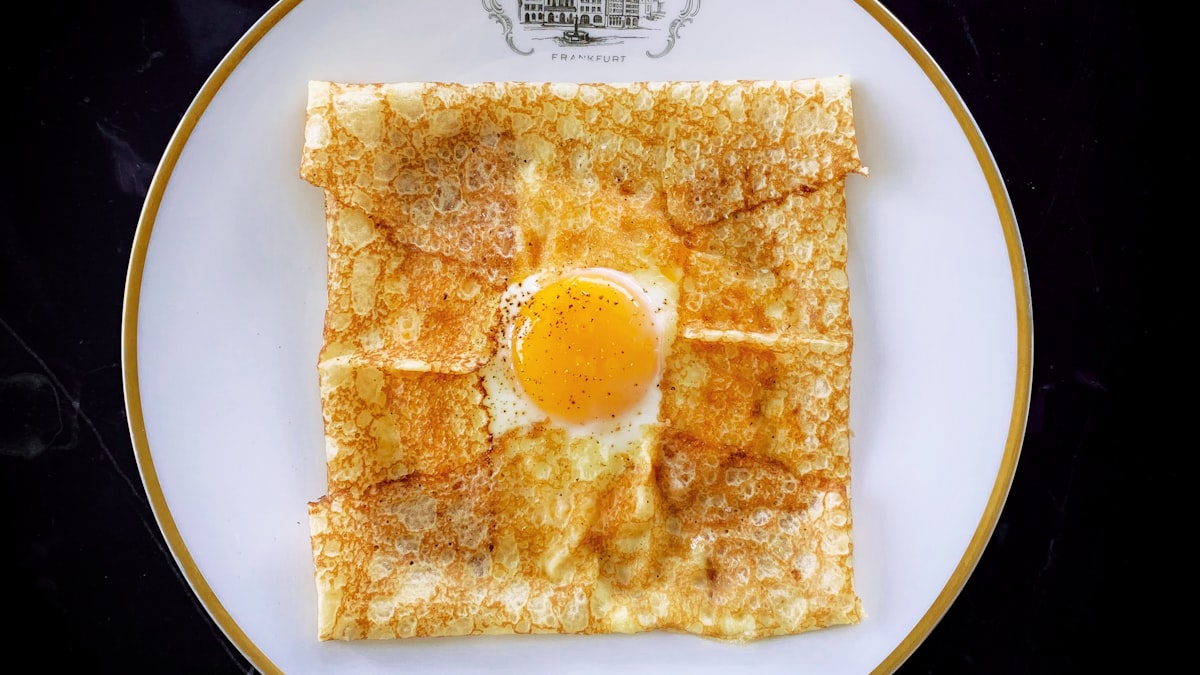
Jianbing is made to order on a flat iron — egg spread across the crepe, crisp wafer and scallions folded in, eaten hot on the spot.
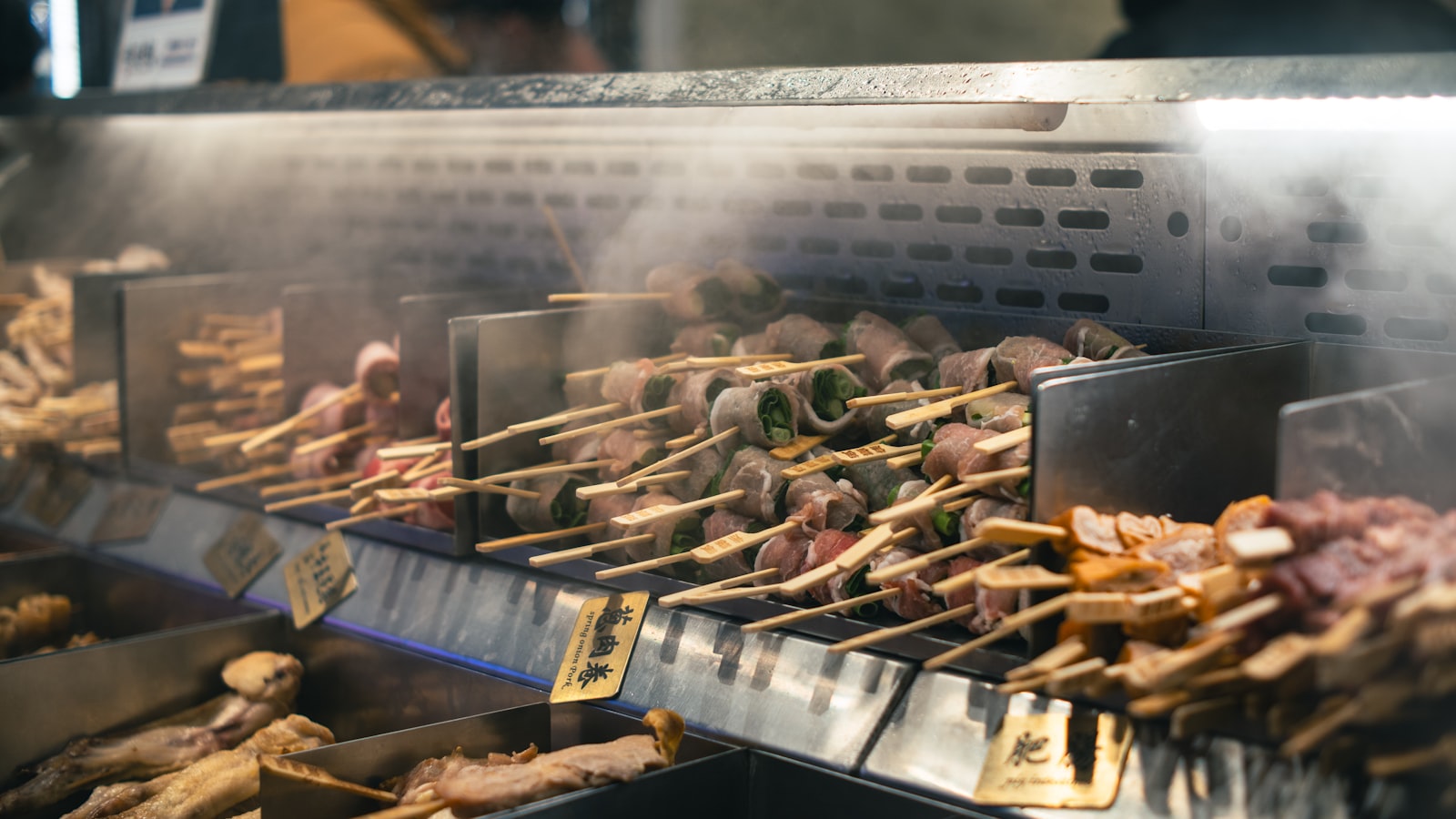
Chuanr (串) — grilled skewers. Lamb, chicken, sausage, tofu, vegetables — threaded on bamboo or metal, dusted with cumin and chili, charred over coals. The Muslim Quarter in Xi’an is the skewer capital.
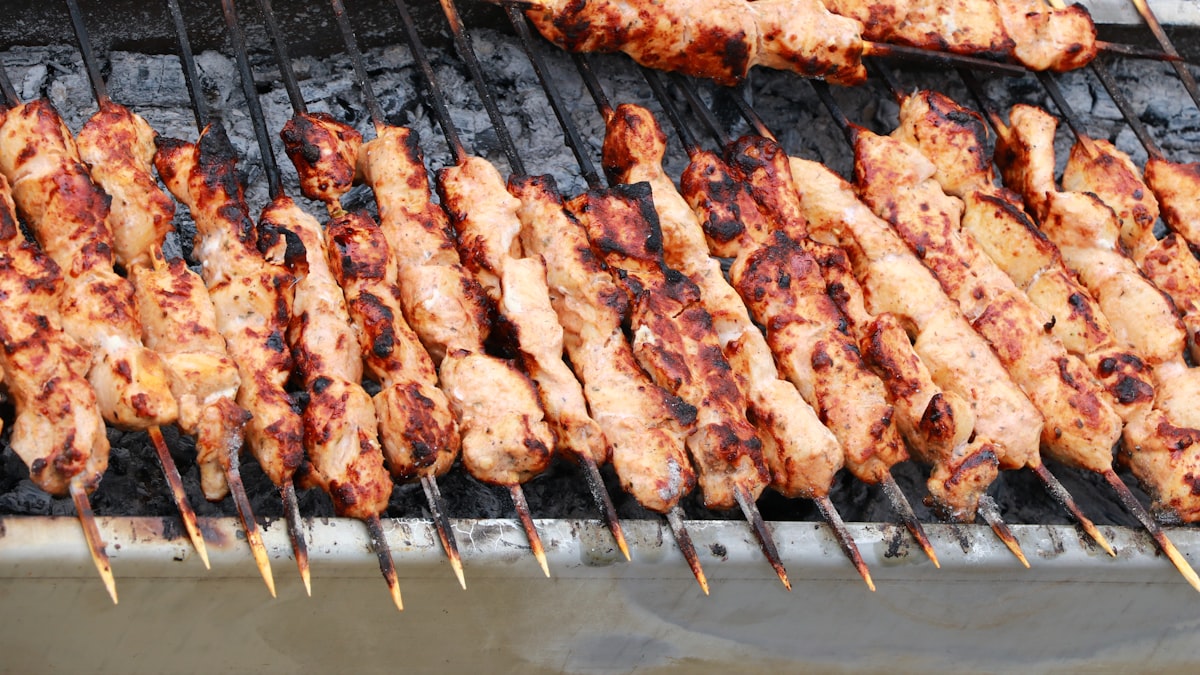
Chuanr skewers are charred over coals and dusted with cumin and chili — order them by the stick at any night market.
Xiaolongbao and shengjianbao (小笼包 / 生煎包). Soup dumplings from Shanghai — bite a corner, sip the broth, then eat. Shengjianbao are the pan-fried version with a crunchy base.
Rou jia mo (肉夹馍) — the “Chinese hamburger”. Braised, cumin-scented pork stuffed into a crisp flatbread. A portable lunch from the Xi’an tradition.
Tanghulu (糖葫芦) — candied hawthorn. Skewered berries dipped in a brittle sugar glaze. Sweet, sour and ridiculously photogenic.
Also worth hunting down: baozi (steamed stuffed buns), stinky tofu (far better than it smells), hand-pulled Lanzhou lamian noodles, choudoufu from Changsha, grilled corn, egg-filled “jianbing guozi” in Tianjin, and dragon’s beard candy for dessert.
Where to find it
- Night markets and snack streets: the Muslim Quarter in Xi’an, Wangfujing snack street in Beijing, Jinli in Chengdu, and the streets around Yunnan Road in Shanghai.
- Breakfast streets: follow the steam and the crowds between 7–9am near residential neighborhoods and markets.
- University districts and metro exits: cheaper, less touristy, and often genuinely better.
- Food courts in malls: a safe, air-conditioned middle ground if you want the flavors with less chaos.
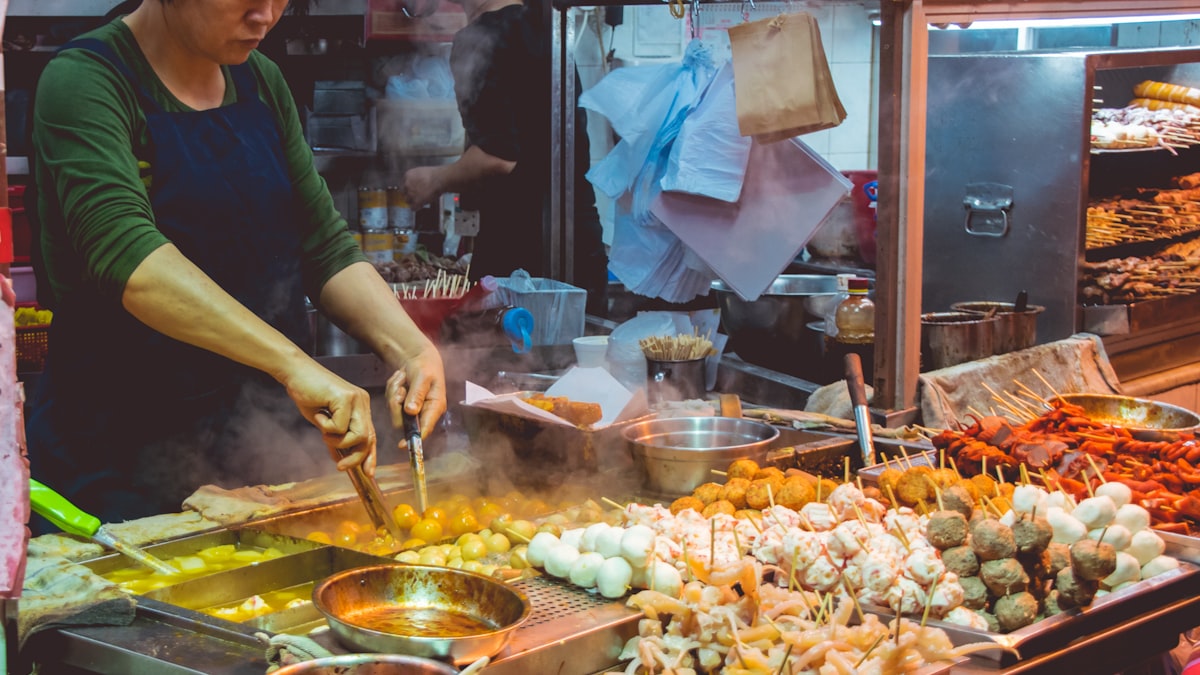
Night markets are where street food culture is loudest — stalls line both sides, and the crowd points, orders and eats as it walks.
Regional variety, briefly
Street food changes dramatically by region, and chasing the differences is half the fun. In Beijing, breakfast means jianbing and youtiao (fried dough sticks). In Xi’an, the Muslim Quarter’s cumin lamb skewers and rou jia mo dominate. In Chengdu, everything comes with numbing chili — try chuanchuan (skewers boiled in spicy broth) and cold noodles. In Shanghai, shengjianbao and rice-ball snacks rule the breakfast streets. And along the coast, from Xiamen to Qingdao, you’ll find oyster omelets, grilled seafood and tropical fruit on sticks. Wherever you are, ask a local for their single favorite stall — you’ll rarely be disappointed.
How to order
- Point and count. Stalls display items and prices. Point at what you want and hold up fingers: “zhe ge, liang ge” (this one, two of them).
- Prices are firm — no haggling on street food. You’ll usually pay when you order or when you collect.
- Translation apps read menus and signs instantly; don’t be shy about using one.
- For skewers, order by the stick; for dumplings and crepes, by the portion or item.
Hygiene tips for worry-free eating
- Eat where it’s busy. A long local line is the best health certificate in China.
- Watch it cook. Choose stalls where food is cooked fresh to order and served steaming.
- Go hot. Piping-hot, fully cooked food is your safest bet; be wary of pre-sliced raw fruit and cold salads early in the trip.
- Drinks: bottled or boiled water only; if a drink comes with ice, consider asking for no ice (“bu yao bing”) until your stomach acclimates.
- Carry your own tissues, wet wipes and hand sanitizer — stalls rarely have napkins.
- Start mild. If you’re new to chili, ask for “bu la” (not spicy) or “wei la” (a little spicy) where the option exists.
How much to budget
Street food is the cheapest good meal in China. A rough daily target of ¥50–100 per person covers breakfast, a snack, and a generous evening feed of skewers and dumplings. Payment is increasingly cashless — set up Alipay before you fly — but keep a little small cash because the tiniest carts sometimes still prefer it.
Street-food etiquette
- Eat as you walk — it’s completely normal.
- Some stalls are sit-down, with tiny stools; just grab a seat and order.
- Don’t drop litter — bins can be scarce, so pocket your skewers and napkins until you find one.
- Share generously — ordering a bunch of different skewers and sharing is exactly how locals do it.
Last updated: August 2026. Stalls and prices change constantly — confirm before you go.
Frequently Asked Questions
Is Chinese street food safe to eat?
For most visitors, yes — with a few habits. Eat where the line is long (high turnover means fresh food), watch your item being cooked, and make sure skewers and dumplings come out piping hot. Drink bottled or boiled water, and be cautious with raw salad and ice in the first days.
What are the best street foods for a first-timer?
Start with jiaozi (boiled or pan-fried dumplings), jianbing (a savory breakfast crepe), chuanr (grilled lamb or chicken skewers), rou jia mo (Xi'an's 'Chinese hamburger'), and tanghulu (candied hawthorn on a stick). All are mild, portable and hugely satisfying.
Where are the best night markets and snack streets?
The Muslim Quarter in Xi'an is legendary for skewers and flatbread; Wangfujing snack street in Beijing is touristy but fun; Jinli in Chengdu is atmospheric; and in Shanghai, the food streets around Yunnan Road and the old town deliver. University districts and metro stations are great off-the-tourist-path options.
How do I order if there's no English?
Almost every stall shows items and prices. Point at what you want and hold up fingers for quantity — 'zhe ge, liang ge' means 'this one, two of them'. A translation app's camera mode reads signs instantly. No haggling on street food; prices are firm.
How much does street food cost?
Prices vary by city, but a rough guide: grilled skewers about ¥5–15 each, a jianbing about ¥8–15, a portion of dumplings about ¥8–20, and rou jia mo about ¥8–15. A filling street-food meal rarely exceeds ¥30–50 per person.
What if I have a sensitive stomach?
Ease in: start with cooked-and-steaming items rather than raw or cold ones, avoid ice in drinks, and carry your own hand sanitizer and tissues. If you're nervous, big-name stalls and shops inside food courts are safer bets than tiny pushcarts.