
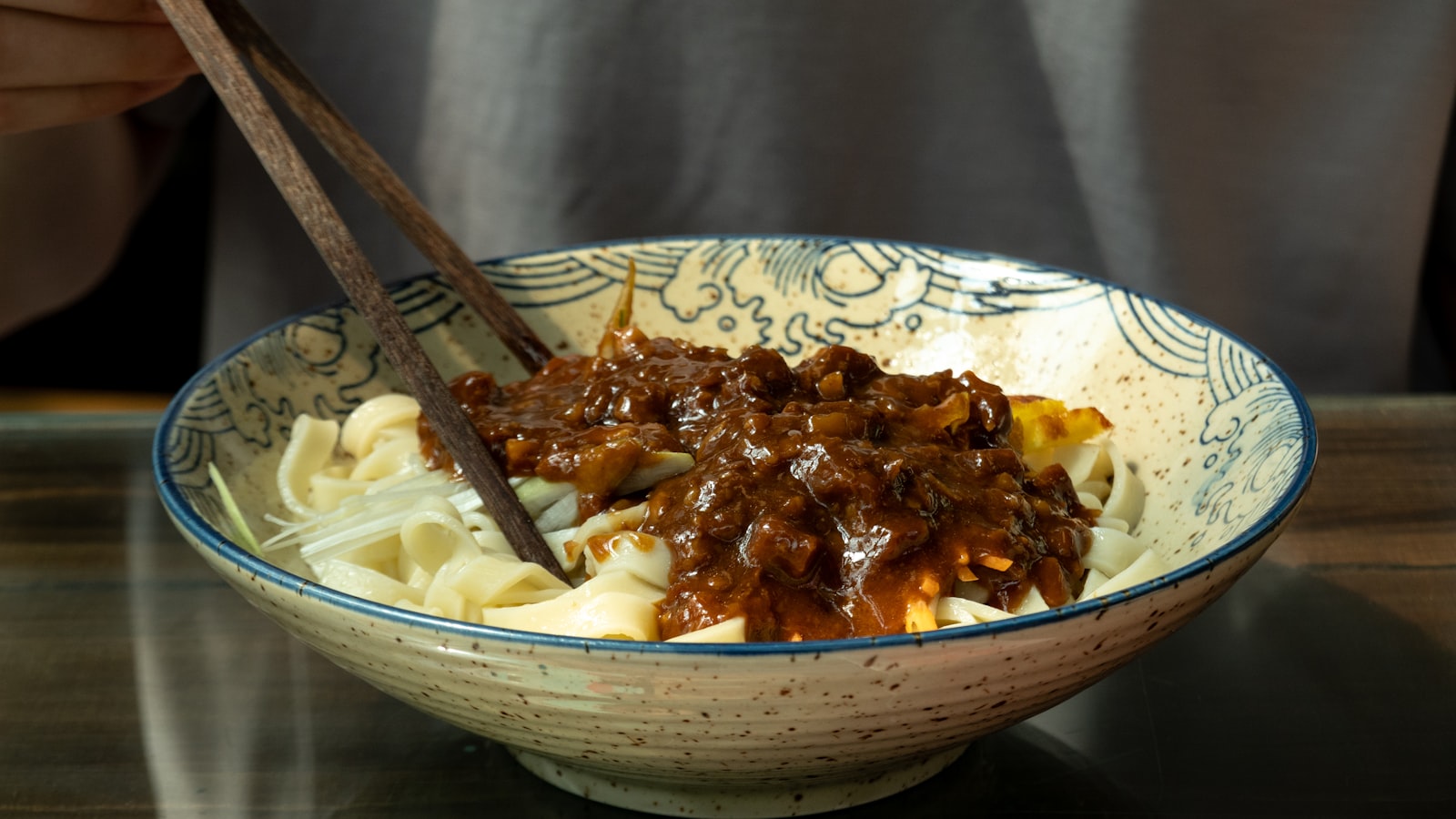
Biangbiang Noodles in Xi'an: What They Are & Where to Eat
Biangbiang noodles are Xi'an's famous belt-wide hand-made noodles — why they're named by a sound, the 58-stroke character, and where to eat them in Shaanxi.
Biangbiang noodles are Xi’an’s famous belt-wide hand-stretched noodles — so named for the sound they make when slapped on the counter, and famous for a Chinese character with 58 strokes. Here’s what they are and where to eat them.
Biangbiang noodles (biangbiang mian, 邉麺) are the most theatrical noodle in China. A lump of dough is stretched and slapped against the counter until it becomes a single thick, belt-wide ribbon — the ‘biang’ of the dough hitting the board is where the name comes from. The noodles are then cooked and tossed with chili oil, garlic and vinegar, and served in a bowl that’s all about texture: chewy, substantial, and deeply satisfying. They’re a Shaanxi classic, and Xi’an is the city to eat them in.
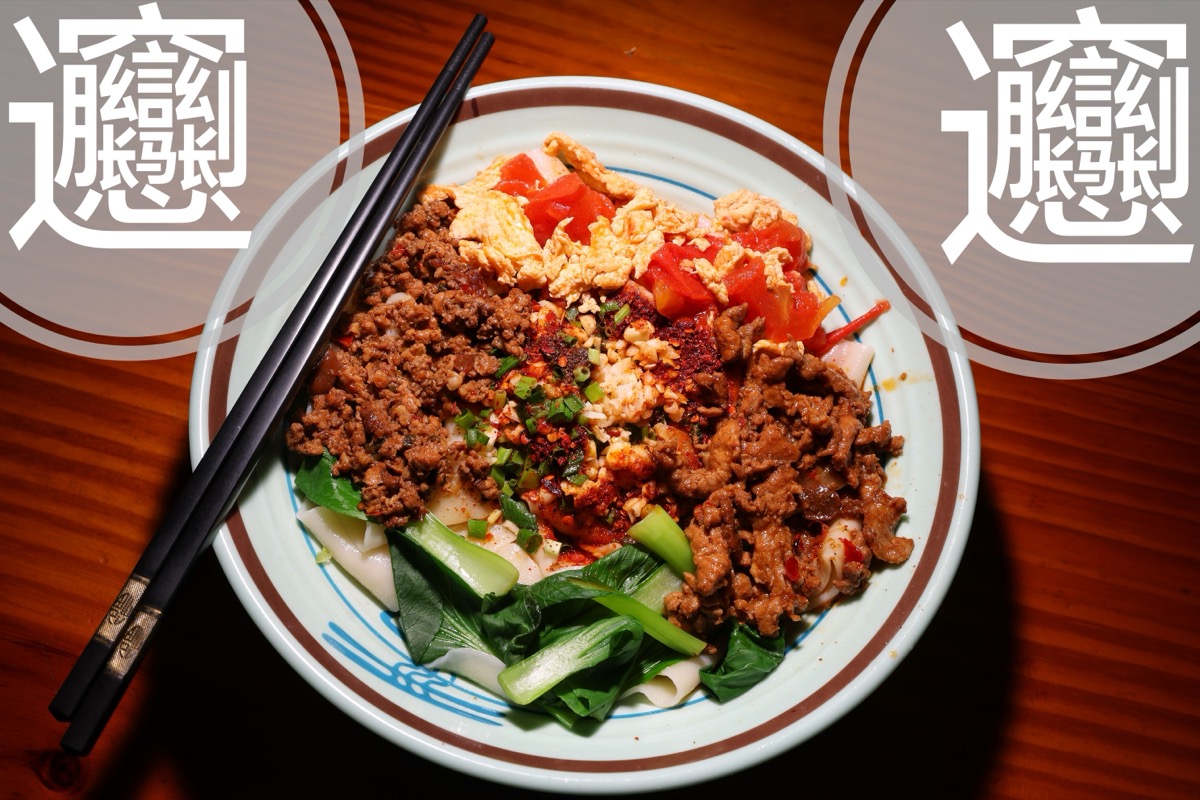
The famous 58-stroke character
The character for biang is one of the most complex in the Chinese writing system — up to 58 strokes depending on the variant, with a folk etymology that packs the character with symbols for flour, salt and luck. It’s a character invented purely for this noodle, used nowhere else, and it’s become the dish’s calling card. You’ll see it painted large on restaurant signs across Xi’an, and locals genuinely love showing visitors how to attempt it. For travelers, it’s the rare noodle with its own piece of linguistic folklore.
What’s actually in the bowl
A classic biangbiang noodles bowl is a study in simple, bold flavors:
- The noodle — one or two extra-wide hand-stretched ribbons, thick enough to chew properly.
- Chili oil — a generous slick that’s more aromatic and fragrant than searingly hot.
- Garlic and vinegar — the sharp, savory backbone that cuts through the richness.
- Toppings — often tomato-and-egg in the home-style version, or minced pork; sometimes greens.
- The mix — you stir the chili and vinegar through the wide noodles until every ribbon is coated.
How they’re made
The making is half the show. The cook takes a ball of dough, flattens it, and then stretches and slaps it against the counter, folding and pulling until it becomes a long, wide ribbon. The rhythmic ‘biang, biang’ sound is where the name comes from — and why the dish is often called ‘belt noodles’ by visitors. Watch an open kitchen and you’ll see the performance before you even taste the bowl.
Where to eat biangbiang noodles in Xi’an
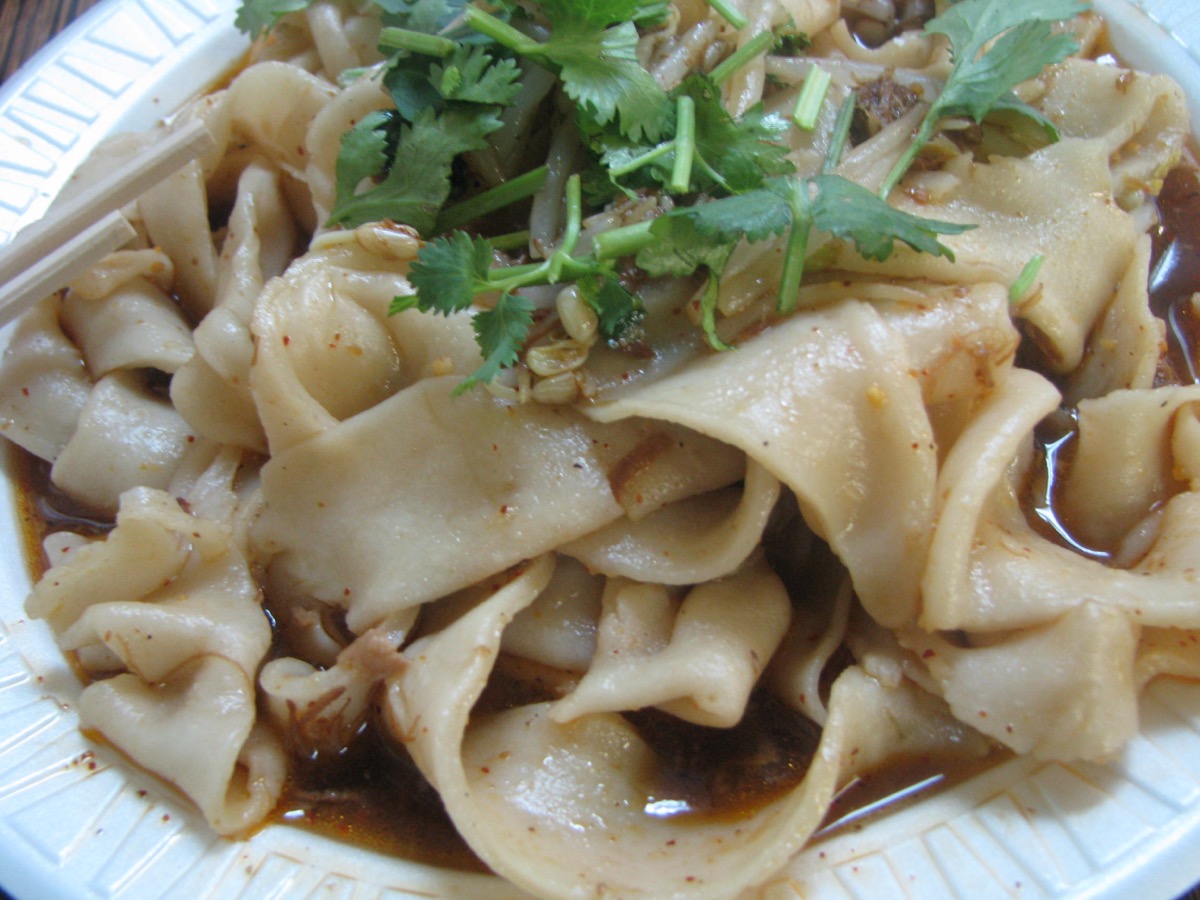
Biangbiang noodles are one of Xi’an’s signature dishes, so you’re spoiled for choice. The Muslim Quarter (回民街) is the most concentrated and tourist-friendly option — a warren of food streets where picture menus and open kitchens make ordering easy, and where you’ll find plenty of shops with the giant ‘biang’ character on the sign. Beyond the quarter, nearly every local noodle restaurant in the city has biangbiang noodles on the menu. The Xi’an guide has the full food map for the city.
How to order like a local
- Point and order — picture menus are the norm; biangbiang noodles are almost always pictured with the character.
- Mix it well — the chili and vinegar sit on top; stir until every ribbon is coated before eating.
- Spice control: ‘shaola’ (less spice) or ‘bula’ (not spicy) work if you want to ease up.
- Portion: biangbiang noodles are substantial — one bowl is usually a full meal.
- Try the pairing: a bowl of biangbiang noodles with a Shaanxi-style cold dish or some hand-pulled lamian makes a great Xi’an meal.
What it costs
A bowl of biangbiang noodles in Xi’an is typically ¥15–35 (estimate) — a filling, inexpensive meal. Tourist-area shops run higher; local neighborhood spots are often the best value. Cashless payment is standard.
A few practical notes
- Texture matters: the wide ribbons are genuinely chewy — that’s the point. If you prefer thinner noodles, say so; most shops can make them thinner.
- Vegetarian: the tomato-egg version is vegetarian-friendly, and the chili-vinegar base is plant-based. Ask for ‘su’ (vegetarian) or ‘bu yao rou’ (no meat).
- Meal timing: biangbiang noodles are an all-day dish in Xi’an; lunch and dinner are the busiest windows.
- Explore wider: for the full range of Shaanxi food, see our regional cuisines guide and the noodles in China map for how Xi’an fits the national picture.
Why Xi’an is a noodle city
Xi’an’s love of noodles is baked into its history. As the eastern terminus of the ancient Silk Road and the capital of several dynasties, the city absorbed wheat-based cooking from Central Asia and turned it into a local obsession. Shaanxi’s wheat belt produces flour that’s ideal for hand-stretched noodles, and the province’s food culture is built around the grain: noodles, flatbreads (mo), and hand-pulled everything. That’s why biangbiang noodles feel so at home here — they’re not a tourist invention but a deep expression of how this region eats. When you see the giant character on a shop sign, you’re looking at centuries of wheat culture in one symbol.
The full Shaanxi meal
Biangbiang noodles are best treated as part of a wider Shaanxi spread rather than a one-off bowl. A classic Xi’an food crawl might start with a liangpi (cold rice noodle) as a light starter, move on to a bowl of biangbiang noodles, and finish with a roujiamo (the famous ‘Chinese hamburger’ of braised pork in a flatbread) or a bowl of yangrou paomo (lamb and flatbread soup). The regional cuisines guide explains how all of this fits together, and the Xi’an guide maps the best neighborhoods to eat your way through them. If you only have time for two things, make them biangbiang noodles and roujiamo.
How the bowl is eaten
The ritual matters. When your biangbiang noodles arrive, the chili oil and seasonings are usually sitting on top of the wide ribbons — mix thoroughly, working from the bottom up, until every inch of noodle is coated in the glossy chili-vinegar slick. The best way to eat the wide ribbons is with chopsticks and a slight slurp; the noodles are thick enough to chew, and the sauce needs to move with you. If the bowl is served with a fried egg on top, break the yolk and let it run into the sauce. It’s a messy, delicious, hands-on meal — and that’s exactly the point.
When to go
Xi’an is a year-round food city, and biangbiang noodles are available every day of the year, but the timing changes the experience. In summer, the noodle shops stay busy into the evening as locals seek out cool treats alongside their noodles. In winter, a bowl of hot, chili-laced ribbons is exactly the right thing after a cold day walking the city wall. Mornings are quieter at noodle shops, which makes them a relaxed window for a first try; lunch is when the queues form. If you want to avoid the crowds entirely, come just after the lunch rush ends, around 2 p.m.
The honest takeaway
Biangbiang noodles are the noodle you’ll remember for the theater as much as the taste — the slap of dough, the impossible character on the sign, and a bowl of wide, chewy ribbons coated in chili and vinegar. They’re cheap, easy to find in Xi’an, and deeply satisfying. Order a bowl, mix it properly, and you’ll understand why this is one of China’s most famous noodles.
Last updated: August 2026. Prices are estimates and change — confirm before you go.
Frequently Asked Questions
What are biangbiang noodles?
Biangbiang noodles are a Xi'an specialty: extra-wide, thick, chewy wheat noodles that are stretched by hand, often to belt-like widths. They're typically served with chili oil, garlic, vinegar and sometimes tomato-egg or pork, in a bold, rustic bowl that's all about the texture of the noodle itself.
Why is there a 'biang' character with 58 strokes?
The character 邉 (or 麺) was invented for this dish and is one of the most complex in the Chinese writing system — up to 58 strokes depending on the variant. It's a folk character, not used for any other meaning, and locals joke that you have to be able to write it to order the noodles. It's a huge part of the dish's charm for visitors.
How spicy are biangbiang noodles?
It varies. The classic preparation is a generous slick of chili oil, which brings warmth and fragrance but not always intense heat — the chili in Shaanxi food is often more aromatic than fiery. Ask for 'bula' (no spice) or 'shaola' (less spice) if you prefer, and the vinegar-garlic base is mild on its own.
Where can I eat biangbiang noodles in Xi'an?
Everywhere — biangbiang noodles are one of the city's signature dishes and appear on menus across Xi'an. The Muslim Quarter (回民街) is the most tourist-friendly place to find them, with picture menus and open kitchens, and nearly any local noodle shop does a good version. If there's a queue, it's a good sign.
Are biangbiang noodles gluten-free?
No — they're made from wheat flour, like most Chinese noodles. If you need gluten-free options, rice noodles (mifen) and rice dishes are the safer choices; see our guide on eating in China with dietary needs for the full picture.