
Cantonese Food Guide: Fresh, Subtle, Delicious
Cantonese cuisine explained — the gentlest of China's great cuisines, from dim sum to slow soups, roast goose and fresh seafood.
Cantonese food is China’s most refined cuisine — fresh, subtle and built on letting good ingredients shine. It’s also the friendliest for travelers.
For most Western visitors, Cantonese food is where Chinese food makes the smoothest first impression. No numbing heat, no in-your-face sauce — just pristine ingredients, light seasoning, and techniques that respect them. From a morning of dim sum to a slow-simmered soup at dinner, it’s the cuisine that rewards patience and rewards beginners equally.
The philosophy: freshness first
Cantonese cooking’s core belief is that the ingredient is the star. A steamed fish needs nothing but ginger, scallion and a splash of soy; a good broth is built by hours of slow simmering, not heavy spice. The techniques are chosen to preserve and elevate, not to mask: steaming, stir-frying over high heat, roasting, and long-simmered soups. It’s the antithesis of ‘more is more’.
The dim sum morning
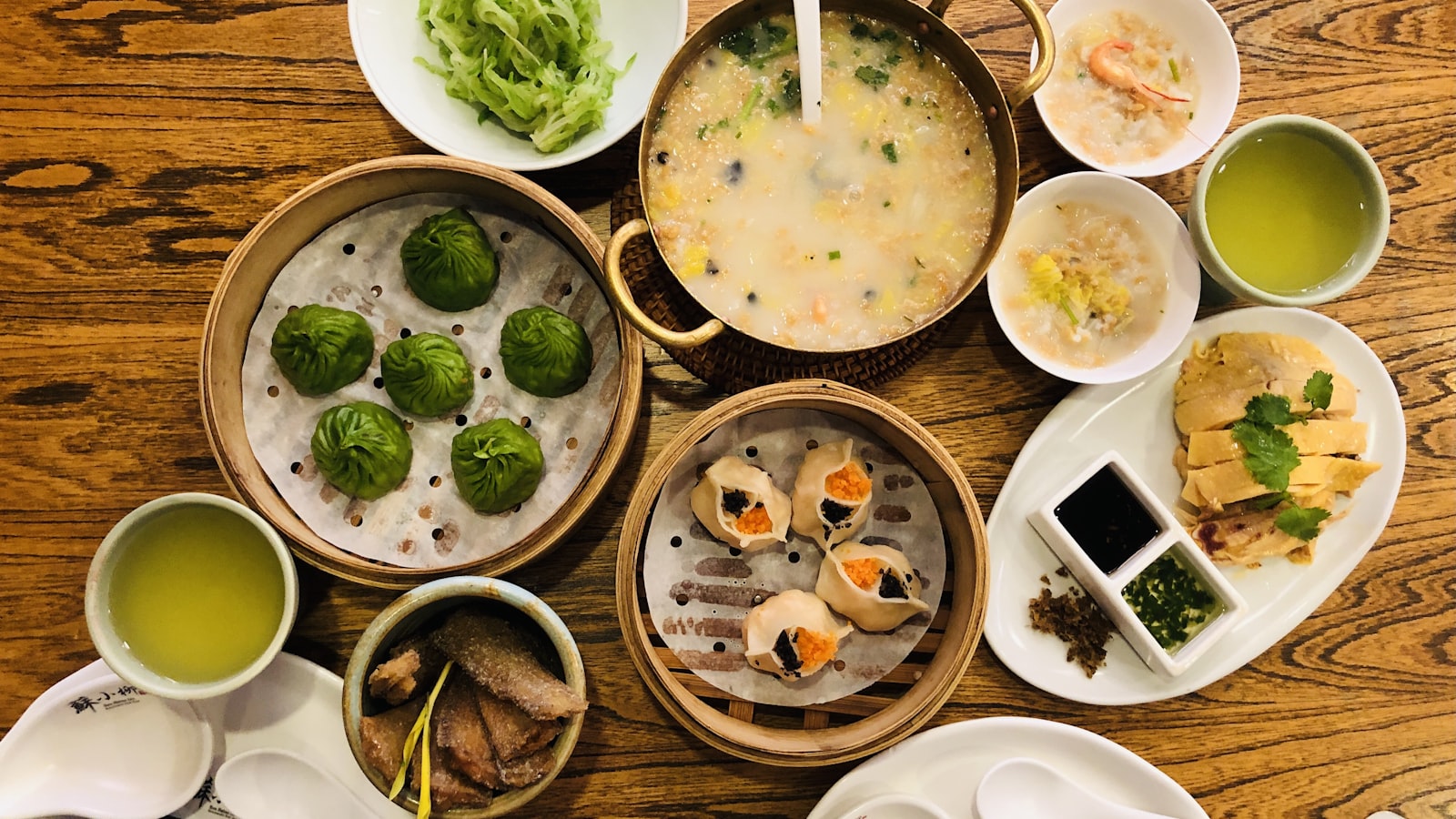
Dim sum is Cantonese food’s most famous export — a long morning of small steamed baskets with tea. Start there. The classics are har gow (shrimp dumplings), siu mai, char siu bao (barbecue pork buns), cheung fun (rice rolls) and egg tarts. Full guide: dim sum, decoded.
The bigger plates
Beyond dim sum, a proper Cantonese meal builds a balanced table:
- Roast goose & roast duck — lacquered, crisp-skinned, a specialty of Guangzhou.
- White-cut chicken (bai qie ji) — poached chicken served cold with ginger-scallion sauce; a study in subtlety.
- Slow-simmered soup (lao huo tang) — hours-long broths with herbs and meat, a Cantonese institution.
- Steamed fish — whole fish, simply steamed, the ultimate test of freshness.
- Stir-fried seafood — clams, prawns and greens over screaming-hot woks.
- Congee — the rice porridge that is breakfast and comfort food in one.
Where to eat it
Guangzhou is the home of Cantonese cuisine — the old Liwan district’s tea houses and the city’s seafood restaurants are the authentic experience. Hong Kong, a short train ride away, is the other great Cantonese city. See our Guangzhou guide for neighborhoods and our dim sum guide for the morning ritual.
The tea, always
Tea is not an afterthought in Cantonese dining — it’s the frame. A pot of pu-erh, jasmine or oolong arrives with the meal, and the tea culture of ‘yum cha’ is the social center of Cantonese life. When someone pours for you, a light two-finger tap on the table is the traditional thanks.
Beginner-friendly and allergy-aware
Cantonese food is the gentlest Chinese cuisine — mild, fresh and almost never spicy. For allergies, it’s one of the easier cuisines to navigate because dishes are usually simple: ask what’s in a dish and most kitchens will tell you. Carry a Chinese allergy card as backup, and note that soy sauce contains gluten.
Practical notes
- Cost: ¥50–150 per person for a good meal (estimate); street food cheaper.
- Payment: cashless — Alipay is the norm.
- Timing: dim sum in the morning, the big meal at lunch or dinner, late-night congee and seafood for the night owls.
- Pair with: a Sichuan meal a day later for the contrast — the two cuisines are opposite poles of Chinese food.
Why Cantonese is called China’s finest
Food writers often call Cantonese the finest of the Chinese cuisines, and the reason is its philosophy: the ingredient is everything, and the cooking exists to reveal it. A Cantonese chef’s skill is shown by restraint — a fish steamed so it tastes of the sea, a chicken poached so it’s silky. There’s nowhere to hide with Cantonese cooking; no heavy sauce masks a mediocre ingredient. That’s why the cuisine rewards the freshest markets and the best kitchens, and why eating it well in Guangzhou is a genuine education.
The Cantonese meal structure
A proper Cantonese dinner builds a balanced table rather than one big dish. The shape: a soup to start (slow-simmered, clear), a roast (goose or duck), a steamed dish (fish), a stir-fry (greens or seafood), and rice. Each element is a different technique, and together they show the cuisine’s range. At a good Cantonese restaurant, the waiter will often steer the order — trust them.
Dim sum and the full Cantonese day
Cantonese food runs all day: morning dim sum with tea, lunch a quick noodle or rice dish, dinner the full banquet table, and late night congee and seafood for the night owls. Each meal is a different expression of the same philosophy. See the dim sum guide for the morning ritual.
Eating Cantonese well
- Guangzhou’s old town (Liwan) is where the classic tea houses are.
- Go where locals queue — turnover means freshness.
- Order the soup — it’s the heart of the meal.
- Let the waiter suggest — Cantonese hospitality loves to feed you well.
- Payment: cashless — Alipay.
The Cantonese dinner, ordered properly
A good Cantonese dinner is a sequence. It opens with a slow-simmered soup — clear, herbal, restorative. Then a roast — goose or duck, lacquered and crisp. A steamed whole fish follows, the ultimate test of freshness. A stir-fry — greens or seafood — balances the richness. And rice or noodles close the meal. At a proper Cantonese restaurant, the waiter will often steer this order; trust them. It’s a structure that shows the cuisine’s range in one sitting.
Seafood by the tank
Cantonese restaurants love live seafood — you’ll often see tanks of fish, crabs and shellfish near the entrance. Ordering from the tank is the freshest way to eat: point at what you want and how you want it cooked (steamed, stir-fried, in a soup). This is the cuisine at its purest — the ingredient is the point. In Guangzhou’s seafood restaurants, this is the experience to have. It’s also a great way to eat if you’re new to Chinese food, because the dish is exactly what you picked.
The Cantonese art of the soup
The slow-simmered soup (lao huo tang) is Cantonese food’s quiet masterpiece. It’s not a starter in the Western sense — it’s a restorative broth simmered for hours with meat, herbs and dried ingredients, served clear and deeply savory. Every Cantonese family has its own recipes, and restaurants take it seriously. Order a soup wherever you see one on the menu; it’s the most nourishing thing on the table.
Cantonese for first-timers
If you’re brand new to Chinese food, Cantonese is the gentlest way in: everything is mild, cooked and identifiable, and the dishes are simple enough to order by pointing. Start with dim sum (small, shareable, zero risk), move to a roast and a steamed fish, and finish with a congee or soup. By the end of a Cantonese meal you’ll have a reference point for every other cuisine — and a strong argument for why freshness beats spice.
Cantonese and your broader trip
Cantonese food works as both an introduction and a benchmark. Start your China trip in Guangzhou — the gentle entry to Chinese food — then travel north and east into bolder cuisines, using the Cantonese meal as your reference point. Many travelers find the contrast is the lesson: freshness vs. spice, subtlety vs. boldness, and how both are expressions of the same vast food culture. See the Guangzhou guide to begin.
Prices as of August 2026 — confirm current rates before you go.
Frequently Asked Questions
What makes Cantonese food different from other Chinese cuisines?
Cantonese cooking prizes freshness and lets ingredients speak for themselves. Seasoning is light — a pinch of salt, some ginger, a splash of soy — and the techniques are steaming, stir-frying, roasting and slow-simmering. Compared to Sichuan's numbing heat or Shanghai's sweet sauces, Cantonese is the most subtle and refined of the great cuisines.
Is Cantonese food spicy?
Almost never. The Cantonese palate favors fresh, clean flavors over heat. Chili appears occasionally in sauces, but the cuisine is fundamentally gentle — which makes it the friendliest introduction to Chinese food for travelers who are cautious about spice.
What should I eat in Guangzhou?
Start with dim sum (see our [dim sum guide](https://chinotrips.com/culture/dim-sum-guide/)), then move to the bigger plates: roast goose, white-cut chicken, slow-simmered soups, and fresh seafood — steamed fish, stir-fried clams. A classic Cantonese meal balances a soup, a roast, a stir-fry and a steamed dish.
What is 'yum cha' and why is tea so important?
Yum cha literally means 'drink tea' — it's the Cantonese ritual of a long morning meal with dim sum and endless tea. The tea (pu-erh, jasmine or oolong) is as much the point as the food; it cleanses the palate and aids digestion. It's a social institution, not a quick coffee.
Is Cantonese food good value in Guangzhou?
Yes. Guangzhou is one of China's great value food cities — world-class dim sum and seafood at a fraction of the price you'd pay elsewhere. A good meal runs roughly ¥50–150 per person (estimate), and street-level eating is even cheaper. See our [Guangzhou guide](https://chinotrips.com/guangzhou/) for where to start.