
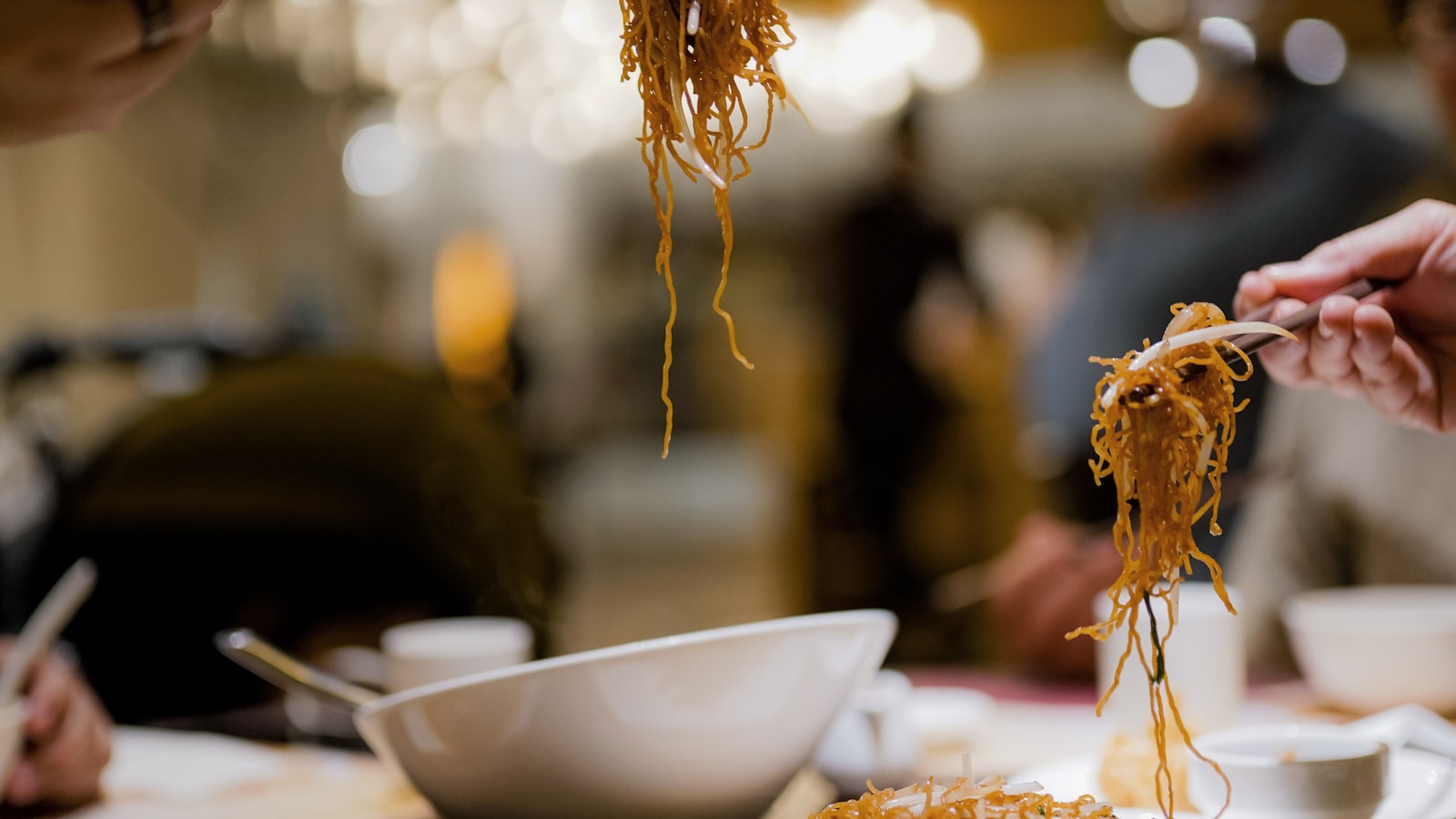
Restaurant Etiquette in China: Ordering, Sharing & Paying
How to order, share dishes, use public chopsticks and handle the bill in a Chinese restaurant — the table manners locals expect.
A Chinese restaurant table runs on its own quiet rules — and once you know them, sharing a meal becomes one of the best parts of traveling in China.
Dining in China is a communal event. Dishes arrive in the center of the table, everyone shares, and the meal is as much about the group as the food. The etiquette isn’t complicated, but getting it right makes you feel — and look — like a guest who understands. Here’s how the table works.
The family-style meal
Almost every Chinese meal is served family-style: a round of dishes in the middle, rice for everyone, and shared chopsticks doing the work. You rarely order one plate per person. The rough rule of thumb for a group is to order about as many dishes as there are diners, plus one — more if your host is generous.
Ordering
- The host orders, or the table decides together. As a guest, defer to the host’s choices — they’ll often order your preferences if you share them.
- Not sure what to pick? A safe strategy is one meat, one fish or tofu, one vegetable, one soup, and rice. Ask for local specialties — every city has dishes you can’t get elsewhere.
- Spice level: if you’re new to chili, say “bu la” (not spicy) or “wei la” (a little spicy) — especially in Sichuan and Hunan, where spicy is the default.
- Regional flavor: Beijing leans savory with duck and noodles, while Chengdu turns up the chili — a Beijing meal and a Sichuan meal are different worlds, so ask what the city you’re in is known for.
Sharing and the Lazy Susan
- The Lazy Susan is spun gently, and only when no one is reaching for it. Wait for others to serve themselves before you turn it.
- Serve others first. The polite move is to serve the elders or the host before yourself. It’s a small gesture that says a lot.
- Don’t dig for the best piece. Take food from the side of the dish facing you, not the choicest bit in the middle.
- The host’s first move is usually to gesture everyone to start. Wait for that signal before diving in.
Public chopsticks and hygiene
- Use the public chopsticks or serving spoons (gong kuai, 公筷) to take food from shared dishes. Restaurants increasingly provide them; if not, use the serving spoon that comes with each dish.
- Don’t pick through dishes with your own chopsticks. It’s the single most noticed etiquette slip.
- Chopstick taboos: never stand them upright in rice (funeral incense), don’t point them at people, and don’t pass food directly from chopsticks to someone else’s chopsticks.
Drinking and toasting
- Toasting is a ritual. The host may propose a toast (ganbei — “bottoms up”). You don’t have to empty your glass, but raising it and taking a sip is respectful.
- Glass height: traditionally, the younger person or the guest holds their glass lower than the elder’s or host’s when clinking. It’s a subtle sign of respect that’s still observed.
- It’s fine to decline alcohol — politely. Say “wo bu he jiu” (I don’t drink) and switch to tea or juice; nobody will pressure you past the first offer.
Paying the bill
- The host pays. Whoever invited the table typically settles the bill — it’s a gesture of hospitality and face.
- Splitting is called “AA” in China. Friends split the total or each pays for their own share; it’s normal and unremarkable.
- As a guest, offer once to contribute (“let me pay my share”), and if the host insists, accept gracefully. The bill fight — two people wrestling over the check — is a genuine Chinese tradition; don’t be startled if it happens near you.
- To call for the bill, catch the server’s eye and say “jie zhang” or use the QR code on the table. Payment is almost always by phone — Alipay or WeChat.
What not to do
- Don’t tip at ordinary restaurants — it’s not expected.
- Don’t leave a completely clean plate as a signal of wanting more; a little food left shows you’re full and the host provided enough. (Buffets are the exception — waste less there.)
- Don’t stick your chopsticks upright in rice, ever.
- Don’t start eating before the host or elders — wait for the first gesture.
The golden rule
When in doubt, watch the locals and mirror them. If you’re unsure whether to use the public chopsticks, using them is never wrong. A Chinese meal is an invitation into how the culture works — gracious, group-oriented and generous — and the etiquette exists to keep it that way.
Last updated: August 2026. Restaurant customs are fairly stable, but always follow your host — confirm before you go.
Frequently Asked Questions
Is tipping expected in Chinese restaurants?
Generally no. Most Chinese restaurants do not add a service charge and tipping is not expected — leaving cash on the table can even cause confusion. A few upscale or tourist-oriented venues may include a 10–15% service charge in the bill, but that's the exception, not the rule.
How do I split the bill in China?
Split bills are normal but handled informally. Locals call it 'AA' (from 'actuarially appropriate') — each person pays for themselves or everyone divides the total. The person who invited the others usually pays, which is a gesture of hospitality; guests should offer to chip in once, then accept if the host insists.
What are the big chopstick rules?
Never stick chopsticks upright in a bowl of rice — it resembles incense at a funeral and is deeply unlucky. Don't point at people with them, and don't use them to spear food. Rest them on the chopstick rest or the edge of your bowl when not eating, and don't pass food chopstick-to-chopstick.
How do I handle the Lazy Susan?
Turn it gently and only when no one is reaching. Wait for others to take food before you spin it, and avoid spinning it while someone is serving themselves or pouring tea. The polite rhythm is: food arrives, the host gestures to start, then everyone serves themselves in turn.
Do I need to order for the table?
No — the host orders, or the table orders together. As a guest, let the host take the lead and order 'as many dishes as people, plus one'. If you're the one hosting, it's polite to order more than the table can eat; running out is considered poor hosting.
How do I say I'm full or can't eat something?
For full, say 'wo chi bao le' (I've eaten enough). To decline a specific dish politely, say 'bu yong, xie xie' (no need, thank you) — a gentle refusal is more graceful than a firm one. If you have dietary restrictions, state them early; see the allergy and vegetarian guides for the exact phrases.