
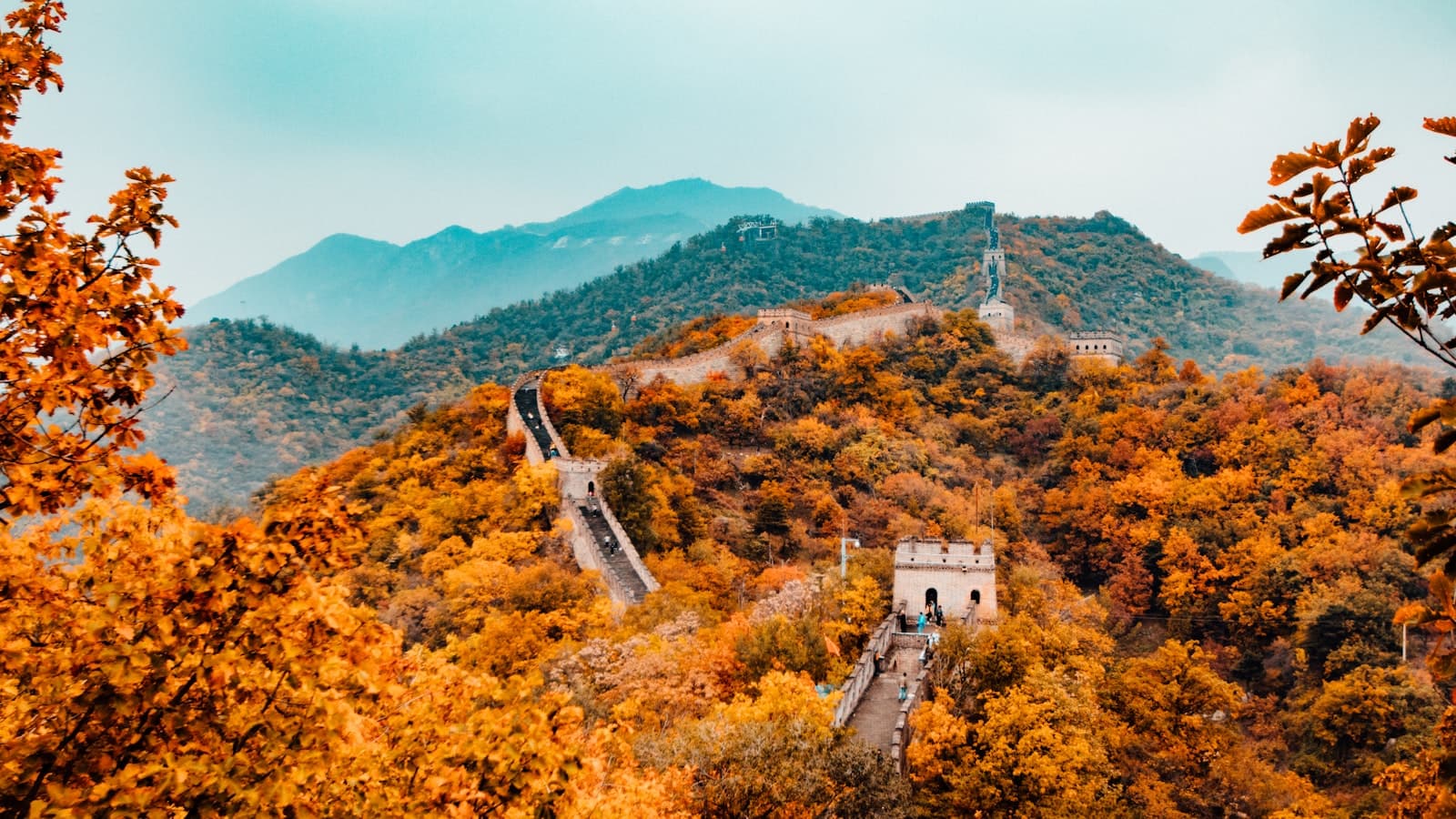
Which Section of the Great Wall Should You Visit?
Badaling, Mutianyu, Simatai or Jinshanling — pick the right Great Wall section for crowds, cable cars, hiking and how to get there.
Every traveler to Beijing wants to see the Great Wall — but ‘the Great Wall’ isn’t one place, and choosing the right section makes or breaks the day.
This guide compares the four sections visitors actually choose from, and how to get to each.
The short answer
- First-timer, average fitness, want it easy → Mutianyu.
- Want the ‘famous’ Great Wall with minimal effort → Badaling.
- Want a real hike with ruins and no crowds → Jinshanling.
- Want dramatic wild towers and a night visit → Simatai / Gubei Water Town.
Badaling — nearest and most crowded
Badaling is the section most people picture: restored, paved and packed with tour groups. It’s about 70km from central Beijing and the easiest to reach (regular buses and tourist shuttles), and it has a cable car.
- Good for: first-timers who want the name-brand Wall, families with young kids, or anyone short on time.
- Watch out: crowds at midday can be extreme. Go early (before 8am) or not at all.
- Getting there: tourist bus from central Beijing, or sightseeing rail-style services; a private car is the comfortable option.
Mutianyu — the best all-rounder
Mutianyu, about 70km northeast of Beijing, is restored but far less chaotic than Badaling. It’s set on a lovely, forested ridge with 23 watchtowers, a cable car up and down, and — the highlight for many — a toboggan slide back down from the wall.
- Good for: most visitors, especially families; the classic first-time experience with a touch of fun.
- Watch out: weekends and holidays still get busy; weekday mornings are best.
- Getting there: direct tourist buses from central Beijing (about 2 hours), or a private car / Didi.
Simatai — wilder, with the famous night view
Simatai, about 120km from Beijing, is the most dramatic of the restored sections: steeper, wilder and with a string of towers along a razor-edge ridge. Many visitors combine it with Gubei Water Town, a rebuilt canal village at its base, where you can also do the night tour — the Wall lit up on the ridge is spectacular.
- Good for: photographers, couples, and anyone who wants the Wall at night.
- Watch out: night tours operate on select days and need advance booking; the walk is steep.
- Getting there: no direct public bus — a tour or private car is the realistic option.
Jinshanling — the hiker’s choice
Jinshanling, about 130km from Beijing, is the most beautiful unrestored section: crumbling watchtowers, original paving in places, and almost no crowds. The classic route is the 3–4 hour hike from Jinshanling to Simatai, over wild wall that few tourists see.
- Good for: serious hikers and photographers who want the ‘real’ Great Wall.
- Watch out: it’s a long day from Beijing — start early, bring water and good shoes.
- Getting there: private car, or a tour that handles the logistics and drops you at the trailhead.
How to choose
| Section | Distance | Crowds | Difficulty | Best for |
|---|---|---|---|---|
| Badaling | ~70km | Very high | Easy | Famous name, quick trip |
| Mutianyu | ~70km | Medium | Easy–moderate | First-timers, families |
| Simatai | ~120km | Low–medium | Moderate–steep | Night views, drama |
| Jinshanling | ~130km | Low | Strenuous | Hiking, ruins |
Practical tips
- Go early. The Wall is at its best in the morning light, and every section is calmer before 9am.
- Check the weather — fog erases the views; a clear day matters more than a warm one.
- Book ahead for Mutianyu, Simatai and Gubei Water Town during holidays.
- Set up mobile payment for tickets, snacks and shuttle buses.
- Pair it with a proper Beijing itinerary — and if you’re still deciding between the capital and Shanghai, see our comparison.
Other sections worth knowing
Beyond the big four, a few more sections turn up in tour brochures. Huanghuacheng is a partly flooded, semi-wild stretch with a lake — unusual scenery but awkward transport. Jiankou is a crumbling, dangerous hiker’s wall that’s mostly photographed, not walked, by sensible visitors. For a first visit, none beats the four above; for a return trip, Huanghuacheng is a more rewarding ‘less-travelled’ pick than the crowded Badaling loop.
Plan your day
Whichever section you choose, allow a full day — most are 1–2.5 hours each way from central Beijing, and the Wall itself deserves at least three hours. The standard day is: early-morning departure, a late-morning walk along the wall, lunch at the base (or at Gubei Water Town for Simatai), and a late-afternoon return. Book transport the evening before in high season, and keep your passport handy if you’ve booked any tickets online.
Getting to each section
Public buses only really serve Badaling and Mutianyu; Simatai and Jinshanling almost always mean a tour or private car. Whichever you choose, build the trip into your Beijing plans and book transport a day ahead in high season. Long-distance rail bookings across China use your passport — see our train guide.
Tickets, timing & the best light
Entry tickets for the restored sections (Badaling, Mutianyu, Simatai) are typically bought online with your passport, and the popular sections are real-name and can sell out on holidays — book a day or two ahead in season. Cable car and toboggan tickets are usually separate from entry. The best light is early morning and the hour before sunset, when the wall glows and the crowds are thinner; midday is the worst time for both. Clear, crisp weather matters more than warmth — a blue autumn or winter day beats a hazy summer one, and fog will erase the views entirely, so check the forecast before committing to a section. All prices are estimates and change.
What to bring & eat
Pack water, sun protection and a light windbreaker even in mild weather — the wall is exposed, with little shade and a breeze that picks up on the ridge. Wear grippy shoes; the restored sections have steep steps, and the wild ones have loose stone. Food at the base is simple and tourist-priced, so a packed snack is smarter if you’re hiking. For a full-day hike like Jinshanling, carry more water than you think you need. Set up mobile payment for tickets, shuttles and snacks, and keep your passport handy if you’ve booked online.
Common mistakes to avoid
- Choosing Badaling by default — it’s the most crowded; Mutianyu is the better all-rounder for most.
- Going at midday — you’ll queue for the wall and then share it with the crowds.
- Underestimating the steps — the wall is steeper than it looks; pace yourself.
- Ignoring the weather — fog and rain waste the day; check the forecast.
- Not booking transport back — the remote sections (Simatai, Jinshanling) have limited return options in the evening.
One more planning point: allow a full day for whichever section you choose, and don’t try to combine the Wall with another major Beijing sight on the same day — the travel time alone makes that a mistake. And if you’re weighing sections purely on scenery, Jinshanling and Simatai deliver the most dramatic ridgeline views, while Mutianyu wins on comfort and the toboggan. For most first-timers, Mutianyu’s balance remains the safest recommendation. Whatever you pick, go early and the crowds mostly solve themselves.
Last updated: August 2026. Night-tour dates and prices change — confirm before you go.
Frequently Asked Questions
Which section of the Great Wall is best for first-timers?
Mutianyu. It's restored enough to be safe and comfortable, has a cable car and the famous toboggan ride down, and is far less crowded than Badaling. For most visitors it offers the best balance of scenery, ease and manageable crowds.
Which section is the most crowded?
Badaling, by a wide margin. It's the nearest section to Beijing and the one on every tour-bus route, so at peak times it's shoulder-to-shoulder. Go there only if you want the easiest access or a strong preference for the most famous name.
Which section is best for a proper hike?
Jinshanling. The unrestored-to-restored stretch between Jinshanling and Simatai is the classic Great Wall hike, with wild, crumbling watchtowers and no crowds. It takes 3–4 hours and is the one serious hikers travel for.
Can I visit the Great Wall without a tour?
Yes. Mutianyu and Badaling both have regular tourist buses from central Beijing, and private cars or ride-hailing are common. Jinshanling and Simatai are harder without a driver or tour because of the distance. See our [train guide](https://chinotrips.com/how-to/train-tickets/) for general travel bookings.
Is the Great Wall one continuous wall?
Not really. The Great Wall is a network of walls and fortifications built and rebuilt over many dynasties, much of it in ruins. 'A section of the Great Wall' is really a choice of which stretch to visit — which is exactly what this guide helps with.