
Anhui Travel Guide (2026)
The essential Anhui guide — Huangshan's granite peaks, the ancient villages of Hongcun and Xidi, Tunxi old street and how to plan a visit.
OpenStreetMap Google Maps (opens externally)
Anhui is home to Huangshan — the Yellow Mountains — China’s most famous mountain range, plus some of the best-preserved ancient villages in the country.
It’s a compact province that combines a world-class natural landmark with the white-walled, black-tiled architecture of Huizhou, the region’s merchant culture. This guide covers the essentials.
Overview
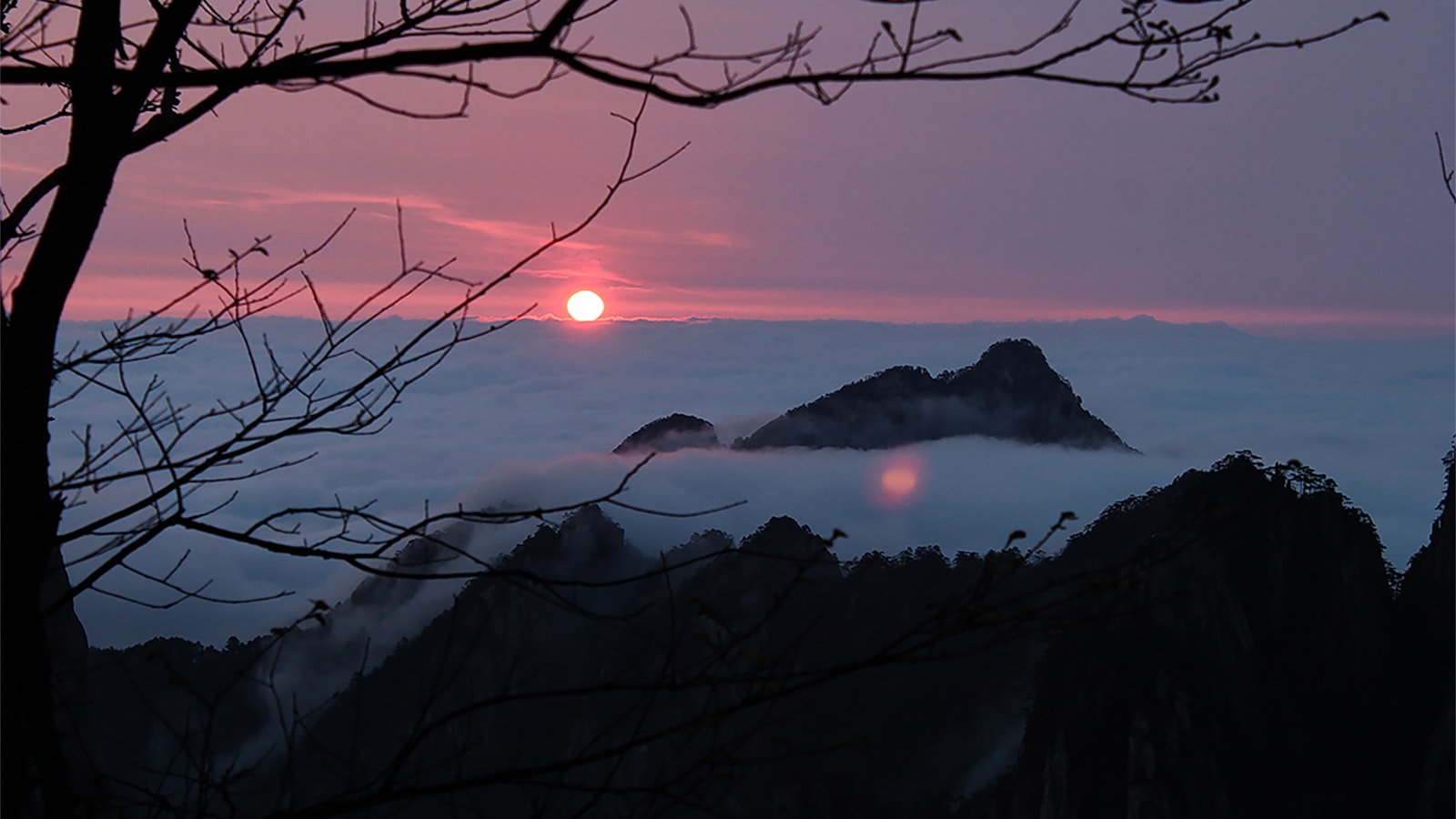
Anhui, in eastern China between the Yangtze and the Yellow Sea coast, is best known for two things. The first is Huangshan (literally “Yellow Mountain”), a UNESCO World Heritage Site whose granite peaks, gnarled pines and swirling clouds have inspired Chinese painters for centuries — its tallest summit, Lotus Peak, rises to about 1,864 meters. The second is the Hui-style architecture of southern Anhui: the ancient villages of Hongcun and Xidi, where white walls, dark tiled roofs and ornate carved gates survive from the Ming and Qing dynasties.
The natural base for a visit is the town of Tunku (Tunxi), with its restored old street of teahouses and craft shops, and Tangkou, the gateway village at the foot of the mountain. Everything here is within a comfortable day’s reach of the mountain or the villages, which makes Anhui a satisfying, self-contained trip — and an easy add-on to a Shanghai or Hangzhou itinerary.
Best time to visit
- Autumn (October–November): the classic — clear skies and the best odds of sunrise and a sea of clouds.
- Spring (April–May): fresh green and wildflowers, with more mist.
- Summer (June–August): busy and often cloudy or rainy; cooler than the plains below but still crowded.
- Winter (December–February): snow and rime ice make the peaks otherworldly and it’s quieter — but cold, and the West Sea Grand Canyon closes roughly December to March.
Getting there & getting around
- By high-speed rail: to Huangshan North station (黄山北) — about 2.5–3 hours from Shanghai, about 1.5 hours from Hangzhou and Nanjing. Book with your passport — see our train ticket guide.
- From the station: a shuttle bus or taxi (roughly 50 minutes) runs to Tangkou at the foot of the park; Tunxi old street is a shorter ride.
- On the mountain: cable cars (Yungu, Yuping and Taiping routes) do the heavy lifting, and walking the stone stairways connects the viewpoints. Summit hotels at Beihai, Xihai and Guangmingding put you close to the sunrise spots.
- To the villages: buses and taxis from Tangkou reach Hongcun and Xidi in about 30–45 minutes. The mountain and the villages are organized as separate sites with separate entry tickets, but both are reachable from the same Tangkou base, so you can arrange the whole trip from one place.
Main destinations
- Huangshan — the headline: granite peaks, the sea of clouds, the West Sea Grand Canyon and the Welcoming Pine, best seen with an overnight on the summit. See our Huangshan Travel Guide for the full two-day plan.
- Hongcun — the water-mirror village, with its reflecting lake and film-famous gatehouse; the most photographed of the Anhui villages.
- Xidi — the quieter neighbor, with more intact merchants’ houses and fewer crowds; a calm complement to Hongcun.
- Tunxi old street — a restored stretch of Ming- and Qing-era buildings with teahouses, ink-stone shops and local snacks; good for a final morning before departure.
- Jiuhuashan — a sacred Buddhist mountain to the northeast, an optional add-on for travelers with extra days.
Suggested itinerary
A 4-day plan:
- Day 1: high-speed rail to Huangshan North, shuttle to Tangkou, and the cable car up in the afternoon; settle into a summit hotel and catch sunset.
- Day 2: sunrise at Guangmingding or Beihai, then the West Sea Grand Canyon before descending via the Yuping cable car past the Welcoming Pine; overnight in Tangkou or Tunxi.
- Day 3: a full day on the ancient villages — Hongcun in the morning, Xidi in the afternoon.
- Day 4: Tunxi old street in the morning, then the train onward to Hangzhou or Shanghai.
The key booking is the summit hotel — everything else schedules around that date.
Practical tips
- Book the mountain hotel first — summit rooms are limited and sell out, especially in October and on weekends.
- Pack light but warm — it’s several degrees cooler on the summit than at the base, even in summer.
- Leave big luggage at Tangkou — most hotels at the foot store bags while you’re up the mountain.
- Sort out mobile payment before you arrive — park tickets, buses and village entry are all cashless.
- Check the summit forecast — rain means little to see, while the day after rain is often spectacular.
- What to eat: Huizhou (Hui) cuisine is savory and slow-cooked; try the preserved vegetables and bamboo shoots of the mountain region.
Food & drink
Huizhou (Hui) cuisine is the cooking of the mountains — savory, slow-braised and generous with cured and preserved ingredients. In the villages around Huangshan, look for stinky mandarin fish, a fermented-then-braised river fish whose aroma is more alarming than its taste; hairy tofu, fried or braised with a pungent kick; and bamboo shoots, mushrooms and mountain greens gathered from the surrounding forests. Dishes tend toward dark, rich braises and heavy use of stone-pot cooking. Tea is the region’s other staple — Huangshan Maofeng and Keemun (Qimen) black tea are both grown in the province, and a tasting in the old streets is a gentle way to end a day of hiking.
Hui culture & crafts
The villages of southern Anhui preserve more than buildings — they preserve a whole merchant culture. During the Ming and Qing dynasties, Huizhou merchants dominated China’s salt, tea and pawnbroking trades, and they poured their wealth into home villages: whitewashed walls, dark tile roofs, carved wooden screens and horse-head gables designed, in part, as fire breaks. Hongcun’s water system still channels mountain streams past every doorway, which is why the village appears to float; Xidi’s merchants’ houses show the carved latticework and stone gateways that advertised a family’s success. The old street in Tunxi carries the region’s other craft traditions, above all the ink sticks and ink stones of the Huizhou literati, which are still made and sold there.
Beyond Huangshan
Most visitors never get past the mountain and the villages, which is fine — but the province has a couple of worthwhile extensions. Jiuhuashan, northeast of Huangshan, is one of China’s four sacred Buddhist mountains, with dozens of temples strung across its ridges and a quiet, pilgrimage-driven atmosphere that contrasts with Huangshan’s cable-car crowds. The ancient city of Shexian, west of the villages, holds further Hui architecture and the scenic Xin’an River corridor. Because Anhui sits neatly between Shanghai, Hangzhou and Nanjing on the high-speed rail network, it is also one of the easiest provinces to fold into a wider eastern-China loop — the mountain, one village and Tunxi make a tight, satisfying three- or four-day block.
The local bamboo-shoot and preserved-vegetable dishes pair well with Huangshan’s strong, toasty teas, and mountain farmers sell dried mushrooms and tea as souvenirs. Look for the carved wooden door panels and stone lattice windows as you walk the villages — the level of ornament was a Huizhou merchant’s way of showing status without saying a word. If you have a fifth day, the smaller, quieter valleys around the mountain, with their hot springs and bamboo groves, make a gentler end to the trip than the summit crowds.
Last updated: August 2026. Cable-car prices, winter closures and summit hotel availability change — confirm before you go.
Frequently Asked Questions
How many days should I spend in Anhui?
Four to five days is comfortable: two days for Huangshan with an overnight on the mountain, a day for the ancient villages of Hongcun and Xidi, and a final morning for Tunxi old street before departure. If you're short on time, the mountain plus one village makes a solid three-day trip.
Do I need to stay overnight on Huangshan?
Recommended, if you can get a room — staying on the summit lets you catch sunrise and the famous sea of clouds, when the day-trip crowds thin out. Summit hotels are limited and sell out weeks ahead, especially in October and on weekends, so book early.
Hongcun or Xidi — which village should I pick?
Both are UNESCO-listed and easy to reach from Tangkou, so you can usually see both in one day. Hongcun is the more cinematic — a water-mirror village famous for its reflecting lake and Crouching Tiger, Hidden Dragon filming — while Xidi is quieter, with more intact merchants' houses. Many travelers do Hongcun first and keep Xidi for a calm afternoon.
How do I get to Anhui from Shanghai or Hangzhou?
Take the high-speed train to Huangshan North station — about 2.5–3 hours from Shanghai and about 1.5 hours from Hangzhou. From the station, a shuttle bus or taxi runs roughly 50 minutes to Tangkou at the foot of the mountain park. Book rail tickets with your passport; see our train ticket guide.
When is the best time to see Huangshan's sea of clouds?
The sea of clouds is most likely in autumn and after rain, especially around sunrise — but it's weather luck. October to November gives the best odds of clear skies; spring brings more mist and wildflowers but cloudier days. Check the summit forecast and be flexible.
Do I need a visa for Anhui?
Same rules as mainland China generally: citizens of 50 countries are visa-free for up to 30 days, and others may use the 240-hour transit scheme for short trips. Check the visa-free list for your passport before booking.