
China Domestic Flights: Booking, Airlines, Baggage (2026)
How to book domestic flights in China — airlines and budget carriers, fares, baggage rules, handling delays, and when to fly instead of taking the train.
China’s domestic flights are cheap, frequent and easy to book once you know the system — but the train often beats them on shorter routes, and a few airport quirks can catch first-timers out. Here’s how to fly smart inside China.
Flying between Chinese cities is one of the fastest ways to cover the country’s enormous distances. A flight from Beijing to Guangzhou takes about three and a half hours, where the high-speed train takes eight. But domestic aviation in China has its own rules: passport-based check-in, two-airport cities, budget carriers that charge for everything, and weather delays that bunch up in summer. This guide walks through when to fly, how to book, what to pack into your allowance and how to handle the delays that will happen sooner or later.
When to fly instead of taking the train
The single most useful decision is not which airline to pick, but whether to fly at all. China’s high-speed rail network is world-class, and for routes under about 800 km it is usually the better choice:
- Door-to-door time. Airports sit far outside most city centers — Beijing Daxing is over an hour from downtown — while high-speed rail stations are central. Add check-in, security and baggage, and a two-hour flight is often a five-hour journey. Rail from center to center is honest about its time.
- Reliability. Trains are barely affected by weather; aviation is. Summer thunderstorms and air-traffic control routinely stack up delays in July and August.
- Cost. On short routes the rail is comparable or cheaper, and it has no baggage games.
- When flying wins: genuinely long routes — Beijing to Guangzhou or Shenzhen, Shanghai to Chengdu, anywhere crossing half the country — plus any route over water or mountains with no rail shortcut, like Hainan island.
A useful rule of thumb: below 800 km, take the train; above 1,000 km, consider flying; in between, compare actual door-to-door time. Our train ticket guide covers booking the rail alternative, which on many corridors is effectively a shuttle.
Booking domestic flights in China
Booking a domestic flight as a foreigner is straightforward, and there are two comfortable routes:
- Online travel agency. Trip.com (the international face of Ctrip) handles foreign passports natively, shows prices in your currency, and manages rebooking when things change. It is the default choice for most visitors.
- Airline direct. Air China, China Southern, China Eastern and Hainan all run English sites and apps where you can book and check in. Direct booking sometimes gives better access to fare changes and seat selection.
Either way, three rules apply:
- Enter your passport details exactly as they appear — the name must match the document at check-in.
- Book early for the best fares. Domestic prices climb sharply in the last week, and can double or triple at the counter.
- Watch the airport code. As covered below, which airport matters as much as which city.
Payment is easy with an international card on Trip.com. If you plan to pay locally with a Chinese wallet, see our guide to paying in China — Alipay and WeChat Pay can be linked to international cards, which also lets you buy tickets on the airline apps directly.
Which airlines to consider
China’s “big three” state carriers — Air China, China Southern and China Eastern — cover nearly every route and are the safest default. Hainan Airlines and Xiamen Airlines are also full-service and well regarded. For a first-time traveler, any of these is fine.

The bigger decision is whether to use a budget carrier to save money. The main ones are Spring Airlines, 9 Air, Beijing Capital Airlines and Lucky Air, plus a few regional players. Budget fares can be strikingly cheap — sometimes half the full-service price — but:
- Checked baggage usually costs extra, and the base fare may include none at all.
- Seat pitch is tight, and drinks and snacks are paid.
- They often fly from the older, farther airport (for example, Shanghai’s budget flights tend to use Pudong, while full-service domestic flights often use central Hongqiao).
If you are flying light with carry-on only, a budget fare is a genuine bargain. If you check a bag, compare the all-in price before booking.
Baggage rules on domestic flights
Baggage rules vary by airline and fare class, but a typical full-service domestic ticket includes:
- 20 kg of checked baggage (one bag) — some routes include 23 kg or two bags on business-class tickets.
- One carry-on up to about 7 kg, sized to fit the overhead bin.
Budget carriers break this model: their cheapest fares may include no checked bag at all, selling it as an add-on for roughly ¥60–150 per 20 kg depending on route. The carry-on allowance is often smaller too. Always read the baggage line in the fare rules before paying.
Other things to know:
- Power banks (external batteries) must go in carry-on, never checked baggage, and are limited to 100 Wh (about 27,000 mAh). This rule is enforced at security.
- Liquids follow the standard 100 ml carry-on rule; anything larger goes in checked luggage.
- Overweight bags are charged per kg, typically around ¥30–80/kg depending on route — cheaper to buy an extra bag online in advance than to pay at the counter.
If you arrive on an international flight and immediately connect to a domestic one, our airport arrival guide covers the arrival flow — note that you usually clear customs and re-check your bag before the domestic leg.
At the airport: check-in and security
Chinese domestic terminals are efficient but busy, and the flow is a little different from many Western airports:
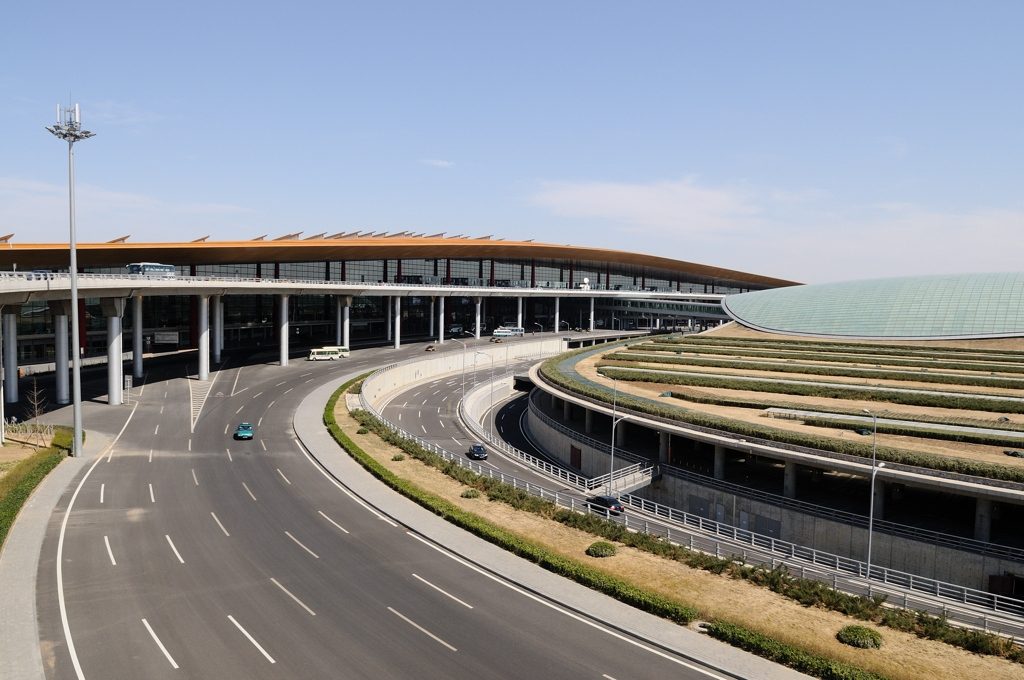
- Check-in is by passport, not by paper ticket. Have your passport and booking reference ready at the counter or kiosk. The passport is also your boarding pass at security and the gate.
- Arrive with time. Domestic check-in usually closes 30–45 minutes before departure, and security lines at peak hours (mornings, Friday and Sunday evenings, around holidays) can be long. Two hours before is a comfortable buffer for a domestic flight; three for anything around a festival.
- Security is thorough but standardized — laptops out, liquids in the tray, power banks visible. There are no significant differences in what’s allowed compared to international standards.
- Boarding is by zone, announced in Mandarin and English at major airports. Have your passport and boarding pass in hand.
If your flight is early morning, consider the night before: hotels near airports are inexpensive, and some book with a free shuttle. On the other side, if you are flying into a new city and need to get from the airport to the center, many cities have rail links — our metro guide covers the common options.
Dealing with delays and cancellations
Delays happen more in China than most travelers expect, and they cluster in predictable windows:
- Summer thunderstorms (June–August) are the biggest cause — afternoon and evening flights back up when weather closes the corridor.
- Air-traffic control is the second cause and unique to China’s crowded airspace. It can hit clear-sky days, and the reason is often not announced in English.
- Winter fog occasionally grounds flights in Chengdu, Urumqi and other basins in December and January.
Practical responses:
- Check your flight status in the app before leaving for the airport. Trip.com and airline apps show live departure/arrival. If a flight is listed as delayed or cancelled, the app usually offers rebooking options directly.
- If you’re at the airport, go to the airline counter for rebooking and, under China’s consumer rules, potentially meal vouchers or hotel accommodation for significant delays. Know that compensation is more generous in China than in many Western jurisdictions but enforcement can be uneven — a polite ask at the counter helps.
- Keep your original booking details. For refunds and insurance claims you’ll want the ticket number and the airline’s written delay reason.
- Travel insurance pays for the unpayable. Trip delays, missed connections and the cost of an extra night are exactly what travel insurance for China covers — get a policy with trip-delay protection before you fly.
Budget carriers and hidden fees
The cheap domestic fare you see in a search result is rarely the total. Before comparing, add:
- Checked baggage — the big one, often not in the base fare.
- Seat selection — some budget airlines charge for choosing a seat at booking.
- Payment fees — occasionally added for foreign cards.
- Airport transfer cost — if the budget airline flies from the far airport, factor in the extra travel.
With all fees added, the budget flight is often still cheaper than full-service — but not by as much as the headline number suggests, and the time penalty of the far airport can eat the savings on short hops.
Connecting flights and through-tickets
If you are flying between two cities with no direct route — or making a domestic connection after an international arrival — consider buying one through-ticket rather than two separate bookings:
- A through-ticket means the airline (or the online agency) handles your connection; if the first leg is late, you are rebooked on the next flight at no cost.
- With two separate bookings, a missed connection is your problem and your cost.
- Through-tickets on the same airline also let you check your bag to the final destination.
Trip.com will show through-ticket options automatically. Just make sure you have enough connection time — at least two hours for a domestic-to-domestic connection in a big airport, more if you need to transfer between airports (which is a full surface journey, not a terminal walk).
Flying around holidays and peak periods
China’s travel peaks — especially the Spring Festival and the National Day Golden Week — turn domestic aviation into a stampede. If you are traveling during one of these windows:
- Book far ahead. Fares climb fast and popular routes can sell out weeks before the holiday.
- Expect full flights and long queues, and add an extra hour at the airport.
- Flexible dates are gold — flying the day before or after the peak can halve the fare and the chaos.
- If your dates are fixed and the flights look painful, the high-speed train is often the calmer choice — the network is enormous and trains are added over holidays.
For the full picture of China’s holiday calendar and how to dodge the worst crowds, see our China festival calendar and the Golden Week travel guide.
Final checklist before you book
- Compare the train on routes under 800 km before defaulting to a flight.
- Book with your passport details, and bring the passport itself to the airport.
- Decide on baggage before booking — a checked bag turns a budget fare into a full-service fare.
- Note the exact airport in two-airport cities like Beijing, Shanghai and Chengdu.
- Leave a generous buffer at peak hours and around holidays.
- Get travel insurance with delay cover, and keep your booking reference handy.
Last updated: August 2026. Schedules, baggage allowances and airline policies change frequently — confirm current rules with your airline or booking agency before you go.
Frequently Asked Questions
How do I book a domestic flight in China as a foreigner?
The easiest way is an online travel agency like Trip.com or Ctrip, which handles foreign passports automatically. You can also book direct on airline apps (Air China, China Southern, China Eastern, Hainan) and sites — many have English versions. Book with your passport details exactly as they appear in the document; the name must match when you check in. On the day, bring the passport itself — Chinese domestic flights are checked against the passport, not a ticket printout.
Is it better to fly or take the high-speed train in China?
For routes under about 800 km, the high-speed train is usually the better choice: city-center stations beat far-flung airports, security is faster, and weather affects rail far less than aviation. Above 800–1,000 km, flying usually wins on total time — for example Beijing to Shanghai or Beijing to Guangzhou. On some corridors (Beijing–Shanghai, Shanghai–Hangzhou) the rail is so frequent it's effectively a shuttle. Compare door-to-door time before you book.
How much does a domestic flight in China cost?
Domestic fares are often cheaper than in the West. Rough guidance in CNY (prices change, and this is an estimate): short hops (1–1.5 hours) ¥400–900; medium routes like Beijing–Shanghai ¥600–1,300; long transcontinental routes like Beijing–Guangzhou or Beijing–Urumqi ¥1,000–2,500. Budget carriers undercut these, and last-minute tickets are typically 2–3 times the advance price. The same route on the same day varies a lot by booking lead time.
What are the baggage rules on Chinese domestic flights?
Full-service Chinese carriers usually include 20 kg of checked baggage and one 7 kg carry-on in a standard domestic fare. Budget airlines (Spring Airlines, 9 Air, Beijing Capital Airlines) often sell fares with no checked baggage, or charge per bag — read the fine print before paying. Liquids, batteries and power banks follow standard aviation rules; power banks go in carry-on, never checked, and must be under 100 Wh. A checked bag that exceeds the allowance is charged per kg, typically around ¥30–80/kg depending on route and carrier.
How common are delays and what should I do if mine is cancelled?
Domestic flights in China run reasonably on time overall, but delays spike in summer (thunderstorms) and with air-traffic control — a cause unique to China's busy airspace. On departure, check the app for status before you head to the airport. If a flight is delayed or cancelled, the airline is responsible for rebooking and, under China's rules, may owe meal or hotel compensation for longer delays — ask at the airline counter. Travel insurance (see our insurance guide) covers the rest, and flexibility is easier if you booked refundable.
Which airports do Chinese domestic flights use?
Big cities often have two airports: Beijing has Capital (PEK) and Daxing (PKX), Shanghai has Pudong (PVG) and Hongqiao (SHA), Chengdu has Shuangliu and Tianfu. Which one matters a lot — Hongqiao is right in Shanghai's city while Pudong is far east. Check which airport your ticket actually uses, and give yourself time for transfers between the two. Budget carriers tend to fly from the older, farther airport. If you are arriving internationally and connecting onward, our airport arrival guide walks through the flow.
Do I need a VPN to book or check in on Chinese airline apps?
No — Chinese airline sites and apps work fine without a VPN, and most airport Wi-Fi is usable for check-in. A VPN is useful for Western apps like Google Maps and WhatsApp that are blocked on mainland networks; install and test it before you arrive if you rely on those. For flight bookings, Trip.com, Ctrip and the airline apps themselves all run natively on mainland connections. See our VPN guide for setup details if you do need the Western apps.