
Photographing the Terracotta Army: What Works (2026)
How to photograph the terracotta army in Xi'an — the photo rules, the best positions and timing, what the official photos look like, and how to get a worthwhile shot.
The terracotta army is one of the most impressive sights in China — and one of the most photographed. Here’s how to capture it well: the photo rules, the best positions, and the timing that beats the crowds.
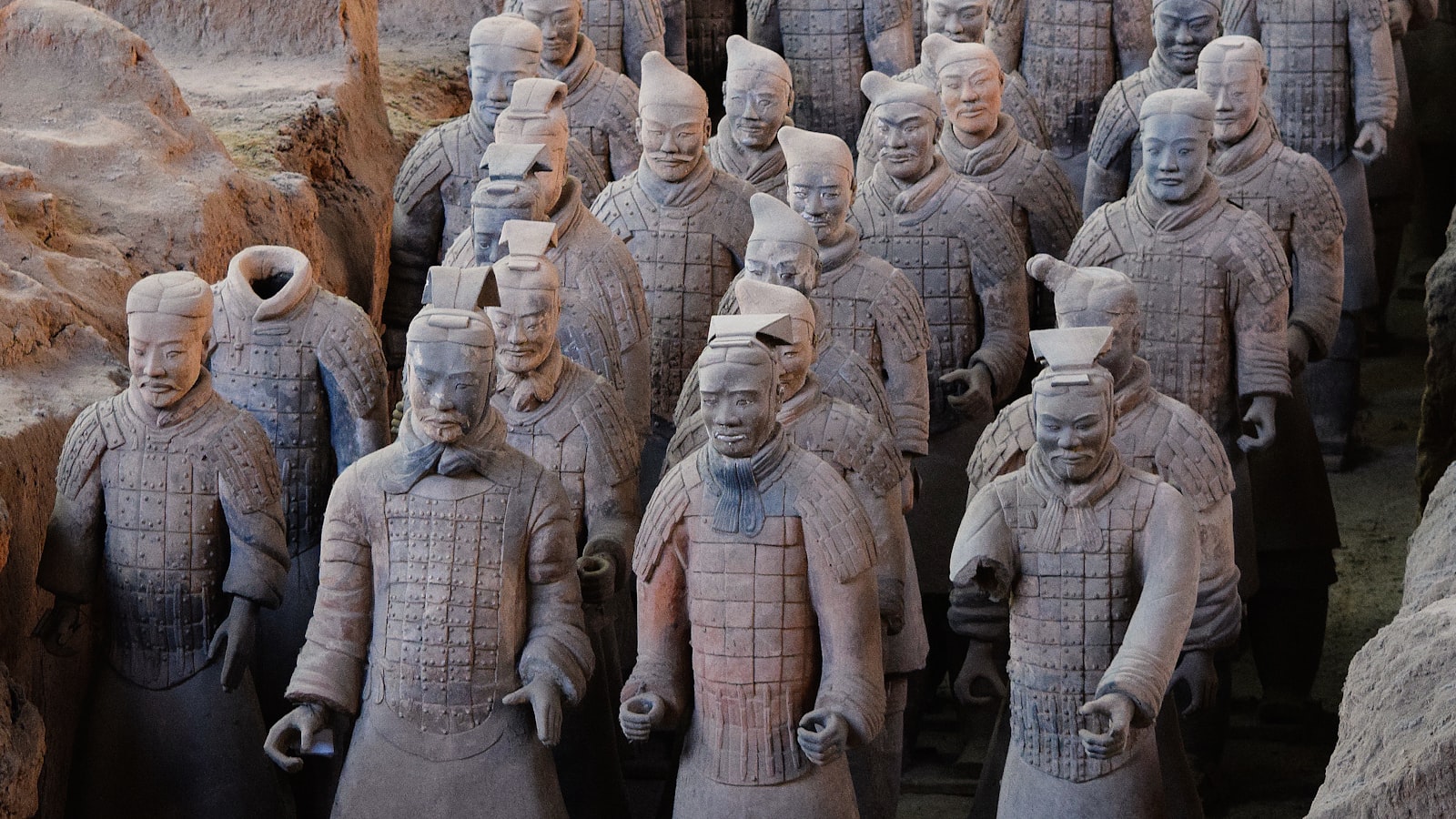
The terracotta army is a photographer’s challenge as much as a spectacle. Thousands of life-sized warriors stand in formation in Xi’an’s pit 1 — one of the most photographed scenes in China — but the best images aren’t the wide crowd shots. They come from understanding the rules, the timing and the positions. This guide covers how to photograph the warriors well.
The photo rules, plainly
- Photography is allowed in the pits — the defining rule is no flash, which can damage the painted surfaces.
- Some viewpoints and exhibitions restrict cameras; follow the signs and the staff.
- No touching, no tripods in the busiest areas — the handrails and galleries are your tripod.
- The high galleries around the pits are the open, standard photography positions.
The rules are simple and consistently enforced: no flash, respect the restricted spots, and shoot from the walkways.
The best positions
- The high galleries around pit 1 — the classic wide overview, the defining image of the army.
- The end positions — for the diagonal view down the ranks of warriors, which reads better than a head-on shot.
- Pits 2 and 3 — smaller but with closer views of the warriors and the general’s figures.
- The museum’s collection — individual warriors and artifacts, good for detailed shots.
The wide shot comes from the galleries; the memorable images come from the detail — so move between the wide and the close-up.
The timing that matters
- Go at opening — the first hour is the quiet window before the tour groups fill pit 1.
- Do pit 1 first — see it early, at its emptiest, then the smaller pits and the museum.
- Avoid 10am–2pm — the busiest window on the galleries.
- Expect crowding at the rail — the front of the gallery gets deep with people; wait for a gap and shoot from the upper line.
The light inside is even and fairly flat, so the timing is about the crowds, not the light — early is everything.
The shots worth taking
- The wide gallery view — the army from above, thousands of warriors in formation.
- A single warrior, close-up — every face is distinct; a zoom on one warrior’s expression is the shot that surprises people.
- The rows in perspective — shooting down the ranks, the depth of the army compressed into a line.
- The detail of the armor — the craftsmanship in a single figure.
The close-ups are the images that stand out from every other terracotta photo — spend time finding the warrior whose face speaks.
The shots, in order
A good terracotta photo sequence, from wide to close:
- The pit 1 overview — from the high gallery, the whole army in formation; the definitive shot.
- The diagonal ranks — shooting down the rows, the depth of the army compressed into perspective lines.
- The front line — the first rows of warriors, their faces visible, from the front gallery.
- A single face — zoom on one warrior; every face is distinct, and this is the image that stands out.
- The details — armor, hands, the individual features; the craftsmanship close-up.
Most photographers leave with the wide shot; the memorable images come from moving from the wide to the single face.
Common mistakes to avoid
- Using flash — the one rule that matters; it can damage the painted surfaces and it flattens your shot anyway.
- Photographing the crowds instead of the warriors — the pits have plenty of people at the rail; wait for the gaps and shoot the army, not the visitors.
- Leaving without the close-up — the single-face shots are what separate a terracotta photo from everyone else’s.
- Arriving late — the tour groups fill the galleries from mid-morning; opening is the window.
- Rushing through — the pits are a place to take time; the good frames come with patience along the walkways.
The museum logistics
The terracotta army site is a museum complex about an hour from Xi’an, and the practicalities matter for photos: arrive at the gate at opening to be first into pit 1; enter pit 1 first before moving to the smaller pits and the museum; and allow 2–3 hours for the full visit — the warriors reward unhurried time, and the light changes through the morning. Book entry ahead in peak season, and use the free shuttle from the main car park to the gates.
What a visit costs
Rough guidance (per person, CNY, prices change): entry ticket about ¥120; transport from Xi’an (bus, tour or driver) ¥40–200 depending on option; audio guide or guide ¥50–150 if you want context; food and water at the site ¥30–80. The photography itself is free. A full morning at the warriors — with time for the wide shots and the close-ups — is a modest cost for one of the most photographed sights in China.
The background that improves the shots
The warriors are powerful subjects, and a little context makes the photos richer. The army was built to accompany the first emperor into the afterlife — thousands of soldiers, each individually crafted with a unique face, standing guard for over two millennia. Knowing that the differences in the faces were deliberate — each warrior modeled to a real soldier — transforms how you photograph them: the close-up of a single face becomes a portrait of a person, not a statue. The archaeology adds meaning to the images.
Practical planning
- Book ahead — the site needs advance booking in peak season; entry is timed.
- Go early and directly — transport from Xi’an is about an hour; being at the gate at opening is the single best move.
- Bring a zoom — a 24–70 mm or a phone handles it; reach helps for the detail shots.
- Get connected — Alipay and an eSIM for tickets and transport.
- Combine with the city — the city wall at sunset and the Muslim Quarter make a full photographic day.
Photography inside and out
The terracotta army’s photography extends beyond the pits. The museum’s main hall holds individual warriors and artifacts displayed with good lighting — often closer and clearer than the pit galleries. The site’s grounds and the entrance area offer architectural shots, and the bronze chariots exhibition has superb close-up subjects. Give yourself time beyond pit 1; some of the best images of the site come from these quieter, closer displays where the lighting is better controlled.
The bottom line
The terracotta army is one of the world’s great photographic subjects — thousands of warriors, each with a distinct face, in one of the most moving sights in China. Photograph it by knowing the rules (no flash), taking the high-gallery wide shot, and — the key — arriving at opening to beat the crowds. Then zoom in on a single face, and you’ll have an image that stands out from every other photo of the army.
Last updated: August 2026. Access and photo rules change — confirm current details before you go.
Frequently Asked Questions
Can I take photos of the terracotta army?
Yes — **photography is allowed** in the pits, with one important rule: **no flash**. The flash can damage the fragile painted surfaces, and guards enforce it. Some viewpoints and special exhibitions restrict cameras entirely, so follow the signs and the staff. The standard galleries around pit 1 are open to photography, and most visitors get good shots from the high walkways.
What's the best way to photograph the terracotta army?
From the **high viewing galleries** around pit 1 — the walkways give the overview of the whole army, the classic wide shot. For the more distinctive image, use a **zoom to isolate a single warrior or a row of faces** — the detail shots are far more striking than a wide crowd scene. The warriors' expressions and the variations in each face are what make the close-ups special.
When is the best time to visit for photos?
**Right at opening** — the museum opens early, and the first hour is the window before the tour groups flood pit 1. The galleries are busiest 10am–2pm. Go early, head straight to pit 1 first, and do the detailed shots before the crowds fill the walkways. The lighting inside is fairly even, so the timing matters more for the crowds than the light.
Do I need a special lens to photograph the terracotta army?
No — a **standard zoom** (24–70 mm or similar) covers it well: wide for the army overview, and zoomed for the single-warrior close-ups. A phone works too, especially for the wide shots. The main constraint is **distance** — you photograph from the galleries, not among the warriors — so a lens with some reach helps for the detail images. No tripod needed; the handrail is the stabilizer.
Are the warriors really as impressive as the photos?
Yes — the sheer scale of pit 1, with thousands of life-sized warriors standing in formation, is genuinely overwhelming and one of the most impressive sights in China. The photo that does it justice is the wide gallery shot, but the detail is the surprise: every warrior has a distinct face and expression, which is what makes the close-up shots so special.
What else in Xi'an is worth photographing?
Xi'an is a superb photography city: the **ancient city wall** (best at sunset and at night when it lights up), the **Muslim Quarter's street life**, the **Big Wild Goose Pagoda** at dusk, and the **Tang dynasty night-scene district**. See our [Xi'an guide](https://chinotrips.com/xian/) for the full picture. A day at the terracotta army plus a sunset on the wall is the classic photographic day.