
Central Ancient Capitals Route: Luoyang, Kaifeng & the Heart of China (2026)
A route through China's ancient capitals — Luoyang's Longmen Grottoes, Kaifeng's Song city, Zhengzhou and Xi'an. The 5-day itinerary through the heart of Chinese history.
OpenStreetMap Google Maps (opens externally)
The Central Ancient Capitals route is a journey through the heart of Chinese history — Luoyang’s Longmen Grottoes, the Shaolin Temple, Kaifeng’s Song city and the road to Xi’an. Here’s the 5-day plan.
China’s greatest history was written in the Central Plains — the flat, fertile heartland where the dynasties made their capitals for over two thousand years. Luoyang, Kaifeng, Zhengzhou and, to the west, Xi’an: the cities where emperors ruled, where the great religions carved their caves, and where the kung fu masters founded their temple. This route connects them in a 5-day journey through the very heart of Chinese history.
Day 1: Zhengzhou and the Shaolin Temple
- Zhengzhou — the modern hub of the region, with its ancient layers beneath.
- The Shaolin Temple — the cradle of martial arts, in the mountains east of the city.
- The kung fu — the performances and the training halls, the highlight for many.
- The history — the temple and its monks, a thousand years of the martial arts.
Zhengzhou opens the route with the Shaolin Temple — the martial arts heart of China.
Day 2: Luoyang and the Longmen Grottoes
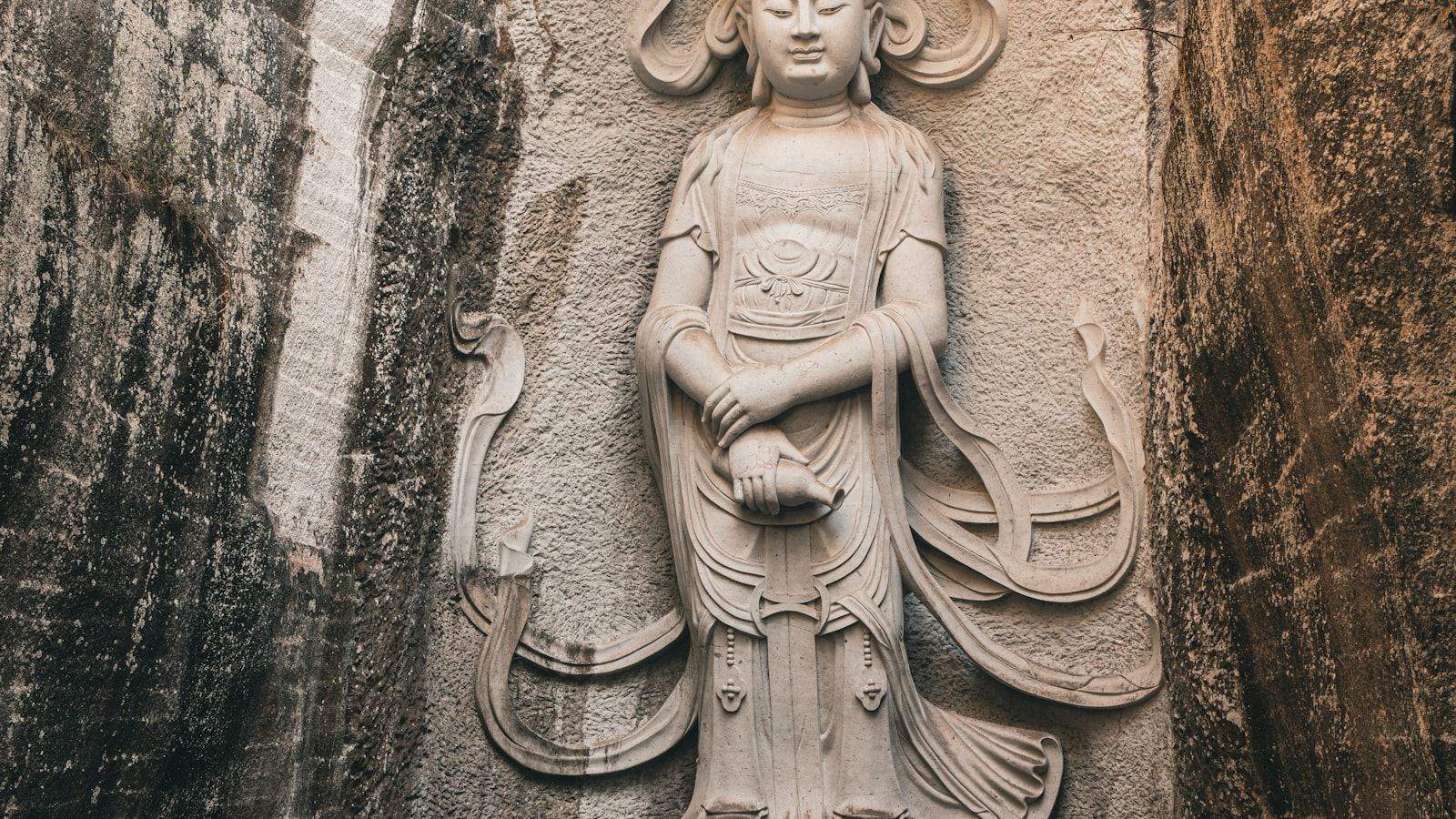
- The Longmen Grottoes — the vast Buddhist cave temple complex, carved into the cliffs above the river.
- The great Buddha — the colossal Vairocana, one of the masterpieces of Chinese art.
- The old town — Luoyang’s streets and the peony heritage.
- The capital — the city that ruled China across many dynasties.
Luoyang delivers the route’s greatest sight — the Longmen Grottoes, one of the wonders of China. See our Luoyang guide.
Day 3: Kaifeng and the Song city
- Kaifeng — the Song dynasty capital, once the largest city in the world.
- The Qingming Shanghe Gardens — the immersive recreation of Song-era life.
- The Iron Pagoda — the thousand-year-old landmark.
- The night market — the food and the atmosphere of the old streets.
Kaifeng carries the Song chapter of the story — the golden age of China’s medieval capital. See our Kaifeng guide.
Day 4–5: the connections and the extension
- High-speed rail between the cities — the route’s easy backbone.
- Extend to Xi’an — 2 hours west, the terracotta army and the Tang capital.
- The deeper version — a week for the full route and the side sights.
- The region — the ancient capitals, the grottoes, the temple and the martial arts.
The route opens westward — the capitals and the monuments of the Central Plains, with Xi’an as the western anchor.
Planning the route
- 5 days for the essentials — a day each for Zhengzhou-Shaolin, Luoyang and Kaifeng, plus the connections.
- A week for the full version — including Xi’an and the deeper sights.
- Best season — spring and autumn; the monuments work year-round.
- The rail — the cities are an hour or two apart, easy by high-speed rail.
The route rewards time and a clear plan — the history is deep, and the monuments are vast.
The story of the Central Plains
The Central Plains — the flat, fertile basin around the middle Yellow River — is the birthplace of Chinese civilization. For over two thousand years, the great dynasties made their capitals here: Luoyang and Kaifeng each served as the imperial capital across multiple dynasties, and the region around Zhengzhou holds the earliest traces of Chinese statehood. The Shang dynasty capital at Zhengzhou, buried beneath the modern city, dates back over 3,000 years and is among the oldest urban sites in China. Understanding that this region was the center of the world’s most enduring civilization gives every monument on the route a deeper resonance — the Longmen Grottoes and the Song city were not provincial sites but the grand statements of the imperial center.
- Luoyang — the capital of many dynasties, from the Eastern Zhou to the Tang.
- Kaifeng — the Song capital and, in its day, the largest city in the world.
- Zhengzhou — the ancient Shang capital beneath the modern transport hub.
- The heartland — the flat, fertile plains where Chinese civilization was born.
Food along the route
The Central Plains is the home of some of China’s most satisfying and hearty cooking, and eating well is part of the route. Henan cuisine is wheat-based and robust — the province sits in the great wheat belt, and the food revolves around noodles, dumplings and bread. The signature breakfast is the hot and sour soup (hulatang), a peppery broth that locals swear cures whatever ails you; the signature feast is the “water banquet” of Luoyang, a famous procession of dozens of courses said to date back to the Tang court. Braised noodles, steamed buns and lamb soups appear everywhere.
- Hulatang — the peppery hot and sour soup, the essential Central Plains breakfast.
- Luoyang’s water banquet — the historic multi-course feast, the region’s grandest meal.
- The noodles and the bread — the wheat country’s daily staples, cheap and excellent.
- The night markets — Kaifeng’s night market is among the best in China.
Budget and practical planning
The route is one of the most affordable in China — the cities are mid-sized, the transport is cheap, and the big sights are reasonably priced by national standards. High-speed rail between the cities runs ¥40–100 per leg; the Longmen Grottoes and the Shaolin Temple are the biggest single costs. A mid-range traveler can cover the five days comfortably on a moderate daily budget, and the rail makes the logistics simple.
- Transport — the rail legs between the cities are short and cheap.
- The big tickets — Longmen and Shaolin are the main admission costs.
- Accommodation — Luoyang and Kaifeng have excellent mid-range hotels near the old towns.
- Getting around — the cities’ metros and taxis handle the sights; ride-hailing works well.
Traveling with kids
The route is genuinely family-friendly. The Longmen Grottoes are a cliffside wonder that needs no explanation, the Shaolin Temple’s kung fu performances hold any child’s attention, and Kaifeng’s Qingming Shanghe Gardens are effectively a themed park of Song-era China, with street performers, costumed staff and old-time crafts. The rail travel between the cities is quick and comfortable, and the pace — a day per city — suits families better than the longer, harder routes.
- The kung fu — the Shaolin performances are a guaranteed highlight for children.
- The gardens — Kaifeng’s Song recreation is playful and immersive.
- The pace — a day per city keeps the logistics easy.
- The rail — short, fast hops between the cities, ideal for families.
Practical notes
- Get connected — set up Alipay and an eSIM for tickets and transport.
- Book the grottoes and the temple ahead — they fill in peak season.
- See our Kaifeng guide and Luoyang guide for the city details.
The bottom line
The Central Ancient Capitals route is a journey through the heart of Chinese history — the Longmen Grottoes, the Shaolin Temple, Kaifeng’s Song city and the road to Xi’an, in a 5-day rail journey through the cities where the dynasties ruled. Spend a day on each chapter, extend west to Xi’an if you can, and you’ll have walked through the very center of China’s imperial story.
Last updated: August 2026. Transport and opening hours change — confirm current details before you go.
Frequently Asked Questions
What is the Central Ancient Capitals route?
It's the journey through the **heart of Chinese history** — the cities of the Central Plains that served as China's capitals across the dynasties: **Luoyang** (the capital of many dynasties), **Kaifeng** (the Song capital), **Zhengzhou** (the regional hub) and, further west, **Xi'an** (the Tang capital). The route connects the great monuments of imperial China — the Longmen Grottoes, the Shaolin Temple, the Kaifeng gardens — in a 5-day journey. See our [Kaifeng guide](https://chinotrips.com/kaifeng/) and [Luoyang guide](https://chinotrips.com/luoyang/).
What are the highlights of the route?
The standouts: **the Longmen Grottoes** at Luoyang — the vast Buddhist cave temple complex, one of the great sights of China; **the Shaolin Temple** — the cradle of martial arts, near Zhengzhou; **Kaifeng's Song city** — the Qingming Shanghe Gardens and the ancient capital's streets; and, if you extend the route, **Xi'an** — the terracotta army and the Tang capital. Each is a world-class monument of Chinese history.
How long do I need for this route?
**Five days** covers the essentials: a day for Zhengzhou and Shaolin, a day and a half for Luoyang (the Longmen Grottoes and the old town), a day for Kaifeng, and a day for the connections. **A week** allows the deeper version, including the extension to Xi'an. It's a route that rewards time — the monuments are vast and the history is deep. See our [first-timer itinerary](https://chinotrips.com/itineraries/china-first-timer-itinerary/) for the wider context.
How do I get around the route?
**High-speed rail** connects the cities — Zhengzhou, Luoyang and Kaifeng are within an hour or two of each other, and Xi'an is about 2 hours further west. The stations are modern and the trains frequent. Within the cities, taxis, ride-hailing and day tours handle the sights. It's one of the easiest regions of China to travel by rail, which is part of why the route works so well.
When is the best time to visit?
**Spring and autumn** are ideal — mild weather and clear skies across the whole region. **Summer** is hot and busy; **winter** is cold but quiet, and the monuments (especially the grottoes) have a stark beauty. The Shaolin Temple and the Longmen Grottoes are spectacular year-round; the seasons change the atmosphere more than the experience. For the classic trip, spring or autumn is the safe, beautiful choice.
Is this route good for families?
Yes — the monuments are engaging at any age: the **Longmen Grottoes** are a cliffside wonder, the **Shaolin Temple** has the kung fu performances that children love, and **Kaifeng's** Qingming gardens are a themed-park delight. The rail makes the logistics easy, and the pace is manageable. It's a route that works for a family interested in history — and for the kids, the kung fu and the gardens are the highlights.
Should I extend the route to Xi'an?
**If you have the time, yes** — Xi'an is the great western anchor of the route: the **terracotta army**, the city wall and the Tang heritage, about 2 hours by high-speed rail from the Central Plains. The route becomes the classic east-west passage through the capitals of Chinese history. See our [Xi'an guide](https://chinotrips.com/xian/) and [terracotta photography guide](https://chinotrips.com/how-to/photography-terracotta/) for the details.