
Luoyang Travel Guide (2026): Longmen Grottoes & More
Luoyang, ancient capital and home of the Longmen Grottoes — a UNESCO world heritage site, China's first temple at White Horse, and peony season in April.
OpenStreetMap Google Maps (opens externally)
Luoyang is the Chinese city that feels like a museum you can walk through — ancient capitals, a river of Buddhist grottoes and one of China’s great food cultures. This guide covers the essentials for a 2026 visit.
The essentials
- Days needed: 2–3 days.
- Getting there: high-speed rail from Xi’an North to Luoyang Longmen in about 1h15 (around ¥175), or from Zhengzhou. Luoyang has no major international airport, so fly into Xi’an or Zhengzhou and take the train.
- Best season: April for the peony festival (the city’s signature event), September–November for clear skies and fewer crowds.
Day 1 — The Longmen Grottoes
A morning (or full day) at the Longmen Grottoes, a UNESCO site of 100,000+ Buddhist statues carved along the Yi River. The centerpiece is the Vairocana Buddha at Fengxian Temple — one of the great images of Chinese Buddhist art. Admission ~¥90; real-name, timed-entry booking online ahead is essential, especially in April and on holidays. Allow 3–4 hours and wear good shoes.
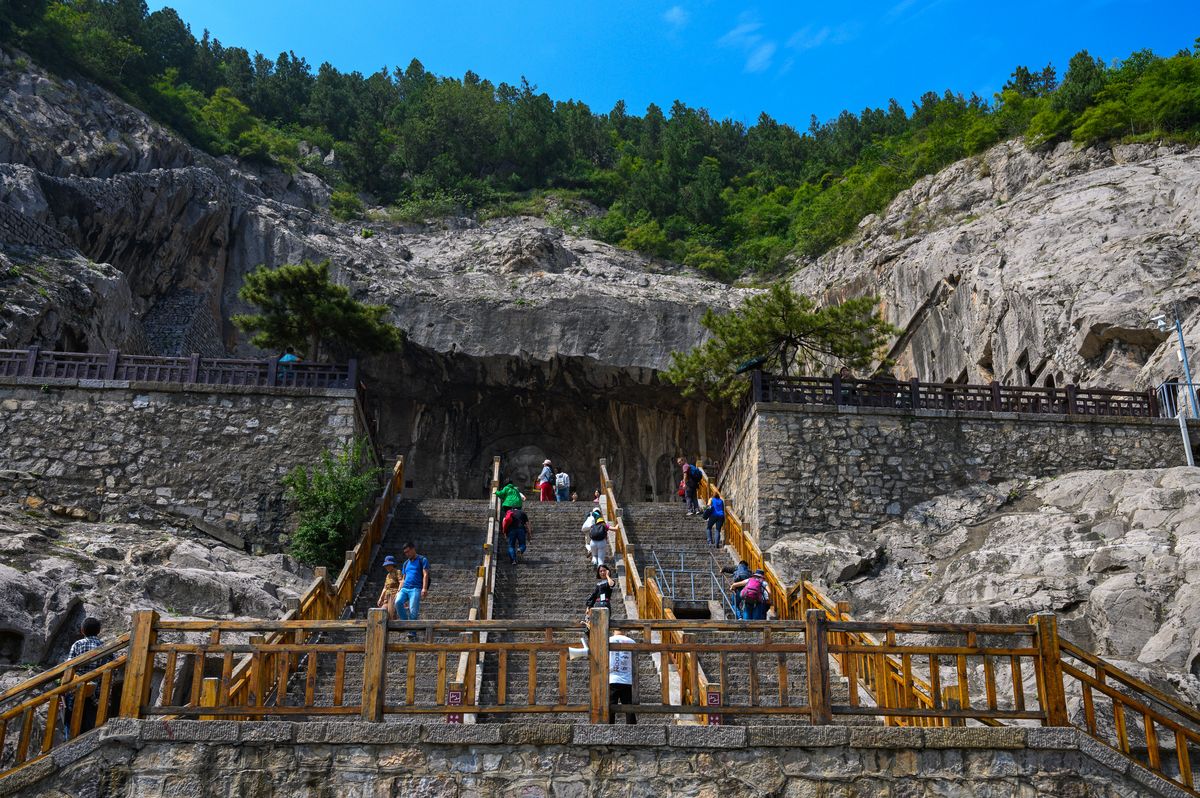
The Longmen Grottoes preserve more than 2,300 caves and 100,000 statues along the Yi River’s west bank.
Day 2 — White Horse Temple & the old town
- Morning: the White Horse Temple — China’s first officially founded temple, with the photogenic international temple districts (Thai, Indian, Myanmar). About ¥35, no reservation needed.
- Afternoon: the old town — Luoyi Ancient City (free but reserve ahead), Lijing Gate and the old lanes.
- Evening: the night food street near the old town — try the local soup culture.
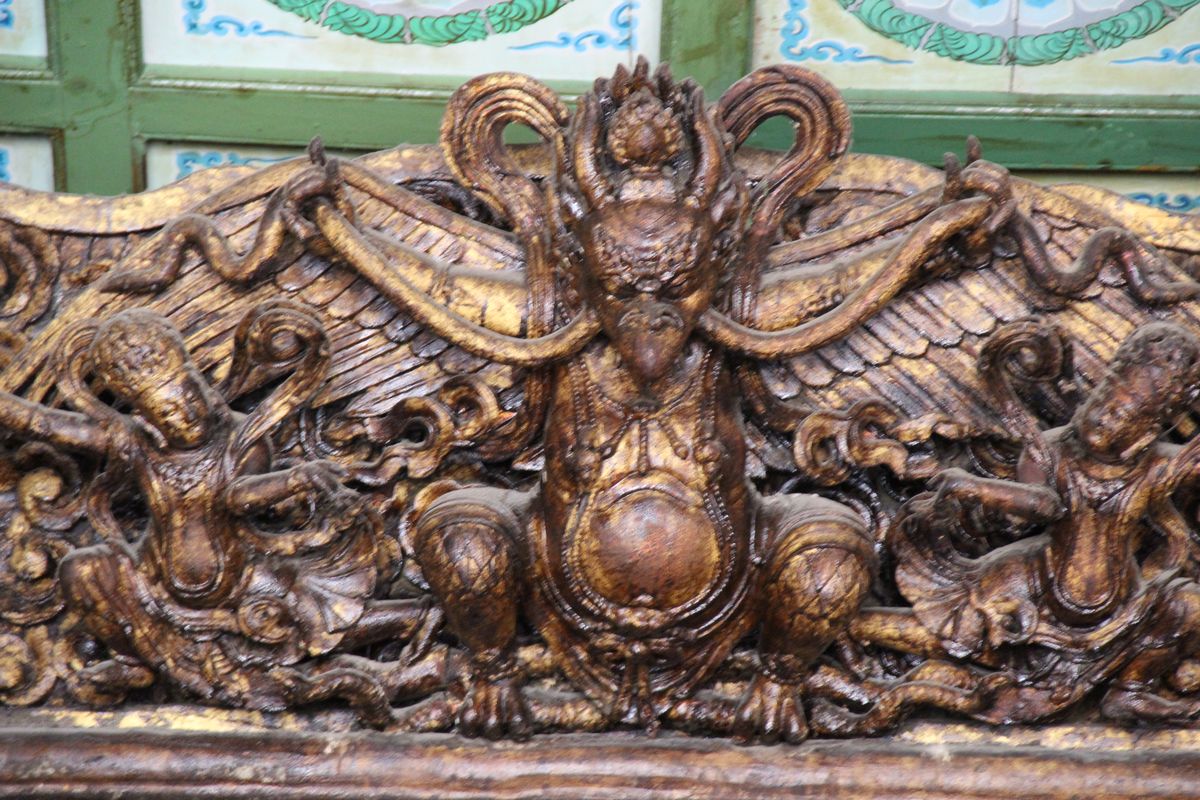
The White Horse Temple, founded nearly 2,000 years ago, is China’s first officially built Buddhist temple.
If you have a third day
- Luoyang Museum (free, reserve ahead): one of the best regional museums in China.
- Laojunshan (Taoist mountain): spectacular peaks and a sea of clouds — but see the foreign-visitor note in the FAQ, and give it a full day.
What to eat
- Luoyang water banquet (shuixi) — the famous multi-course soup banquet.
- Beef soup, bufan soup and the morning soup culture.
- Peony flower cakes (in season) and the street snacks at Cross Street.
The Longmen Grottoes in depth
The Longmen Grottoes are the largest collection of Buddhist cliff carvings in China and one of the great sculptural sites in world art — a claim that is easy to dismiss until you round the corner of the Fengxian Temple terrace and face the Vairocana Buddha. The carving project began in 493, when the Northern Wei emperor Xiaowen moved his capital to Luoyang, and continued through the Tang dynasty into the ninth century — more than 400 years of work. Today the site preserves more than 2,300 caves and niches and over 100,000 statues along roughly a kilometer of the Yi River, concentrated mostly on the west bank.
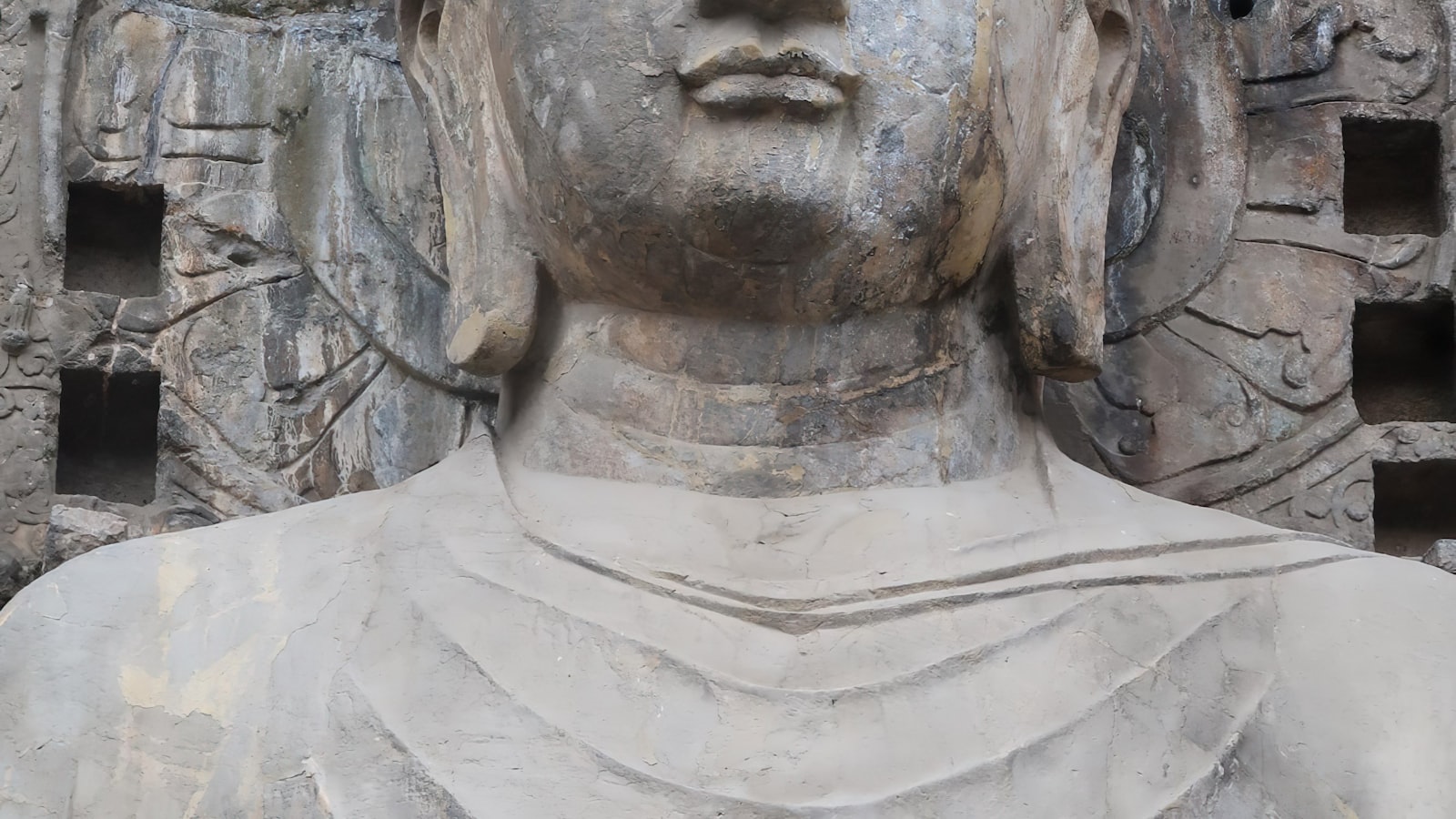
The centerpiece is the Fengxian Temple group, dominated by the seated Vairocana Buddha, completed around 676 during the reign of Wu Zetian. At more than 17 meters tall it is the largest image at Longmen, and the details reward a close look — the curls of the hair, the serene half-closed eyes, the enormous halo carved from the living rock. Art historians have long noted the face’s regal, almost imperial character, which has led to speculation that it was modeled in part on Wu Zetian herself — the most powerful woman in Chinese history, who chose this site for her grandest commission.
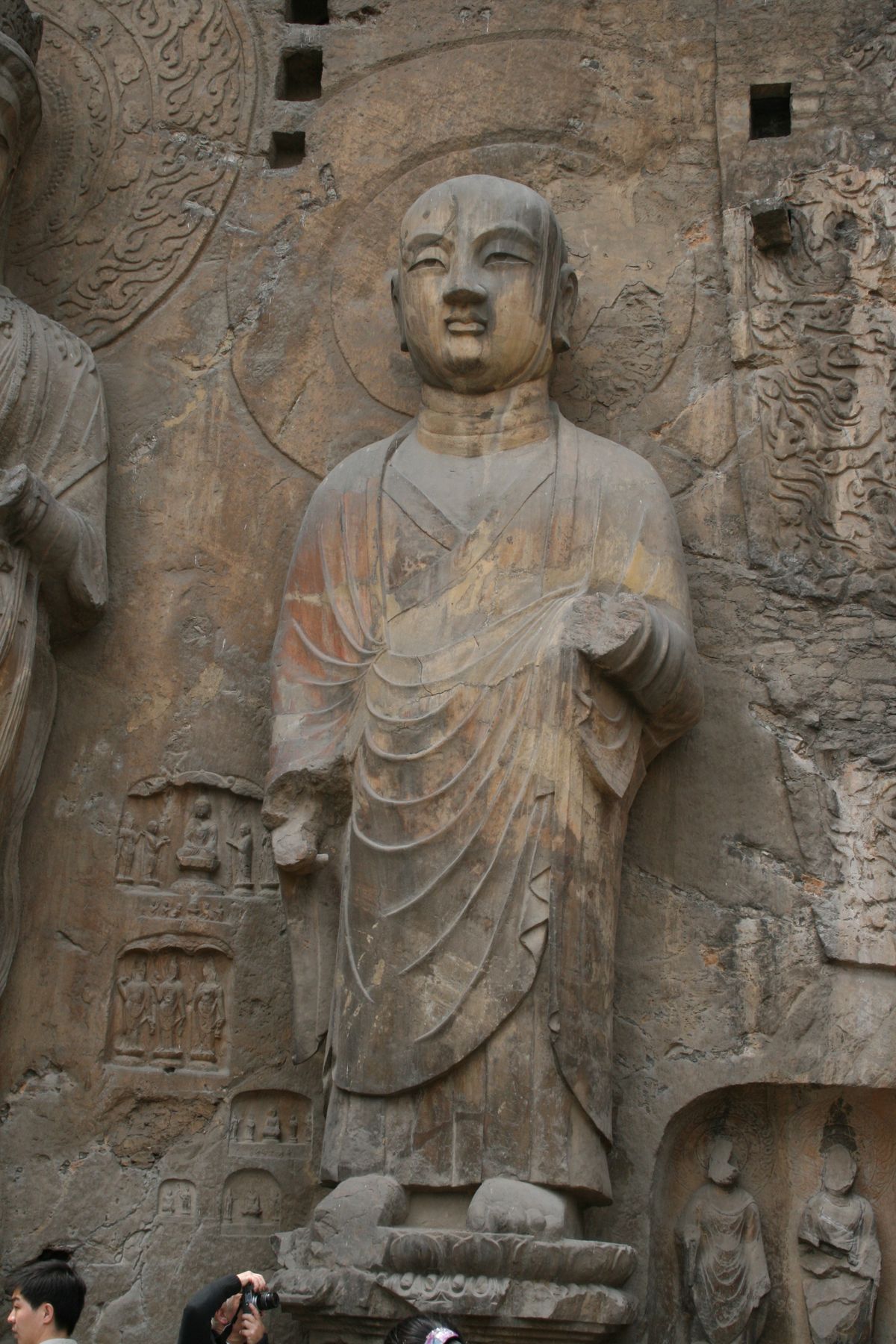
The seated Vairocana Buddha at Fengxian Temple is the largest image at Longmen and the icon of Chinese Buddhist art.
Before Fengxian, spend time in the earlier caves to see the style evolve. The Guyang Cave holds some of the oldest carvings, begun around 493; the Binyang Central Cave shows the elongated, austere Northern Wei aesthetic; the Wanfo (“Ten Thousand Buddha”) Cave is exactly what its name promises, its walls dense with small seated Buddhas. The east bank, reached by crossing the river, holds smaller caves, the ruins of Xiangshan Temple and the classic wide view back across to the cliff face.
Practical notes: the site is about 15 minutes from the center by taxi, allow 3–4 hours, and wear shoes for stone stairs and uneven paths. The one-way walking route through the west bank ends near the exit bridge — you will not be walking back the way you came. Audio guides are worth the small fee.
Peony season and the April festival
Peonies are Luoyang’s civic obsession, and the city has a claim few Chinese cities can match: it is the historic center of peony cultivation, a lineage gardeners trace back more than 1,500 years. Every spring the city runs its Peony Culture Festival, roughly from early April to early May, with the flower at its peak usually in the middle two weeks of April — though the exact timing shifts with the weather.
The parks to know: Wangcheng Park, the largest and most convenient, planted with tens of thousands of blooms; the National Peony Garden outside the city, where rare varieties grow; and the Sui and Tang City Ruins Botanical Garden, which pairs the peonies with the archaeology of the old capital. Expect big crowds on weekends — go early in the morning, when the flowers are freshest and the light is soft.
Peonies spill into the food and souvenir scene too. Peony cakes, a sweet flower-filled pastry, are the classic take-home, and peony tea and scented products fill the tourist shops. If you visit in April, book hotels weeks ahead; the festival fills the city.
When to go, season by season
- April (peony season): the signature time. Expect crowds, higher prices and a fully booked hotel market — but the city at its most colorful.
- May and September–October: the best all-round windows — mild weather, clear skies and far fewer crowds than April. Autumn gives the grottoes clean light for photography.
- Summer (June–August): hot and humid, often above 33°C. The caves offer some shade, but the walking is exposed — go for the opening slot.
- Winter (November–March): cold but quiet, with the lowest prices and fewest visitors. The grottoes are atmospheric in winter light and the museum is a warm refuge. Avoid Chinese New Year week, when domestic tourism surges.
A realistic budget
Luoyang is very affordable by Chinese standards — noticeably cheaper than Xi’an or Beijing.
- Hotels: ¥250–450 per night for a comfortable mid-range hotel near the old town or a metro line; budget options from about ¥120.
- Sights: Longmen Grottoes about ¥90; White Horse Temple about ¥35; Luoyang Museum free with reservation; Laojunshan with its cable cars roughly ¥100+. A 2–3 day sightseeing budget of ¥250–400 is realistic.
- Food: water-banquet set meals ¥50–150 per person depending on the restaurant; bowls of beef or bufan soup ¥10–25; street snacks ¥5–20.
- Transport: metro ¥2–5 per ride; taxis across town ¥10–30; the grottoes taxi ride about ¥25–40.
All figures are planning estimates and change with season — confirm current prices online, especially for the grottoes, which switch between peak and off-peak rates.
Common mistakes to avoid
- Not booking Longmen’s timed entry. The grottoes are real-name and timed-entry; in April and on holidays slots sell out. Book the day you want as soon as it opens.
- Doing the grottoes at midday in summer. The walk is exposed and the crowds peak late morning; take the earliest slot.
- Skipping the east bank. Many visitors stop after the west bank — the short crossing and the wide views back are worth an extra 45 minutes.
- Arriving for peony season without hotel reservations. The whole city fills up; prices climb sharply and the best locations go first.
- Treating Laojunshan as a casual add-on. It is two-plus hours from the city and involves cable cars and long walks — and the foreign-visitor policy has changed before, so confirm before planning around it.
- Ordering the full water banquet for two. The banquet is a procession of soup courses — ideal for a group, overwhelming for a couple unless you request a small set.
Getting around
Luoyang’s metro lines 1 and 2 cover the essentials: line 1 runs east–west past the old town, and line 2 connects the rail station and crosses the river. The Longmen Grottoes are about 15 minutes from the center by taxi, or reachable by a metro stop plus a short shuttle. The White Horse Temple is about 10 km out — metro to Yangwan, then a short taxi.
The old town is walkable: Lijing Gate, the Luoyi Ancient City lanes and the food streets cluster together. For Laojunshan or the wider Henan countryside, a private driver or a tour from a local agency is the practical option. Confirm current metro lines and shuttle details on a map app before you travel, as stations evolve.
Practical tips
- Book the grottoes and hotels ahead in April and on holidays — peony season fills everything.
- Metro: Luoyang’s metro lines 1 and 2 cover the main sights — see our China metro guide.
- Payment and data: set up Alipay and an eSIM before you arrive.
- Getting around: the grottoes are about 15 minutes from the center by taxi; the White Horse Temple about 10km out (metro to Yangwan, then a short taxi).
Where this fits
Luoyang pairs naturally with Xi’an (1h15 by rail) and Zhengzhou on a Henan/Shaanxi ancient-capitals loop, and is an easy add-on to the two-week route.
Prices and times as of August 2026 — confirm current tickets, reservations and the Laojunshan policy before you go.
Frequently Asked Questions
Why visit Luoyang?
Luoyang was one of China's great ancient capitals and is home to the Longmen Grottoes, a UNESCO World Heritage Site of more than 100,000 Buddhist statues carved into cliff faces — including the huge Vairocana Buddha that's the icon of Chinese Buddhist art. It's an easy high-speed rail hop from Xi'an or Zhengzhou.
How many days do I need in Luoyang?
Two to three days: a morning (or full day) at the Longmen Grottoes, a half day at the White Horse Temple, and time for the old town, the Luoyang Museum and the food streets. Add a full extra day if you plan to visit Laojunshan (see the foreign-visitor note below).
What are the Longmen Grottoes?
A UNESCO World Heritage Site — more than 2,300 caves and niches along the Yi River, with the colossal Vairocana Buddha at the Fengxian Temple as the centerpiece. Admission is about ¥90, and it's a real-name, timed-entry site: book online ahead, especially in April (peony season) and on holidays.
Is the White Horse Temple worth visiting?
Yes — it's China's first officially founded Buddhist temple, nearly 2,000 years old, and the complex includes international temple districts built by Thailand, India and Myanmar, which are beautifully photogenic. Admission about ¥35, no reservation needed.
Can foreign visitors go to Laojunshan?
Check before you book. Laojunshan (the Taoist mountain about 2 hours from Luoyang) has officially declined to admit holders of some non-Chinese passports. Confirm with your hotel or a local agency before planning the trip — and consider it a half-day-plus excursion, not something to squeeze into the city itinerary.