
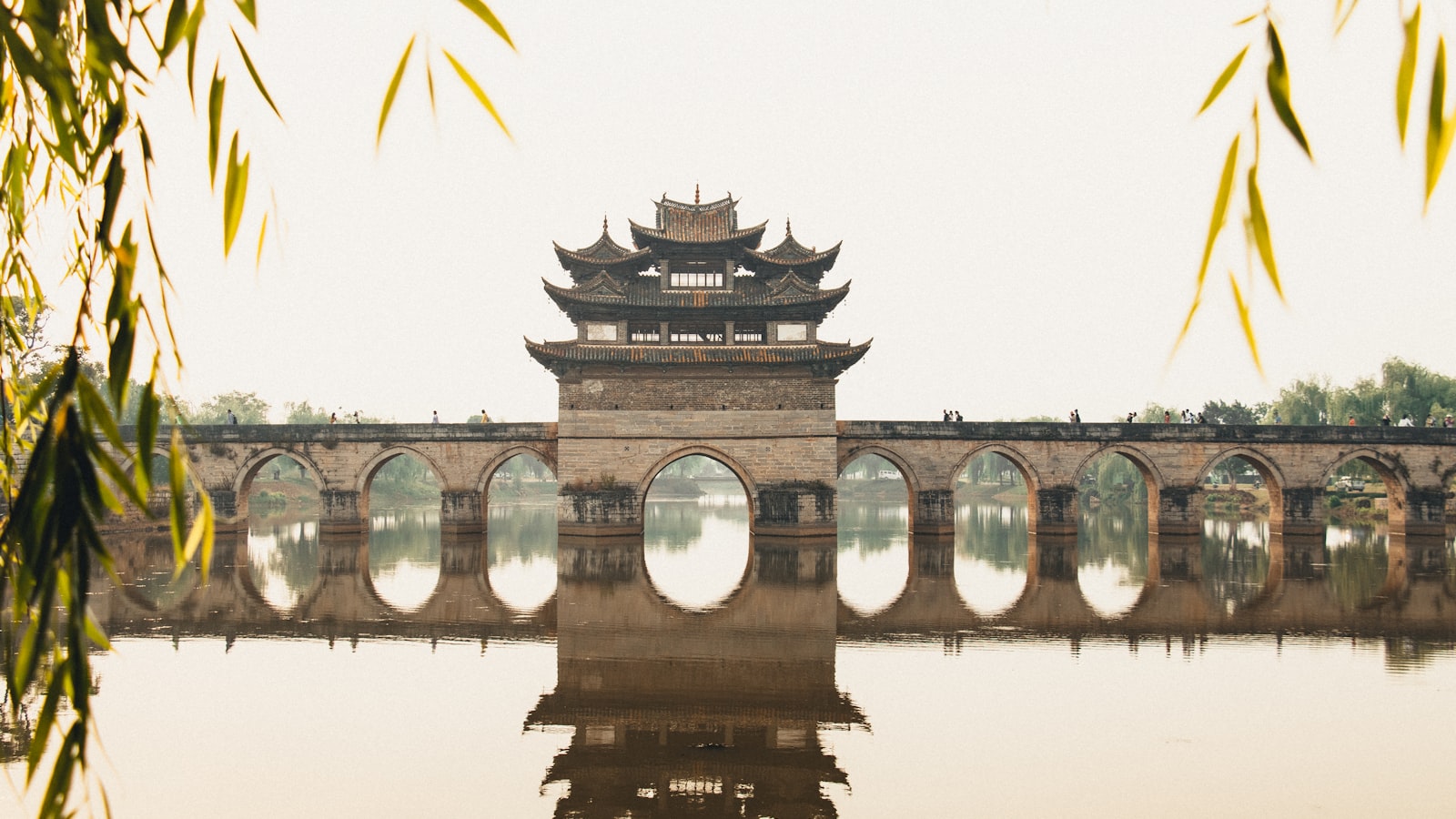
Kaifeng Guide (2026): Song Dynasty Capital & Qingming Gardens
Kaifeng, the ancient Song dynasty capital — the Qingming Shanghe Gardens, the night market on the old streets, the Iron Pagoda, and how to plan a day here.
Kaifeng, Henan, China
Open an external map for this location.
OpenStreetMap Google Maps (opens externally)
Kaifeng was one of the world’s great medieval capitals — the Song dynasty’s city of a million people. Today it’s a rewarding, less-crowded stop for the Qingming gardens, the ancient pagoda and one of the region’s liveliest night markets.
In its golden age, Kaifeng was the capital of the Northern Song dynasty — a city of over a million people, the largest in the world, where commerce, printing and the arts flourished. Much of that world is gone, but Kaifeng still holds the layered history of a great ancient capital: pagodas a thousand years old, the recreations of Song-era life, and the old streets where the city’s cooking heritage lives on. It’s a genuine, unhurried step into China’s imperial past — and far less crowded than the headline sights.
The top sights
- The Qingming Shanghe Gardens — a large, immersive themed park recreating the famous ‘Along the River During the Qingming Festival’ scroll: Song-era streets, shops, performances and a night show. The highlight of the visit.
- The Iron Pagoda — actually glazed brick, built in 1049; Kaifeng’s oldest and most famous landmark, standing for nearly a thousand years.
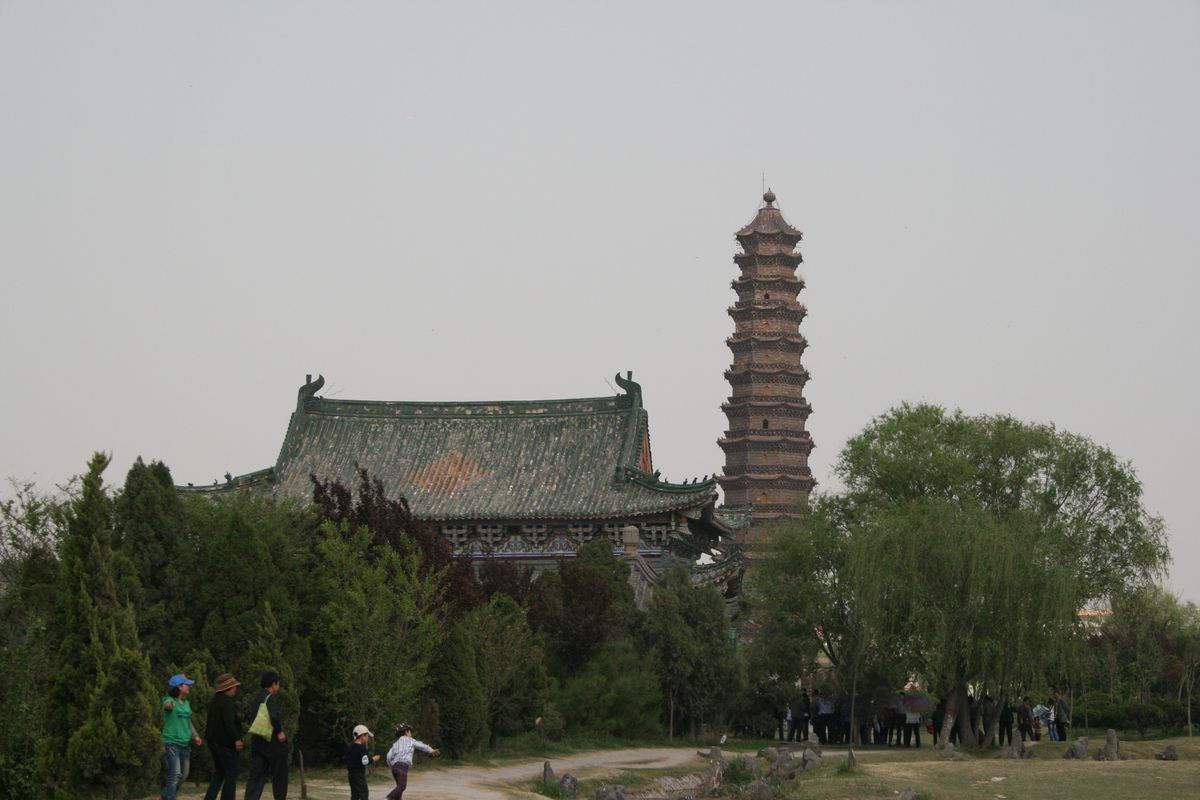
The Iron Pagoda — actually glazed brick — has stood in Kaifeng since 1049 and survived the Yellow River floods that buried the old city.
- The Dragon Pavilion — the site of the old palace, with a grand lake and gardens; the heart of the old imperial city.
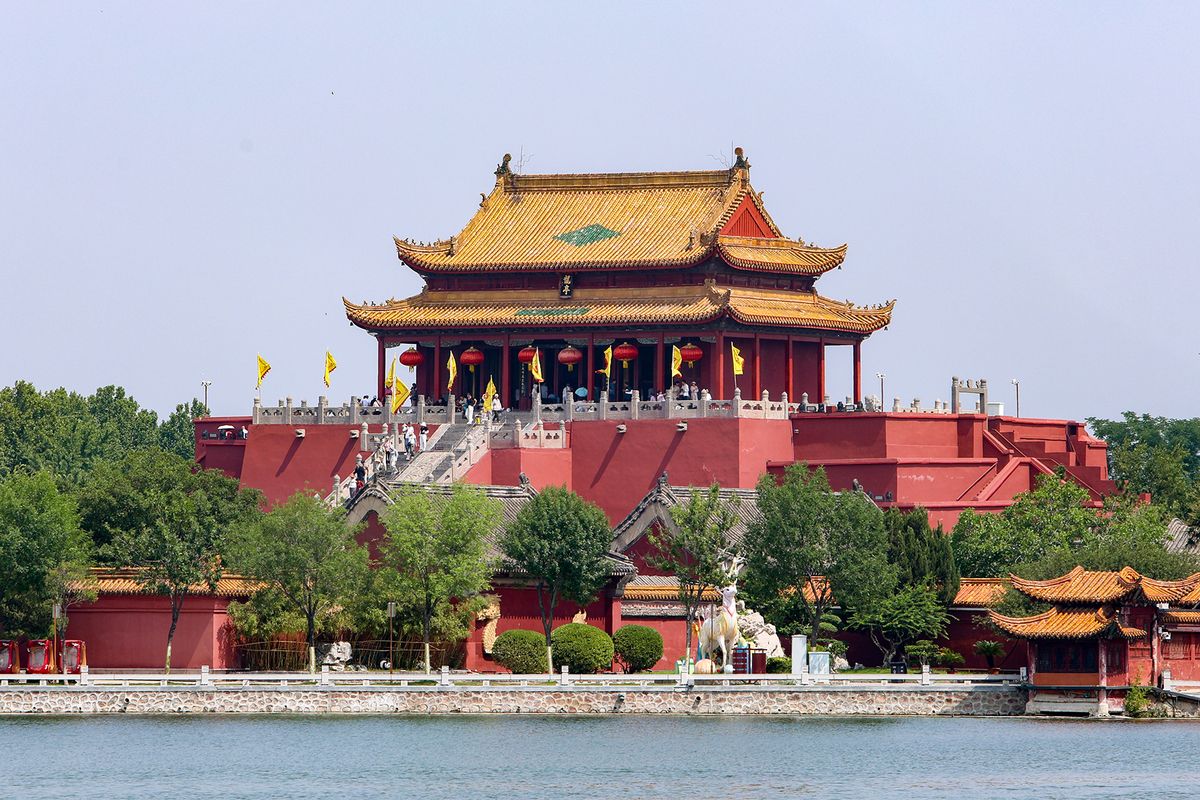
The Dragon Pavilion by its lake, the site of the old imperial palace in Kaifeng.
- The old streets — the lanes around the Drum Tower and the night market, where the city’s character and cooking live on.
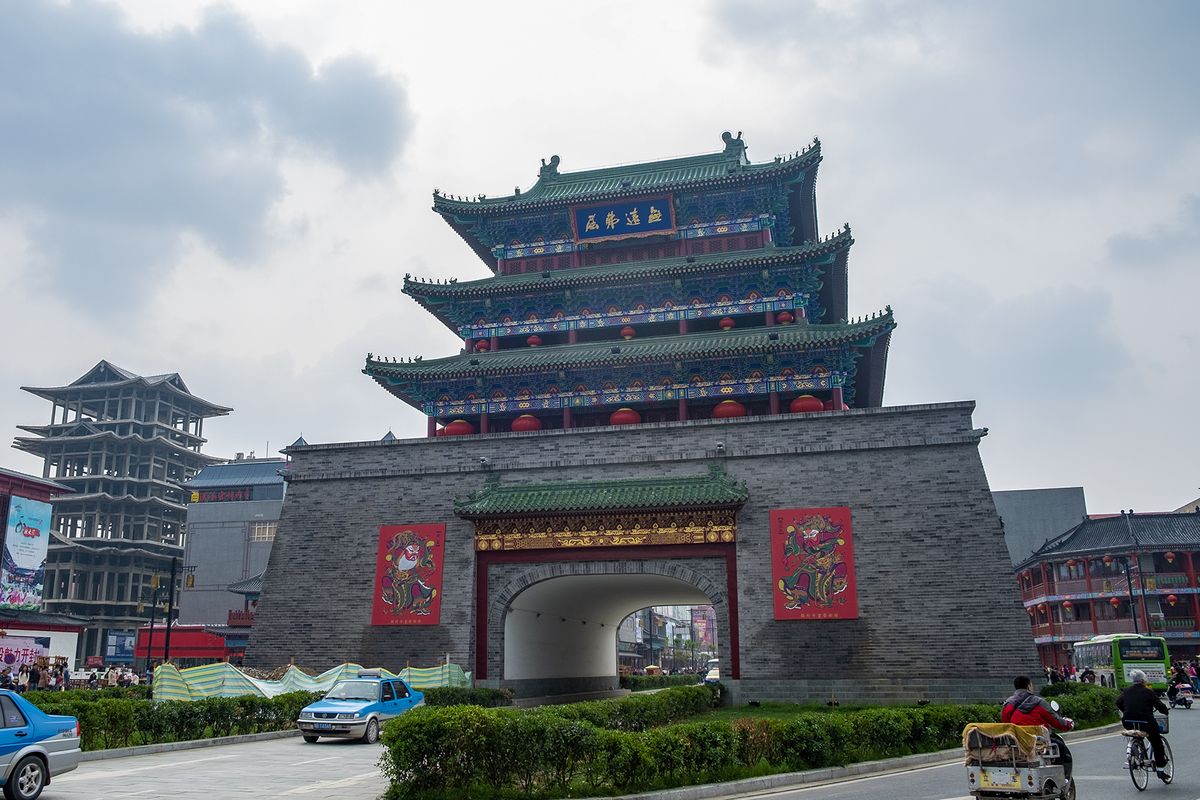
The Drum Tower at the heart of Kaifeng’s old streets, where the night market gathers in the evening.
Each belongs to a different layer of Kaifeng’s long history — the theme-park recreation, the surviving monument, and the living streets.
A day in Kaifeng
- Morning — the Qingming Shanghe Gardens, before the midday crowds; allow 2–3 hours.
- Afternoon — the Iron Pagoda and the Dragon Pavilion; the quieter, more historical Kaifeng.
- Evening — the old-street night market; the food and the atmosphere.
This rhythm — the immersive gardens, the ancient pagoda, the market — captures the full range of what Kaifeng offers in a single day.
The Song dynasty story
Kaifeng’s golden age makes the visit far richer. In the 11th and 12th centuries, the Northern Song made Kaifeng the capital of a dynasty and the largest city in the world — a place of a million people, where printing, paper money, street markets and the arts all flourished. The famous scroll ‘Along the River During the Qingming Festival’ was painted to celebrate this very city — the teeming streets, the shops and the river life that the Qingming Shanghe Gardens recreate. Walking Kaifeng with that story in mind — the world’s greatest city of its time, risen and reworked through the centuries — turns the pagodas and the gardens from sights into history.
What a visit costs
Rough guidance (per person, CNY, prices change): entry to the Qingming Shanghe Gardens about ¥100–160; the Iron Pagoda and the Dragon Pavilion ¥30–60 each; the night market ¥30–80 for a good meal; high-speed rail from Zhengzhou ¥30–60; a full day’s driver or tour ¥300–600. A day in Kaifeng with tickets, food and transport typically runs ¥250–500 per person — modest for a full day of one of China’s great ancient capitals.
Common mistakes to avoid
- Skipping the night market — the old-street market is one of the best in the region and the food highlight of Kaifeng; a visit that misses it misses the city’s soul.
- Treating the Qingming gardens like a museum — it’s a themed park with shows and a busy schedule; check the performance times and plan the day around them.
- Rushing the Iron Pagoda — it’s the oldest, quietest layer of Kaifeng’s history; give it time rather than a photo stop.
- Arriving late — a full day needs the morning for the gardens and the afternoon for the pagoda; late starts compress everything.
- Forgetting the passport — entry tickets are tied to your ID at some sights; carry it.
Visiting with children
Kaifeng is a surprisingly good family stop. The Qingming Shanghe Gardens are a child’s dream — the themed streets, the performances, the river and the bustle are engaging at any age. The Iron Pagoda is a memorable climb for kids, and the night market is a food adventure. The old streets are walkable and the city is compact. For a family on a Central Plains route, Kaifeng is an easy, colorful day that children enjoy as much as adults.
The old streets and the food culture
Kaifeng’s old streets are where the city’s character lives. The lanes around the Drum Tower and the night market are the heart of it — the stalls, the cooking and the crowds that have filled these streets for centuries. Kaifeng’s food claim is real: the Song dynasty court refined a cooking style that the city still honors, and the kaifeng baozi (the local soup dumplings), the stir-fried noodles and the grilled skewers of the market are worth the visit on their own. Walk the streets hungry, follow the queues, and eat your way through one of the most genuine food scenes in central China.
Practical notes
- Getting there — high-speed rail from Zhengzhou (30 minutes), Beijing, Shanghai or Xi’an; a short taxi from the station to the old city.
- Getting around — taxis and ride-hailing are easy; the old city is walkable.
- Best season — spring and autumn for mild weather; the gardens and the pagoda work year-round.
- Get connected — set up Alipay and an eSIM for tickets and payment.
Combining Kaifeng with the region
Kaifeng sits in the heart of China’s ancient capitals, and it pairs naturally with a Central Plains route: Zhengzhou, Kaifeng, Luoyang and (further west) Xi’an — the cities that were China’s capitals across the dynasties. See our Luoyang guide and the central ancient capitals route for the full picture. It’s a route through the very heart of Chinese history.
Getting the timing right
Kaifeng’s rhythm rewards an early start. The Qingming Shanghe Gardens are at their best in the morning, before the midday crowds and with the light on the themed streets. The Iron Pagoda is quietest and most atmospheric in the early afternoon. The night market comes alive after dark — that’s the evening’s centerpiece, not an afterthought. With this rhythm — gardens in the morning, pagoda in the afternoon, market at night — a single day covers the full range of the city, from the immersive recreation of Song-era life to the ancient monument to the living streets.
The Iron Pagoda, in depth
Kaifeng’s oldest landmark is also one of its quietest surprises. The Iron Pagoda (Tie Ta) is not iron at all — it’s an octagonal brick tower built in 1049 during the Northern Song, its surface covered in glazed tiles in an iron-brown color that gives it a metallic look. It stands roughly 55 meters tall, and it has survived nearly a thousand years of floods, earthquakes and war. The most telling story: during the 1938 Battle of Kaifeng, the tower took artillery and machine-gun fire — the scars are still visible in the brickwork, and the pagoda stood firm. It also outlived the Yellow River floods that destroyed most of the city’s wooden architecture, which is why it remains the last major Song-era structure still standing in Kaifeng. Unlike many famous Chinese pagodas that have been rebuilt, this is the original, and you can still climb the narrow interior staircase. The climb is steep and the interior is dark, but the reward is a broad view over the old city’s grey rooftops to the river plain beyond.
The Yellow River and the buried city
Kaifeng’s history is written in the ground beneath your feet. The Yellow River — long nicknamed “China’s sorrow” — has flooded the city repeatedly over the centuries, and each flood deposited a layer of silt. As a result, Kaifeng has been rebuilt on top of its own ruins so many times that the Song-era capital now sits roughly ten to twelve meters below the modern streets. Archaeologists have found a stack of older cities beneath the current one: successive Kaifengs from the Tang, Song, Ming and Qing dynasties, each buried by a river that later shifted course. It is one of the few places in the world where you can walk over a thousand years of history without leaving the street. Two details bring this home: the Iron Pagoda stands close to its original Song ground level, while the old city walls and moats preserve traces of the river’s earlier courses. When locals tell you Kaifeng is “a city on top of a city,” it is not a figure of speech — it is a geological record of one of China’s most repeatedly destroyed and stubbornly rebuilt capitals.
A realistic day budget, item by item
A fuller sense of costs helps you plan without surprises. Rough 2026 figures, per person in CNY, and prices change — confirm current rates at the gate:
- Getting there: high-speed rail from Zhengzhou around ¥30–60 each way; from Beijing or Shanghai the one-way fare is a few hundred yuan.
- Qingming Shanghe Gardens: roughly ¥100–160 entry, with an evening performance ticket extra.
- Iron Pagoda and Dragon Pavilion: about ¥30–60 each.
- Food: a night-market meal of a few snacks and drinks ¥30–80; a sit-down dinner ¥60–120.
- Staying over: budget hotels in the old city from about ¥150–250 a night, mid-range ¥300–500.
- Getting around: taxis and ride-hailing are cheap, and the old city core is walkable.
Add it up and a single day with tickets, food and local transport typically runs ¥250–500 per person; an overnight trip with a mid-range hotel brings two days to roughly ¥600–1,000 per person — still modest for a city with this much history.
The bottom line
Kaifeng is a rewarding, less-crowded stop on any Central China itinerary — a Song dynasty capital with the immersive Qingming gardens, the thousand-year-old Iron Pagoda and one of the region’s liveliest night markets. Spend a full day, eat at the old-street market, and step back into the world of medieval China — the capital that was once the greatest city on earth, and the history that still shapes the streets you walk.
Last updated: August 2026. Opening hours and ticket rules change — confirm current details before you go.
Frequently Asked Questions
What is Kaifeng known for?
Kaifeng was the capital of the **Northern Song dynasty** (960–1127) — one of the world's great medieval cities, with a population of over a million. Today it's best known for the **Qingming Shanghe Gardens** (a themed park recreating the famous scroll of life in Song-era Kaifeng), the ancient **Iron Pagoda**, and its lively old-street night market. It's a rewarding, less-touristed step back into China's imperial history.
Is Kaifeng worth visiting?
Yes — especially for travelers interested in Chinese history and food. It's one of China's great ancient capitals, far less crowded than the big-name sights, and it offers a genuine taste of the Song dynasty world: the Qingming gardens, the pagodas and the old streets. It also has one of the liveliest night markets in the region. A day to a day-and-a-half covers it well, and it pairs naturally with Luoyang and Zhengzhou.
How do I get to Kaifeng?
**High-speed rail** is the easy way — Kaifeng is about 30 minutes from Zhengzhou, and directly connected to Beijing, Shanghai and Xi'an. The station is a short taxi from the old city. It also works as a **day trip from Zhengzhou** (about 30 minutes each way). See our [Luoyang guide](https://chinotrips.com/luoyang/) and the [central ancient capitals route](https://chinotrips.com/itineraries/central-ancient-capitals-route/) for the wider region.
What are the top sights in Kaifeng?
The standouts: **the Qingming Shanghe Gardens** — a large, immersive park recreating the famous 'Along the River During the Qingming Festival' scroll, with Song-era streets, performances and a night show; **the Iron Pagoda** (actually glazed brick, dating to 1049) — Kaifeng's oldest and most famous landmark; **the Dragon Pavilion** — the old palace site with a grand lake; and **the old-street night market** — the food highlight of the visit.
How much time do I need in Kaifeng?
**One full day** covers the main sights: the Qingming gardens in the morning, the Iron Pagoda and the Dragon Pavilion in the afternoon, and the night market in the evening. A **second day** lets you go slower and catch more of the old streets and the smaller temples. If you're on a tight Central Plains route, it works well as a full day between Zhengzhou and Luoyang.
Is the Qingming Shanghe Gardens worth it?
For most visitors, yes — it's the highlight of a Kaifeng visit. It's a themed park, not a historical site, but it's done remarkably well: recreations of Song-era streets, shops and performances, all inspired by the famous 12th-century scroll of everyday life in Kaifeng. Expect it to be busy and theatrical. If themed parks aren't your thing, the Iron Pagoda and the old streets give a quieter, more historical Kaifeng.
What should I eat in Kaifeng?
The **old-street night market** is the food highlight — the long-established stalls serve local favorites: **kaifeng baozi** (the city's famous soup dumplings), **stir-fried noodles**, **grilled skewers** and the sweet snacks. The city's claim to fame is its role in Chinese cooking history — the 'kaifeng style' of the Song court. Come hungry, follow the queues, and try the local specialties.