
Guizhou: Waterfalls, Karst & Miao Villages in 7 Days
China's rising star — the Huangguoshu Waterfall, Libo's emerald karst pools, the world's largest Miao village and Zhenyuan's ancient river town. A 7-day route.
OpenStreetMap Google Maps (opens externally)
Guizhou is the China that locals go to and foreigners haven’t found yet — Asia’s biggest waterfall, emerald pools in a karst forest, and the world’s largest Miao village. This seven-day route strings together the province’s best, with a pace that lets the countryside breathe.
The route at a glance
| Day | Stop | Focus |
|---|---|---|
| 1 | Guiyang | Arrive, old town |
| 2 | Huangguoshu | The great waterfall |
| 3 | Libo | Arrive, Xiaoqikong |
| 4 | Libo | The karst forest pools |
| 5 | Xijiang | The Miao village |
| 6 | Zhenyuan | The ancient river town |
| 7 | Depart | Back via Guiyang or Kaili |
Day 1 — Arrive in Guiyang
Fly into Guiyang, Guizhou’s capital. Ease in with the old city lanes, Jiaxiu Tower by the Nanming River, and a bowl of the local noodle or sour fish soup (suantangyu). Full province guide: Guizhou route planning.
Day 2 — Huangguoshu Waterfall
A day trip from Guiyang (high-speed rail to Anshun, then a short bus) to Huangguoshu Waterfall — at 74 meters tall and 81 wide, Asia’s largest. Walk the cave behind the falls and the downstream section for the best angles. Go early.
Day 3–4 — Libo’s Xiaoqikong
High-speed rail toward Libo, then into Xiaoqikong — a lush karst forest with a chain of impossibly green pools, the Seven Arch Bridge, waterfalls and boardwalk trails. Give it a full day; the second morning is for the quieter upper stretches.
Day 5 — Xijiang Qianhu Miao Village
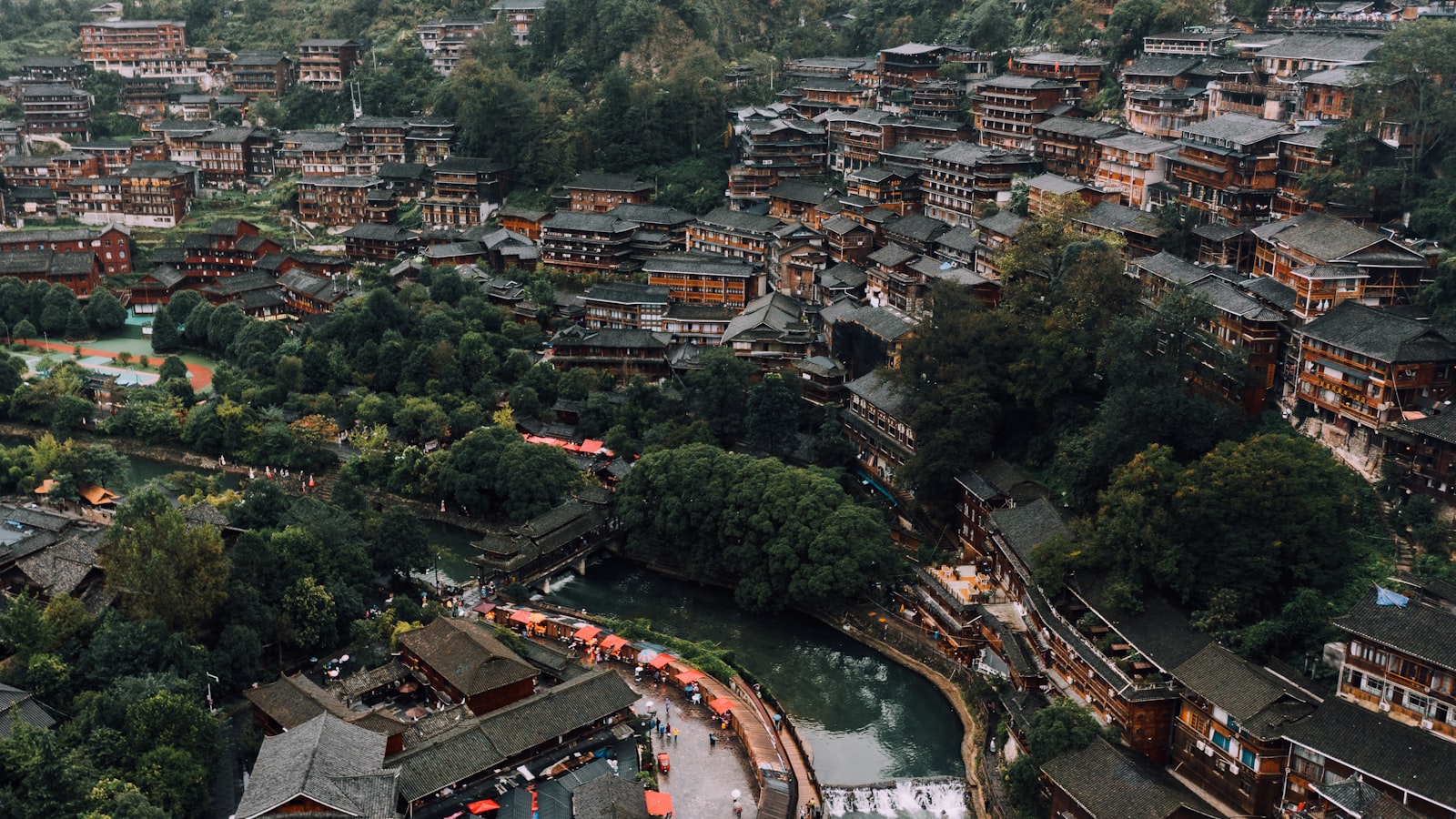
On to Xijiang, the world’s largest Miao village — a hillside of wooden stilt houses and rice terraces. Stay overnight to see it without the day-trip crowds, and try the sour fish soup in a family restaurant.
Day 6 — Zhenyuan Ancient Town
The train via Kaili to Zhenyuan — a Ming-dynasty river town on the Wuyang River, with old lanes, bridges and quiet boat rides. An easy final stop before heading back.
Day 7 — Depart
Return to Guiyang by rail and fly out — or, with more time, add the FanJing Mountain (a UNESCO peak with a famous mushroom rock) for a couple more days.
More time? Add Fanjingshan (2 days) or the Dong villages of Congjiang for minority culture in depth.
Practical tips
- Book the high-speed rail with your passport — Guiyang–Anshun, Guiyang–Libo, Libo–Kaili. How to book trains.
- Write destinations in Chinese for taxis and shuttle buses — English is thin off the tourist trail.
- Rain is your friend: the waterfalls are at their best after rain; pack a rain jacket and waterproof shoes.
- Set up payment and data first: Alipay, eSIM, and a translation app.
- The local food — sour fish soup, rice noodles, and grilled skewers in the villages — is a highlight. See our what to eat guide.
Where this route fits
Guizhou is a fantastic second trip to China, or the wilder alternative to Guilin on a first visit. Start planning with the first-timer planner.
FAQ highlights
- Is it crowded? Less than almost anywhere in China — the province is just starting to appear on itineraries.
- Do I need a guide? No — the rail and shuttle system covers it; villages have English signage and maps.
- Best season? May–October for the waterfalls, but check flood alerts in heavy rain.
Getting around Guizhou
Guizhou’s high-speed rail now covers the main towns, but the villages sit at the end of a bus ride, so leave a little slack in each day. Here’s how the hops work:
- Guiyang → Anshun (for Huangguoshu): high-speed rail in about 30–40 minutes, then a bus or taxi of about an hour to the waterfall park.
- Guiyang → Libo: the high-speed line to Libo has made this much easier — roughly 1.5 hours, then a shuttle into Xiaoqikong.
- Libo → Kaili (for Xijiang): by rail toward Kaili, then a bus or taxi of about an hour up to the village.
- Kaili → Zhenyuan: high-speed rail in about an hour.
- Zhenyuan → Guiyang: roughly 1.5 hours back by rail.
Book the rail legs with your passport ahead — see our train guide — and have each destination written in Chinese for the bus and taxi drivers, since English is thin once you leave Guiyang. The buses to Xijiang and Huangguoshu run frequently, but the last services back leave mid-afternoon, so start early and don’t plan a tight return.
What to budget
Guizhou is one of China’s most affordable provinces, which is part of its appeal. As a rough estimate and always subject to change: a budget traveler can get by on roughly ¥300–450 per day for simple guesthouses, local noodles and rail tickets, while a comfortable mid-range pace with nicer hotels and private transfers for the village days runs nearer ¥600–900 per day. The fixed costs are the Huangguoshu and Xiaoqikong park tickets, the Xijiang village entry, and the rail tickets between towns. Food is cheap and excellent — sour fish soup, rice noodles and village skewers are some of the best value meals in China. Staying overnight inside Xijiang costs more than the towns below it, but it’s the one night worth the splurge so you can see the hillside lit up after the day-trippers leave.
Best season, what to pack & rain plan
Guizhou’s scenery runs on rain, so the trade-off is that the waterfalls are biggest exactly when you’re most likely to get wet. May–October is the best window for the waterfalls and the emerald pools, with June–September the peak for Huangguoshu’s full flow; just keep an eye on flood alerts in heavy rain. Winter is cooler and quieter but the karst still works. Pack a proper rain jacket, waterproof shoes and a folding umbrella — they’ll be used — plus a warm layer for the cooler mountain evenings. The weather changes fast, so a small dry bag for your phone and camera is genuinely useful on the waterfall and pool days. Sun protection matters too once the clouds clear, and comfortable walking shoes are essential for the boardwalk trails in Xiaoqikong.
Food & the villages
Guizhou’s food is the province’s sleeper highlight, built on sour and spicy flavors you won’t find anywhere else in China. The signature is suantangyu (sour fish soup), made with a fermented rice or tomato broth, and it’s everywhere from Guiyang to the villages — order it at least once. Add rice noodles at breakfast, grilled skewers and cured meats in the villages, and the Miao and Dong dishes in Xijiang, where many family restaurants cook for small groups and will happily point at ingredients. Eat at a family table in Xijiang rather than a tour-group restaurant, and try the glutinous rice and sour-and-spicy chicken. Vegetarians should write down what they don’t eat in Chinese, since the default is meat-heavy. The Dong villages around Congjiang, if you extend south, are the place for slower, more authentic minority food than the busier Miao town — worth a day if food is your priority. And the province’s famous Maotai baijiu is made here in Zunyi, so a cautious taste is part of the local culture if that’s your thing. Guiyang also makes a good final stop to stock up on dried chilies and sour-soup paste to take home.
Last updated: August 2026. Rail and attraction times change — confirm before you travel.
Frequently Asked Questions
Why visit Guizhou?
Guizhou is China's most underrated province — huge waterfalls, emerald karst pools, the world's largest Miao and Dong villages, and a fraction of the crowds of Guilin or Yunnan. It's rising fast, which means now is the moment to visit before it gets busy.
When is the Huangguoshu Waterfall at its best?
June to September, after the rains, is when Huangguoshu — Asia's largest waterfall — is at full power. The trade-off is mist and occasional floods. May and October are also fine. Avoid peak Chinese holidays, when the viewing platforms are shoulder-to-shoulder.
Is Guizhou easy to get around as a foreigner?
Yes — the high-speed rail connects the main towns, and the villages are served by shuttle buses. English is thinner than the big cities, so have your destinations written in Chinese and use a [translation app](https://chinotrips.com/how-to/translation-apps/). Book trains with your passport. [How to book trains](https://chinotrips.com/how-to/train-tickets/).
Is the West Miao village touristic?
Xijiang Qianhu Miao Village is the largest Miao village in the world and it does get busy, especially at night when the hillside lights up. It's still worth it — stay overnight and you'll see the village wake up before the day-trippers arrive.
How does Guizhou compare with Guilin?
Both are karst landscapes, but Guizhou is more vertical and wilder — waterfalls, mountains and minority culture — while Guilin is river karst you drift past. If you've done Guilin, Guizhou is the deeper, less-touristed next step.