
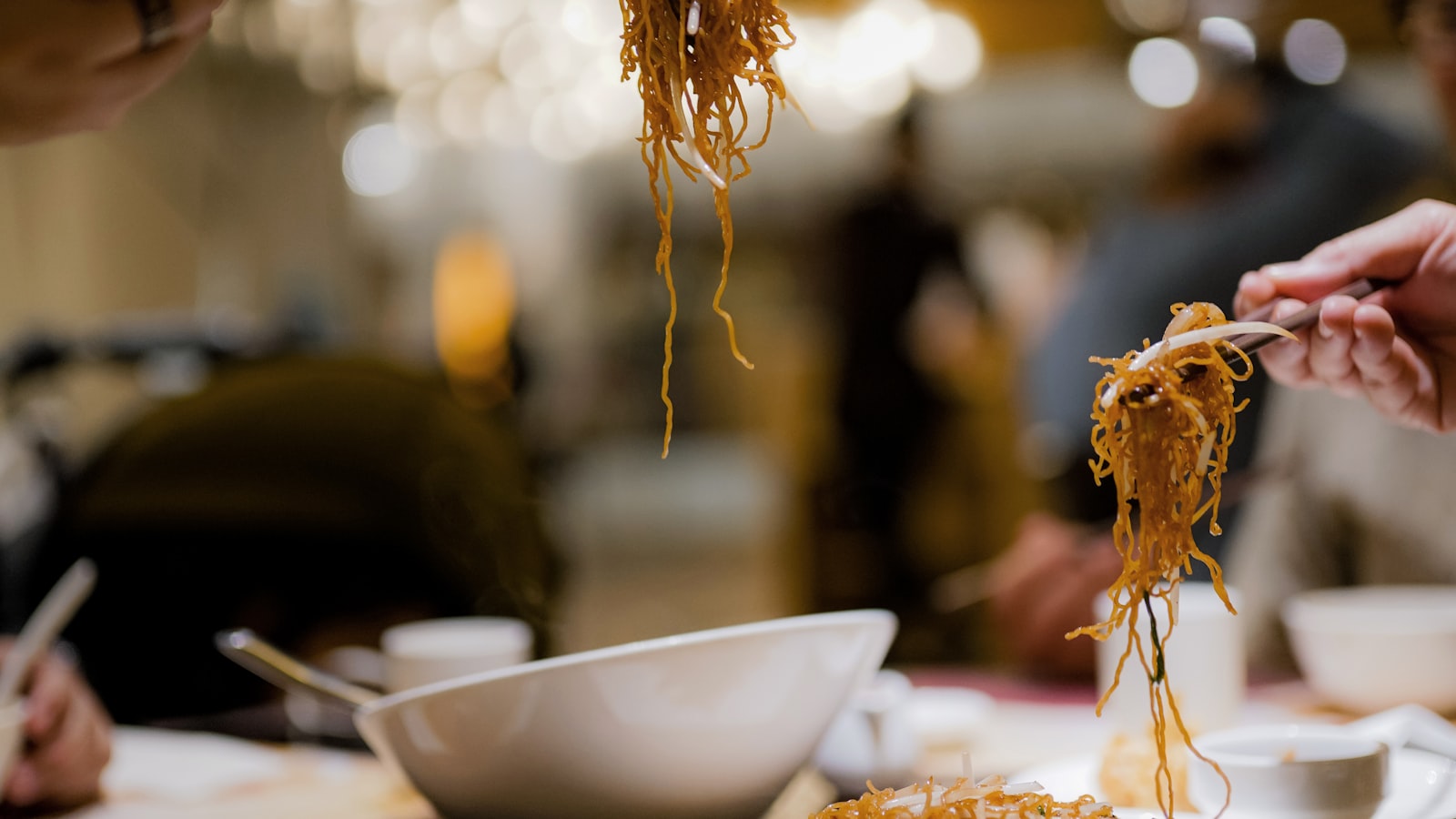
What to Eat in China: A First-Timer's Guide to Chinese Food
What to eat in China on your first trip — must-try dishes by region, how to order, handling spice, and basic table manners.
The best thing about a first trip to China might be the food — here’s what to try, how to order it, and how to eat like a local.
Chinese food abroad is a pale shadow of the real thing. A Beijing duck that’s carved at your table, soup dumplings you must sip carefully, hand-pulled noodles slapped on a marble counter while you watch — these are experiences as much as meals. The good news: it’s easier to navigate than it looks, and the food culture is deeply welcoming to newcomers.
The must-try dishes, region by region
Beijing — imperial and northern classics. Peking duck (北京烤鸭) is the showpiece: lacquered, carved tableside, wrapped in thin pancakes with scallion and sweet bean sauce. Also try zhajiangmian, chewy wheat noodles in a fermented soybean sauce. See the Beijing guide for where to base your eating.
Shanghai — sweet, soupy and refined. Xiaolongbao (小笼包) are the city’s icon — delicate wrappers holding hot broth; bite a corner, sip, then eat. Shengjianbao are the pan-fried, thicker-crusted cousins. Red-braised pork (hongshao rou) is slow-cooked, sweet and utterly tender. Explore more in the Shanghai guide.
Xi’an — noodles and Muslim Quarter eats. Biangbiang noodles are wide, hand-pulled and usually doused in chili oil. Rou jia mo is the “Chinese hamburger” — braised pork stuffed into a crisp flatbread. Lamb skewers (chuanr) from the Muslim Quarter are a nighttime ritual.
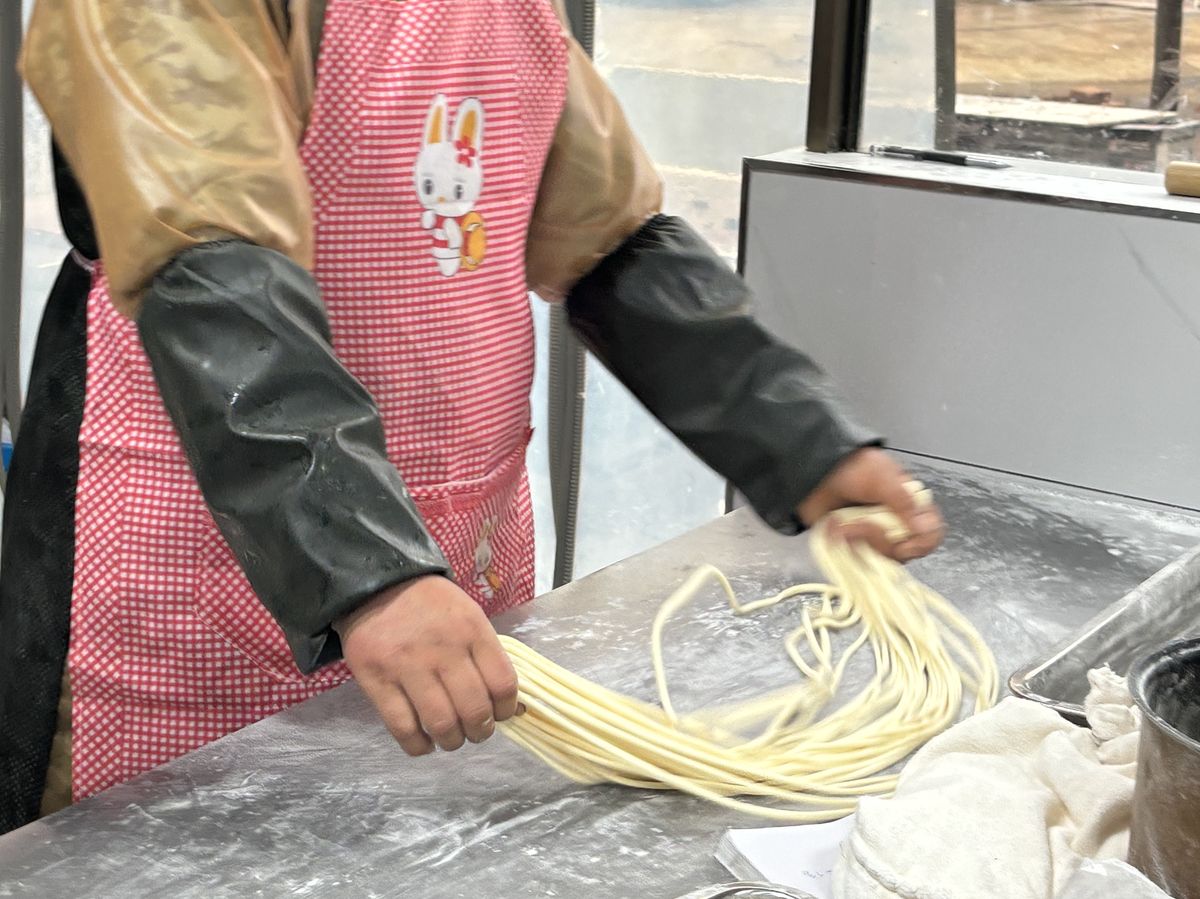
Hand-pulled noodles are the essential Xi’an experience — watch them slapped and stretched on the counter, then doused in chili oil.
Chengdu — Sichuan’s spicy heart. Hotpot (火锅) is the communal centerpiece: a bubbling pot of broth, usually with a numbing spicy half and a mild half, for cooking raw ingredients at the table. Mapo tofu, kung pao chicken and dan dan noodles round out the essential Sichuan set. The Chengdu guide covers the food scene in depth.
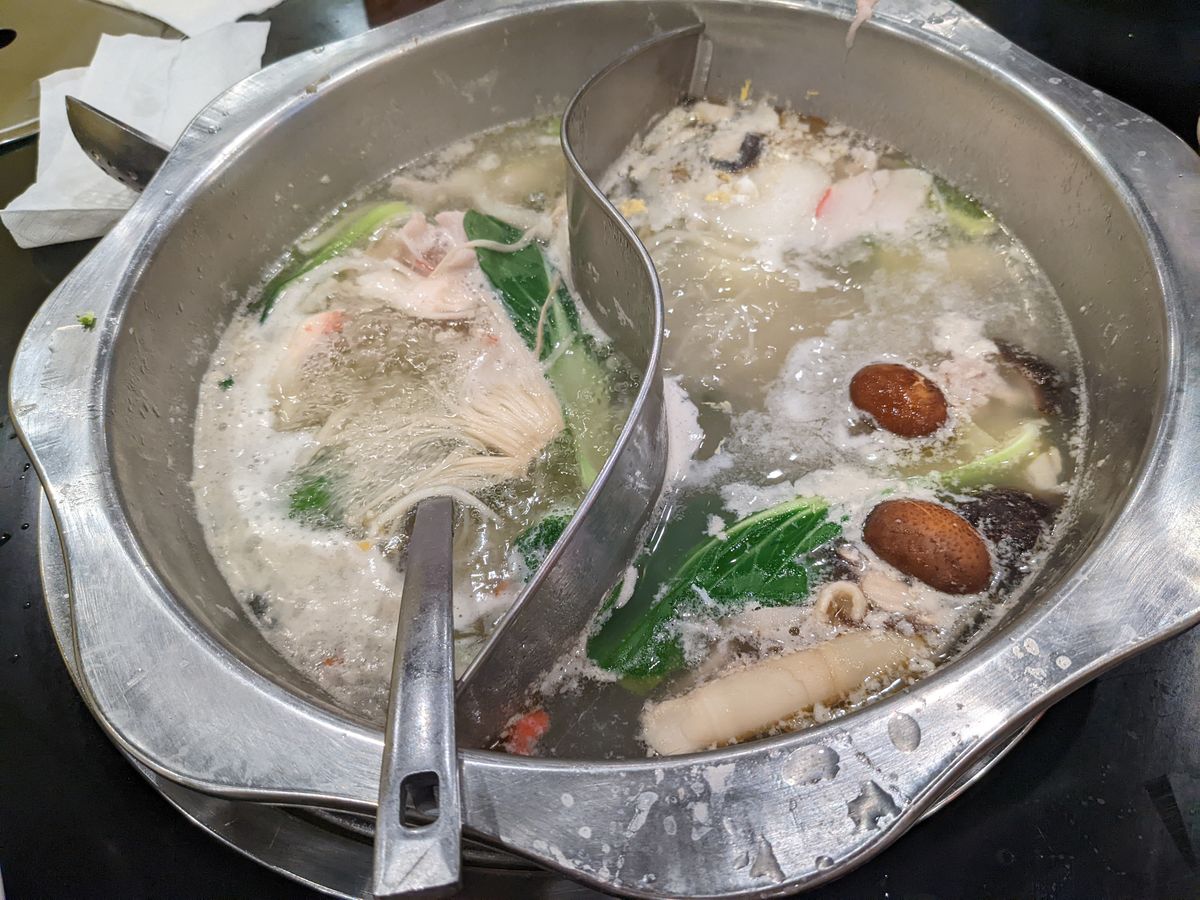
Sichuan hotpot is a communal centerpiece — choose a split pot with one mild half if you’re new to the numbing spice of Sichuan peppercorn.
Nationwide — the safe hits. Jiaozi (boiled dumplings), baozi (steamed stuffed buns), fried rice, and Cantonese dim sum are delicious everywhere and easy for hesitant eaters.
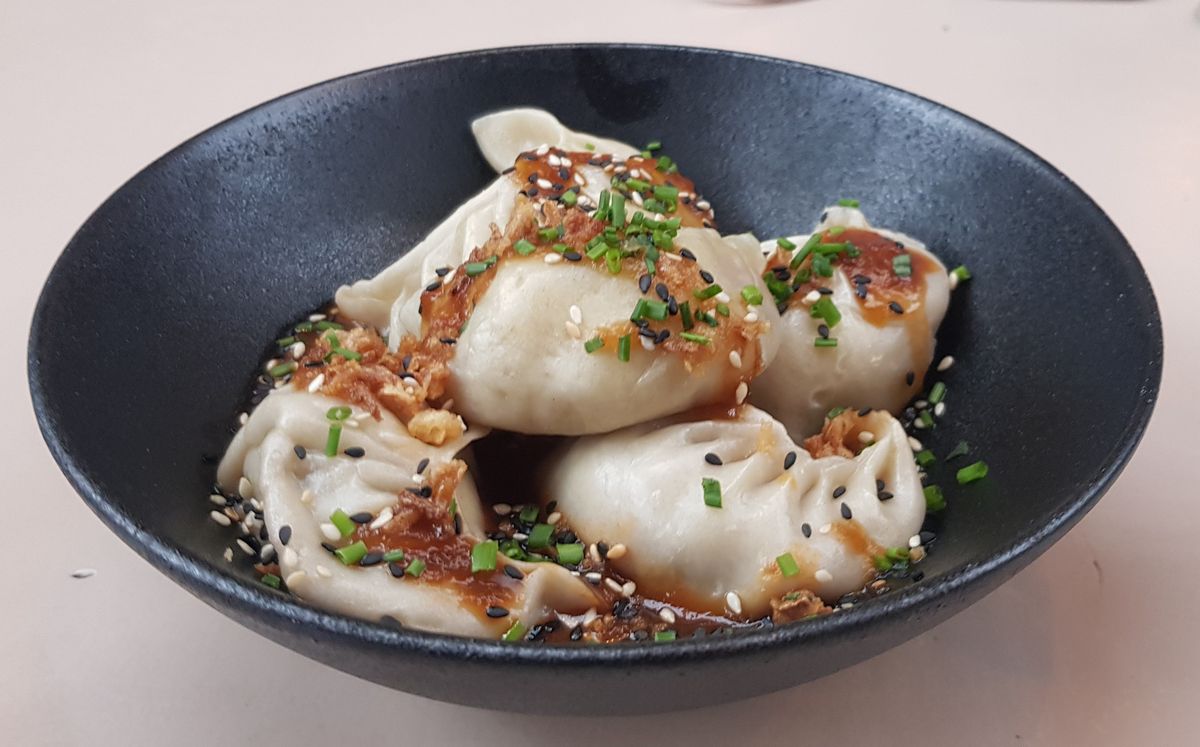
Jiaozi dumplings are the safe, delicious entry point to Chinese food — boiled, steamed or pan-fried, and easy to find in every city.
How to order like a local
- Share, don’t order one dish per person. Chinese meals are communal — for a table of four, order roughly five dishes (the “n+1” rule), plus rice.
- Point at the photo. Small restaurants usually have picture menus. Point and say “zhe ge” (this one); repeat as needed.
- Use a translation app for live menus — the camera translation in Google Translate or Apple Translate handles Chinese characters well.
- Rice is on the side. In the south rice is standard; in the north, noodles and dumplings play the staple role.
- Drinks: hot tea usually arrives free with the meal. Beer (Tsingtao, Yanjing, Harbin) is cheap and crisp.
What to drink with your meal
- Hot tea arrives free at most restaurants and is refilled without asking — in Beijing it’s usually jasmine, in the south often oolong or green.
- Beer is cheap, served ice-cold, and pairs brilliantly with Sichuan heat — Tsingtao, Yanjing and Harbin are the national names.
- Suan nai (酸奶), a drinkable yogurt, is the classic local antidote after a spicy meal.
- Bottled water is the safe default. Ask for no ice (“bu yao bing”) in drinks until your stomach acclimates.
Spice levels
- “Bu la” (不辣) — not spicy. “Wei la” (微辣) — a little spicy. “La” (辣) — spicy.
- Sichuan cooking uses Sichuan peppercorn, which numbs the mouth — a sensation, not just heat. It’s half the fun, but it’s fine to ask for less.
- In hotpot, choose a split pot (鸳鸯锅) with one mild half. The mild half is genuinely mild.
- Keep water, tea or beer at hand; yogurt (“suan nai”) is the classic local antidote to spice.
Table manners, briefly
- Chopsticks: never stand them upright in rice (it evokes funerary incense), don’t point with them, and don’t spear food like a fork.
- Shared dishes: use the serving spoon or the “public chopsticks” when provided.
- Slurping is fine — it signals enjoyment, especially for noodles.
- Tipping is not expected in China. Rounding up is unnecessary.
- Finishing your plate is fine; leaving a little is also fine. Nobody will be offended either way.
Dietary needs
- Vegetarian: learn “wo chi su” (我吃素). Ask “bu yao rou” (no meat) when ordering, since stock and meat often hide in sauces.
- Vegan: harder — many dishes use egg. Say “bu yao rou, bu yao ji dan” (no meat, no egg).
- Allergies: carry a written card in Chinese. Peanuts and chili oil are ubiquitous, and soy sauce contains gluten. “Wo dui … guo min” means “I’m allergic to …”.
- Pork-free: pork is the default meat in much of China; specify “bu yao zhu rou” (no pork).
The rhythm of a Chinese meal
Understanding how meals work in China makes ordering easier and more enjoyable. A typical meal is served all at once rather than in courses: rice or noodles arrive on the side, several shared dishes fill the center of the table, and everyone takes from the shared plates. Ordering is built around balance — one meat dish, one vegetable dish, one soup or tofu, and something with a contrasting texture or flavor. That is why the “n+1” rule works: for a table of four, five dishes plus rice.
Breakfast is a different world from the West: congee, jianbing (savory crepes), baozi (steamed buns), noodles and soy milk rule the morning, and many people eat on the street or in tiny storefronts rather than in a sit-down restaurant. Lunch and dinner are where the shared-table format takes over. Snacking is a way of life, too — night markets and street stalls serve small plates designed to be eaten standing up.
Regional cuisines beyond the big five
China’s food is enormously regional, and the dishes that define each area are worth seeking out beyond the classics.
- Cantonese (Guangzhou, Hong Kong): dim sum, roast goose, congee and the lightest, freshest cooking in China.
- Hunan: fiery and direct, with more pure heat and less of the numbing pepper of Sichuan; famously home of Chairman Mao’s braised pork.
- Dongbei (northeast): hearty, rib-sticking stews, dumplings and potatoes, plus the region’s signature hotpot without the Sichuan numbness.
- Jiangnan (Shanghai, Hangzhou, Suzhou): sweet, refined and seafood-rich, with dishes like Beggar’s Chicken and West Lake fish.
- Xinjiang: lamb skewers, naan bread and hand-pulled noodles from the Muslim northwest — a taste of Central Asia inside China.
- Yunnan: wild mushrooms, rose-flavored pastries, rice noodles and the subtle use of herbs and edible flowers.
Common mistakes to avoid
- Ordering one dish per person. Chinese meals are shared; one dish each leaves you with no variety and a huge pile of rice.
- Forgetting that “not spicy” is a request, not an insult. Locals ask for mild versions all the time; say “bu la” without apology.
- Skipping breakfast. Street breakfasts like jianbing and baozi are among the best food in China and almost never make it into guidebook restaurant lists.
- Eating only at Western chains. The food is half the reason to visit China; a translation app’s camera mode makes any menu readable.
- Drinking tap water. Stick to bottled or boiled water, especially in the first days — your stomach will thank you.
- Not carrying tissues. Many small restaurants and street stalls have no napkins.
A realistic food budget
Chinese food is famously affordable. Eating at street stalls and neighborhood canteens, you can eat very well for ¥30–60 per day; a sit-down restaurant meal with several shared dishes runs ¥60–150 per person; and a splurge — Peking duck, a hotpot feast, fine Cantonese — costs ¥200–400 per person. Drinks are cheap: local beer is a few yuan a bottle, and tea arrives free with most meals. Prices rise in tourist areas, so a meal near a big sight can cost twice what the same dish costs a few streets away.
Eating like a local: a daily meal map
A local’s eating day looks very different from a tourist’s, and following it unlocks the best food. Morning starts around 7–9am with a quick street breakfast — jianbing, baozi, youtiao (fried dough) dipped in soy milk, or a bowl of noodles — eaten standing at the stall or on the way to work. Lunch at noon is the day’s proper meal, often at a canteen or small restaurant, with a shared set of dishes over rice. Afternoon brings the snack culture: in the south, afternoon tea with dumplings and pastries; across the country, skewers, fruit and iced drinks. Dinner is the social meal, eaten late by Western standards, often from 6:30pm onward, and it is when hotpot and banquet-style eating come out. Late-night snack streets fill after 10pm in big cities. The practical takeaway: eat early breakfasts, big lunches and sociable dinners, and you will eat exactly how locals do.
Practical tips
- Payment: most restaurants are cashless — set up Alipay with a foreign card before you fly.
- Tea and tissues: tea comes with meals; small restaurants may not have napkins, so carry tissues.
- Water: drink bottled or boiled water everywhere.
- Go where locals queue: the shortest route to great food in any city is the stall or restaurant with a line of locals.
Last updated: August 2026. Restaurant hours and menus change — confirm before you go.
Frequently Asked Questions
What should I eat first in China?
Start regional: jiaozi (boiled dumplings) and Peking duck in Beijing, xiaolongbao (soup dumplings) in Shanghai, hand-pulled noodles and rou jia mo in Xi'an, and hotpot or mapo tofu in Chengdu. These five dishes cover the classics with almost no risk.
How spicy is the food in China, really?
It varies by region. Sichuan and Hunan food is genuinely fiery, with a numbing sensation from Sichuan peppercorn; most of Shanghai, Beijing and Guangzhou is much milder. You can almost always ask for 'bu la' (not spicy) or 'wei la' (a little spicy) — it's a normal request, not a slight.
How do I order if I can't read the menu?
Most small restaurants have menus with photos; point at the dish and say 'zhe ge' (this one). Translation apps like the camera feature in Google Translate or Apple Translate handle live menus well. For tables of two or more, ordering three to four dishes to share is usually right.
Are there rules I need to know before eating?
A few basics: never stand chopsticks upright in rice, don't point at people with them, and use the serving spoon rather than your own chopsticks for shared dishes. Slurping noodles is fine and normal. Tipping is not expected anywhere.
What if I'm vegetarian, vegan, or have allergies?
'Wo chi su' (我吃素) means 'I eat vegetarian', but many dishes hide meat stock or meat in sauce, so be explicit. For vegans, it's harder — say 'bu yao rou, bu yao ji dan' (no meat, no egg). For allergies, carry a card in Chinese; peanuts and chili oil are common, and soy sauce contains gluten.
Is it safe to eat from small local restaurants?
Generally yes. The easiest rule is to eat where it's busy — high turnover means fresh ingredients. Stick to freshly cooked, piping-hot food, drink bottled or boiled water, and for sensitive stomachs, avoid raw salads and ice in drinks for the first few days.