Tibet Beyond Lhasa: Namtso, Yamdrok & Everest (2026)
Beyond Lhasa — Tibet's great landscape trips: the Namtso and Yamdrok lakes, the Everest Base Camp journey, and the wider high plateau, with the permits and practicalities.
OpenStreetMap Google Maps (opens externally)
Beyond Lhasa lies the Tibet of the grand landscapes — the sacred lakes of Namtso and Yamdrok, the passes, and the journey to Everest Base Camp. Here’s the guide to going deeper into the high plateau.
Lhasa is the heart of Tibet, but the region’s grandest landscapes lie beyond it. North of the city, Namtso — the highest great lake in the world — spreads blue beneath the snow mountains. South, Yamdrok folds its turquoise water between the ridges. And across the high plateau, the road leads to Everest Base Camp, the foot of the world’s highest mountain. These are the great journeys of Tibet — demanding, high and unforgettable. This guide covers the lakes, the mountain and the practicalities.
The lakes: Namtso and Yamdrok
- Namtso — the vast sacred lake at 4,700 m, one of the most beautiful in Tibet; a day trip or an overnight from Lhasa.
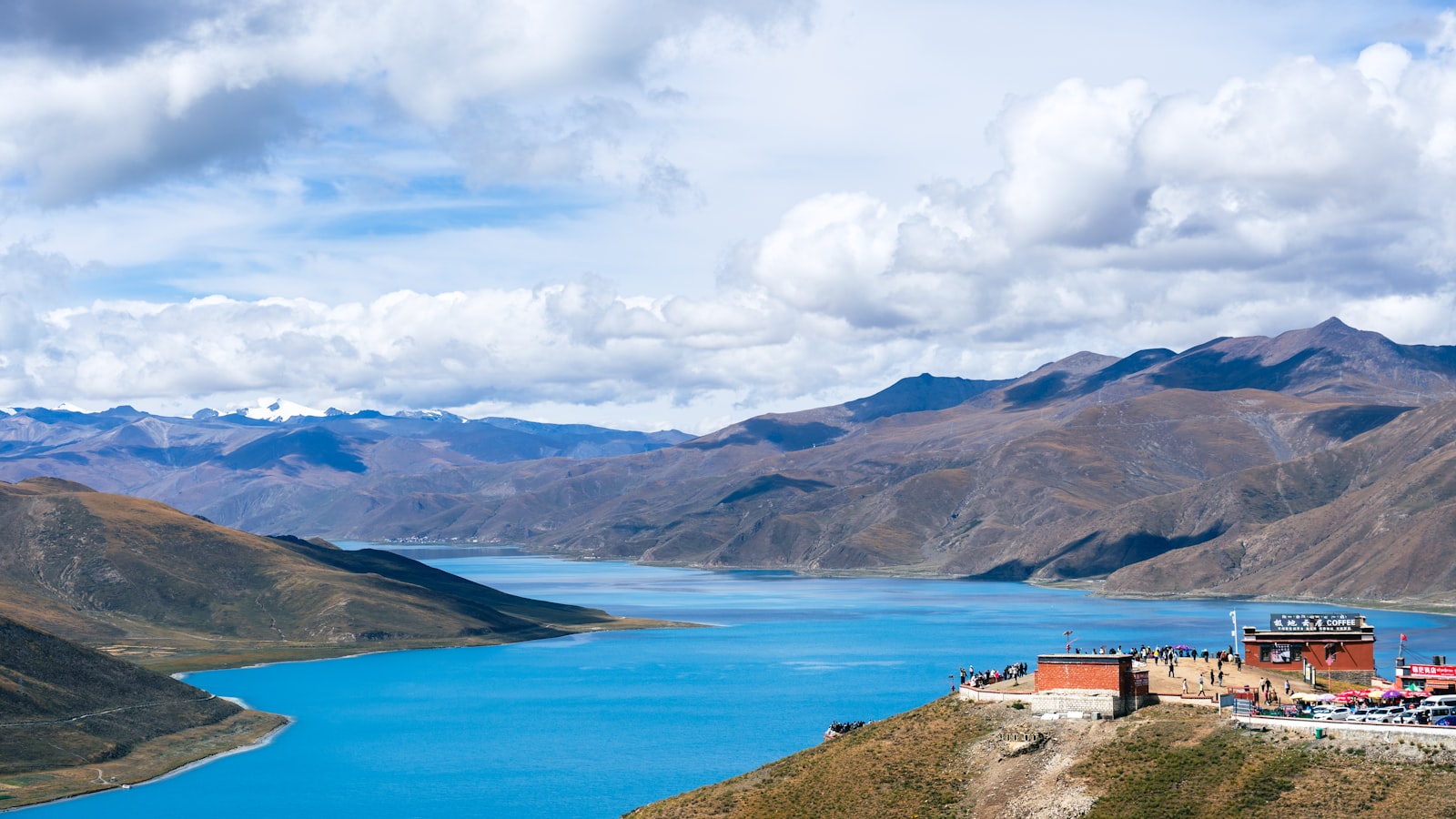
- Yamdrok — the turquoise lake on the road south, folded dramatically between the mountains.
- The passes and the views — the journeys to the lakes are as stunning as the lakes themselves.
- The altitude — both are high; acclimatize first.
The lakes are the great day trips of Tibet — the sacred waters of the plateau, unforgettable in the clear high-altitude light.
The mountain: Everest Base Camp
- The journey — several days across the high plateau from Lhasa.
- The destination — Everest Base Camp at about 5,200 m, with the north face rising ahead.
- The route — the passes, the monasteries and the plateau towns along the way.
- The experience — standing at the foot of the world’s highest mountain.
Everest is the ultimate Tibet journey — the days of high travel that end beneath the world’s roof.
The permits and the structure
- The Tibet permit — required for foreign visitors; handled through an organized tour.
- The Everest permit — an additional authorization for the base camp area.
- The organized structure — most travelers join a licensed tour; the paperwork is theirs.
- Book ahead — the agencies and the permits need planning. See our Tibet guide for the context.
The permits are the fixed frame of travel in Tibet — plan them through the agencies, and they’re straightforward.
The altitude, honestly
- Lhasa: 3,650 m — acclimatize for a couple of days first.
- Namtso: over 4,700 m — real altitude; the lake’s beauty comes at a cost.
- Everest Base Camp: about 5,200 m — the high point, needing the preparation.
- The rules — climb slowly, hydrate, sleep low, descend on symptoms. See our high-altitude guide.
The altitude is the defining factor — respect it, and the plateau opens up.
The road to Everest: the route in stages
The Everest Base Camp journey is the classic deep-Tibet road trip, and it unfolds in clear stages that give the journey its shape. From Lhasa, the road heads south and west toward the Yarlung Tsangpo valley. Shigatse — Tibet’s second city — is the first major stop, home to the great Tashilhunpo Monastery, the seat of the Panchen Lama. Beyond it, the road climbs the passes of the Himalaya foothills, past the turquoise lakes and the high valleys, to the mountain town of Tingri, where the first clear view of Everest’s massif appears on the horizon. The final stage crosses the plain to the base camp itself, where the north face of the mountain rises directly ahead.
- Shigatse and Tashilhunpo — the great monastery of the Panchen Lama, Tibet’s second city.
- The passes — the high crossings of the Himalaya foothills, with the lakes below.
- Tingri — the town where Everest first appears, huge on the horizon.
- The base camp — the final plain and the north face rising ahead.
What to pack for the high plateau
Packing for beyond Lhasa is packing for altitude and weather extremes. Days on the plateau can be warm and brilliantly sunny, while the nights — and the winds — are cold at any time of year. Layering is the whole game: a warm base layer, a fleece or down mid-layer, and a windproof shell, with a warm hat and gloves for the early mornings and the high passes. The sun at 5,000 meters is fierce — high-factor sunscreen, sunglasses and lip balm are essential — and a good water bottle to stay hydrated against the thin dry air is non-negotiable.
- Layers — base layer, mid-layer and a windproof shell; the plateau swings between sun and cold.
- The sun — high-factor sunscreen, good sunglasses and lip balm for the fierce high-altitude light.
- Hydration — a big water bottle and regular drinking, the simplest altitude defense.
- The overnight — the guesthouses are basic; a warm sleep setup pays off.
The monasteries and the passes
Beyond the two great lakes and Everest, the roads of central and southern Tibet are strung with the monasteries and the passes that give the region its character. The great Tashilhunpo Monastery at Shigatse is one of the largest functioning monasteries in Tibet and a highlight in its own right. Gyantse holds the remarkable Pelkor Chode with its many-storied kumbum — a white stupa covered in chapels, among the most distinctive structures in Tibet. And every pass is marked by its prayer flags, snapping in the wind, each set of flags a blessing left by a traveler.
- Tashilhunpo — the great monastery at Shigatse, the seat of the Panchen Lama.
- Gyantse and the kumbum — the white chorten covered in chapels, a one-of-a-kind sight.
- The prayer flags — the wind-blessed markers on every pass.
- The route south — the road from Lhasa to Shigatse crosses the Yamdrok country.
Budget, season and time
A week to ten days is the realistic frame for the lakes and Everest, and the budget depends mostly on the organized structure — the tours bundle the transport, the driver, the permits and the accommodation, and the price reflects the remote logistics. Two weeks allows the fuller circuit. The season is the fixed window: May through October, with September and October the sweet spot for clear skies. Winter is severe at altitude and the passes close; the summer monsoon brings rain but also the greenest landscape.
- Time — a week minimum; two weeks for the lakes, Everest and the fuller circuit.
- The organized structure — the tours handle the permits, the driver and the pacing.
- May–October — the travel season; September–October the sweetest for the skies.
- The reward — the high, clear light and the greatest landscapes on earth.
Practical notes
- Season — May–October; September–October is the sweetest.
- Time — a week minimum; two weeks for the lakes, Everest and the region.
- Get connected — set up Alipay and an eSIM for the logistics.
- The agencies — a good one handles the permits, the transport and the pacing.
The bottom line
Beyond Lhasa lies the Tibet of the grand landscapes — the sacred lakes of Namtso and Yamdrok, and the journey to Everest Base Camp across the high plateau. Acclimatize, take the time, let the agency handle the permits, and the great journeys of Tibet open up — the lakes, the passes and the foot of the world’s highest mountain.
Last updated: August 2026. Permits, access and conditions change — confirm current details before you go.
Frequently Asked Questions
What is there to see in Tibet beyond Lhasa?
The great landscape trips: **Namtso** — the vast sacred lake at 4,700 m, one of Tibet's most beautiful; **Yamdrok** — the turquoise lake folded between the mountains on the road south; and **Everest Base Camp** — the classic deep-Tibet journey to the foot of the world's highest mountain. Beyond those, the region holds the monasteries, the passes and the plateau itself. See our [Tibet guide](https://chinotrips.com/tibet/) and [deep Tibet route](https://chinotrips.com/itineraries/tibet-deep-route/) for the region.
Are the lakes worth the journey?
Yes — **Namtso** and **Yamdrok** are among the most beautiful places in Tibet. Namtso, the highest great lake in the world, spreads vast and blue beneath the holy Nyenchen Tanglha mountains; Yamdrok's turquoise water folds dramatically between the ridges on the road south. Each is a day trip (or overnight) from Lhasa, and each is unforgettable. The altitude is real — Namtso is over 4,700 m — so acclimatize first.
Is Everest Base Camp worth it?
For most travelers to Tibet, yes — it's the ultimate journey: several days across the high plateau to the **Everest Base Camp** (about 5,200 m), with the mountain's north face rising ahead and the world's highest views. It requires the altitude preparation, the permit and the organized tour, and it's a long, high trip — but standing at the foot of Everest is one of the great experiences of travel. See our [high-altitude guide](https://chinotrips.com/how-to/outdoor-mustang-karoo/) for the preparation.
What permits do I need for these trips?
**Tibet requires a permit for foreign visitors**, and most travelers must join an organized tour — the permits, the travel and the logistics are handled through a licensed agency. The **Everest trip** needs an additional permit for the base camp area. This is not optional; it's the fixed structure of travel in Tibet. Book through a reputable agency well ahead, and let them handle the paperwork. See our [Tibet permit guide](https://chinotrips.com/visa/tibet-travel-permit/) for the details.
How does the altitude affect these trips?
The altitude is the defining challenge: **Lhasa is 3,650 m**, **Namtso over 4,700 m**, **Everest Base Camp about 5,200 m**. The thin air affects everyone — the rules are acclimatize in Lhasa for a couple of days, climb slowly, hydrate and sleep low when possible. Severe altitude sickness is real, and descending is the only cure. See our [high-altitude guide](https://chinotrips.com/how-to/outdoor-mustang-karoo/) for the full preparation.
How much time do I need?
**A week minimum** for the region: a couple of days in Lhasa, a day for Namtso or Yamdrok, and 4–5 days for the Everest trip. **Ten days to two weeks** allows the lakes, Everest and the other monasteries and passes. It's a region that rewards time and acclimatization — the altitude dictates the pace, and the scenery rewards the slow approach.
When is the best time to visit Tibet?
**May–October** is the travel season — the passes open, the weather is mild, and the lakes and the mountains are at their most accessible. **September–October** is often the sweetest: clear skies and the dramatic autumn light. **Winter (November–April)** is severe at altitude — extreme cold, closed passes and limited access. For the lakes and Everest, the summer-to-autumn season is the window.