
Xi'an Day Trips: Huashan, Famen Temple & the Terraces (2026)
The best day trips from Xi'an — Huashan's mountain hike, the Famen Temple, the Hukou Waterfall and the terracotta army region, and how to plan them.
OpenStreetMap Google Maps (opens externally)
Xi’an’s day trips take you to the terracotta army, the sacred mountain of Huashan, the Buddha’s finger bone at Famen and the thundering Hukou Waterfall — each a complete trip from the ancient capital in a day.
Xi’an is the gateway to a region rich in history and drama. East of the city stand the terracotta warriors, the essential excursion of any visit. To the east too rises Mount Huashan, the sacred mountain with its famous plank walk. South lies the Famen Temple, shrine of the Buddha’s relic; far to the north the Yellow River thunders through the Hukou gorge. Each is a complete day trip from the ancient capital — and each is unforgettable in its own way.
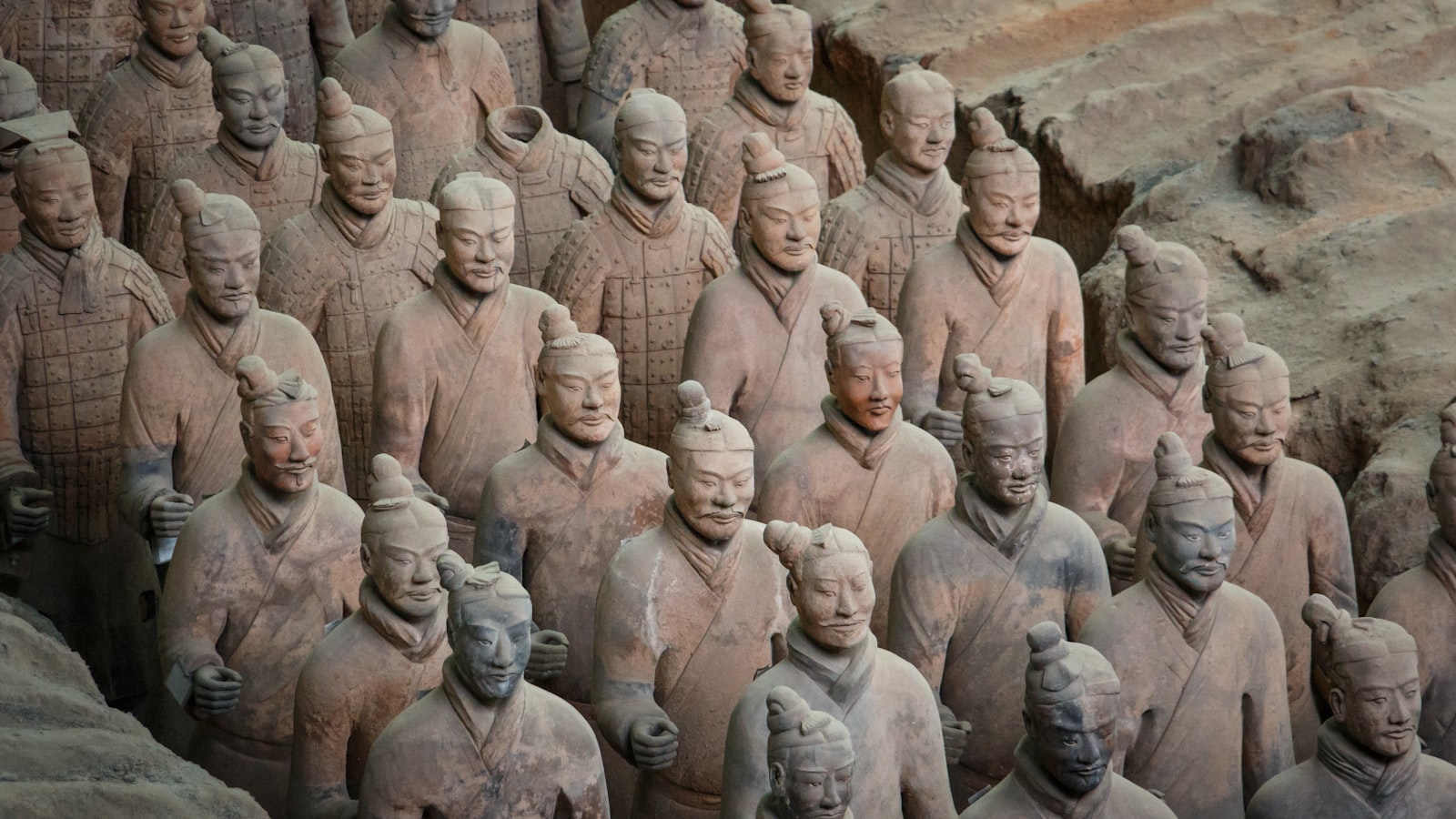
The essential: the Terracotta Army
- A half day — about an hour east of Xi’an, with the pits and the museum taking a few hours.
- The warriors — thousands of life-sized soldiers in formation; one of the great sights of China.
- The museum — the bronze chariots and the collection.
- The morning light — the best time for the pits. See our terracotta photography guide.
The terracotta army is the essential Xi’an trip — see our Xi’an guide for the full picture.
The mountain: Mount Huashan
- 30 minutes by high-speed rail — one of China’s easiest great-mountain day trips.
- The granite spine — one of the sacred peaks, with dramatic cliffs and summits.
- The plank walk — the famous walkway along the cliff face; the thrill of the visit.
- The cable car — gets you most of the way; the walks and the plank walk complete the day.
Huashan is the adventurous day trip — strenuous, spectacular and unforgettable.
The temple: Famen
- The Buddha’s relic — the finger bone discovered at the site, in the vast modern hall.
- The ancient pagoda — the original shrine that stood for centuries.
- A quieter trip — fewer tourists than the headline sights, and genuinely impressive.
- A 2-hour drive — an easy, rewarding day out.
Famen is the cultural day trip — Buddhism, archaeology and the blend of old and new.
The waterfall: Hukou
- The Yellow River’s drama — the falls where the great river thunders through the gorge.
- Best in spring and autumn — the highest water and the most dramatic spectacle.
- A long day — 3–4 hours each way; the furthest of the Xi’an trips.
- The reward — one of the great natural sights of the north.
Hukou is the long, spectacular day trip — for those with the time.
Planning the trips
- The terracotta army fits a half day — combine it with the city’s sights for a full day.
- Huashan needs a full day — the rail, the cable car and the walks; start early.
- Famen and Hukou are full days — the driving is part of the trip.
- Book through day tours or a driver — the logistics are easier, and the tours handle the tickets.
- Best season — spring and autumn for all four.
Each trip rewards an early start and a clear plan — the region is rich enough for a week of day trips.
The story of the terracotta army
The terracotta army was discovered in 1974 by farmers digging a well outside Xi’an, and what they uncovered has become one of the great archaeological finds of the twentieth century. The figures were made to guard the tomb of Qin Shi Huang, the first emperor who unified China in 221 BC, and they were built in astonishing variety — each of the thousands of soldiers has a distinct face, hair style and rank, so that no two are identical. The pits are arranged in military formation, with infantry, archers, chariots and officers facing east. Today visitors see Pit 1, the largest and most dramatic; Pit 3, the command post; and the impressive bronze chariots in the museum hall. The best visits pair the pits with a look at the museum’s finer pieces — the detail of the armour and the bronze birds is easy to miss in the crowds.
Food on the road
The region around Xi’an is the heartland of Shaanxi cooking, and a day trip is a chance to eat it well. The classic breakfast is a bowl of roujiamo — the “Chinese hamburger” of shredded pork in a crisp flatbread — or a plate of liangpi, the cold wheat noodles with chilli oil that the province does better than anywhere. Around the terracotta pits the food is standard tourist fare, so have breakfast in the city before you go and plan the real eating for the evening back in Xi’an. On the road to Hukou and Famen, roadside restaurants are straightforward and cheap, and the local noodles are the reliable choice. For the mountain day at Huashan, pack snacks and water — the summit restaurants are expensive and the queues are long.
Budgeting the trips
The terracotta army is the budget essential: public buses reach the site for a few yuan, entry is modest, and a do-it-yourself visit keeps the whole morning around ¥150–250. Huashan is the costliest — the cable car round trip and the entry are the big-ticket items, and a day tour bundles them with the rail and transport for ¥300–600. Famen and Hukou sit in between, with the distance doing most of the pricing. The value lesson is the same across all four: a private driver or day tour makes sense when you are covering distance, while the terracotta army and Huashan are both easy to do independently with the rail and shuttle buses. Booking the high-speed rail a day ahead in season avoids the stress of sold-out trains.
Weather, seasons and practical timing
Spring and autumn are the seasons to plan around. Huashan is at its most spectacular in the clear days of May and October, when the granite ridges catch the light and the summit views stretch for miles; winter can close parts of the mountain for ice. The terracotta army is an all-weather visit, but the crowds are at their heaviest during the national holidays, when the pits fill within hours of opening. The Hukou Waterfall is best in spring, when the Yellow River runs high and the falls are at their most dramatic. For all the trips, start early and confirm the last return — the mountain and the waterfall both punish a missed connection.
Adding Xi’an’s own sights to a day
A day trip from Xi’an works best when it leaves room for the city itself. The terracotta army is the classic morning, and most visitors pair it with an afternoon back in Xi’an: the ancient city wall (walk or cycle a section of it), the Muslim Quarter’s narrow food streets, or the Big Wild Goose Pagoda as the light fades. The practical point is that Xi’an’s core sights are compact and easy to slot around a half-day excursion. If you are doing Huashan or Hukou, plan the city for another day entirely. The evening food market in the Muslim Quarter is the best meal in the city and a reward worth returning for after any day trip.
Practical notes
- Get connected — set up Alipay and an eSIM for tickets and transport.
- See our Xi’an guide for the city itself.
- Book the popular trips ahead — the terracotta army and Huashan fill in peak season.
The bottom line
Xi’an’s day trips are among the best in China — the terracotta army, the sacred mountain of Huashan, the Famen Temple and the Hukou Waterfall, each a complete trip from the ancient capital. Give the army a half day, Huashan a full day, and Famen and Hukou their full long days — and you’ll have seen the drama and the history of the region beyond the city.
Last updated: August 2026. Transport and opening hours change — confirm current details before you go.
Frequently Asked Questions
What are the best day trips from Xi'an?
The standouts: **the Terracotta Army** (the essential half day — the warriors at the pits east of the city); **Mount Huashan** (the sacred mountain with the famous plank walk, a full day); **the Famen Temple** (the shrine of the Buddha's finger bone); and **the Hukou Waterfall** (the dramatic Yellow River falls, a long day). Each is a complete trip from Xi'an, and all are easy to book through day tours or drivers. See our [Xi'an guide](https://chinotrips.com/xian/).
Is the Terracotta Army a day trip?
It's a **half-day trip** from Xi'an — about an hour east of the city, with the pits and the museum taking a few hours. It's the essential Xi'an excursion and one of the great sights of China. Most travelers do it in the morning (or afternoon) with the rest of the day free for the city. See our [terracotta photography guide](https://chinotrips.com/how-to/photography-terracotta/) for getting the best from the visit.
Is Mount Huashan worth a day trip?
Yes — for the fit and the adventurous. Huashan is one of China's sacred mountains, with a dramatic granite spine and the famous **plank walk** along a cliff face. The cable car gets you most of the way, and the summit walks and the plank walk make it an unforgettable day. It's a strenuous, spectacular trip — see our [hiking guide](https://chinotrips.com/itineraries/hiking-mount-emei-huangshan/) for the mountain context. Not for those who dislike heights.
How do I get to Mount Huashan?
**High-speed rail** from Xi'an to Huashan North station (about 30 minutes), then the shuttle to the mountain, or a **day tour** or **private driver** that handles the whole trip. The cable car gets you up the mountain, and the summit trails and the plank walk are the reward. Allow a full day: the rail, the cable car, the walks and the return. It's one of the easiest great-mountain day trips in China.
What is the Famen Temple?
The **Famen Temple** is one of China's great Buddhist shrines — the site where the finger bone relic of the Buddha was discovered, now housed in a vast modern hall behind the ancient pagoda. It's about a 2-hour drive from Xi'an and makes a good day trip for those interested in Buddhism, archaeology and the blend of ancient pagoda and modern shrine. It's quieter than the headline sights and genuinely impressive.
Is the Hukou Waterfall worth the trip?
For the right traveler, yes — the **Hukou Waterfall** is the great Yellow River's most dramatic moment, where the river thunders through a narrow gorge, best seen in spring (the highest water) and autumn. It's the furthest of the Xi'an day trips (about 3–4 hours each way), so it's a long day, but the spectacle is real. For those with limited time, the terracotta army and Huashan are the priority.
How much do Xi'an day trips cost?
Rough guidance (per person, CNY, prices change): **Terracotta Army** ¥150–300 including transport and entry; **Huashan** ¥300–600 including the rail, cable car and entry; **Famen Temple** ¥200–400; **Hukou Waterfall** ¥400–700 for the long day. The terrain and the distances set the prices; the day tours handle the logistics, and a private driver is the flexible option.