
Guangzhou Travel Guide (2026): Dim Sum & the Pearl River
The essential Guangzhou guide — Cantonese dim sum mornings, the Pearl River night cruise, Chen Clan Ancestral Hall and the Canton Tower.
OpenStreetMap Google Maps (opens externally)
Guangzhou is China’s southern gateway — a city that lives for food, river views and trade.
For travelers arriving in the south, Guangzhou is often the first stop: Hong Kong’s big-city neighbor that feels genuinely Chinese, with a food culture that rivals anywhere on the planet. This guide covers the essentials.
Overview
Guangzhou (Canton) is the capital of Guangdong province and the heart of the Pearl River Delta. It has been China’s great trading port for centuries — the city where the Silk Road met the sea. Today it’s a huge, modern metropolis with a Cantonese soul: loud, warm, and organized around the table.
How many days
Two days covers the essentials:
- Day 1: morning dim sum, Chen Clan Ancestral Hall, Shamian Island in the afternoon, Pearl River night cruise in the evening.
- Day 2: Canton Tower and the riverside district, Yuexiu Park, then shopping or food markets.
Suggested itinerary
A 2-day plan:
- Day 1 — Old Guangzhou: Chen Clan Ancestral Hall and a dim sum lunch, then a walk through Shamian Island’s colonial streets.
- Day 2 — New Guangzhou: the Canton Tower (go up for the view), then a Pearl River night cruise to see the skyline from the water.
Have more time? Add a day trip to Foshan or the Kaiping diaolou towers. Guangzhou pairs naturally with Hong Kong on a Greater Bay Area loop.
Best time to visit
- Autumn (October–December): the best — mild and dry.
- Spring (March–May): pleasant, though the Canton Fair brings big crowds in April.
- Summer (June–September): hot, humid and rainy; the river cruise still works.
- Winter (December–February): mild and comfortable, occasionally chilly.
Top sights
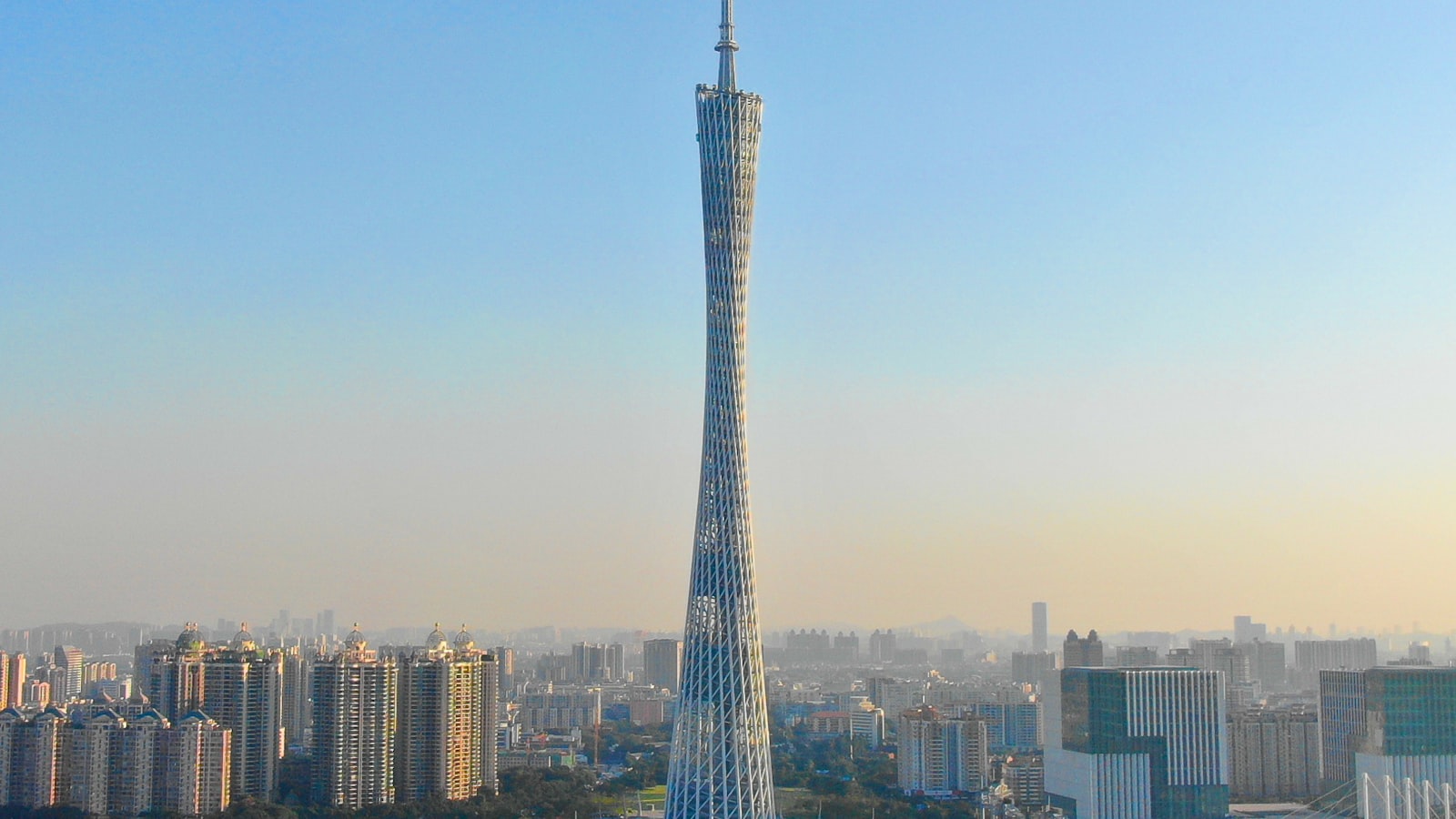
- Canton Tower — the needle-shaped tower on the river, roughly 600m tall. Go up for the view, best just before sunset.
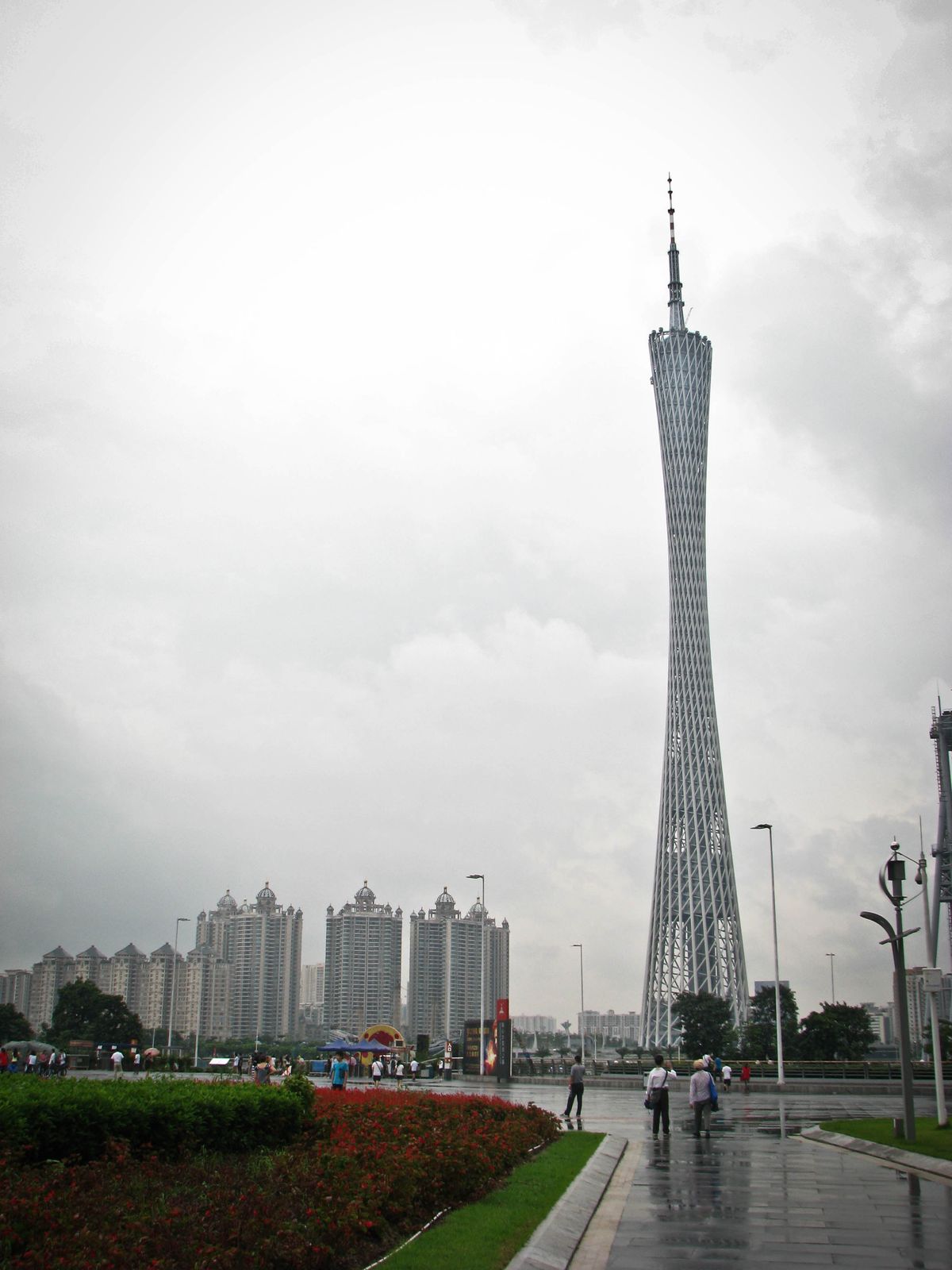
The Canton Tower, Guangzhou’s 600-meter landmark on the Pearl River. 2. Pearl River night cruise — the classic Guangzhou evening: lights, bridges and the tower seen from the water.
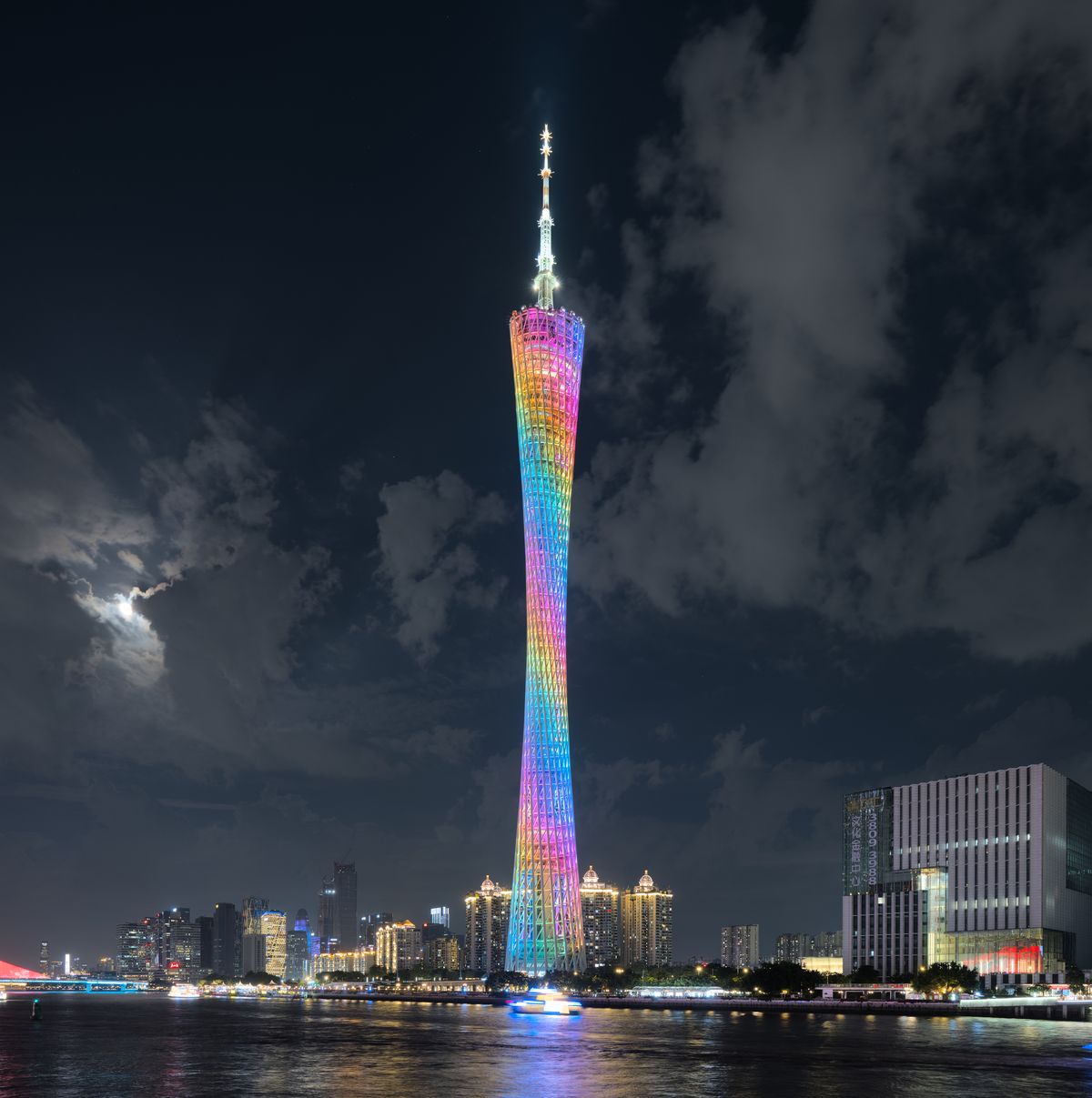
The Pearl River at night in Guangzhou — bridges, lights and the Canton Tower from the water. 3. Chen Clan Ancestral Hall — a 19th-century clan temple famous for its carved roof ridges and courtyards; now a folk-art museum.
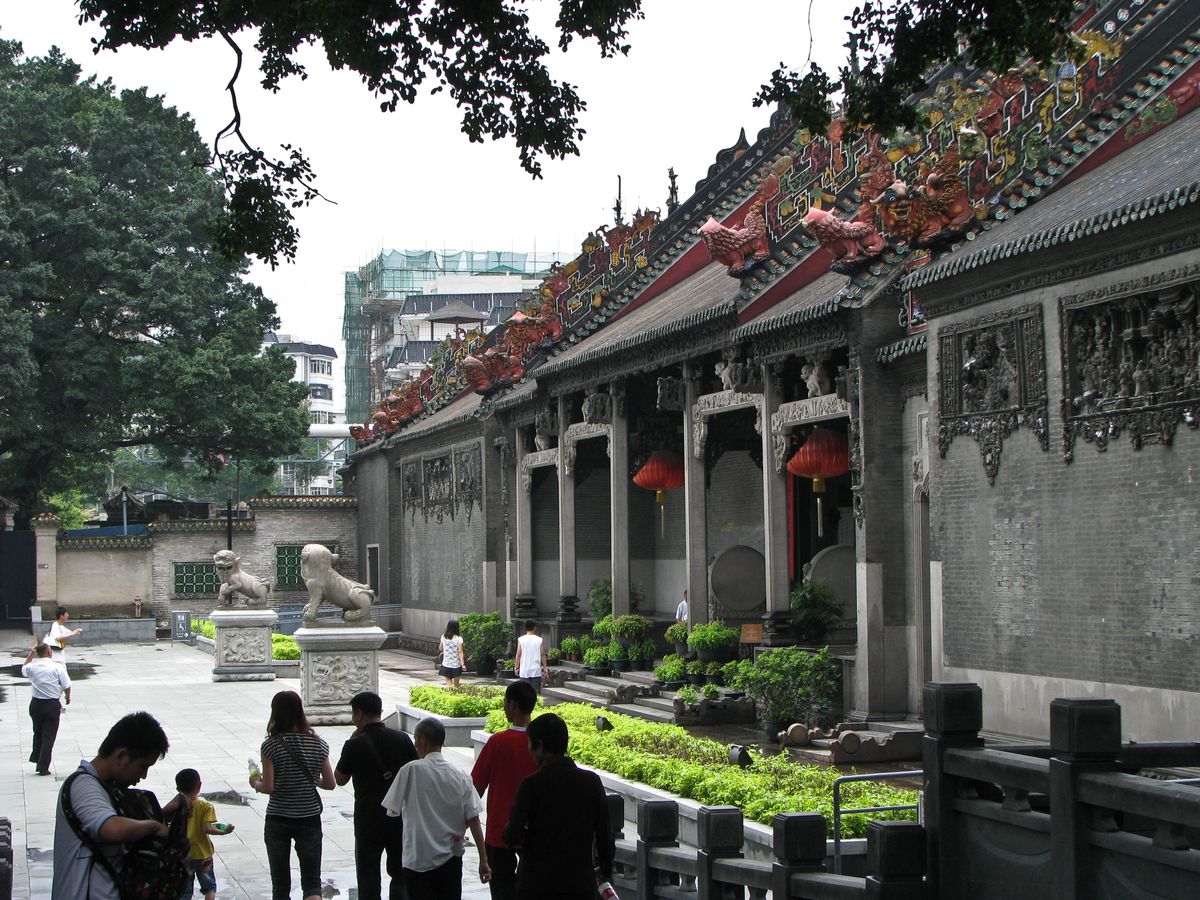
The carved roof ridges of the Chen Clan Ancestral Hall, Guangzhou’s folk-art museum. 4. Shamian Island — a quiet, leafy former concession area with colonial buildings — a nice contrast to the skyscrapers. 5. Yuexiu Park — home to the Five Rams statue, Guangzhou’s symbol, and easy for a stroll.
Food: the real reason to come
Guangzhou is the birthplace of dim sum (yum cha). The ritual is a morning tea-house session with steamed baskets of dumplings, rice rolls and pastries. Do it at least once — go where the locals queue, order by pointing, and don’t skip the har gow (shrimp dumplings) or char siu bao (BBQ pork buns). Cantonese food is subtle and fresh compared with the spice of Chengdu — a completely different Chinese flavor world.
Budget
Guangzhou is mid-priced by Chinese standards — cheaper than Shanghai, pricier than inland cities. Rough daily figures for planning (per person, CNY, and prices change):
- Accommodation: budget hotels from about ¥150–250/night, mid-range ¥350–600.
- Attractions: the Canton Tower observation deck is the biggest single cost (roughly ¥150–220 depending on the level); Chen Clan Ancestral Hall and Yuexiu Park are a fraction of that.
- Food: a dim sum session ¥50–120 per person; street snacks and noodle bowls ¥15–40.
- Transport: the metro is a few yuan per ride; a Didi across the center is typically ¥20–50.
Carry a little cash as backup, but pay by Alipay almost everywhere.
Getting there
- High-speed rail: from Shenzhen about 30 minutes, from Hong Kong West Kowloon about 1 hour, from Shanghai about 7 hours. Book with your passport — see our train guide.
- Flights: Guangzhou Baiyun (CAN) is a major international hub with routes across Asia and beyond.
Getting around
- Metro: cheap, fast, and covers everything a visitor needs.
- Taxis / ride-hailing: Didi works well and is easy to pay for — see how to pay in China.
- On foot: the riverfront, Shamian Island and the old city around Chen Clan Ancestral Hall are walkable.
Where to stay
- Liwan district (old town): the classic Guangzhou base — close to Chen Clan Ancestral Hall, Shangxiajiu shopping and the dim sum streets. Atmospheric but older hotels.
- Near Tianhe / the CBD: modern, central and metro-served; good if you prefer polished international hotels.
- Along the Pearl River: many hotels here have river views toward the Canton Tower — a lovely way to end the day, though slightly pricier.
Dim sum, decoded
Guangzhou’s morning tea culture is a ritual worth learning. Arrive early — 8 to 10am is prime time — and order by pointing at the trolleys or the picture menus. The essentials are har gow (translucent shrimp dumplings), siu mai (pork and shrimp), char siu bao (barbecue-pork buns) and cheung fun (rice rolls with shrimp or beef). A pot of pu-erh or jasmine tea comes with the meal, and the table is set for sharing. It’s loud, it’s busy, and it’s one of the great food experiences in China.
Practical tips
- Book the Canton Tower ticket online to skip the queue, and check the weather — the view disappears in fog.
- Have mobile payment ready for food markets and tea houses.
- Guangzhou’s airport is far from the center — budget time for the metro ride or a taxi.
- Combine with the south: Guangzhou is the natural base for a Guilin scenic detour, or for a hop to Beijing and Shanghai.
Beyond the center
- Beijing Road & Shangxiajiu — pedestrian shopping streets in the old town, busy day and night, and great for snacks and street food.
- Guangzhou Opera House — Zaha Hadid’s flowing riverside building; worth a look from the outside even if you don’t catch a show.
- Food markets — the old town’s markets overflow with produce, seafood and dried goods; a morning wander is a vivid look at how Cantonese households shop.
Day trips & nearby
Guangzhou makes a strong base for a few easy add-ons. Shunde, just south of the city, is widely regarded as the home of Cantonese cuisine — a food-focused half-day there is a genuine treat for anyone who loves eating. Further afield, the Kaiping diaolou (about two hours west) are fortified village towers from the early 20th century, a UNESCO World Heritage site and a completely different side of Guangdong. Both are easy to arrange as a private car or a small-group day trip.
Language & etiquette
Cantonese, not Mandarin, is the everyday language of Guangzhou’s streets, though Mandarin is widely spoken and English works in hotels and tourist spots. A couple of habits smooth the way: point at dishes in tea houses rather than guessing, accept that meals are shared family-style, and don’t expect subtitles on the Cantonese TV in your hotel. Tips are rarely expected outside upmarket restaurants and tour guides. Learning one or two words — ‘néih hóu’ for hello and ‘m̀h’gōi’ for thank you — tends to warm locals up immediately.
Where to go next
Guangzhou works as the southern bookend of a first China trip: fly in, ride the train up through the country, and leave from Beijing — or add Shenzhen and Hong Kong for a few days of city-hopping. It’s also the natural first taste of Cantonese culture for travelers heading onward to Hong Kong or the coastal cities of southern China. For food lovers it deserves at least as much attention as the famous northern cities.
Cantonese food beyond dim sum
Guangzhou is the heart of Cantonese cooking, and beyond the morning tea ritual the city has more to offer. Roast goose and roast pork (siu mei) hang in the windows of the old town’s barbecue shops — order a plate with rice for a fast, excellent lunch. Congee (rice porridge) is the late-night staple, served plain or with preserved egg and pork. Wonton noodles and beef offal soups fill the small shops around Shangxiajiu and the old quarters. In autumn, claypot rice — rice and meat cooked in a clay pot over a flame until the bottom crisps — is a local favorite. And the Cantonese dim sum classics (har gow, siu mai, cheung fun) are as good in the evening as in the morning. For dessert, try the local double-skin milk and the sweet soups served in the old-town shops. Follow the crowds and you will rarely eat badly in Guangzhou.
Common mistakes to avoid
The most common Guangzhou mistakes are about timing and expectations. Skipping the morning tea session is the biggest — dim sum is a daytime ritual, and the tea houses empty out after lunch, so go early (8–10am is prime). Booking the Canton Tower for a foggy evening wastes the ticket — check the weather and book the observation deck for a clear late afternoon instead. Staying only in the new CBD misses the point of the city; the Liwan old town and the riverfront hold the atmosphere. Assuming everyone speaks Mandarin — Cantonese is the street language, though Mandarin and some English work in hotels and tourist spots. And forgetting the airport is far from the center means a rushed transfer; budget time for the metro or taxi. A little planning turns a good trip into a smooth one.
Last updated: August 2026. Cruise and tower prices change — confirm before you go.
Frequently Asked Questions
How many days should I spend in Guangzhou?
Two days is plenty for the essentials: a dim sum morning, the Chen Clan Ancestral Hall and Shamian Island, an evening on the Pearl River, and a trip up the Canton Tower. If you're pairing it with Shenzhen and Hong Kong, two days slots in well.
Where do locals go for dim sum?
Old, busy tea houses and family-run restaurants across the city, especially in the Liwan district. Look for places full of locals in the morning and order small plates — har gow, siu mai and char siu bao are the classics. Big-name hotel brunches are fine, but not where locals eat daily.
Is the Pearl River night cruise worth it?
Yes, as an evening activity. Boats leave from wharves near Tianzi Pier and sail past the city lights, with the Canton Tower as the centerpiece. It's more about the skyline at night than deep history — budget about an hour on the water.
How do I get to Guangzhou from Hong Kong or Shenzhen?
By high-speed rail. Guangzhou South to Shenzhen is about 30 minutes, and the direct train to Hong Kong West Kowloon takes about an hour. Book in advance with your passport — see our [train guide](https://chinotrips.com/how-to/train-tickets/).
Do I need a visa for Guangzhou?
Same as the rest of mainland China: many nationalities are visa-free for up to 30 days, and the 240-hour transit scheme covers others including US citizens. Entry rules are identical whether you fly in or arrive overland from Hong Kong.
More in Guangdong
Guangdong Travel Guide (2026) — Guangdong travel guide