
Sichuan Food Guide: Beyond the Numbing Heat
Sichuan cuisine explained — the numbing mala flavor, classic dishes to order, how to handle the spice, and the best city for it (Chengdu).
Sichuan food is China’s boldest cuisine — famous for numbing heat, but hiding a whole world of flavors behind it. Here’s what to order and how to eat it.
Sichuan (Sichuan) cuisine is the one most visitors have heard of, and the one that surprises them most. The reputation is ‘spicy’, but the reality is far more interesting: a cooking style built on a palette of numbing, sour, sweet and smoky flavors, with heat as just one instrument. Once you get past the initial fire, it’s one of the great food traditions on Earth.
The signature: mala, decoded
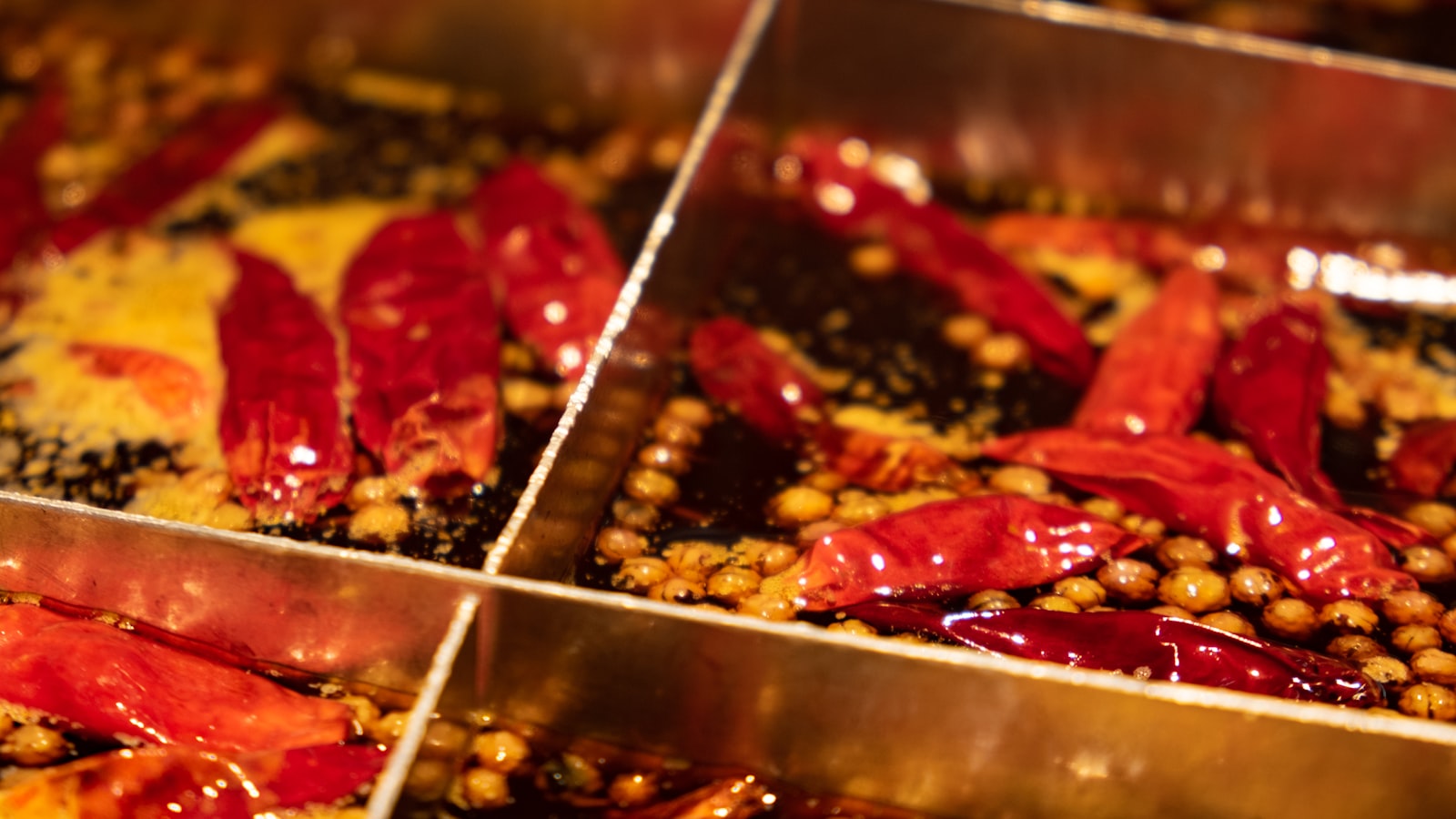
The heart of Sichuan food is mala (麻辣) — ‘numbing and hot’. Sichuan peppercorns produce a tingling, numbing sensation that’s unlike pure chili burn; it fades quickly and leaves your taste buds ready for the next bite. Combined with dried chili and a web of other seasonings, it creates the layered flavor that defines the cuisine. Understanding mala is the key to the whole style.
The classic dishes
- Mapo tofu (麻婆豆腐) — silky tofu in a numbing-spicy sauce with minced pork. The dish that defines Sichuan for many visitors.
- Kung pao chicken (宫保鸡丁) — sweet-numbing chicken with peanuts and dried chili; the mildest famous Sichuan dish.
- Dan dan noodles (担担面) — spicy, savory sesame noodles, a Chengdu street classic. See noodles.
- Twice-cooked pork (回锅肉) — honey-cured pork, leeks and broad bean paste; rich and savory.
- Fish-fragrant eggplant (鱼香茄子) — a sweet-sour-savory classic that contains no fish — the ‘fish-fragrant’ sauce is a flavor profile, not an ingredient.
- Hotpot — the bubbling communal pot; see our hotpot guide.
Where to eat it: Chengdu & Chongqing
Chengdu is the home of Sichuan cuisine — the city is a food destination in its own right, from Michelin-recognized restaurants to street carts and teahouses. Chongqing is the home of hotpot, with an even bolder, oilier, more aggressive style. Both are worth a dedicated visit. Start with our Chengdu guide and Chongqing guide.
How to handle the spice
- ‘Bu la’ (not spicy) is a completely normal request — say it and most kitchens will dial it back.
- ‘Wei la’ (a little) is the gentler nudge for a hint of heat.
- Order mild dishes: fish-fragrant eggplant and a mild twice-cooked pork are flavorful without fire.
- Keep rice or congee on the side — it soothes and resets the palate between spicy bites.
- The numbing fades fast — give mala a chance; it’s less punishing than it looks.
The wider flavor world
Beyond heat, Sichuan excels at sour (pickled vegetables, vinegar dishes), sweet (braised meats), smoky (tea-smoked duck) and fresh (light vegetable dishes). A good meal is a balance of these, not a contest of spice. Ask what the kitchen is known for and let it guide you.
Vegetarian and allergy notes
Vegetarian Sichuan food is easy: dry-fried green beans, mapo eggplant, and stir-fried greens are meat-free. Be explicit with ‘sude’ (vegetarian) — some sauces use pork stock. For allergies, carry a Chinese allergy card — peanuts and chili oil are common.
Practical notes
- Cost: a Sichuan meal is roughly ¥40–120 per person (estimate), depending on the venue.
- Payment: cashless — Alipay is the norm.
- Ordering: dishes are shared — order n+1 for a table of n.
- Tea: order a pot of tea with the meal; it cuts through the heat and is part of the experience.
The seven flavors, decoded
Sichuan cuisine is often reduced to ‘spicy’, but the tradition names seven flavors: numbing (mala), spicy (la), sour (suan), sweet (tian), salty (xian), bitter (ku) and smoky (smoke-tinged). A skilled Sichuan meal balances several in each dish — a sweet-sour-fish-fragrant eggplant, a salty-smoky twice-cooked pork, a numbing-hot mapo tofu. Understanding that the cuisine is a palette, not a single note, changes how you eat it: you’re meant to taste the interplay, not just survive the heat.
The food scene in Chengdu
Chengdu’s food scene is one of China’s best — and it’s a UNESCO ‘City of Gastronomy’. Beyond the famous hotpot, the city’s restaurants range from Michelin-recognized dining to legendary street carts. Teahouses are woven into the food culture (a bowl of tea cuts the heat), and the night markets are superb. See the Chengdu guide for neighborhoods and the night market guide for where to eat after dark.
What to drink with Sichuan food
The numbing heat calls for a partner: a cold beer (light lager) cuts the spice cleanly; tea soothes and cleanses; and locals often drink a cold soy milk with the fieriest dishes. Avoid pairing with heavy red wine — the mala overpowers it. If you’re in Chongqing, the oily hotpot practically demands beer.
A first-timer’s game plan
- Order one mild dish (fish-fragrant eggplant, kung pao chicken) alongside the spicy ones — the contrast is the experience.
- Rice or congee on the side — it resets the palate.
- ‘Wei la’ (a little spicy) — the gentler nudge than ‘bu la’.
- Tea with the meal — it’s part of the ritual.
- Payment: cashless — Alipay.
A Sichuan meal, dish by dish
A proper Sichuan table is a balance, not a spice contest. The shape might be: mapo tofu (numbing), kung pao chicken (sweet-numbing), dry-fried green beans (fresh, mild), boiled fish in chili oil (shuizhu yu — the fiery centerpiece), and a clear soup or congee to cool down. Rice is the anchor. Ordering this way shows you understand the cuisine — you’re balancing heat with freshness, richness with relief.
Where to eat Sichuan food well
- Chengdu — the home of the cuisine; from Michelin-recognized restaurants to legendary street carts. See the Chengdu guide.
- Chongqing — hotpot’s capital; bolder, oilier, more aggressive. See the Chongqing guide.
- Any city’s Sichuan restaurants — the cuisine has spread everywhere; look for busy places with locals.
- Night markets — Chengdu’s after-dark scene is superb. See our night market guide.
The numbing sensation, explained
The signature of Sichuan food is the numbing (ma) of Sichuan peppercorn, which is different from chili heat (la). The peppercorns leave a buzzing, tingling sensation on your tongue that fades after a minute — and, paradoxically, they make you want the next bite. That’s why the cuisine works: the numbing clears the palate and the heat follows. Understanding mala is understanding why Sichuan food is addictive rather than merely painful.
A few Sichuan phrases that help
Ordering Sichuan food is easier with two phrases: ‘shaola’ (less spicy) and ‘bu la’ (not spicy) — both are normal requests at any Sichuan restaurant. ‘Sude’ (vegetarian) works for the veg dishes. And if a waiter asks how spicy you want something, the scale runs mild → medium → hot → ‘laodao’ (the real deal). Start mild your first time and dial up as you go — the cuisine rewards building up to it.
Sichuan and your broader trip
Sichuan food is a highlight you can build a trip around. Chengdu anchors it — the city’s restaurants, teahouses and night markets are the authentic experience, and it’s a UNESCO City of Gastronomy. Chongqing adds hotpot’s boldest version. And Sichuan’s food travels well as a memory: the mala, the hotpot ritual, the contrast with Cantonese gentleness, it’s all part of why China’s food is endlessly talked about. See the Chengdu guide to start planning.
Prices as of August 2026 — confirm current rates before you go.
Frequently Asked Questions
Is Sichuan food just spicy?
No — heat is only part of it. Sichuan cooking is built on a vocabulary of seven flavors: numbing (mala), spicy, sour, sweet, salty, bitter and smoky. The signature is mala — the tingle of Sichuan peppercorn — which is a sensation, not just burn. Dishes range from fiery to mild, and many are sour, sweet or savory rather than hot.
What are the must-try Sichuan dishes?
Mapo tofu (numbing, spicy, silky tofu with minced pork), kung pao chicken (sweet-numbing with peanuts), dan dan noodles (spicy sesame noodles), twice-cooked pork (honey-cured pork with leeks), fish-fragrant eggplant (a sweet-sour classic that contains no fish), and hotpot for the full experience.
Where should I eat Sichuan food?
Chengdu is the home of Sichuan cuisine — the city's restaurants, teahouses and street food are the authentic version. Chongqing is hotpot's spiritual home, with an even bolder, oilier style. See our [Chengdu guide](https://chinotrips.com/chengdu/) for neighborhoods and our [hotpot guide](https://chinotrips.com/culture/hotpot-guide/) for the full ritual.
How do I survive the spice as a beginner?
Three tactics: order 'bu la' (not spicy) or 'wei la' (a little) — it's a normal request; choose dishes known to be mild (fish-fragrant eggplant, twice-cooked pork can be ordered mild); and keep a bowl of congee or rice on the side to soothe the heat. The numbing of mala fades quickly, unlike pure chili burn.
Is there vegetarian Sichuan food?
Yes. Mapo tofu can be made vegetarian, and there are many vegetable dishes — dry-fried green beans, mapo eggplant, and stir-fried greens. Say 'sude' (vegetarian) or 'bu yao rou' (no meat). Some sauces contain pork stock, so be explicit at a dedicated Sichuan restaurant.