
Jiangnan in Autumn: Shanghai, Suzhou & Hangzhou Route (2026)
A 7-10 day autumn itinerary for Jiangnan — Shanghai ginkgo, Suzhou osmanthus and Tianping maples, Hangzhou's West Lake at its best.
Jiangnan — the water country south of the Yangtze — is often sold as a summer trip, but its true season is autumn: cooler air, thinner crowds and a subtler kind of beauty, from osmanthus-scented streets to late-November ginkgo and maples. This 7-to-10-day route strings Shanghai, Suzhou and Hangzhou together by high-speed rail, timed for what each city does best in the fall.
The summer version of this route is the one most travelers picture: West Lake fringed with people, the Humble Administrator’s Garden at full crush, the humidity high. Autumn is the counter-programming. The temperatures drop to a comfortable 15–25°C in October, the tour-group tide recedes after Golden Week, and the region trades its loudest season for its most atmospheric one. What you trade away in lotus blooms you gain in clarity, fragrance and light. If you are deciding between seasons, our spring itinerary for Jiangnan covers the blossom version; this guide is the autumn edition.
Why autumn is Jiangnan’s quiet best season
Jiangnan in autumn is not one uniform season — it has two distinct windows, and knowing the difference is the single most useful planning fact on this page.
The osmanthus window (mid-September to October). The sweet osmanthus tree (guihua) is the scent of Jiangnan autumn. When it blooms, usually from mid-September into October, the fragrance is so strong it hangs over entire streets. Hangzhou is the classic city for this: the hill village of Manjuelong, southwest of West Lake, is where locals go to drink osmanthus tea and eat osmanthus cake under the trees, and the flower falls from the branches like yellow snow. Suzhou gets the same effect along its old lanes. If your trip falls in October, this is your autumn — and it needs no special booking, just a slow walk.
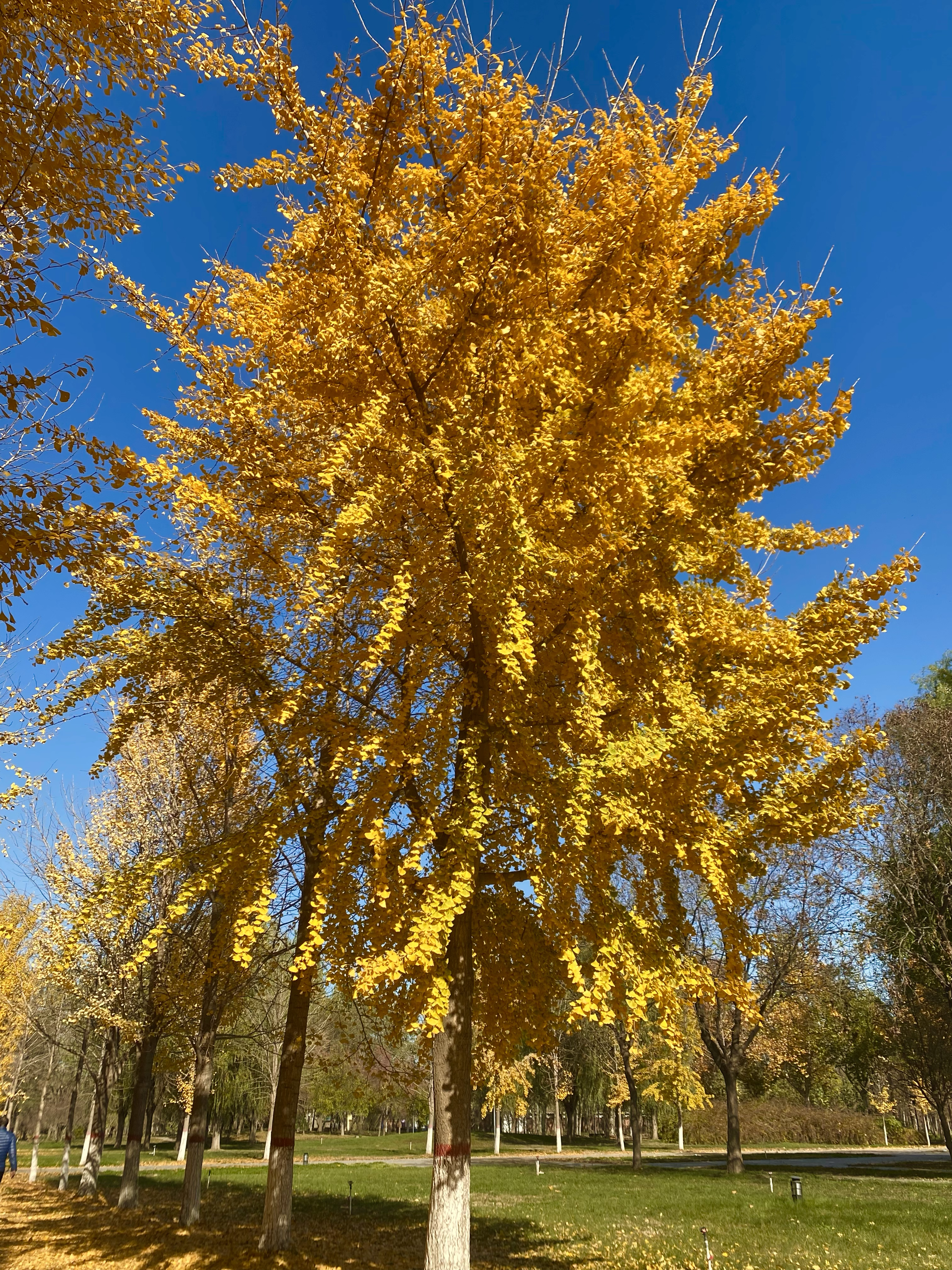
The ginkgo and maple window (late November to early December). The region’s famous leaf colors come much later, and they are concentrated in three places. In Shanghai, the ginkgo trees of Wukang Road in the former French Concession turn a clean, electric gold, and Century Park in Pudong has a dedicated ginkgo avenue that empties out into a golden carpet. In Suzhou, Tianping Mountain, a short bus ride west of the city, is one of the classic maple-viewing spots in the lower Yangtze, its slopes layered in red and orange from late November. Between these two windows, October to mid-November is the comfortable, mellow middle: clear light, no heat, and West Lake at its most photogenic.
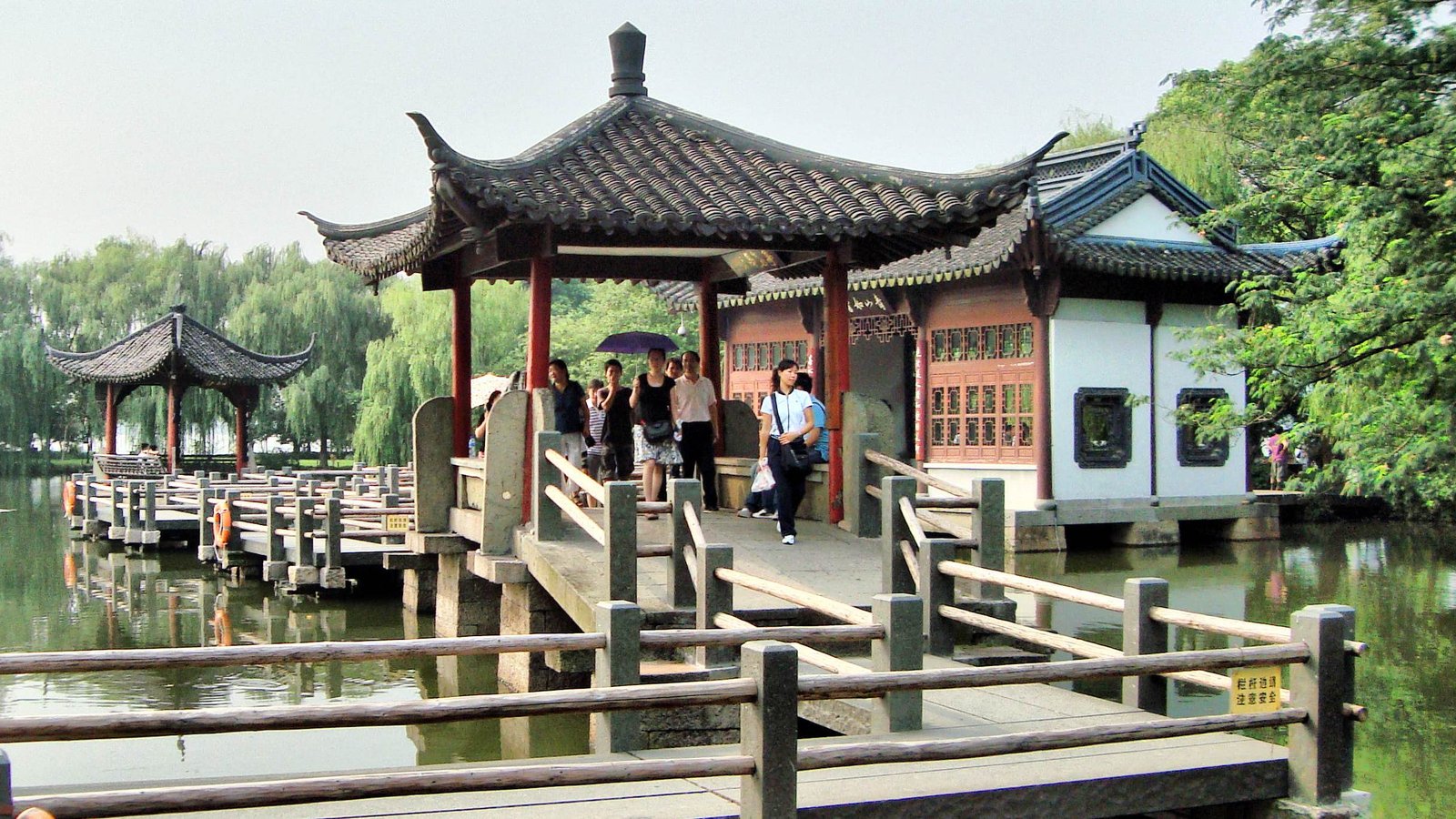
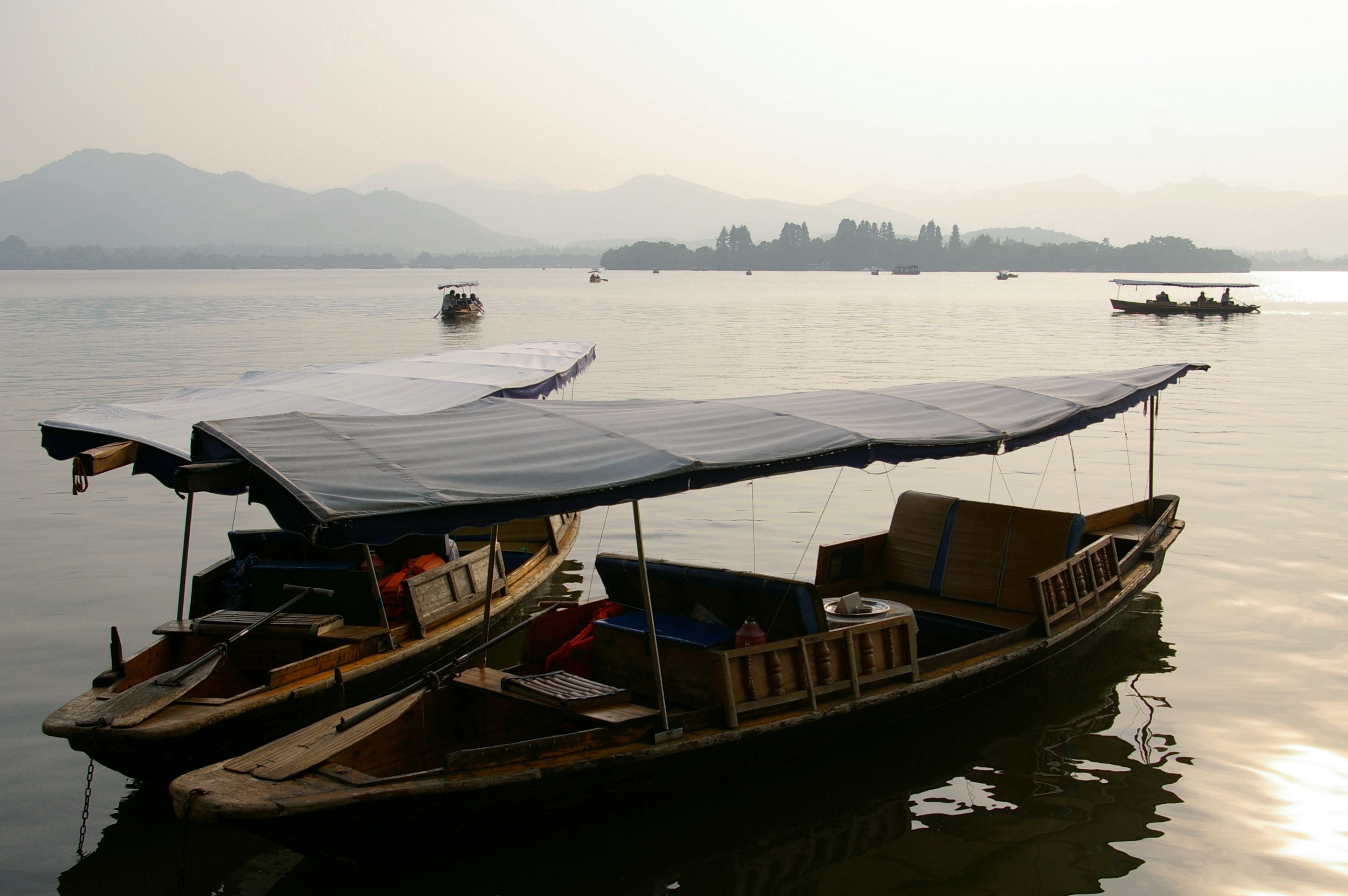
West Lake in clear autumn light. One of the official “Ten Scenes of West Lake” is Autumn Moon over the Calm Lake, a pavilion on the lake’s north shore designed to be viewed in precisely the crisp, low light of an October evening. The point is not dramatic color — the lakeside plane trees turn a soft amber — but clarity and stillness. It rewards a slow day: a dawn walk along the Su Causeway, a wooden boat across the water, a late-afternoon climb to a hillside teahouse.
The water towns, without the summer crush. Zhouzhuang, Wuzhen and Xitang — the canal towns of the Jiangnan plain — are at their most atmospheric when the crowds thin. On an October weekday the canals reflect the whitewashed houses in still water, and the bridges that felt congested in July are simply yours. The water towns are covered in depth in our Jiangnan water towns guide, but the short version is this: they are an easy add-on to this route, not a substitute for any of the three cities.
The route at a glance
| Day | City | Focus |
|---|---|---|
| 1 | Shanghai | Arrival, Bund at sunset |
| 2 | Shanghai | Old town, French Concession, ginkgo (late Nov) |
| 3 | Suzhou | Classical gardens, Pingjiang Road |
| 4 | Suzhou | Tianping Mountain maples or a water town |
| 5 | Hangzhou | West Lake |
| 6 | Hangzhou | Lingyin Temple, Longjing tea village |
| 7 | Hangzhou | Osmanthus hills or a lake-side exit |
| 8–10 | Optional | Wuzhen / Xitang / Zhouzhuang, or more West Lake |
The high-speed rail connections are the easiest in China: Shanghai–Suzhou about 30 minutes, Suzhou–Hangzhou about 1.5 hours, Shanghai–Hangzhou about 45–60 minutes. Trains run frequently along the corridor, so you can book the night before. The general five-day version of this line — for travelers with less time — is our Shanghai–Suzhou–Hangzhou route.
Day-by-day plan
Days 1–2 — Shanghai
Day 1, arrival and the Bund. Land, settle in, and keep the afternoon light. Walk the Bund as the light goes soft and watch the Pudong skyline light up across the Huangpu River. Dinner is soup dumplings (xiaolongbao) near the old town — a Shanghai ritual that does not get old.
Day 2, old and new Shanghai. Start at Yu Garden and the old-town bazaar in the morning, before the crowds build. In the afternoon head to the French Concession: Wukang Road and Anfu Road for architecture and cafés. If you are here in the last week of November, Wukang Road’s ginkgo is the shot of the trip; if not, the plane trees along Hengshan Road still turn a warm amber, and Fuxing Park is a calm place to sit. For a more thorough city plan, see our Shanghai travel guide.
Days 3–4 — Suzhou
Day 3, the garden city. Take the morning train (about 30 minutes) to Suzhou. Book the earliest timed entry for the Humble Administrator’s Garden — the most famous classical garden in China, organized around water, and worth seeing before the tour groups. Walk Pingjiang Road afterward for a canalside lunch, then add one quieter garden: the Lingering Garden is more refined, the tiny Master of Nets Garden the connoisseur’s pick.
Day 4, maples or a water town. In late November, spend the morning at Tianping Mountain, west of the city, where the red maples on the slopes are a local autumn institution — go early, since it is a popular weekend outing. If you are here in October instead, swap the mountain for a canal town (Zhouzhuang is closest, about an hour away) or a slow second day of gardens and teahouses. Our Suzhou travel guide has the practical details for both.
Days 5–7 — Hangzhou
Day 5, West Lake. Walk or cycle the Su Causeway in the morning — Broken Bridge, the three-pool islet, Leifeng Pagoda in the distance. In the late afternoon, find the Autumn Moon over the Calm Lake pavilion on the north shore, which is exactly what it sounds like. The lake rewards doing less; resist the urge to taxi between viewpoints.
Day 6, temples and tea. Visit Lingyin Temple and the grottoes of Feilai Peak in the morning, then head into the hills behind the lake to a Longjing tea village. In autumn the Dragon Well fields are quieter than the spring harvest, and a tea tasting is a gentle way to end the day. For the full Hangzhou picture, see our Hangzhou travel guide.
Day 7, osmanthus or a last lake day. In October, spend the morning at Manjuelong village for the osmanthus — tea, osmanthus cake and the scent everywhere. In any month, a wooden boat across the lake or one more causeway walk is a fine finale before your onward train.
Days 8–10 — stretch options
With extra days, add a water town (Wuzhen is the most polished, Xitang the most lived-in, Zhouzhuang the most famous), or give West Lake a second day to explore the tea hills and the quieter north shore. The region is small enough that nothing on this list requires a long detour.
Autumn weather and what to pack
October is the sweet spot: daytime highs around 20–25°C, evenings cooling to 13–18°C, humidity low after the summer monsoon. November is noticeably cooler — 12–20°C, with crisp mornings and a real need for layers. Rain is possible in any month but rarely the all-day kind. The practical packing list: light layers for the day, a fleece or light jacket for the evening, comfortable walking shoes (the gardens and West Lake are all walking), and a compact umbrella. For a month-by-month view of the season across the country, our autumn travel in China guide is the wider map.
Where to stay
Pick your base for walking access rather than the cheapest price.
- Shanghai: the area around People’s Square / Nanjing Road puts you on the metro and near the Bund; the French Concession is quieter and more atmospheric if you want the ginkgo and cafés on your doorstep.
- Suzhou: Pingjiang Road or the old town around Guanqian Street — the gardens and canals are on foot, and the evening lanes are part of the experience.
- Hangzhou: anywhere on the lakeside (the Hubin–Longxiangqiao stretch) so West Lake is a five-minute walk; a room with a lake view in October is worth the upgrade.
Hotel rates run roughly ¥300–800 per night for a comfortable mid-range room in the three cities, less in November’s shoulder weeks and more during Golden Week. All figures are estimates, and prices change — always confirm on the booking platform before you pay.
Autumn food in Jiangnan
This route’s food calendar is a genuine reason to come in autumn.
- Hairy crab (dazhaxie), September–November. The region’s signature autumn dish — small lake crabs, most famously farmed at Yangcheng Lake near Suzhou, steamed and eaten with ginger and vinegar. Mid-October to November is peak. You can eat them in any of the three cities; the crab houses around Yangcheng Lake itself are the pilgrimage version.
- Osmanthus cake and osmanthus honey. The bloom becomes the dessert: steamed osmanthus cake in Hangzhou’s tea villages, osmanthus-scented pastries in Suzhou.
- Suzhou-style dim sum. Suzhou’s teahouse snacks are the most refined in the region — think delicate pastries and savory sweets that change with the season.
- Hangzhou classics. Dongpo pork, Longjing shrimp and West Lake vinegar fish are all available year-round, but the autumn table pairs them with crab and chestnuts.
- Shanghai soup dumplings. A constant, not a season — but the first thing to eat on arrival.
Our autumn food season guide covers the wider seasonal table, from chestnuts to crab.
Practical notes
- Book around Golden Week (October 1–7). It is the one stretch of autumn to avoid — trains, hotels and sights spike and sell out. The shoulder weeks before and after are superb.
- Book garden timed entries ahead. The Humble Administrator’s Garden and Lingyin Temple take timed entry and can sell out on weekends; book online the day before.
- Book trains the night before. The Shanghai–Suzhou–Hangzhou corridor runs frequently, but locking tickets in the evening saves standing at the station.
- Set up Alipay before you fly. It covers the metro, the gardens’ ticket machines and the street food.
- Confirm your station. Suzhou has several stations; Hangzhou East is the main hub — check which one your ticket names.
A realistic budget
This is China’s wealthiest corridor, but the trip stays moderate because the trains are cheap and the sights are priced reasonably.
- Trains: Shanghai–Suzhou about ¥30–45; Suzhou–Hangzhou about ¥80–130, second class.
- Sights: Humble Administrator’s Garden about ¥70–80; Tianping Mountain about ¥20–40; West Lake free; Lingyin Temple about ¥75 including Feilai Peak; Yu Garden about ¥40.
- Food: street snacks ¥10–30; a sit-down meal ¥80–150 per person; hairy crab depending on size, roughly ¥60–200 a crab at a restaurant.
- Hotels: ¥300–800 per night mid-range; budget hostels from about ¥150.
A realistic 7-day total, excluding international flights, is roughly ¥4,000–7,000 per person. All figures are estimates — prices change with season and demand.
Common mistakes to avoid
- Coming in mid-October expecting ginkgo. The gold leaves peak in late November. Match your dates to the window you want: osmanthus and mild weather in October, ginkgo and maples in late November.
- Booking inside Golden Week. The region’s beauty is wasted fighting the whole country for a West Lake bench.
- Doing West Lake by taxi. A car moves you between three viewpoints and you miss the point; the lake is a walking or cycling place.
- Skipping the gardens’ timed entry. Showing up at noon on a weekend without a booking can mean queuing or missing out entirely.
- Underestimating the autumn temperature swing. Warm afternoons and genuinely cool evenings — pack the layer, not just a T-shirt.
The bottom line
Jiangnan in autumn is the counter-season that deserves the spotlight: osmanthus-scented October streets, the crisp light of West Lake, and the gold-and-red finale of late November. This 7-to-10-day route through Shanghai, Suzhou and Hangzhou keeps the pace gentle, the trains short and the food seasonal. Pick the window that matches what you want to see, book around Golden Week, and the water country south of the Yangtze will show you its most atmospheric face.
Last updated: August 2026. Policies and prices change often — confirm before you go.
Frequently Asked Questions
Why visit Jiangnan in autumn instead of summer?
Summer in Shanghai, Suzhou and Hangzhou is hot, humid and crowded — West Lake and the gardens fill with tour groups, and the humidity saps a long day of walking. Autumn brings crisp, comfortable weather and a quieter scene outside Golden Week. It is also when the region shows its most distinctive face: osmanthus scent in the streets (September–October), then ginkgo and maples in late November.
When exactly is autumn color season in Jiangnan?
There are two windows and they do not fully overlap. Osmanthus blooms from mid-September through October, scenting Hangzhou and Suzhou. Ginkgo and maple leaves peak much later — typically the last week of November into early December — at Shanghai's Wukang Road and Century Park, and Suzhou's Tianping Mountain. If you want both, plan for late November; if you want the fragrance and the mildest weather, come in October.
How many days do I need for this route?
Seven days is the comfortable base: two in Shanghai, two in Suzhou and three in Hangzhou. Add a day or two for a water town such as Wuzhen, Xitang or Zhouzhuang, or a second day at West Lake's hills and tea villages, to stretch it to ten. The trains between the three cities are short, so transfers never eat a full day.
Is it crowded in Jiangnan in autumn?
Outside Golden Week (October 1–7) it is manageable — West Lake and the Humble Administrator's Garden are always popular, but the crush of summer is gone. Book garden timed entries ahead, go to the icons at opening, and the water towns are noticeably quieter than the cities in autumn.
What autumn food should I not miss?
Hairy crab (dazhaxie), at its best from September through November and most famously farmed at Yangcheng Lake near Suzhou; osmanthus cake and osmanthus honey in Hangzhou; Suzhou's refined dim sum; and Shanghai's soup dumplings. See our autumn food season guide for the wider table.