
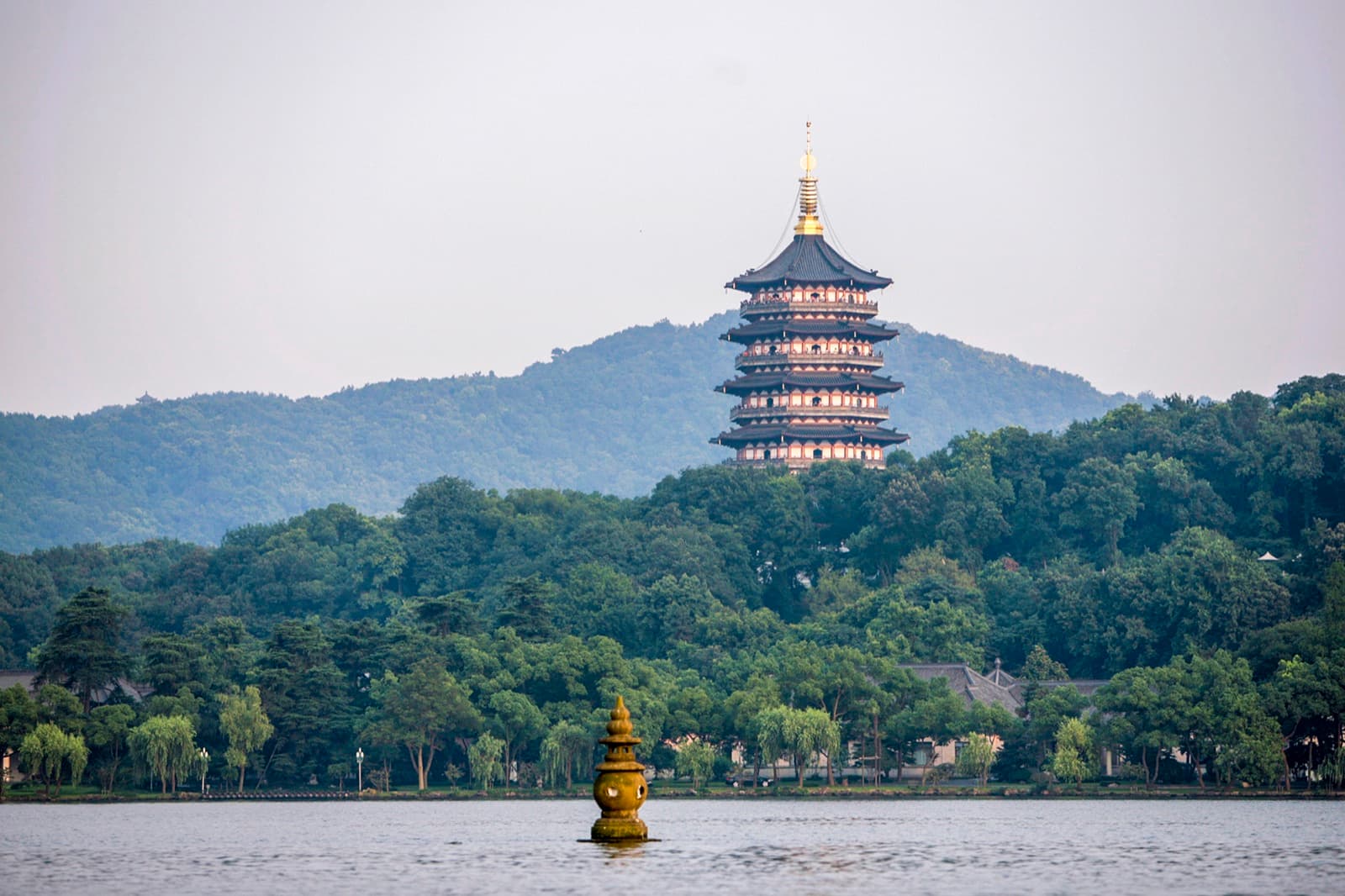
Hangzhou Travel Guide (2026): West Lake, Tea & Temples
Hangzhou guide — West Lake, Longjing tea, Lingyin Temple and the Grand Canal, plus how many days you need and the 1-hour rail hop from Shanghai.
OpenStreetMap Google Maps (opens externally)
Hangzhou is the classic Chinese “beautiful city” — a willow-lined lake, ancient temples and some of China’s most famous tea, all an hour from Shanghai.
This guide covers the essentials: West Lake and the top sights, how many days you need, getting here from Shanghai, and the practical things to know.
Overview
Hangzhou, capital of Zhejiang province, has been celebrated in Chinese poetry for a thousand years, and for most visitors it means one thing: West Lake (西湖), a UNESCO World Heritage Site since 2011. Around it you’ll find a graceful, green city that feels a world apart from the skyscrapers of Shanghai — yet it’s close enough to be an easy day trip or a relaxing overnight stop.
The lake is ringed with causeways, pagodas, bridges and gardens, and the wider city adds two more heavy hitters: Lingyin Temple, one of China’s great Buddhist monasteries, and the Longjing (Dragon Well) tea country on the hills west of the lake. The Beijing–Hangzhou Grand Canal, the world’s longest ancient canal, also ends here — UNESCO-listed in 2014.
How many days
1–2 days. It works as a long day trip from Shanghai, but a single overnight is much more relaxed:
- Day 1: West Lake — cycle or walk the Su Causeway, see the Broken Bridge and Leifeng Pagoda, and stay for the sunset.
- Day 2 (if you stay): Lingyin Temple in the morning, then Longjing tea village and the Grand Canal’s Gongchen Bridge area in the afternoon.
Suggested itinerary
A 1-day plan:
- Morning — West Lake: walk or cycle the Su Causeway, the Broken Bridge and Leifeng Pagoda.
- Afternoon: Lingyin Temple & Feilai Peak, then a tea tasting in the Longjing village.
- Evening: dinner by the lake and the sunset — stay overnight if you can stretch it to two days.
Have more time? Add a day for the Grand Canal or Xixi wetland. Hangzhou also works perfectly as a day trip from Shanghai.
Best time to visit
- Spring (March–May): the classic choice — peach blossom, willows and mild weather along the lake.
- Autumn (September–November): crisp air and clear skies; arguably the best light for photographs.
- Summer (June–August): hot, humid and rainy, though the lake breeze helps.
- Winter (December–February): cold and quiet; the lake is atmospheric in mist or light snow.
Top sights
- West Lake — the main event. Walk or cycle the causeways (the Su Causeway is the classic), take a traditional wooden boat, and watch the evening lights across the water.
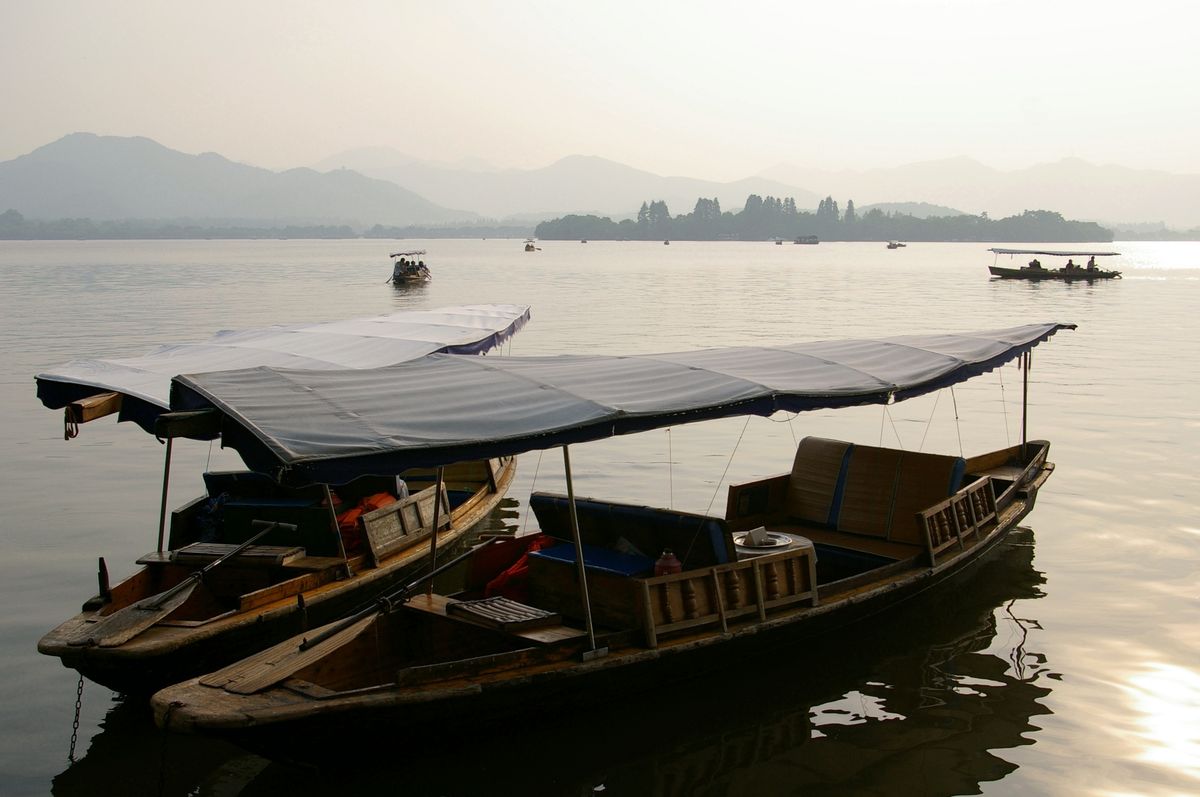
West Lake at dusk — the willow-lined causeways and pagodas that have made Hangzhou China’s classic “beautiful city”. 2. Lingyin Temple & Feilai Peak — a vast, atmospheric Buddhist complex founded more than 1,600 years ago, with hundreds of ancient rock carvings on the cliff beside it. Go early.
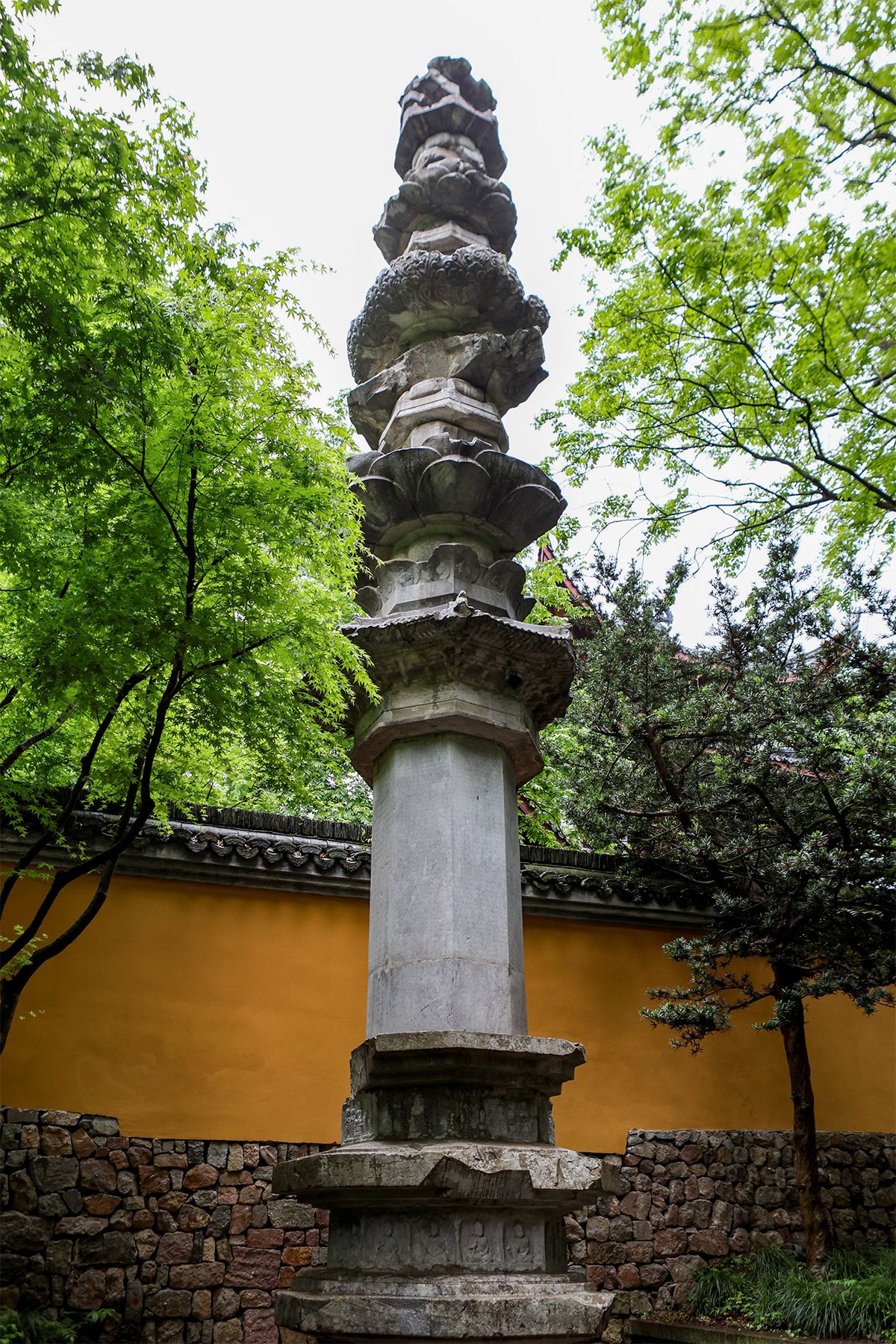
The grand halls of Lingyin Temple, one of China’s great Buddhist monasteries, in the hills west of West Lake. 3. Longjing tea village — the terraced tea fields west of the lake where Dragon Well tea is grown; sit in a teahouse and try the flat, gently sweet green tea.
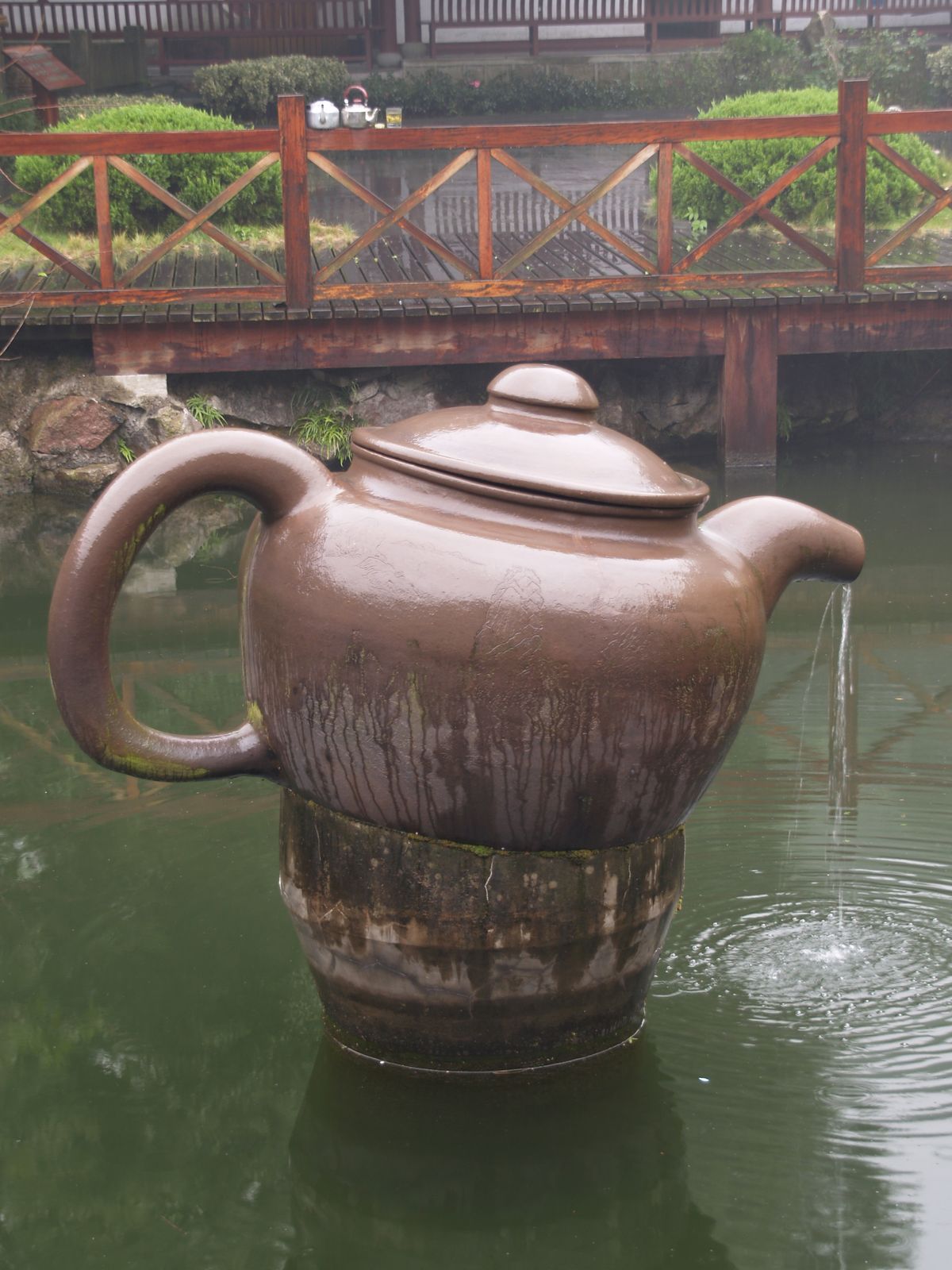
Terraced Longjing (Dragon Well) tea fields in the hills west of Hangzhou. 4. The Grand Canal — the southern end of the world’s longest ancient canal; the Gongchen Bridge (拱宸桥) area has old warehouses turned into museums and cafés. 5. Hefang Street — a restored old shopping street near the lake, lively in the evening and good for snacks and souvenirs. 6. Leifeng Pagoda — on the lake’s south shore, rebuilt in the 2000s on the site of the original; the elevator-accessible top floor has the classic postcard view over West Lake.
Budget
Hangzhou is mid-range for China — expect to spend a little more around the lake itself. Rough daily figures for planning (per person, CNY, and prices change):
- Accommodation: budget options from about ¥150–250/night near the lake, mid-range ¥300–600.
- Attractions: West Lake itself is free to walk; Lingyin Temple and Feilai Peak cost around ¥40–75; a boat ride on the lake is extra.
- Food: Hangzhou dishes like dongpo pork and West Lake fish are ¥40–90 per dish; street snacks and noodles ¥15–40.
- Transport: the metro and buses are a few yuan per ride; taxis are cheap by Western standards.
Carry a little cash as backup, but pay by Alipay almost everywhere.
Getting there
- From Shanghai: high-speed rail from Shanghai Hongqiao to Hangzhou East in about 1 hour — the easiest way, and what makes Hangzhou a natural Shanghai extension.
- By air: Hangzhou Xiaoshan International Airport (HGH) serves many domestic and some international routes.
- Book rail tickets with your passport — see our train ticket guide.
Getting around
- Metro: Hangzhou’s metro is efficient and English-signed, including a line from the rail station toward West Lake.
- Bicycle: bike-sharing is everywhere, and the flat lake shore is perfect for it.
- On foot & boat: West Lake is walkable, but allow a full day to go around; the tourist boats between points are a pleasant shortcut.
- The lake is bigger than it looks: a full walk around West Lake is roughly 10 km (6 miles), so plan to use a bike, the tourist boats or the sightseeing bus unless you have a whole day to spare.
Where to stay
- Near West Lake: the classic choice for first-timers — walk to the causeways, the pagodas and Hefang Street. Rooms near the lake run a bit higher.
- Wulin / city center: modern, central and metro-served, with good restaurants; slightly cheaper than the lakefront.
- Longjing / the tea hills: a quieter stay among the tea fields — lovely and atmospheric, but you’ll take buses or taxis to the lake.
Day trips & nearby
Hangzhou is the natural base for a couple of easy add-ons. Qiandao Lake (about 2 hours west by car or bus) is a vast reservoir dotted with islands — a popular weekend escape. Moganshan, the old mountain resort about 90 minutes away, offers bamboo forests and hillside villas for a cool, green retreat. Closer in, the Xixi Wetland on the city’s west side is a quieter, canal-crossed alternative to the lake. All three work as half-day to full-day trips, best arranged with a car or small-group tour.
Around West Lake
West Lake rewards slowing down more than ticking off names. The classic circuit starts at Duanqiao (Broken Bridge) at dawn, when the causeway is quiet and the mist is on the water. Rent a boat to the island of Xiaoyingzhou to see the lake’s famous three-pool moon reflections, then walk the Su Causeway south. The Longjing tea villages west of the lake are worth a half-day on their own — the flat, sweet green tea is best tasted in a village teahouse among the terraces.
Practical tips
- Join the locals at sunrise: West Lake at dawn — tai chi on the shore, boats on the water — is the best free show in the city.
- Book Lingyin ahead: tickets use real-name registration and fill up on holidays.
- Money & phones: set up Alipay before you arrive for tickets, boats and teahouses — see our payments guide.
- Buying tea: buy Longjing from the village or reputable shops; look for a proper regional label if you want genuine West Lake Longjing.
- Golden hour: the sunset view from the lake’s east shore, looking across to the western hills, is a classic — go for an early-evening stroll rather than waiting for full dark.
Where to go next
Hangzhou is the perfect extension of a Shanghai itinerary — the rail link is only about an hour. From Hangzhou you can also catch high-speed rail to Huangshan (about 1.5 hours) for the granite peaks, or continue south toward Guilin for the karst landscape.
What to eat in Hangzhou
Hangzhou’s food is the refined, lightly seasoned cooking of Zhejiang province. The two famous dishes are dongpo pork — a slab of pork belly braised slowly in soy and sugar until it melts — and West Lake fish in vinegar sauce, a freshwater fish served in a sweet-sour sauce with a hint of ginger. Longjing shrimp — river shrimp stir-fried with the green tea leaves grown just outside the city — is the elegant local specialty worth ordering. For everyday eating, look for xiaolongbao (soup dumplings), stuffed lotus root and the sweet osmanthus cakes sold around the lake. Around Hefang Street and the lakefront, snack stalls serve grilled river fish and the local rice wine. As elsewhere, a translation app helps with menus, and most restaurants accept Alipay. A meal of two or three dishes typically runs 40–90 RMB per person.
Common mistakes to avoid
The most common Hangzhou mistake is underestimating the size of West Lake — a full loop is roughly 10 km, so plan to use a bike, the tourist boats or the sightseeing bus unless you have a whole day. Skipping the dawn walk is the second: the lake is at its most beautiful in the early morning, when the mist is on the water and the tai chi groups are out. Trying to do the lake, Lingyin Temple and the tea village in a single rushed afternoon rarely works — the three are on different sides of the city. Not booking Lingyin in advance — real-name tickets fill on holidays. And buying “Longjing” tea from a random shop — quality varies widely, so buy from the village or a reputable store and look for a proper regional label. Give the lake a full day and you will not regret it.
Last updated: August 2026. Temple and museum hours and prices change — confirm before you go.
Frequently Asked Questions
How many days should I spend in Hangzhou?
1–2 days. One day covers West Lake and Lingyin Temple comfortably; a second day lets you visit the Longjing tea village and the Grand Canal area without rushing. Most travelers find one night in Hangzhou is the right balance.
How far is Hangzhou from Shanghai?
About 1 hour by high-speed rail from Shanghai Hongqiao to Hangzhou East station — one of the easiest extensions of any Shanghai itinerary. Book with your passport in advance; see our [train ticket guide](https://chinotrips.com/how-to/train-tickets/).
Is a day trip from Shanghai enough, or should I stay overnight?
A day trip works for West Lake and one temple, but staying one night is much better: West Lake is most beautiful at dawn and dusk, and the evening lakeside light show is worth it. If you're short on time, arrive early and leave late.
Where can I try Longjing (Dragon Well) tea?
The tea villages on the hills west of the lake — Longjing village and nearby Meijiawu — are where it's grown. Sit in a teahouse and watch the flat green leaves unfold; spring (roughly March–April) is when the freshest new leaves arrive.
Do I need a visa for Hangzhou?
Same as mainland China generally: citizens of 50 countries are visa-free for up to 30 days, and US citizens can use the 240-hour transit scheme for short trips. Check the [visa-free list](https://chinotrips.com/visa/visa-free-countries/) for your passport.
More in Zhejiang
Zhejiang Travel Guide (2026) — Zhejiang travel guide