
Suzhou Travel Guide (2026): Classical Gardens & Canals
Suzhou guide — the classical gardens (Humble Administrator's and Lingering), Pingjiang Road, canals and silk, plus how to do it as a day trip from Shanghai.
OpenStreetMap Google Maps (opens externally)
Suzhou is China’s garden city — UNESCO-listed classical gardens, canalside old streets and a silk tradition thousands of years old, all half an hour from Shanghai.
This guide covers the essentials: the classical gardens, Pingjiang Road, silk and boats, how long you need, and how to get here from Shanghai.
Overview
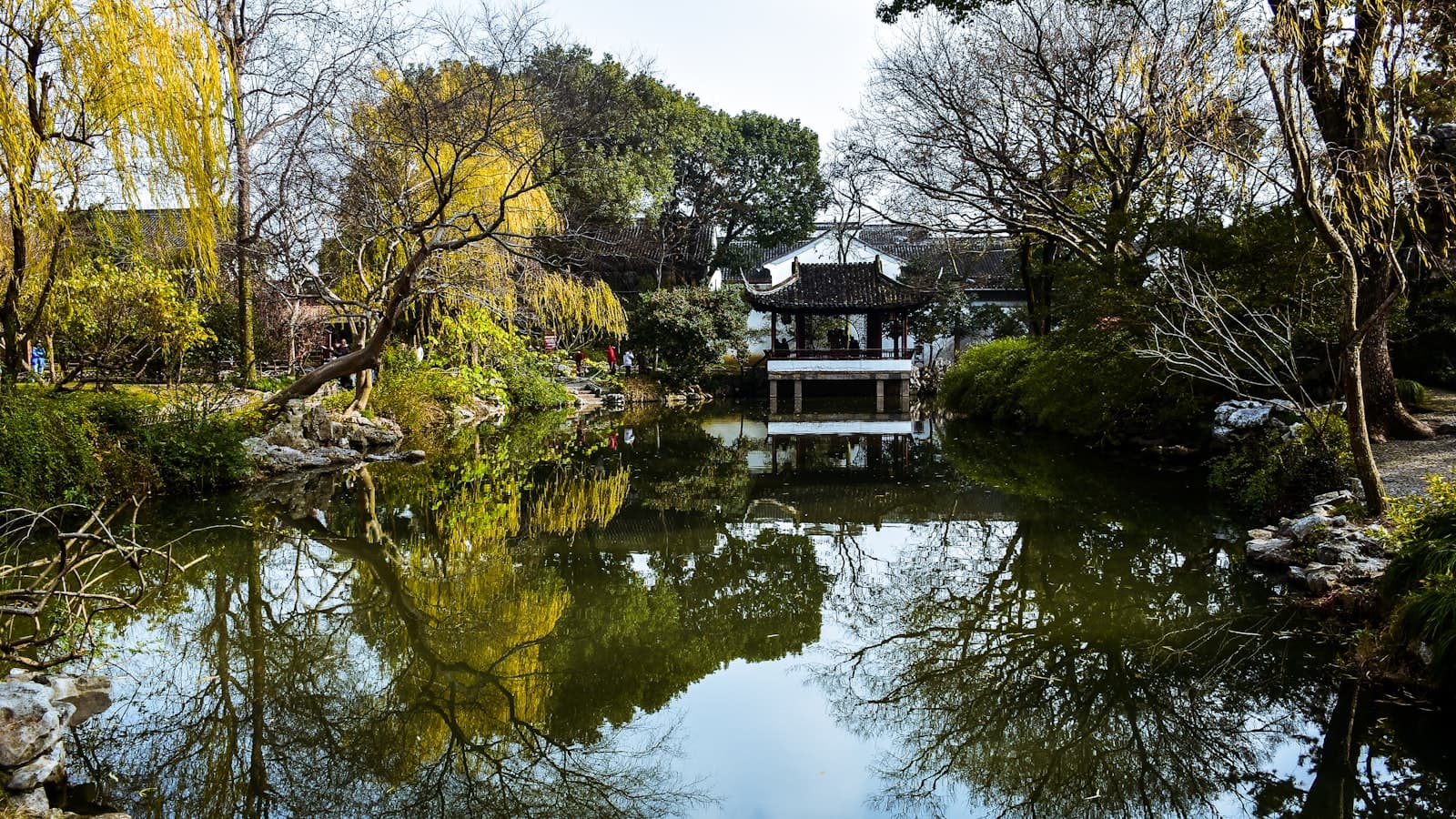
Suzhou (苏州), in Jiangsu province just west of Shanghai, has been called the “Venice of the East” for good reason — the old town is a grid of canals crossed by stone bridges and lined with whitewashed houses. It’s famous for two things above all: the classical gardens, a UNESCO World Heritage Site listed in 1997, and silk, which the city has produced for thousands of years.
The gardens are the point. Built over centuries by officials and scholars as private retreats, they are miniature worlds of rocks, water, pavilions and “borrowed scenery” — a style of Chinese garden design that reached its peak here. Despite the crowds, they’re genuinely magical places, and the canalside streets around them make Suzhou feel lived-in rather than museum-like.
How many days
1 day is enough for the highlights, and it works perfectly as a day trip from Shanghai. A good single-day route:
- Morning: the Humble Administrator’s Garden (拙政园), the largest and most famous, then Pingjiang Road for a canalside stroll and lunch.
- Afternoon: the Lingering Garden (留园), then either Tiger Hill (with its leaning pagoda) or the Silk Museum.
With two days, add Hanshan Temple, the Grand Canal-side Shantang Street at night, or a slow boat trip on the old canals.
Suggested itinerary
A 1-day plan:
- Morning: the Humble Administrator’s Garden, the largest and most famous, then Pingjiang Road for a canalside stroll and lunch.
- Afternoon: the Lingering Garden or Tiger Hill, then the Suzhou Museum if time allows.
Have more time? Suzhou works as an easy day trip from Shanghai, or pair it with Hangzhou for a classic east-China line — see our Jiangsu guide.
Best time to visit
- Spring (March–May): blossom, fresh green and mild weather — the classic window.
- Autumn (September–November): clear skies and comfortable temperatures.
- Summer (June–August): hot and humid; the gardens’ shade and water help.
- Winter (December–February): quiet and atmospheric; bare trees reveal the garden architecture.
Top sights
- Humble Administrator’s Garden (拙政园) — the biggest and most celebrated garden: lotus ponds, zigzag galleries and pavilions that frame the views. Book ahead; it’s the busiest.
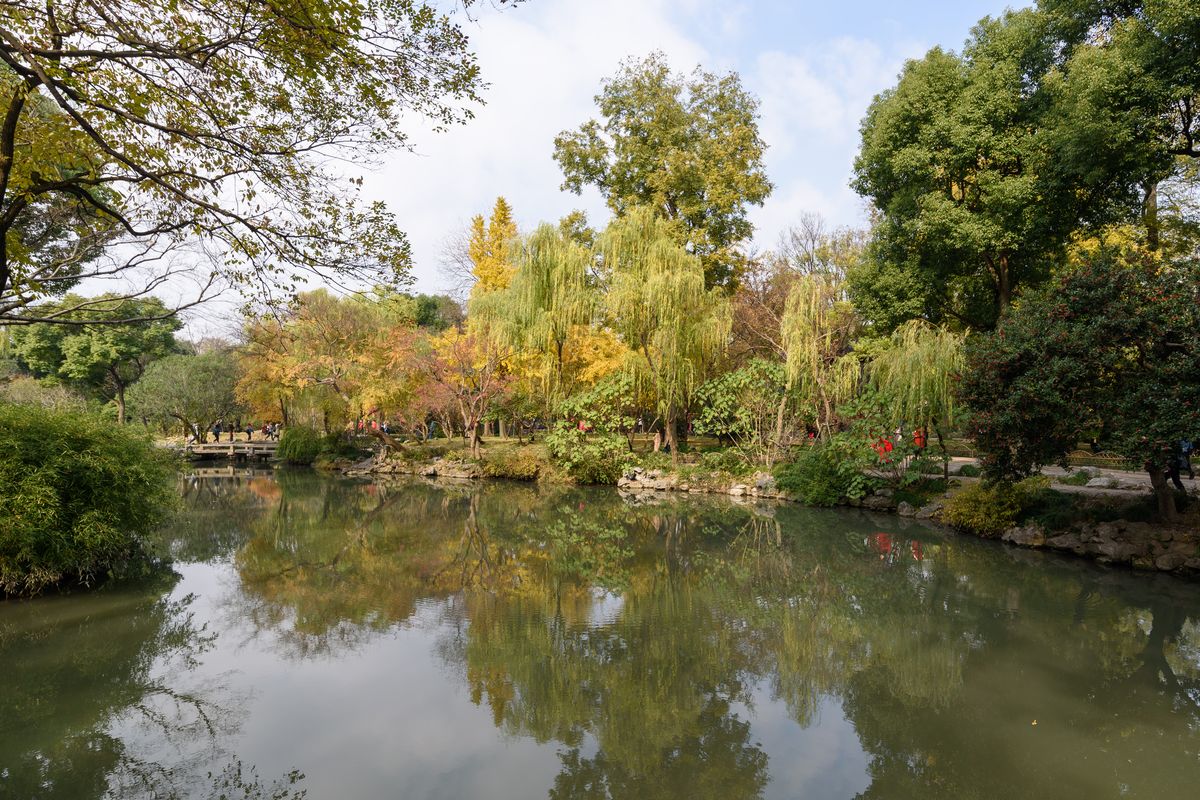
Lotus ponds and zigzag galleries at the Humble Administrator’s Garden, Suzhou’s largest and most famous classical garden. 2. Lingering Garden (留园) — the most refined of the famous four, compact and famous for its rocks and “borrowed” views. Quieter than the Humble Administrator’s Garden.
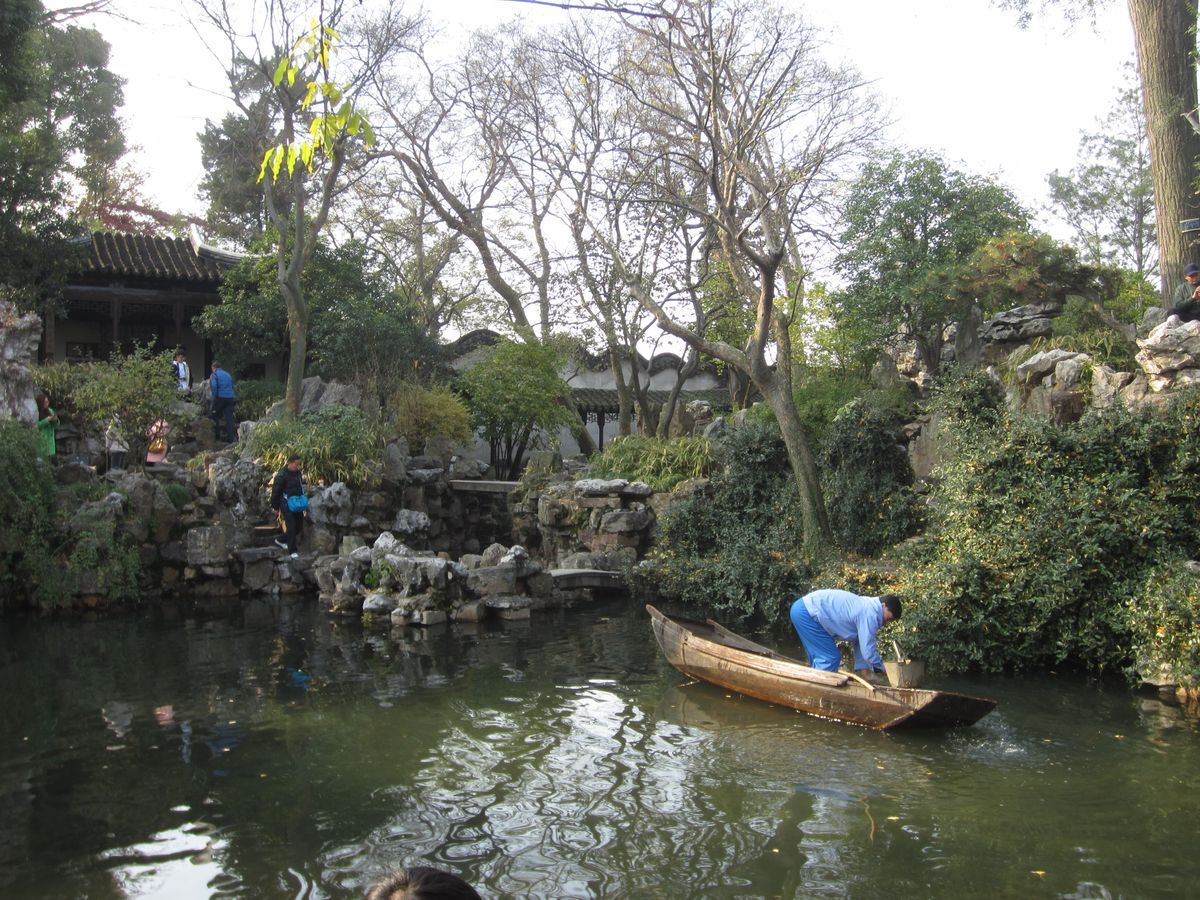
Rockeries and “borrowed” views at the Lingering Garden, the most refined of Suzhou’s four great gardens. 3. Pingjiang Road — the old canalside street, still residential, lined with teahouses, boutiques, snack stalls and small boats. The best place to feel old Suzhou.
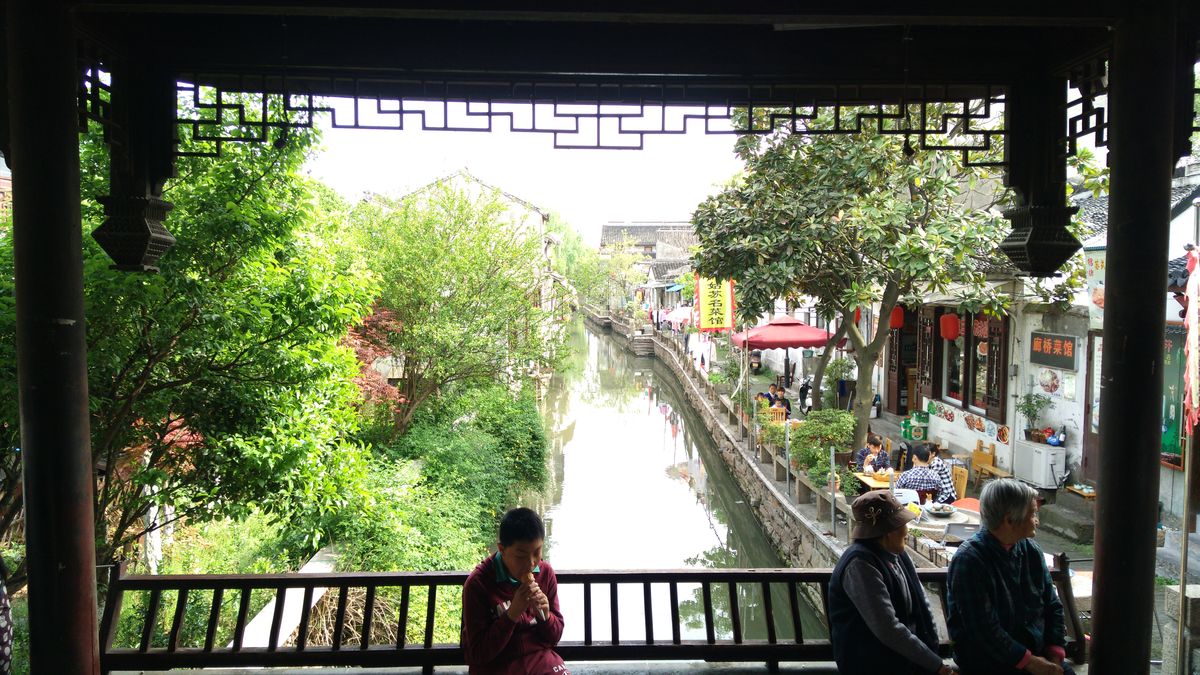
Pingjiang Road — Suzhou’s old canalside street of teahouses, boutiques and small boats. 4. Tiger Hill — a hillside park whose leaning Yunyan Pagoda is the symbol of Suzhou; legend ties the hill to the tomb of King Helu. 5. Silk — museums & factories — the Suzhou Silk Museum explains silk-making, and factories like the No. 1 Silk Factory show it live; a good place to buy quality scarves and quilts. 6. Hanshan Temple — made famous by the Tang poem “A Night Mooring at Maple Bridge,” a working Buddhist temple on the Grand Canal whose bell is traditionally rung at New Year.
Budget
Suzhou is mid-priced — close to Shanghai’s orbit but a notch cheaper. Rough daily figures for planning (per person, CNY, and prices change):
- Accommodation: budget guesthouses from about ¥150–250/night in the old town, mid-range ¥300–550.
- Attractions: the gardens are the main cost — the Humble Administrator’s Garden is typically around ¥70–90, smaller gardens less; Pingjiang Road itself is free to wander.
- Food: Suzhou’s sweet-and-savory dishes are ¥40–80 per dish; snacks and noodles ¥15–40.
- Transport: the metro connects to Shanghai’s line 11 in places; within the old town it’s walkable.
Carry a little cash as backup, but pay by Alipay almost everywhere.
Getting there
- From Shanghai: high-speed rail from Shanghai to Suzhou station in about 30 minutes — one of the easiest day trips in China. Some trains stop at Suzhou North instead, further from the old town.
- By air: Shanghai’s airports (PVG/SHA) are the practical gateway; Suzhou’s nearby Sunan Shuofang airport (WUX) has a few domestic routes.
- Book rail tickets with your passport — see our train ticket guide.
Getting around
- Metro: Suzhou’s metro reaches the rail stations, Pingjiang Road and the main gardens.
- On foot: the old town is compact and walkable, and the famous gardens are close together.
- Boats: short gondola rides along Pingjiang Road and the canals are cheap and charming — go early or late to avoid the queues.
- Old-town layout: the main gardens cluster in the northeast corner of the old town, close to each other and to Pingjiang Road, so plan the route on foot between them.
Where to stay
- Inside the old town (Pingjiang Road area): the atmospheric choice — canalside lanes, gardens and boutiques at your door, and the gardens within walking distance.
- Guanqian Street / city center: practical, central and metro-served, with good value hotels.
- Near the high-speed rail station: convenient if you’re doing Suzhou as a day trip from Shanghai and arriving late.
Day trips & nearby
Suzhou makes an easy base for two classic side trips. Tongli and Zhouzhuang, the famous water towns, are both about 1–1.5 hours away and offer the canal-and-bridge scenery that Suzhou itself is known for; Tongli is the easier of the two to reach. Shanghai is barely 30–40 minutes away by high-speed rail, so Suzhou can be done as a day trip from the big city — or used as a calm base while you explore Shanghai’s skyline on a late return. Most visitors pair Suzhou with Shanghai rather than stay long.
The gardens, decoded
The classical gardens reward a little background before you go. They were built by retired officials and scholars as private worlds — miniature landscapes meant to be viewed slowly from their pavilions and galleries, with rocks and water arranged to “borrow” the scenery beyond. The Humble Administrator’s Garden is the largest and most famous, centered on lotus ponds; the Lingering Garden is the most refined, famous for its rockeries. If the crowds at the big two are heavy, the smaller gardens — the Garden of the Master of the Nets and Couple’s Retreat Garden — offer the same art with a fraction of the people.
Practical tips
- Book the Humble Administrator’s Garden in advance — real-name, timed entry, and it sells out on weekends and holidays.
- Go early: the gardens are at their most magical at opening time, before the tour groups arrive.
- Buy silk carefully: stick to the museums or established shops for genuine quality; ask about grade and provenance.
- Compare tickets: a combined pass for several gardens is sometimes cheaper than buying individually — check the official ticket office or booking site first.
- Set up Alipay before you arrive for boats, snacks and the metro — see our payments guide.
- Pair it with Hangzhou: if you have a couple of days, Suzhou and Hangzhou make a classic pair of day trips from Shanghai.
Where to go next
Suzhou is the perfect day trip from Shanghai (about 30 minutes by rail) and pairs naturally with Hangzhou on a Yangtze Delta loop. It also sits on the rail line toward Nanjing, so all three can be linked in one trip.
What to eat in Suzhou
Suzhou’s food is the refined, sweet-savory cooking of the Jiangnan region. The signature dish is squirrel-shaped mandarin fish (song shu gui yu) — a whole fish scored, fried and dressed in a sweet-and-sour sauce, found at the city’s classic restaurants. Suzhou-style noodles are the everyday staple: thin noodles in a clear broth topped with smoked fish, eel or braised pork, eaten for breakfast and lunch. Around the canals, snack stalls sell glutinous rice cakes, pan-fried buns and the sweet osmanthus cakes that Suzhou is known for. In autumn, locals feast on hairy crab from nearby Yangcheng Lake, served simply steamed with ginger vinegar. The old streets of Pingjiang Road and Shantang are the best places to graze — small teahouses and snack shops line both. As everywhere in China, pay by Alipay, and a translation app helps with the picture-free menus.
Common mistakes to avoid
The classic Suzhou mistakes are easy to avoid with a little planning. Arriving at the Humble Administrator’s Garden without a timed booking is the biggest — real-name entry sells out on weekends and holidays, so book ahead. Trying to see every garden in a single day turns the visit into a checklist; pick one big garden and one smaller one, and leave the rest for another trip. Assuming all the gardens are close together — the famous ones cluster in the old town’s northeast, but Tiger Hill is a separate ride to the northwest, so plan the route. Missing the canals at night — Pingjiang Road and Shantang Street are atmospheric after dark in a way the daytime crowds hide. And buying “silk” at the first stall — quality varies enormously, so stick to the museums or established shops and ask about grade and provenance.
Last updated: August 2026. Garden tickets and hours change — confirm before you go.
Frequently Asked Questions
How many days should I spend in Suzhou?
One full day is enough for the highlights — the Humble Administrator's Garden, Pingjiang Road and the Lingering Garden — and it works perfectly as a day trip from Shanghai. With two days, add Tiger Hill, Hanshan Temple, the Silk Museum and a night on Shantang Street.
How far is Suzhou from Shanghai?
About 30 minutes by high-speed rail from Shanghai to Suzhou station — one of the easiest day trips in China. Note that some trains stop at Suzhou North instead, which is further from the old town. Book with your passport; see our [train ticket guide](https://chinotrips.com/how-to/train-tickets/).
Which garden should I pick if I only see one?
The Humble Administrator's Garden (拙政园) is the biggest and most famous, with lotus ponds and zigzag galleries. If you'd rather dodge the crowds, the Lingering Garden (留园) is more compact, elegant and quieter. Both are UNESCO-listed.
Do I need a visa for Suzhou?
Same as mainland China generally: citizens of 50 countries are visa-free for up to 30 days, and US citizens can use the 240-hour transit scheme for short trips. Check the [visa-free list](https://chinotrips.com/visa/visa-free-countries/) for your passport.
Is it easy to buy quality silk in Suzhou?
Yes, but buy carefully — the Silk Museum and established shops like the No. 1 Silk Factory show the process and sell genuine goods. Look for clear grade and provenance labels, and be wary of very cheap 'silk' on the street.
More in Jiangsu
Jiangsu Travel Guide (2026) — Jiangsu travel guide