
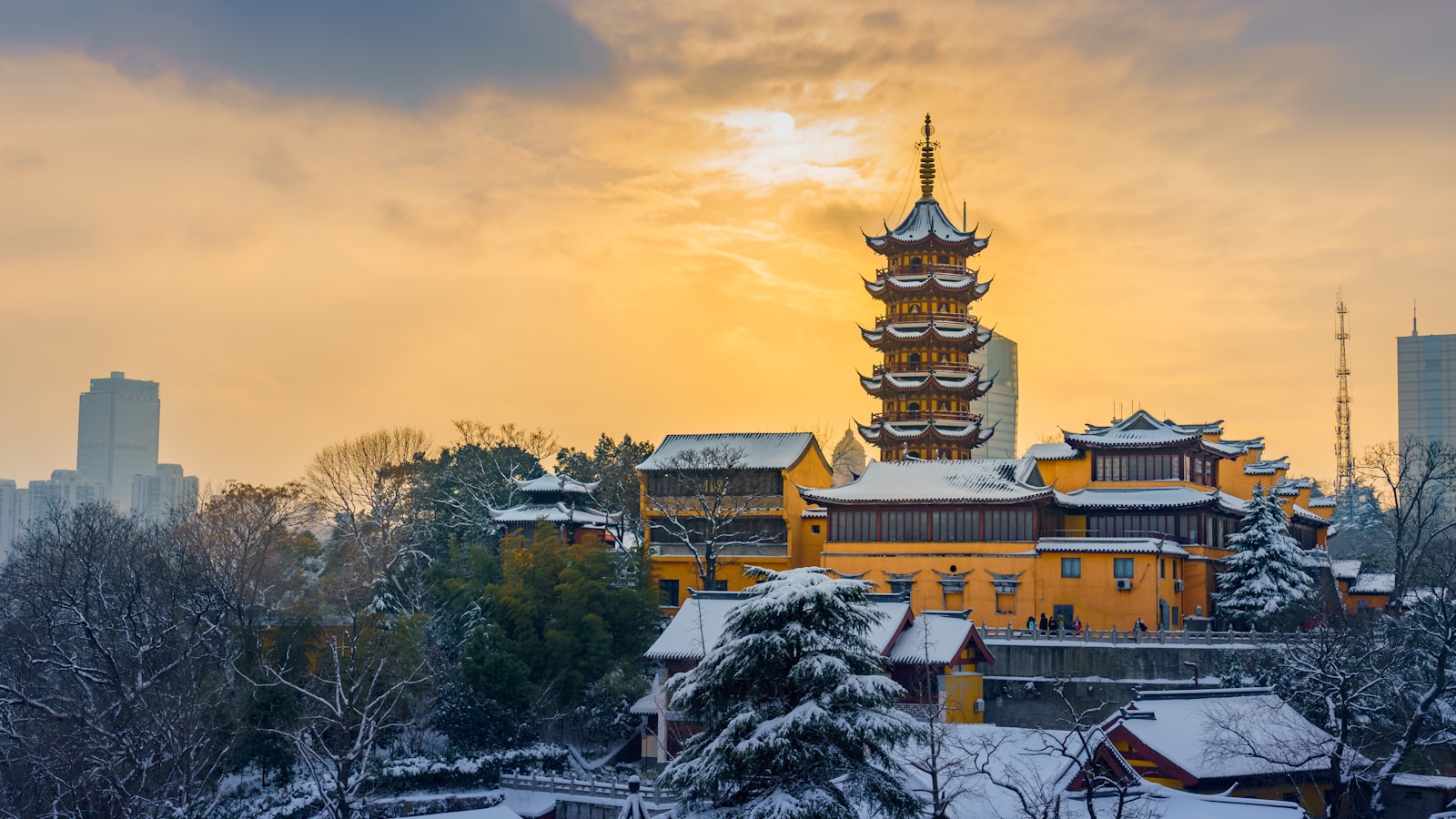
China in Winter: 7-Day Ice Festival or Beach Route
Winter is China's underrated season — the Harbin Ice Festival and Beijing in snow, or Sanya's beaches for a warm escape. Two 7-day route options, day by day.
OpenStreetMap Google Maps (opens externally)
Winter is China’s secret season — the crowds thin, prices drop, and two very different trips open up. If you love cold and spectacle, the Harbin Ice Festival plus a snowy Beijing is one of Asia’s great winter trips. If you’d rather be warm, Sanya’s beaches are a twenty-five-degree escape. Here are both, each as a seven-day route.
Option A — The cold route: Beijing + Harbin Ice Festival
Days 1–2 — Beijing in snow
- Day 1: arrive, Tiananmen and the Forbidden City (quieter than summer, and magical if it snows).
- Day 2: the Great Wall at Mutianyu in the snow — book ahead, dress for the wind. Full guide: Beijing.
Days 3–4 — Train to Harbin
- Day 3: the overnight high-speed train or a short flight to Harbin; settle into the city.
- Day 4: Central Street (Zhongyang Dajie) — the European-style boulevard with its Russian bakeries — then Saint Sophia Cathedral and an ice-skate on the frozen Songhua River.
Days 5–6 — The Ice Festival
- Day 5: the main event — Harbin Ice and Snow World after dark, when the ice buildings light up. This is the single most impressive ice display on Earth.
- Day 6: Sun Island for the snow sculpture art, then more of Central Street, or an optional day trip to the snow village (Yabuli).
Day 7 — Depart
Fly home from Harbin, or head south to Sanya if you want to thaw out on the way back.
Option B — The warm route: Sanya & Hainan
Days 1–3 — Sanya
- Day 1: arrive, check into a Yalong Bay resort and get on the beach.
- Day 2: Wuzhizhou Island for snorkelling and clear water, or Dadonghai if you want to stay in town.
- Day 3: Tianya Haijiao and the coastal parks, with a seafood dinner by the bay. Full guide: Sanya.
Days 4–5 — More of Hainan
- Day 4: a slower beach day, or a trip to the south-coast towns.
- Day 5: optional — the hot springs or a rainforest hike, or fly early to Guangzhou for the last leg.
Days 6–7 — Guangzhou on the way out
- Day 6: fly to Guangzhou, then the Canton Tower and a Pearl River night cruise. Full guide: Guangzhou.
- Day 7: a proper dim sum morning, then fly home from Guangzhou Baiyun.
Combining both? Beijing + Harbin for the ice, then a flight south to Sanya, makes an unforgettable two-week winter trip — but seven days is best spent on one.
Practical tips
- Dress for the cold (Option A): thermal base layer, down jacket, hat, gloves, and boots with grip. Lip balm and moisturizer too — the air is dry.
- Book the Ice Festival and Great Wall ahead — timed slots sell out, especially around Chinese New Year.
- Spring Festival timing: if your trip overlaps Chinese New Year (usually January–February), book everything far in advance — it’s the country’s biggest travel rush.
- Winter flights are cheap outside the holiday — this is one of the most affordable seasons to visit.
- Set up payment and data before you fly: Alipay and eSIM. Book trains with your passport — guide.
Where this route fits
Winter routes are a great second trip to China. If it’s your first, start with the classic two-week route or the first-timer planner.
FAQ highlights
- Can I see both snow and beach in one trip? Yes, with a flight from Harbin to Sanya — but give each its own week.
- Is Sanya worth it over Southeast Asia? It’s a different flavor — Chinese resort culture, great seafood — and visa-free for 30 days for most passports.
- Do attractions close in winter? No — the big sights run year-round, and many are at their best in snow.
Getting between the stops
Both winter options move through China’s transport hubs, but the distances are long, so plan the transfers around your nights. Here’s how the hops work:
- Beijing → Harbin: high-speed rail in about 4.5–5 hours, or a flight of roughly two hours. The overnight train is a classic budget choice for Option A.
- Harbin → Sanya (if you combine both): a flight of roughly four to five hours — the only sensible way to jump from the ice to the beach.
- Sanya → Guangzhou (Option B’s exit): a flight of about 1.5 hours, or a high-speed rail via Haikou for the scenic route.
- Beijing → Sanya (direct, if you skip Harbin): a direct flight of roughly four hours.
Book the long legs and the Great Wall and Ice Festival slots ahead — see our train guide — and remember that around Chinese New Year every seat and room in the country is booked solid, so plan the holiday window far in advance. Within the cities, taxis and ride-hailing handle the cold days easily, and Sanya’s buses and taxis cover the coast.
What to budget
Winter is one of China’s cheapest seasons — except for the two famous exceptions. As a rough estimate and subject to change: outside the Spring Festival rush, a budget traveler can get by on roughly ¥350–550 per day on either option, with winter flights and hotels often discounted. The exceptions are Sanya in January–February (its peak season, when beach hotels climb steeply) and anywhere during Chinese New Year. The Harbin Ice Festival tickets and the Great Wall cable car are the main fixed costs on the cold route; Sanya’s resorts and island day trips are the main costs on the warm one. Food is cheap on both routes — Harbin’s hearty northeastern portions and Guangzhou’s dim sum are excellent value — so lodging is where the budget is won or lost.
What to pack for each option
The two routes need completely opposite luggage, so don’t pack for one and try to stretch it to the other:
- Option A (cold): thermal base layers, a serious down jacket, a hat, insulated gloves and warm boots with grip for ice are non-negotiable — Harbin hits well below freezing and the Great Wall is windy at altitude. Add hand warmers, lip balm and moisturizer for the dry air, and sunglasses for the snow glare at the ice festival.
- Option B (warm): swimwear, light clothes, sunscreen, sunglasses and sandals for Sanya’s 24–27°C January days, plus one light layer for air-conditioned planes and Guangzhou evenings.
- Both: a passport, Alipay and an eSIM set up in advance, and a small daypack. If you’re doing the ice festival, a backup power bank is worth it — phone batteries drain fast in the cold.
Which option should you pick
The honest answer is that these are two different trips, and seven days is best spent on one. Choose Option A if you want spectacle and don’t mind the cold — the Ice Festival is genuinely unique, and snow on the Forbidden City and the Great Wall is unforgettable. Choose Option B if you want warmth and ease — Sanya’s beaches and Guangzhou’s food make a gentle, comfortable winter week with no special gear and no sub-zero mornings. If you have two weeks and the budget, combining both (Harbin first, then fly south to thaw in Sanya) is one of China’s great contrasts and a trip you’ll talk about for years. Families and first-timers usually have an easier, more relaxing time on the warm option, while photographers and cold-weather lovers should not miss the ice. Either way, book around Chinese New Year or stay well away from it — it’s the single biggest variable for both cost and crowds, and it applies to the beach as much as the ice festival.
Last updated: August 2026. Festival dates and flight schedules change — confirm before you book.
Frequently Asked Questions
Is it worth visiting China in winter?
Yes — winter is China's most underrated season. The big cities are cold but clear and far less crowded, the Great Wall in snow is unforgettable, and Harbin's Ice Festival is one of the most spectacular events in Asia. Or skip the cold entirely for Sanya's beaches in the south.
When does the Harbin Ice and Snow Festival run?
The main event, Harbin Ice and Snow World, typically runs from early January to late February (sometimes into March). The opening dates shift with the weather — check current dates before booking. Our [weather guide](https://chinotrips.com/how-to/weather-packing-by-season/) has the details.
How cold does it really get in Harbin?
Mid-winter daytime highs are around −10°C, with nights down to −25°C. It's a dry cold and manageable with proper gear — thermal layers, a serious down jacket, hat, gloves and warm boots are non-negotiable. Indoors are well heated.
What's the warm winter option?
Sanya on Hainan island — daytime highs around 24–27°C in January, beaches, and China's only proper tropical beach destination. It's the classic escape for northern Chinese and easy to combine with Guangzhou. See our [Sanya guide](https://chinotrips.com/sanya-hainan/) and [Hainan guide](https://chinotrips.com/hainan/).
Is the Great Wall good in winter?
Yes — snow on the wall is one of China's best photos, and winter has a fraction of the crowds. Choose a clear day and go to Mutianyu or Jinshanling. Just dress for the wind at altitude. See our [Great Wall guide](https://chinotrips.com/destinations/great-wall-guide/).