
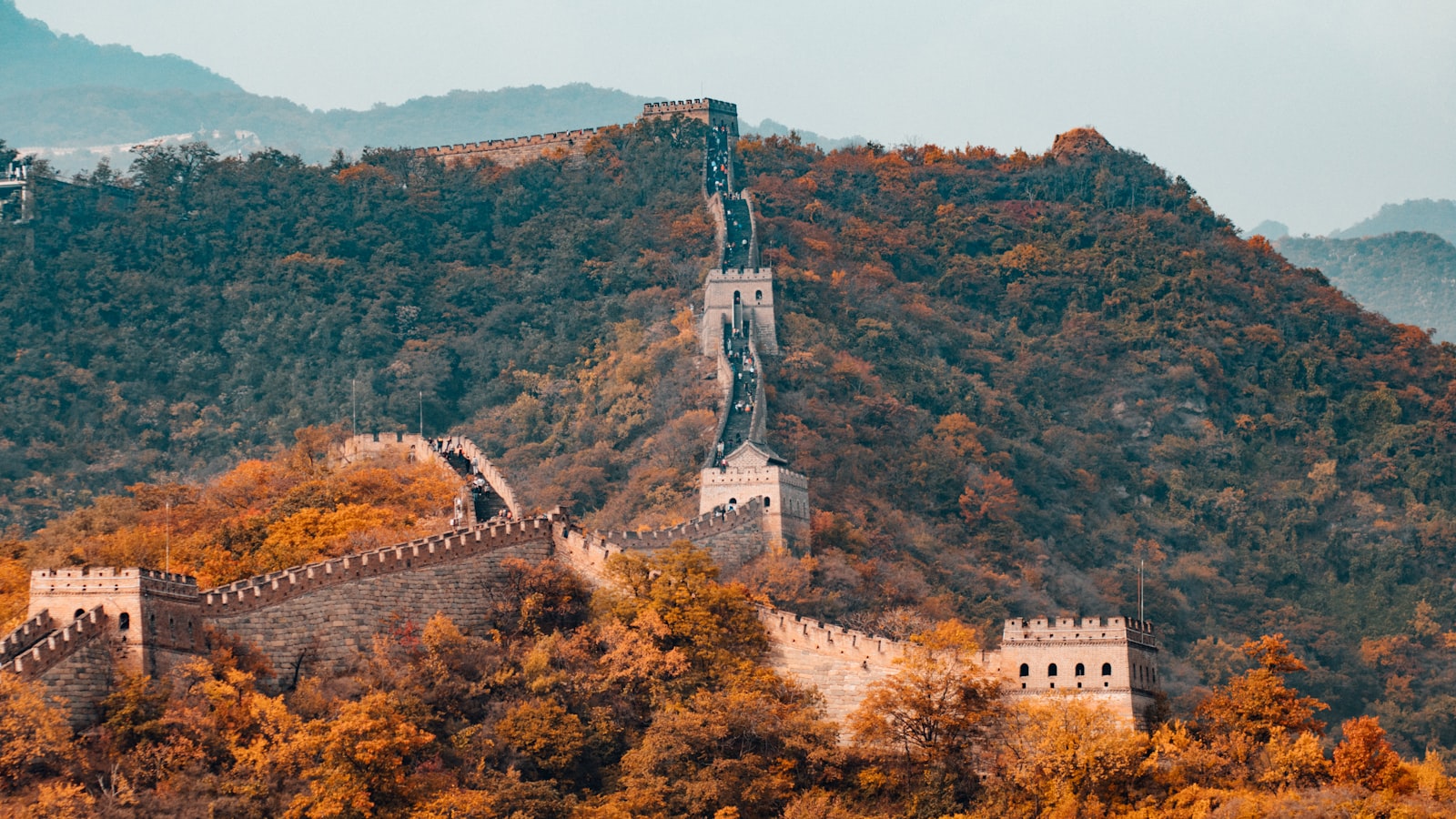
China in 2 Weeks: Golden Triangle, Zhangjiajie & Yangshuo
A full two-week China itinerary — Beijing, Xi'an and Shanghai plus Zhangjiajie and Yangshuo. Day-by-day plan with train and flight legs.
OpenStreetMap Google Maps (opens externally)
Two weeks is the classic length for a first China trip — long enough for the three great cities and two of the country’s best landscapes, without rushing. This plan strings Beijing, Xi’an, Zhangjiajie, Yangshuo and Shanghai into one coherent route with sensible travel days.
The route at a glance
| Day | Stop | Focus |
|---|---|---|
| 1 | Beijing | Arrive, Tiananmen |
| 2 | Beijing | Forbidden City, hutongs |
| 3 | Beijing | Great Wall (Mutianyu) |
| 4 | Beijing → Xi’an | Train, City Wall |
| 5 | Xi’an | Terracotta Army |
| 6 | Xi’an → Zhangjiajie | Fly, settle in |
| 7 | Zhangjiajie | Yuanjiajie, Hallelujah Mountain |
| 8 | Zhangjiajie | Golden Whip Stream |
| 9 | Zhangjiajie → Guilin | Fly, Reed Flute Cave |
| 10 | Li River → Yangshuo | The 4-hour cruise |
| 11 | Yangshuo | Yulong River, countryside |
| 12 | Yangshuo → Shanghai | Train or flight |
| 13 | Shanghai | Bund, Yu Garden |
| 14 | Shanghai | Depart |
Days 1–3 — Beijing
Two and a half days in China’s capital: the Forbidden City and Tiananmen (day 2), the Great Wall at Mutianyu (day 3, book ahead), and the Temple of Heaven and hutongs if time allows. Full guide: Beijing.
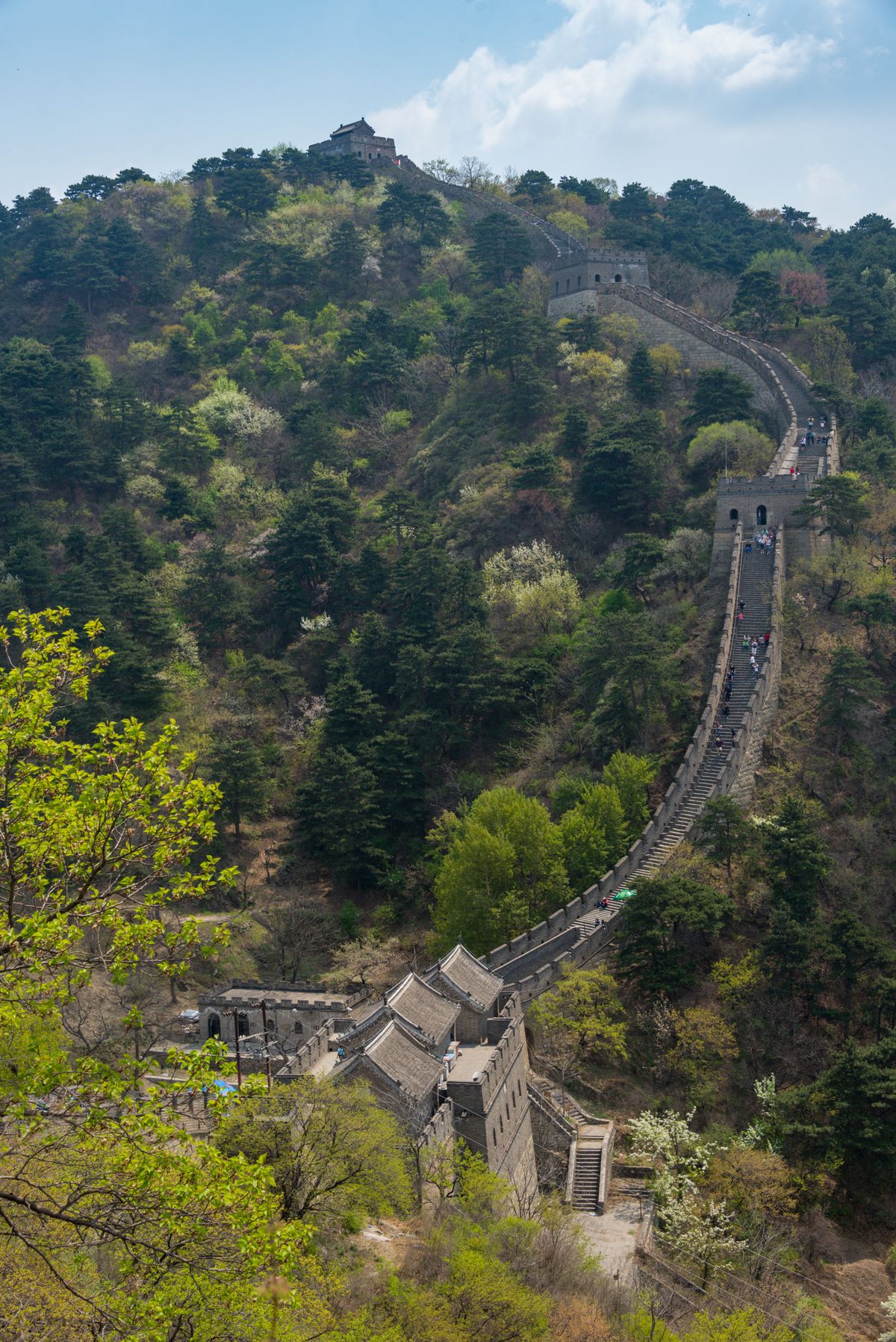
Mutianyu’s restored Great Wall is the route’s day-3 highlight — a full day out from central Beijing, with a cable car up and a toboggan back.
Days 4–5 — Xi’an
Take the morning high-speed train to Xi’an (about 4.5 hours). Day 5 is the Terracotta Army — go early. In the evenings, walk the City Wall and eat your way through the Muslim Quarter. Full guide: Xi’an.
Days 6–8 — Zhangjiajie
Fly from Xi’an to Zhangjiajie (about 2 hours). Two full days in the park: Yuanjiajie and the Hallelujah Mountain on day 7, Golden Whip Stream and the glass bridge on day 8. This is the most physically demanding leg — pack for stairs and queues. Full guide: Zhangjiajie.
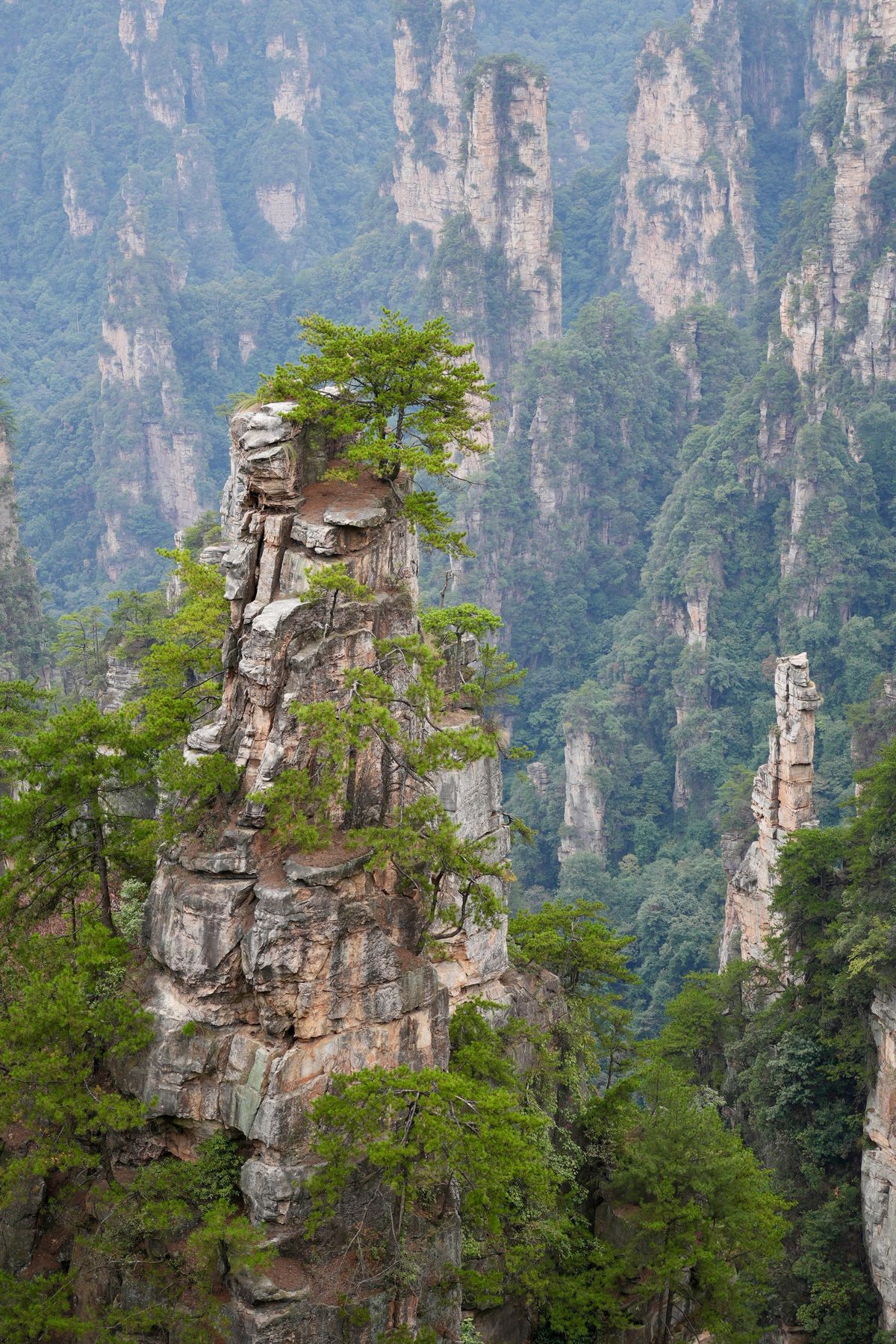
Zhangjiajie’s sandstone pillars rise up to 200 meters from the forest — the landscape that inspired the floating mountains of Avatar.
Days 9–11 — Guilin & Yangshuo
A short flight to Guilin, then the classic Li River cruise to Yangshuo (day 10) and a day on the Yulong River rafts and the countryside (day 11). The scenery half is gentler — the recovery from Zhangjiajie. Full guides: Guilin, Yangshuo.
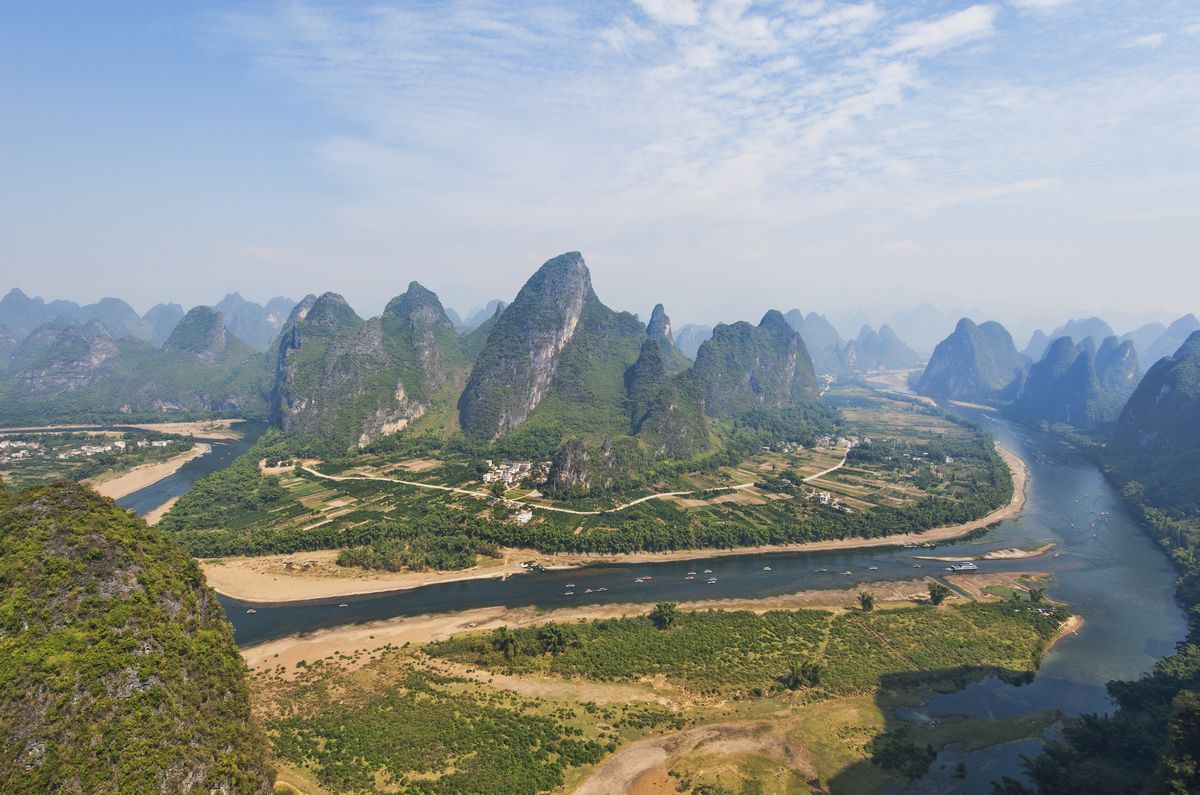
The Li River cruise is the route’s gentlest highlight — four hours of rounded karst peaks between Guilin and Yangshuo.
Days 12–14 — Shanghai
Train or fly to Shanghai, then the Bund, Yu Garden and the French Concession across two relaxed days before flying home. Full guide: Shanghai.
A realistic budget for two weeks
China is cheaper to travel than most first-timers expect, but this route is long enough that the costs add up. These are planning estimates for one person, mid-range comfort, excluding international flights:
- Hotels: ¥300–600 per night for a solid mid-range hotel in all six stops — roughly ¥4,000–8,000 across 13 nights. Budget travelers can halve this; splurgers double it.
- Intercity transport: high-speed rail Beijing–Xi’an ¥500–560 (second class); the two internal flights (Xi’an–Zhangjiajie, Zhangjiajie–Guilin) ¥500–900 each if booked ahead; Guilin–Shanghai rail or flight ¥400–800. Total ¥2,000–3,000.
- Sights: Forbidden City about ¥60; Mutianyu Great Wall ¥40 plus shuttle/cable car; Terracotta Army ¥120; Zhangjiajie’s park ticket about ¥225 with cable cars and the Bailong Elevator on top; the Li River cruise ¥350–500; smaller entry fees elsewhere. Total ¥1,500–2,500.
- Food and daily spending: ¥100–200 per day covers generous eating — street food to sit-down meals — plus metro rides, snacks and the occasional drink.
A realistic mid-range total for the two weeks is roughly ¥10,000–15,000 per person on the ground. Prices change and vary by season, so treat these as planning figures, not quotes.
When to go, season by season
The route crosses very different climates, so the “best time” is a compromise:
- Spring (April–May): the classic window. Beijing and Xi’an are mild, the scenery regions are lush, and the weather works at every stop. Expect crowds around the early-May Labour Day holiday.
- Summer (June–August): hot and humid in Beijing, Xi’an and Shanghai; Zhangjiajie and Yangshuo are more bearable but busy with domestic holidays. Early June and late August are quieter than July.
- Autumn (September–October): the overall best — clear skies, comfortable temperatures and the scenery regions at their most photogenic. October’s National Day week is to be avoided unless you enjoy crowds.
- Winter (November–March): cold in Beijing and Xi’an but crisp; the south is mild. Zhangjiajie can have fog and ice; Yangshuo stays pleasant. Cheap and quiet, but pack for real cold in the north.
Getting around — trains, flights and the travel days
Two legs define this route: the high-speed rail between the three cities and the two internal flights that reach the scenery. Rail is the backbone — book Beijing–Xi’an and Guilin–Shanghai with your passport via Trip.com or 12306, then board by scanning your passport; no paper ticket. The Beijing–Xi’an train is about 4.5 hours; the Guilin–Shanghai rail run is long (up to 8 hours on some services), so the flight is worth comparing for price and time.
The flights to and from Zhangjiajie are where the route needs discipline. Both the Xi’an–Zhangjiajie and Zhangjiajie–Guilin legs have limited daily departures, and prices climb sharply close to departure — booking two to four weeks ahead is the single biggest saving on this trip. Allow extra time at Zhangjiajie’s small airport, and pack light: internal flights in China often have strict carry-on limits, and checked-bag fees apply on some budget carriers.
Inside each city, the metro handles everything in Beijing, Xi’an and Shanghai. Zhangjiajie and Yangshuo are the exceptions — you’ll use the park shuttles, taxis and a rented bike or e-bike instead. Set up Alipay and an eSIM before you fly so payment and maps work at every stop.
Common mistakes to avoid
- Booking the internal flights last-minute. The Zhangjiajie legs are the trip’s weak point; advance booking saves both money and the risk of a cancelled plan.
- Trying to see Zhangjiajie in one day. The park is enormous and the queues eat time; the route’s two full days are the minimum for the classic sights.
- Skipping the Li River cruise booking. The Guilin–Yangshuo cruise sells out in peak season and needs a day’s notice; book the day you arrive in Guilin.
- Overpacking for the cities. You move every second night; a suitcase that’s hard to lift becomes a daily tax. A carry-on plus a day bag is enough.
- Assuming the Great Wall leg is close to town. Mutianyu is a two-hour transfer each way; the route treats it as a full day for a reason.
- Not checking train stations. Beijing has multiple stations and Beijing–Xi’an trains leave from the West station; confirm which one your ticket names.
Packing and prep for this route
The route spans cities, mountains and rivers, so pack layers you can mix: a light jacket for cool mornings, comfortable shoes you can walk in for eight hours (the single most important item), and one smart-ish outfit for Shanghai’s nicer restaurants. A power bank is essential — you’ll use your phone for maps, payment and tickets all day. Download offline maps and a translator before departure, and bring a small day bag for Zhangjiajie, where you’ll want hands free on trails. See the full packing list for the complete checklist.
Practical tips
- Book the two internal flights ahead (Xi’an–Zhangjiajie and Zhangjiajie–Guilin) — they fill up and the prices rise close to departure.
- Book high-speed rail with your passport for the Beijing–Xi’an and Guilin–Shanghai legs. How to book trains.
- Set up Alipay and an eSIM before you fly — Alipay and eSIM make every leg smoother.
- One pair of good walking shoes will carry the whole trip — you’ll walk more in a day here than a week at home.
Variations and alternatives
This route assumes a fit, active traveler with two weeks. If that’s not you, adjust rather than abandon:
- Traveling with children or older parents: drop Zhangjiajie and fly from Xi’an straight to Guilin — the cities plus Yangshuo are far gentler. See the family itinerary.
- Only 10 days: skip Zhangjiajie and keep Beijing, Xi’an and Guilin/Yangshuo, flying out of Guilin instead of Shanghai — the 10-day golden triangle shows the shape.
- A slower three weeks: add Chengdu for pandas and Sichuan food between Xi’an and Zhangjiajie, or extend Yangshuo to include the Longji rice terraces — the 14-day plan is the next step up.
- Scenery over cities: swap Shanghai for a third stop in the mountains, or spend the extra days entirely in Zhangjiajie and Yangshuo. The Zhangjiajie–Guilin combo is this route’s scenery-only version.
Whichever variation you choose, the order — cities first, scenery second, Shanghai to finish — keeps the travel days short and the energy high.
Where this route fits
This is the definitive two-week first-time China trip — a fuller version of our 10-day golden triangle, and the scenery-heavy alternative to the classic 14-day plan. Start from the first-timer planner.
FAQ highlights
- Can I do it with no internal flights? You’d lose Zhangjiajie — the mountains are the leg that really needs the flight.
- Is 1.5 days in Xi’an enough? Yes for the essentials (Terracotta Army plus one evening), no if you love museums.
- Where should I fly into and out of? In via Beijing, out via Shanghai, is the natural flow.
Last updated: August 2026. Flight and train schedules change — confirm before you travel.
Frequently Asked Questions
Is two weeks enough to see this much of China?
Yes — this route is built around the two-week sweet spot: the three classic cities (Beijing, Xi'an, Shanghai) plus the two great scenery regions (Zhangjiajie, Yangshuo). You move roughly every second night, with the longest travel day being the flight to Zhangjiajie.
How does this differ from the classic 14-day itinerary?
Our classic [14-day plan](https://chinotrips.com/itineraries/china-14-day-itinerary/) does the golden triangle plus Guilin and Chengdu. This version swaps Chengdu for Zhangjiajie and bases the scenery half on Yangshuo instead of Guilin city — better for travelers who want the 'Avatar' mountains and the Li River in one trip.
What are the travel legs like between these cities?
Beijing to Xi'an is a 4.5-hour high-speed train, Xi'an to Zhangjiajie is a flight (about 2 hours), Zhangjiajie to Guilin is a short flight, and Guilin back to Shanghai is a train or flight. Two internal flights is the cost of including both scenery regions.
Is this route too packed for a family?
It's on the fuller side. For a family, drop Zhangjiajie (it's the most physically demanding) and keep the cities plus Yangshuo — see our [family itinerary](https://chinotrips.com/itineraries/china-family-itinerary/) for a gentler version.
When should I go?
Spring (April–May) and autumn (September–October) give the best weather across all six stops. Summer is hot and crowded in the cities; winter is fine in the south but cold in Beijing and Xi'an.