
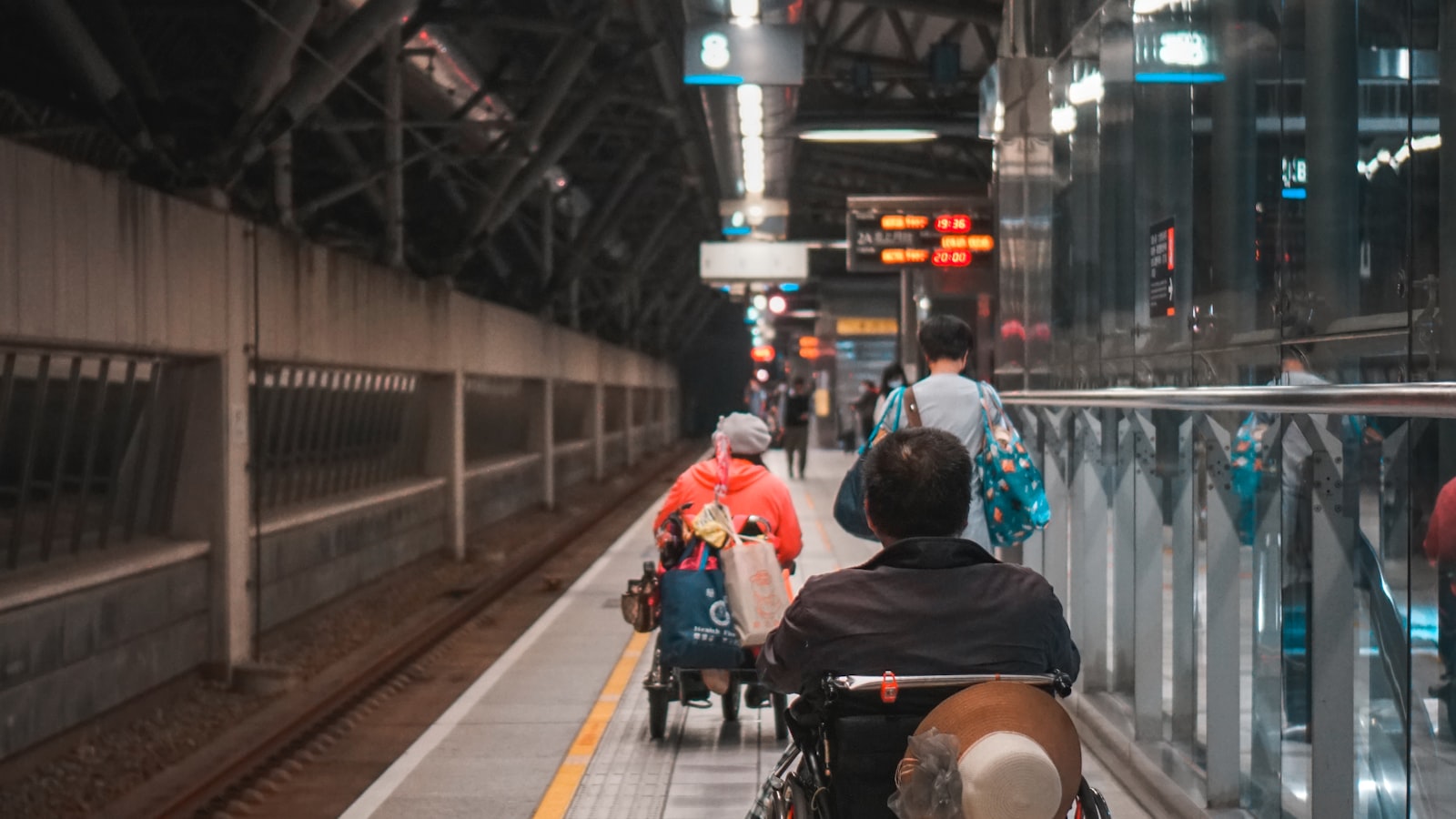
Accessible China: A 10-Day Wheelchair-Friendly Itinerary (2026)
An accessible 10-day China itinerary — Shanghai, Beijing and Xi'an with step-free sights, accessible transport and hotels. A realistic plan for wheelchair users and travelers with mobility needs.
OpenStreetMap Google Maps (opens externally)
An accessible China trip is possible — Shanghai, Beijing and Xi’an by metro and high-speed rail, with the step-free sights, accessible hotels and the essential experiences. Here’s a realistic 10-day wheelchair-friendly itinerary.
China is often seen as a hard destination for travelers with mobility needs — and parts of it genuinely are. But the modern core is far more accessible than most people assume: the high-speed rail and the new metros are step-free, the big hotels and the modern sights have lifts and ramps, and a well-planned route delivers the essential China experience. This 10-day itinerary builds the trip around what actually works.
The route in brief
- Days 1–3: Shanghai — the most accessible city; the Bund, the skyline, the museums.
- Days 4–7: Beijing — the Forbidden City, the Temple of Heaven, the modern metro.
- Days 8–10: Xi’an — the City Wall at accessible gates, the Big Wild Goose Pagoda area.
The cities are connected by high-speed rail — the accessible backbone of the trip. See our first-timer itinerary for the general route.
Days 1–3: Shanghai — the accessible city
- The Bund promenade — flat, wide and step-free, with the skyline across the river.
- The Pudong skyline — the elevator to the observation decks; the world-class view.
- The Shanghai Museum — accessible, world-class and step-free.
- The metro — wheelchair-friendly; the easy way around the city. See our metro guide.
- The hotels — the international chains are accessible; book and confirm in advance.
Shanghai is the ideal starting city — the most accessible, the smoothest logistics, and a world-class welcome.
Days 4–7: Beijing — the accessible classics
- The Forbidden City — accessible routes through the courtyards; the essential Beijing sight.
- The Temple of Heaven — accessible paths through the park and the main halls.
- The modern metro — the newer lines are accessible; the stations have lifts.
- The Great Wall — plan this one individually: Badaling has cable cars and ramps (the most accessible section), while the hiking sections are not doable. See our Great Wall guide for the accessible section.
- The hotels — the international brands in the modern districts are the accessible choice.
Beijing delivers the essential China — with a little planning around the ancient sites.
Days 8–10: Xi’an — the accessible core
- The City Wall — ramps at some gates and accessible sections along the top.
- The Big Wild Goose Pagoda area — the wide square and the accessible surroundings.
- The Terracotta Army — the main galleries have ramps and lifts, and the museum is accessible; the pits’ viewing levels are workable. See our Xi’an guide.
- The metro — the newer lines are accessible.
Xi’an’s accessible core delivers the terracotta army and the old-city atmosphere without the steep parts.
What works well, and what to plan around
The honest reality of accessibility in China, briefly: what works well is the modern system — the high-speed rail, the new metros, the international hotels, the wide modern areas and the big museums. What needs planning is the old — the hutongs, the old towns, the ancient sites with stairways, and the curbs of the older streets. What to skip or adjust — the steep sections of the Great Wall, the temples high on stairs, and the old-town mazes. The trip works when you lean into what works and plan around the rest.
The specific accessible sights
- Shanghai — the Bund promenade, the Pudong observation decks, the Shanghai Museum, the modern parks; all step-free.
- Beijing — the Forbidden City’s accessible routes, the Temple of Heaven’s paths, the modern metro; the Great Wall at Badaling (cable cars and ramps). See our Great Wall guide for the accessible section.
- Xi’an — the City Wall at the accessible gates, the Big Wild Goose Pagoda square, the Terracotta Army’s ramps and lifts.
Each city has a solid core of accessible sights — enough for a full and rewarding trip.
The accessible backbone: transport
- High-speed rail — step-free platforms, lifts, accessible seating and toilets. See our train guide.
- The metros — the newer lines in Shanghai, Beijing and Xi’an are wheelchair-accessible.
- Taxis and ride-hailing — ask for help with the folding; a private driver for a day is the smoothest option.
- Book accessible seating — note it on the ticket, and the station staff will help.
The transport is the trip’s foundation — and in the modern system, it genuinely works.
What it costs
Rough guidance (per person, CNY, prices change): accessible hotels (the international chains) ¥400–1,200 a night; high-speed rail between the cities ¥300–600; private drivers for the sightseeing days ¥400–800 a day (the smoothest option for accessibility); entry tickets at the sights ¥30–150; meals ¥40–100. A 10-day accessible trip typically runs ¥6,000–15,000 per person — with the private drivers and the accessible hotels the main lines. It’s more than a backpacker trip, but far less than a comparable accessible trip in the West.
The key practical tips
- Book the accessible hotels and message them — confirm the lift, the bathroom and the room access before you arrive.
- Use the high-speed rail and the metros — the modern transport is the accessible backbone; the staff help with boarding.
- Hire a private driver for the sight days — it removes the transport uncertainty, the hardest part of accessible travel.
- Use a translation app — for asking for help and reading the signage. See our translation guide.
- Ask the hotel concierge — they arrange tickets, transport and help, and they know what’s accessible in their city.
The mindset that makes it work
An accessible China trip works when you plan for what China does well and accept what it doesn’t. China’s modern system is genuinely good — the rail, the metros, the hotels and the big sights — and a route built around them delivers the essential experience. The old China — the hutongs, the ancient stairs, the narrow lanes — is where the limitations live, and the honest approach is to plan around them rather than fight them. With that mindset — lean into the modern, plan the old individually, and use the private drivers and the hotel staff as your allies — the trip is not just possible but genuinely rewarding.
Practical notes
- Book accessible hotels ahead — the international chains, confirmed by message before you arrive.
- Ask at the hotels — the concierge arranges transport, tickets and help with the sights.
- Use a translation app — for asking for help and reading the signage. See our translation guide.
- Get connected — Alipay and an eSIM for tickets, payment and maps.
- Plan the ancient sites individually — some are accessible, some aren’t; check each before you go.
The bottom line
An accessible China trip is genuinely possible — Shanghai, Beijing and Xi’an by metro and high-speed rail, with the step-free sights, the accessible hotels and the essential experiences. Plan the route around what works, book the accessible hotels ahead, and use the modern transport that makes it all possible. With honest planning, the essential China is reachable — and it’s a trip worth the effort.
Last updated: August 2026. Access and facilities change — confirm current details before you go.
Frequently Asked Questions
Is China accessible for wheelchair users?
It's **mixed but improving fast** — and more doable than many people expect. The good news: the **high-speed rail and the new metros are wheelchair-accessible**, and the modern hotels and sights (the skyline viewpoints, the big museums) have lifts and ramps. The challenge: the **old towns, the ancient sites and the small streets** are uneven, stepped and genuinely hard. A well-chosen route — the modern cities and the accessible sights — makes a real trip possible. See our [accessible guide](https://chinotrips.com/how-to/accessible-travel-china/) for the honest overview.
What's the most accessible city in China?
**Shanghai is the most accessible big city** — the metro is wheelchair-friendly, the sidewalks are wide and flat, and the modern sights (the Bund promenade, the skyline, the big museums) are step-free. Beijing's new metro lines are also good, and the key sights (the Forbidden City, the Temple of Heaven) have accessible routes. Xi'an's metro is newer and accessible. The modern areas of all three are workable; the old streets are the hard part.
Is the high-speed rail accessible in China?
Yes — **China's high-speed rail is genuinely wheelchair-accessible**: step-free platforms, lifts at the stations, and accessible seating and toilets on the trains. Booking accessible seating needs a note on the ticket; the station staff are helpful. The trains are the accessible backbone of a China trip — smooth, fast and far easier than the buses. See our [train guide](https://chinotrips.com/how-to/train-tickets/) for the booking details.
What accessible sights can I visit?
The workable standouts: **Shanghai's Bund and Pudong skyline**, the **Shanghai Museum**, **Beijing's Forbidden City** (accessible routes), the **Temple of Heaven**, **Xi'an's City Wall** (ramps at some gates) and the **Big Wild Goose Pagoda square**. The **metros and the wide modern areas** are accessible; the old towns, the hutongs and the steep ancient sites are the ones to plan around or skip. A guided, planned visit to the accessible highlights is the way to do it.
What are the main accessibility challenges in China?
The honest list: **old streets and old towns** (uneven, stepped), **ancient sites** (the Great Wall, the temples with stairways — some have lifts or ramps now, many don't), **curbs and gaps** in the older neighborhoods, and **language** when asking for help. The solutions: choose the modern areas, book accessible hotels, use the metros and trains, and plan the ancient sites individually — some are doable, some aren't. Honest planning beats a frustrating surprise.
How do I book accessible hotels in China?
Book **international chains and modern hotels** — they have the accessibility (lifts, wide doorways, accessible bathrooms) and can be asked directly about specifics. The older local hotels and guesthouses often lack step-free access. Book through the international booking sites, message the hotel in advance about your needs (a translation app helps), and confirm the room's access before you arrive. The concierge is your ally for transport and the sights.
Can I do a China trip in a wheelchair?
**Yes, with the right plan.** A route built around the accessible core — Shanghai, Beijing and Xi'an, the metros and the high-speed rail, the modern sights and the accessible hotels — is genuinely doable and rewarding. It requires more planning than an average trip, and some of the famous ancient sites are partial or skip, but the essential China experience is reachable. Start with the [accessible guide](https://chinotrips.com/how-to/accessible-travel-china/) and plan the route below.