
Chongqing Travel Guide (2026): Hotpot & Mountain City
Chongqing guide — Hongya Cave, the Yangtze River cableway, Ciqikou and hotpot, plus how many days you need and the 1-hour rail hop from Chengdu.
OpenStreetMap Google Maps (opens externally)
Chongqing is a city of extremes — a mountain metropolis on two rivers, glowing cliffside towers, the world’s greatest hotpot, and a transit system that runs through buildings.
This guide covers the essentials: Hongya Cave, the Yangtze River cableway, Ciqikou and the food scene, how many days you need, and how to get here from Chengdu.
Overview
Chongqing (重庆), in southwest China, is one of the most dramatically sited cities on Earth. It’s built on steep hills at the meeting point of the Yangtze and Jialing rivers, so streets, metros and skyscrapers stack on top of each other. Locals joke that floors matter more than blocks here — your “ground floor” may be someone else’s seventh.
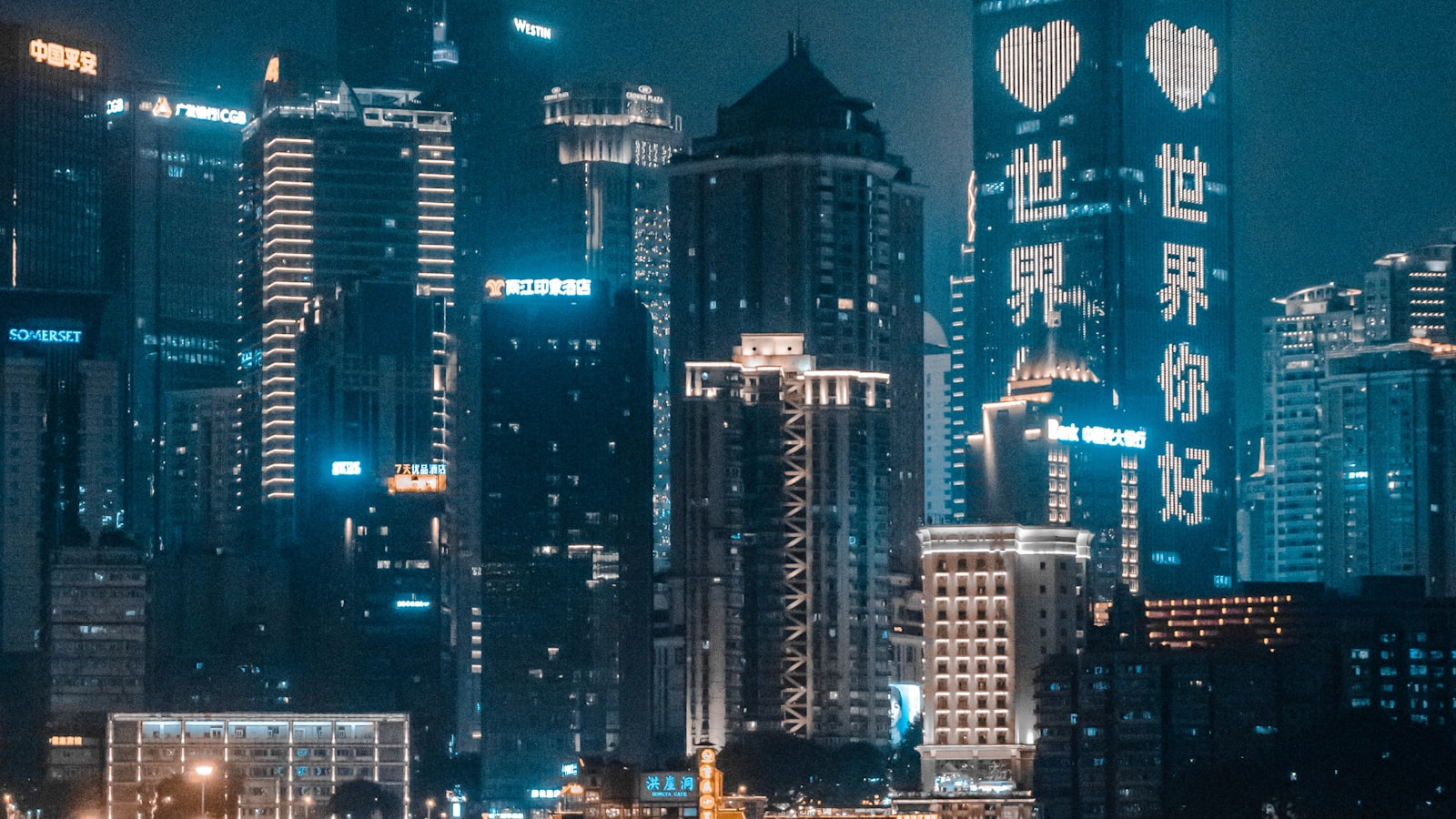
At night it feels like a science-fiction film set, when the cliffside Hongya Cave and the riverfront towers light up. It’s also the undisputed home of hotpot, the bubbling, spicy broth that people fly across the country to eat. And it’s a gateway: the Yangtze River cruises through the Three Gorges start here.
How many days
2 days is right for the highlights:
- Day 1 — the riverside: Jiefangbei and Hongya Cave, the Yangtze River cableway across the water, then the night skyline (from the cableway, a rooftop bar, or a river cruise).
- Day 2 — old town & city quirks: Ciqikou old town in the morning, the Liziba metro station and the Eighteen Stairs area in the afternoon, and hotpot for dinner.
If you have extra time, day trips to the Dazu Rock Carvings (UNESCO) or the Wulong karst are rewarding but need a full day each.
Suggested itinerary
A 2-day plan:
- Day 1 — Old Chongqing & the night view: Ciqikou old town in the morning, the Yangtze River cableway across the river, then Hongya Cave lit up after dark.
- Day 2 — Landmark day: the Liziba station monorail-through-a-building photo spot, the Three Gorges Museum, and a Yangtze night cruise to finish.
Have more time? Add a day trip to the Dazu Rock Carvings, or combine Chongqing with Chengdu — see our Chengdu vs Chongqing comparison.
Best time to visit
- Spring (April–May) and autumn (September–November): mild and clear — the best windows.
- Summer (June–August): famously hot and humid — Chongqing is nicknamed one of China’s “furnace cities.” Avoid unless you love the heat.
- Winter (December–February): cool, grey and often foggy — atmospheric but damp.
Top sights
- Hongya Cave (洪崖洞) — a hillside complex of traditional stilt houses above the Jialing River; after dark the golden lights make it look like a scene from Spirited Away. Free to wander; the views across the river are the point.
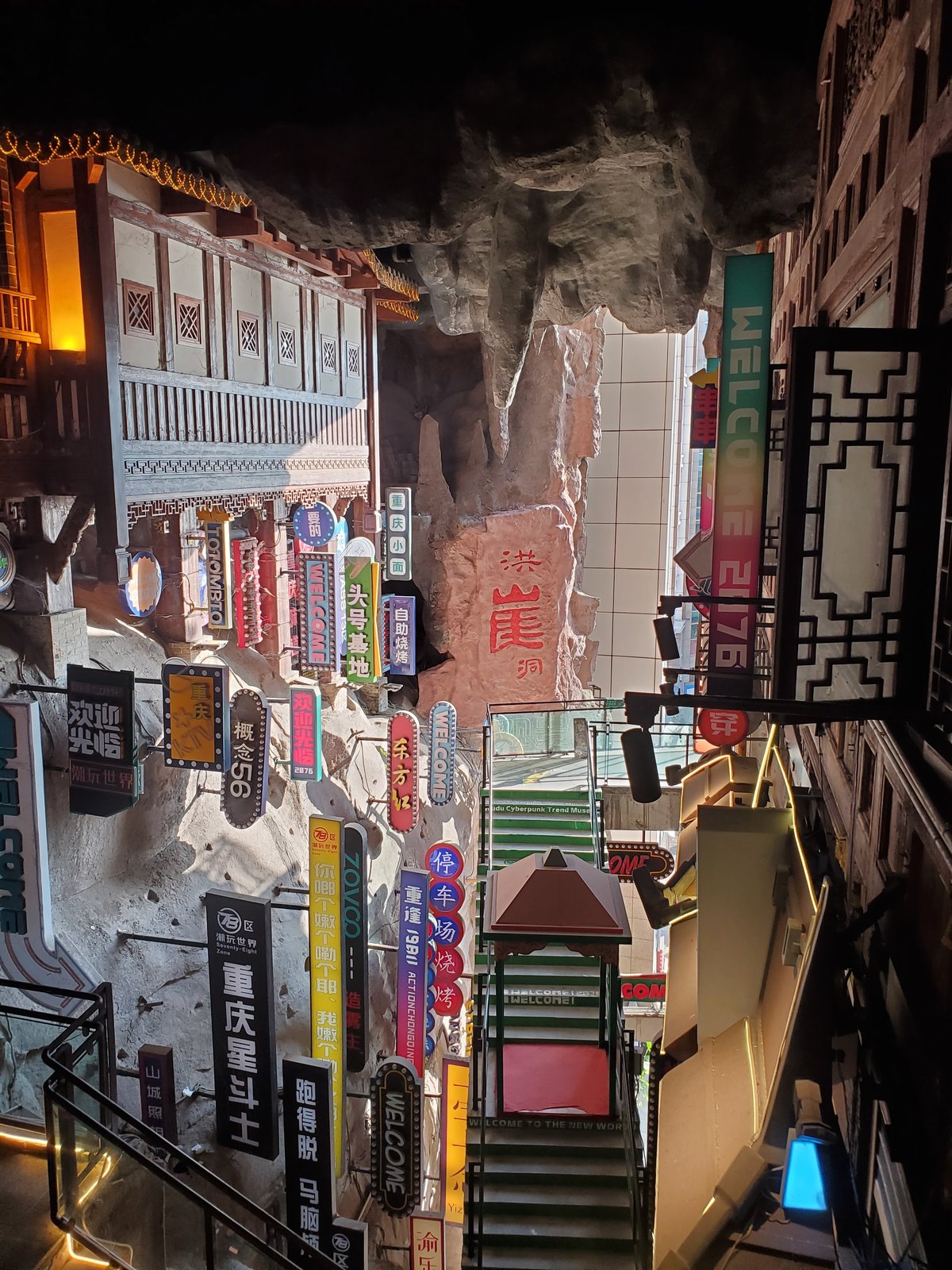
Hongya Cave lit up after dark — Chongqing’s hillside complex of stilt houses above the Jialing River. 2. Yangtze River cableway — the classic Chongqing ride: a cable car suspended roughly a kilometer across the Yangtze, connecting the two riverbanks. Go near sunset for the skyline.
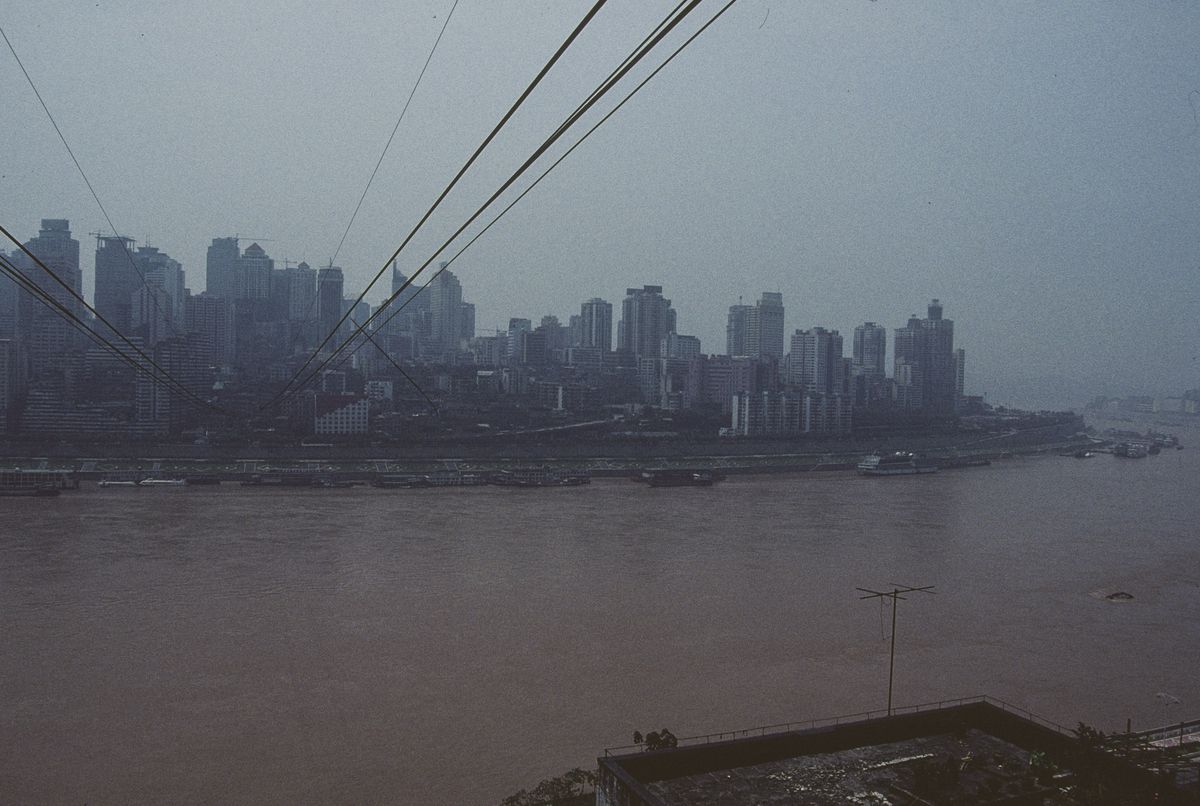
The Yangtze River cableway, Chongqing’s classic ride across the river between the two banks. 3. Ciqikou (磁器口) — an old town of tea houses, snack stalls and narrow lanes at the end of metro Line 1; liveliest in the morning and on weekends. 4. Liziba station — metro Line 2 passes straight through a residential apartment block; watch trains “enter” the building from the viewing platform outside. 5. Hotpot — the city’s defining food: a bubbling, chili- and Sichuan-peppercorn broth you cook in yourself. Go where the locals queue and try the tripe (maodu). 6. Night cruise on the Yangtze & Jialing — about an hour on the water past the lit skyline and Hongya Cave; the most relaxing way to see Chongqing’s famous nightscape.
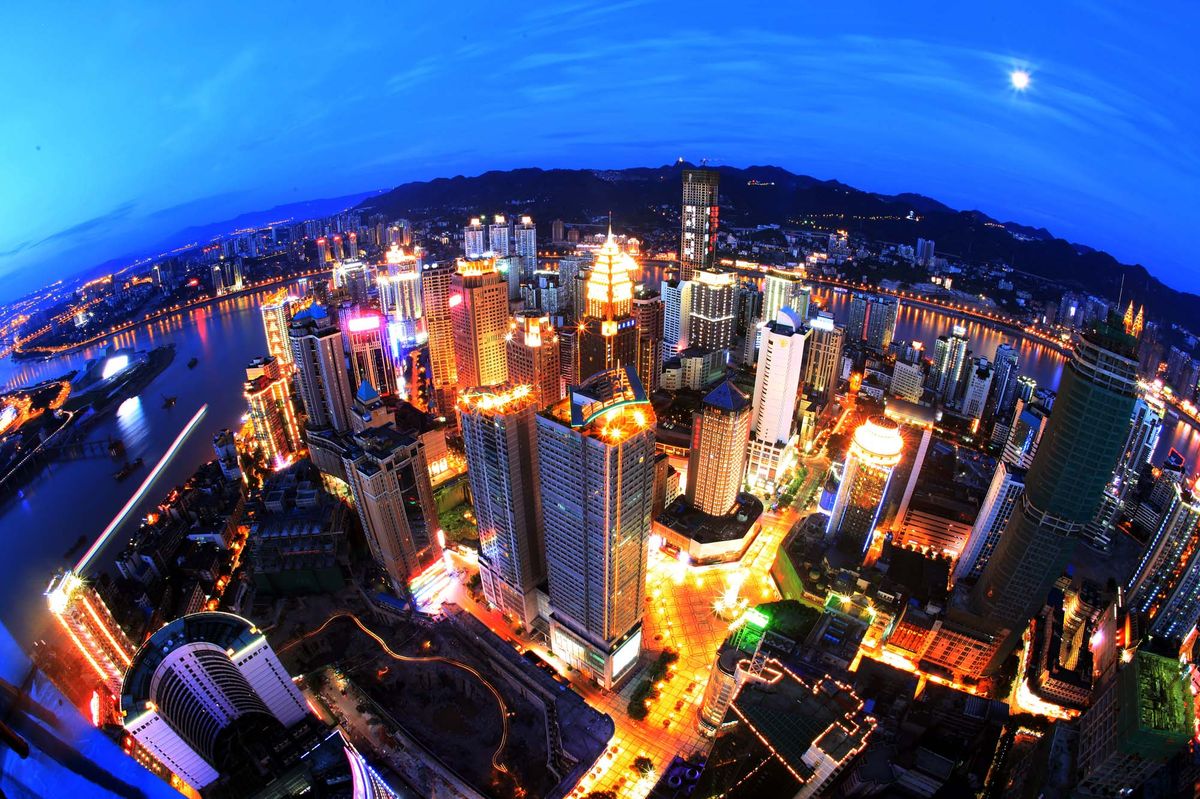
Chongqing’s night skyline on the Yangtze and Jialing rivers, seen from the water.
Budget
Chongqing is one of China’s more affordable big cities. Rough daily figures for planning (per person, CNY, and prices change):
- Accommodation: budget hotels from about ¥120–200/night, mid-range ¥250–450.
- Attractions: Hongya Cave is free to wander; the Yangtze cableway is roughly ¥20–30 one way; the night cruise is the biggest single cost (typically ¥100–150).
- Food: hotpot is ¥80–150 per person depending on how much you order; street snacks are ¥10–30.
- Transport: the metro is a few yuan per ride and does the heavy lifting up and down the hills.
Carry a little cash as backup, but pay by Alipay almost everywhere.
Getting there
- From Chengdu: high-speed rail in about 1 hour — the classic pairing.
- From other cities: direct high-speed rail connects Chongqing with Xi’an (about 5 hours), Guiyang (about 2 hours) and many others.
- By air: Chongqing Jiangbei International Airport (CKG) is a major hub with extensive domestic and some international routes.
- Book rail tickets with your passport — see our train ticket guide.
Getting around
- Metro: one of China’s most interesting systems — deep, hilly and sometimes inside buildings. Cheap and English-signed.
- Taxis / Didi: ride-hailing is reliable and affordable; the hills make walking distances deceptive.
- River views: the cableway and the night cruises on the Yangtze are the best ways to grasp the city’s layout.
- Line 2 doubles as a city tour: ride the metro along the river for elevated views of the skyline; the front of the train is the best seat.
Where to stay
- Jiefangbei / the CBD: the classic base — walkable to Hongya Cave and the river, with metro access and plenty of hotpot.
- Nan’an district (south bank): across the river with skyline views toward Jiefangbei and Hongya Cave; a quieter, scenically-lovely alternative.
- Near the high-speed rail station: practical if you arrive late or leave early.
Day trips & nearby
Chongqing’s signature escape is the Yangtze Three Gorges — the classic cruise runs downstream through the gorges and the towering cliffs, typically 2–3 days ending in Yichang. A day trip to Dazu (about 1.5 hours by car) leads to the Dazu Rock Carvings, a UNESCO World Heritage Site of huge cliff-face Buddhist sculptures. Wulong, about 2 hours south, is where the movie Transformers filmed its karst canyon scenes — a dramatic day out for hikers. For a quick city escape, the Ciqikou old town at the metro’s end is the easiest taste of old Chongqing.
Chongqing’s vertical city
Chongqing is a city that must be experienced more than listed. The metro lines themselves are attractions — Line 2 hugs the cliffs and passes through apartment buildings, and Liziba station is the famous one. The Hongya Cave complex is best seen from across the river after dark, when its stilt-house lights are at their most dramatic. And the Yangtze and Jialing rivers’ confluence, where the two waters meet in different colors, is visible from the Chaotianmen viewpoint. The city’s verticality — floors that feel like streets, elevators that are public transport — is half the charm.
Practical tips
- Hongya Cave after dark is the essential moment; queue for the cableway in the evening and pair the two.
- The map lies: because of the terrain, a “5-minute” walk can involve long stairs — use Didi for the steep bits and wear flat shoes.
- Hotpot etiquette: it’s a communal, social meal; tell staff your spice tolerance and don’t be shy about the dipping-sauce bar.
- Set up Alipay before you arrive — it’s the default for metro, taxis and street snacks; see our payments guide.
- Expect fog in winter: mornings are often grey and damp, so save open-air views like the cableway for midday when visibility is best.
Where to go next
Chongqing pairs perfectly with Chengdu (about 1 hour by rail) — together they’re the classic twin cities of southwest China. From Chongqing you can also take a Yangtze River cruise east through the Three Gorges, or head north to Xi’an for the Terracotta Army.
Hotpot in depth
Chongqing hotpot is a ritual as much as a meal, and knowing a little changes the experience. The broth is the point — a bubbling, deep-red soup loaded with dried chilies and Sichuan peppercorns, whose numbing heat is the city’s signature. Most restaurants offer a split pot (yuan yang): half spicy, half mild, so you can control the heat. Order the classic ingredients — tripe (maodu), the local favorite, plus beef, lotus root, mushrooms, tofu skin and the broad, chewy sweet-potato noodles that soak up the broth. Dip everything in the little bowls of sesame oil and garlic that arrive with the pot; the oil cools the spice and is the authentic way to eat it. If you cannot handle heat, say “bu la” (not spicy) when ordering, and remember the mild broth is still a rich beef-and-marrow stock. Hotpot is communal and loud — go where the locals queue, order a few things at a time, and you will eat like a Chongqing resident.
Common mistakes to avoid
Chongqing’s terrain creates the city’s most common mistakes. Trusting the map distances is the biggest — what looks like a short walk is often long stairs or a deep tunnel, so use the metro or Didi for the steep bits and wear flat shoes. Trying to see Hongya Cave at midday misses the point; the golden lights come on after dark, and the view from across the river is better than from inside the crowds. Missing the cableway timing — it is best near sunset, but queues build in the evening; go early or accept the line. Assuming the metro is flat — Line 2 is wonderful precisely because it dives through buildings and cliffs, but the deep stations involve long escalator descents. And ordering “not spicy” at a hotpot place and getting mild is not a failure — the mild broth is a rich stock, and the dipping-sauce bar lets you control your own heat.
Last updated: August 2026. Cableway and attraction prices and hours change — confirm before you go.
Frequently Asked Questions
How many days should I spend in Chongqing?
Two days covers the essentials: a day for Hongya Cave, the Yangtze River cableway and the night skyline, and a day for Ciqikou, the Liziba 'train through a building' station and hotpot. Add a day if you want a trip to the Dazu Rock Carvings or the Wulong karst.
How spicy is Chongqing hotpot, really?
Very — it's the city's defining food, a bubbling broth of chili and Sichuan peppercorns that numbs as much as it burns. That said, most restaurants offer mild or split broths, and the dipping sauces cool things down. If in doubt, tell the staff you want it 'not spicy' (bu la).
Is Chongqing easy to get around despite the hills?
Surprisingly yes. The metro is deep, fast and English-signed (Line 2 even runs through an apartment building at Liziba), and Didi taxis are cheap. The main challenge is walking — what looks like a short walk on the map can be long stairs, so use ride-hailing for the steep bits.
How do I get from Chengdu to Chongqing?
High-speed rail in about 1 hour — one of the shortest big-city hops in China and the classic southwest pairing. Trains arrive at Chongqing North or Chongqing West. Book with your passport; see our [train ticket guide](https://chinotrips.com/how-to/train-tickets/).
Do I need a visa for Chongqing?
Same as the rest of mainland China: citizens of 50 countries can enter visa-free for up to 30 days, and US citizens can use the 240-hour transit scheme for short trips. Check the [visa-free list](https://chinotrips.com/visa/visa-free-countries/) for your passport.