
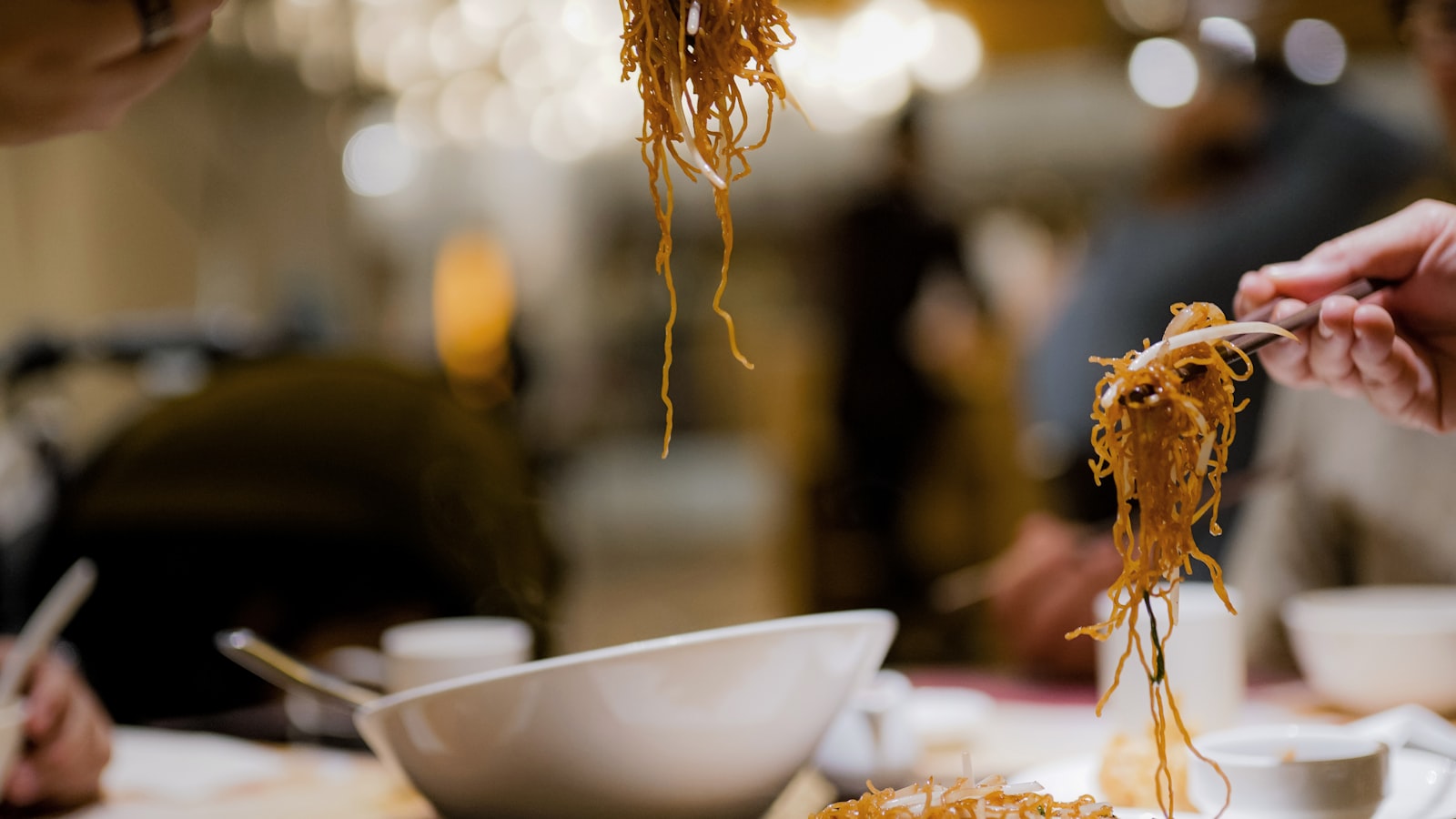
China's Regional Cuisines Explained: Eight Big Flavors
The eight great regional cuisines of China explained for travelers — Sichuan heat, Cantonese freshness, northern wheat, and how to eat your way across the country.
China’s food isn’t one cuisine — it’s a dozen regional traditions that taste nothing alike. Here’s the map, and how to eat across it.
The most useful thing to know about Chinese food before you visit: it’s not uniform. A Sichuan dinner of numbing peppercorn and chili has almost nothing in common with a Cantonese morning of dim sum, and northern wheat cooking is a world away from southern rice-and-seafood. Understand the big flavors and you’ll know what to look for in every city.
The mental map: north vs south
The simplest frame is geography.
- The north grows wheat. Expect noodles, dumplings, flatbreads and buns, and dishes built around meat and simple sauces — Peking duck, zhajiangmian, jiaozi. Beijing and Shandong are the anchors.
- The south grows rice. Expect rice, seafood, soups and light cooking — especially along the coast. Guangzhou and the Pearl River Delta are the classic southern table.
- The southwest (Sichuan, Hunan, Chongqing) is the spice belt — chili and Sichuan peppercorn rule.
- The east (Shanghai, Jiangsu, Zhejiang) leans sweet and saucy — braised dishes, soy, and the refined cooking of the Yangtze delta.
The eight great cuisines, quickly
- Sichuan (川菜) — numbing-hot, bold and complex. Mapo tofu, twice-cooked pork, hotpot. See Chengdu.
- Cantonese (粤菜) — fresh, subtle, steamed. Dim sum, slow soups, roast goose. See Guangzhou.
- Shandong (鲁菜) — northern heartiness: braised dishes, seafood, garlic. The root of much imperial cuisine.
- Jiangsu (苏菜) — refined, slightly sweet, meticulous knife work. Suzhou and Yangzhou are the stars.
- Zhejiang (浙菜) — light, fresh, Hangzhou-style: West Lake fish, dongpo pork.
- Hunan (湘菜) — fiery like Sichuan but with a hotter, less numbing chili profile.
- Fujian (闽菜) — seafood and soups, with the famous ‘Buddha jumps over the wall’.
- Anhui (徽菜) — hearty, wild ingredients, slow braising.
For a traveler, the practical takeaway is the first four — Sichuan, Cantonese, Shandong and the sweet east.
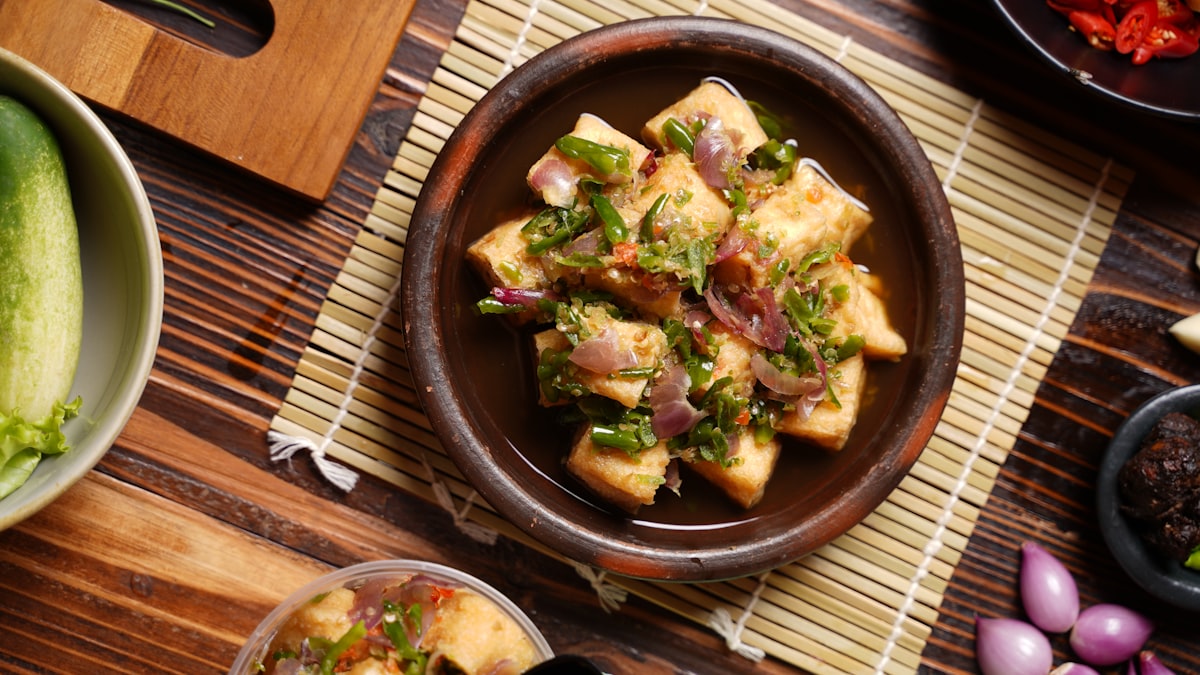
Sichuan cuisine’s signature — mapo tofu — shows the numbing-hot (mala) character that makes the southwest China’s spice belt.
What to eat where
- Guangzhou: dim sum, roast goose, slow soups. See Guangzhou guide.
- Beijing: Peking duck, zhajiangmian, jiaozi, hotpot in winter. See Beijing guide.
- Shanghai: xiaolongbao, braised pork, hairy crab in autumn. See Shanghai guide.
- Xi’an: hand-pulled noodles, roujiamo, the Muslim Quarter. See Xi’an guide.
- Chengdu & Chongqing: hotpot, mapo tofu, dan dan noodles. See Chengdu guide.
- The coast: seafood everywhere — Qingdao’s grilled oysters, Xiamen’s fish.
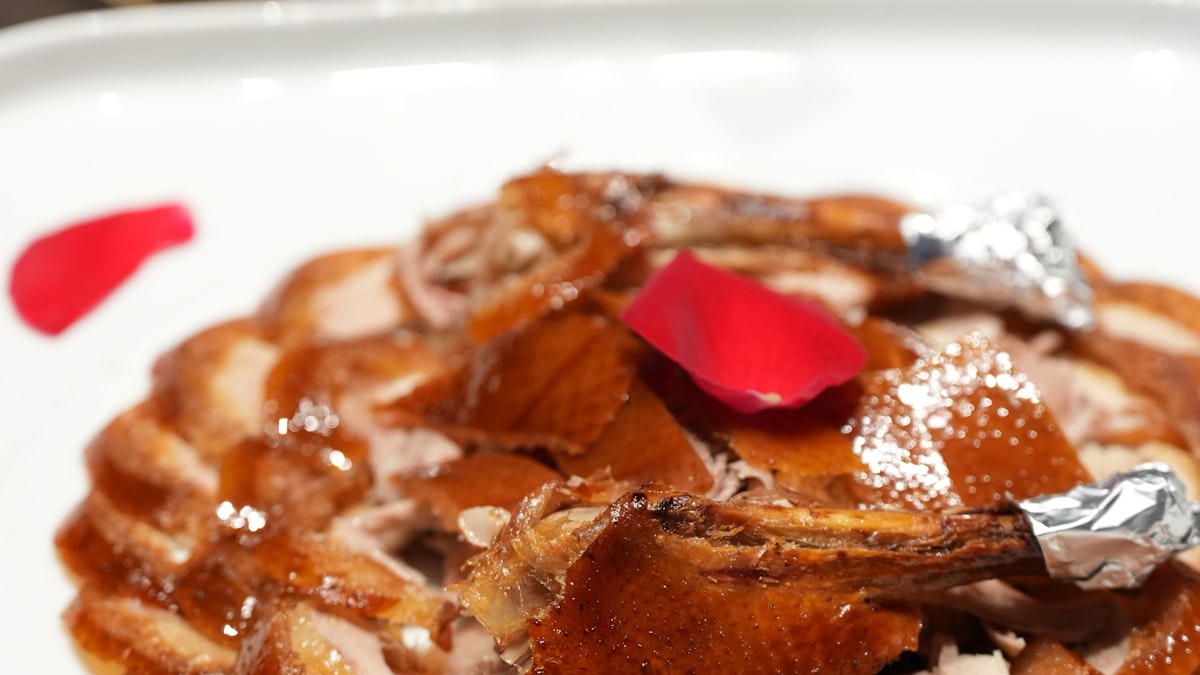
Beijing’s famous Peking duck — crisp skin sliced at the table and wrapped in pancakes — is the northern anchor of the regional map.
Eating across a multi-city trip
If your trip follows the classic Beijing–Xi’an–Shanghai–Guilin route, you’ll naturally pass through three or four distinct food worlds. That’s the point. Each city has a food section in our city guides, and deeper dives on hotpot, dim sum, noodles and dumplings.
Practical notes
- Spice control: ‘bu la’ (not spicy) works everywhere; ‘shaola’ (less spicy) is the gentler nudge.
- Ordering: dishes are shared — order n+1 for a table of n.
- Payment: cashless — Alipay is the norm.
- Dietary needs: see our guides to vegetarian eating and food allergies.
A quick history of the eight
The idea of ‘eight great cuisines’ crystallized in the late Qing dynasty, when regional cooking traditions were codified as a way of mapping the country’s food. But the reality is older and messier than any list: China’s food was regional from the start, shaped by climate, crops and trade. The eight-box version is a useful shorthand, not a boundary — every province, city and town has its own dishes beyond the famous ones. Treat the map as a starting point, not a complete list.
The flavor profiles, side by side
| Cuisine | Character | Signature dish |
|---|---|---|
| Sichuan | Numbing-hot, bold | Mapo tofu |
| Cantonese | Fresh, subtle | Dim sum, steamed fish |
| Shandong | Hearty, savory | Braised dishes, seafood |
| Jiangsu | Refined, sweet | Yangzhou-style stews |
| Zhejiang | Light, fresh | West Lake fish |
| Hunan | Fiery, less numbing | Steamed fish head with chilies |
| Fujian | Seafood, soups | Buddha jumps the wall |
| Anhui | Wild, braised | Stewed game |
For most travelers the practical ones are the first three — Sichuan, Cantonese and Shandong — plus the sweet east of Shanghai and Jiangsu.
How to eat across a trip
The best way to learn Chinese food is to eat regionally as you travel. A classic route naturally passes through three or four worlds: Beijing (northern wheat, Peking duck), Xi’an (noodles, lamb), Chengdu (Sichuan heat), Guilin (light southern fare). Match your eating to the city and the cuisines teach themselves. Our city guides have a food section for each stop.
The beginner’s strategy
- Start in the south or the north — the gentler cuisines — before attempting Sichuan heat.
- Order ‘bu la’ (not spicy) at first; dial up later.
- Share dishes — order n+1 for a table of n.
- Try the local specialty in each city — that’s the whole point.
- Payment: cashless — Alipay.
The sweet east: Shanghai and Jiangsu
The eastern cuisines of Shanghai, Jiangsu and Zhejiang are the counterpoint to Sichuan’s fire: sweet, refined and sauce-driven. Shanghai’s braised pork (hongshao rou), Jiangsu’s elegant Yangzhou cooking, and Hangzhou’s West Lake fish all share a preference for balance over heat. Soy sauce, sugar and Shaoxing wine are the seasonings; the cooking is precise and the portions artful. If you’re new to Chinese food, this is the most approachable region after Cantonese. See the Shanghai guide.
How the food maps to your itinerary
The practical trick: match the meal to the place. In Beijing, eat northern — duck, dumplings, hotpot. In Xi’an, noodles and lamb. In Chengdu, Sichuan spice. In Guangzhou, dim sum and seafood. In Shanghai, sweet braises and xiaolongbao. If you’re following the classic route, you’ll naturally pass through four or five food worlds, and each is a reason to stop. Our city guides carry a food section for every stop.
The cuisine most travelers overlook
Fujian (Min) cuisine — seafood, soups and the legendary ‘Buddha Jumps Over the Wall’ — is one of the greats that gets less attention abroad. Xiamen is the accessible entry point: fresh seafood, oyster omelets, and the famous fish-ball soups. If your route touches the southeast coast, it’s worth a detour. See the Xiamen guide for where to eat it.
The one-dish tour of China
If you want a single-dish introduction to each region, this is the list: Peking duck (Beijing), xiaolongbao (Shanghai), hotpot (Chengdu/Chongqing), dim sum (Guangzhou), lamian noodles (Lanzhou), roujiamo (Xi’an), mapo tofu (Sichuan), West Lake fish (Hangzhou), oyster omelet (Xiamen), beer-fish (Yangshuo). Eat your way through that list and you’ve covered most of China’s culinary map in one trip.
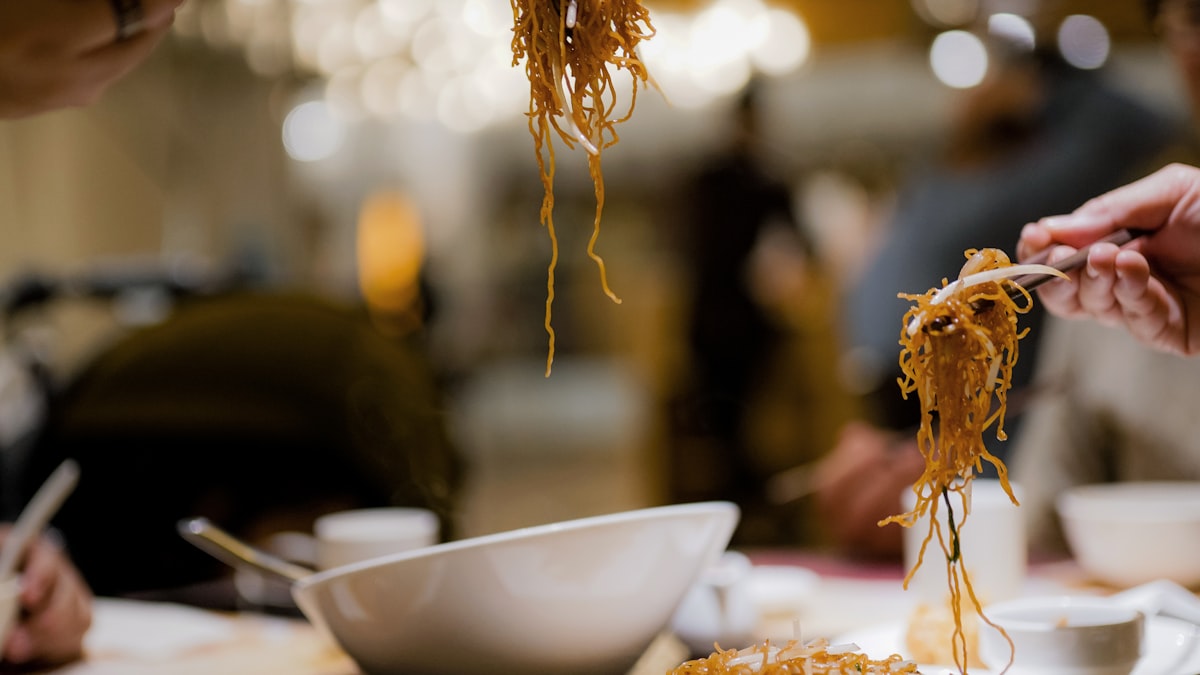
Chinese meals are shared family-style — order n+1 dishes for a table of n and pass everything around.
The final tip: eat where locals eat
All the maps and lists matter less than one habit: follow the crowds. In every Chinese city, the best food is where locals are eating — a busy noodle shop beats an empty tourist restaurant, a crowded night market beats a quiet one. This is the same advice our street food guide gives, and it’s the most reliable rule in Chinese food. Trust the queues, trust the locals, and you’ll eat better than any guidebook can plan.
Prices and details as of August 2026 — confirm current rates before you go.
Frequently Asked Questions
How many regional cuisines does China have?
The classic count is eight 'great cuisines' (ba da cai xi): Sichuan, Cantonese, Shandong, Jiangsu, Zhejiang, Hunan, Fujian and Anhui. But China's food is far more varied than any eight-box list — every province and city has its own specialties. For a traveler, thinking in terms of a few big flavors is more useful than memorizing the eight.
Which Chinese cuisine is the least spicy for a beginner?
Cantonese food (Guangzhou, Hong Kong) is the gentlest — fresh ingredients, light seasoning, steaming and stir-frying. Northern food (Beijing, Shandong) is also mild, built on wheat and simple meat dishes. Sichuan and Hunan are the fiery ones. If you're spice-averse, start in the south or the north, or just ask for 'bu la' (not spicy).
What's the main difference between northern and southern Chinese food?
Geography. The north grows wheat, so the diet revolves around noodles, dumplings, flatbreads and Beijing-style meat dishes. The south grows rice, so rice, seafood, soups and lighter cooking dominate — especially along the coast. It's the single most useful mental map for eating in China.
Is Sichuan food as spicy as people say?
Yes, and the heat is distinctive: Sichuan peppercorns add a numbing tingle (mala) alongside chili heat. But Sichuan food isn't only heat — there's a whole vocabulary of flavors: numbing, hot, sour, sweet, salty and smoky. And you can always order a mild version.
How should I eat my way across China?
Match food to the place: dim sum in Guangzhou, jiaozi and Peking duck in Beijing, xiaolongbao in Shanghai, hotpot in Chengdu or Chongqing, hand-pulled noodles in Lanzhou or Xi'an, and seafood along the coast. Our city guides have a food section for each — start with [Guangzhou](https://chinotrips.com/guangzhou/), [Beijing](https://chinotrips.com/beijing/), [Shanghai](https://chinotrips.com/shanghai/) and [Chengdu](https://chinotrips.com/chengdu/).
What is the one cuisine I absolutely shouldn't miss?
If you only pick one, make it **Cantonese** — the most refined and approachable of the great cuisines, from dim sum to slow-simmered soups. But the real answer is: don't pick one. China's food is a travel itinerary in itself, and the regional variety is the point.