
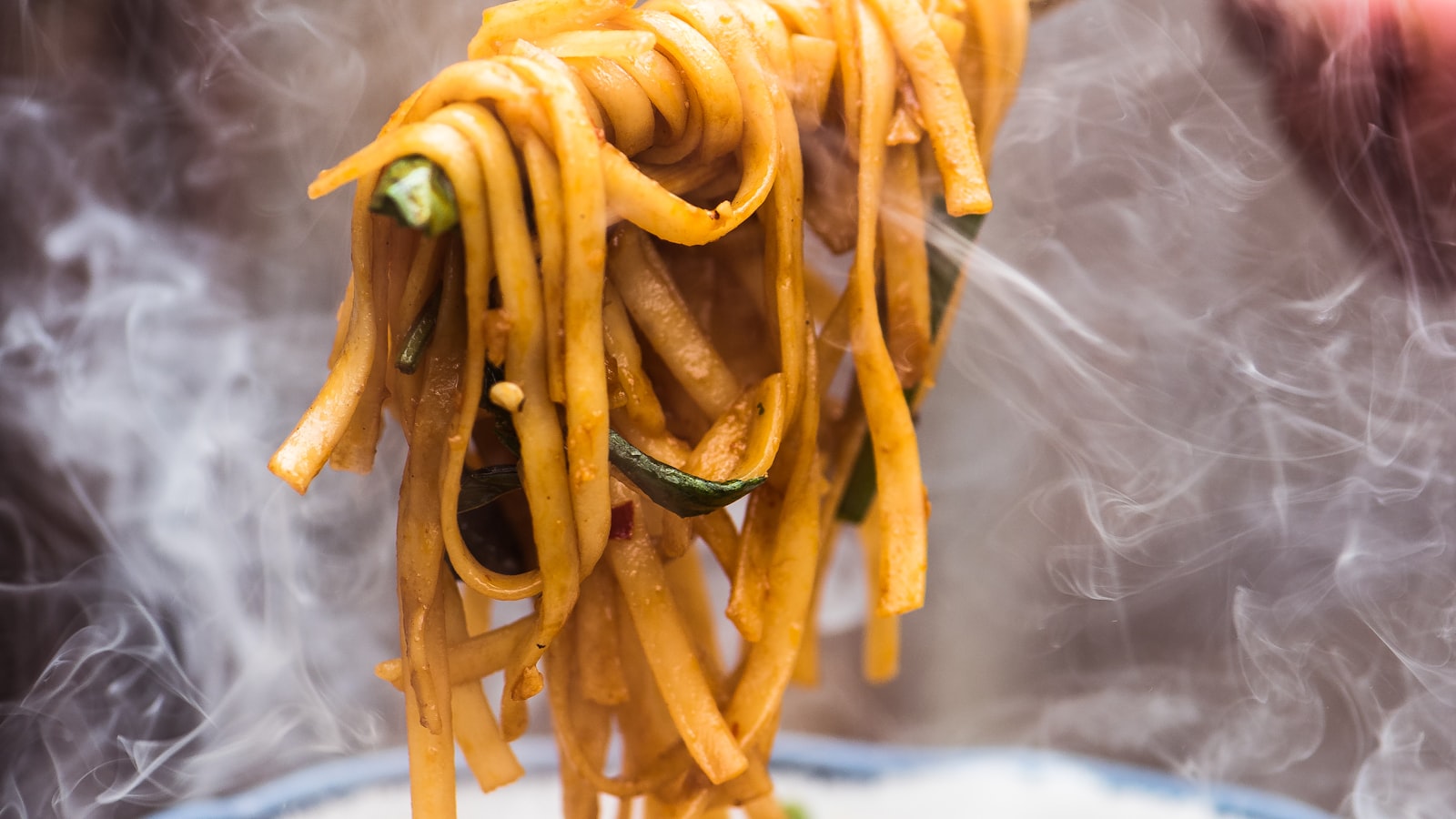
Lanzhou Lamian: China's Hand-Pulled Beef Noodles, Explained
Lanzhou lamian — hand-pulled beef noodles — is the most widespread noodle in China. What the 'one clear, two white, three red' formula means, and how to order the bowl.
Lanzhou lamian — hand-pulled beef noodles — is the most widespread noodle in China, and for good reason: a clear savory broth, springy noodles pulled fresh to order, and chili oil you control. Here’s what it is and how to order it.
Lanzhou lamian (兰州拉面) is the noodle you’ll see in every Chinese city, in shops with glass-front kitchens where a cook stretches a lump of dough into dozens of thin strands in under a minute. It’s beef noodles — a clear broth, hand-pulled wheat noodles, sliced beef, white radish and cilantro — and it’s mild, fresh and deeply comforting. It comes from Lanzhou in northwest China, and it’s a product of Hui (Chinese Muslim) noodle culture, which is why beef, not pork, is at its heart.
The ‘one clear, two white, three red’ bowl
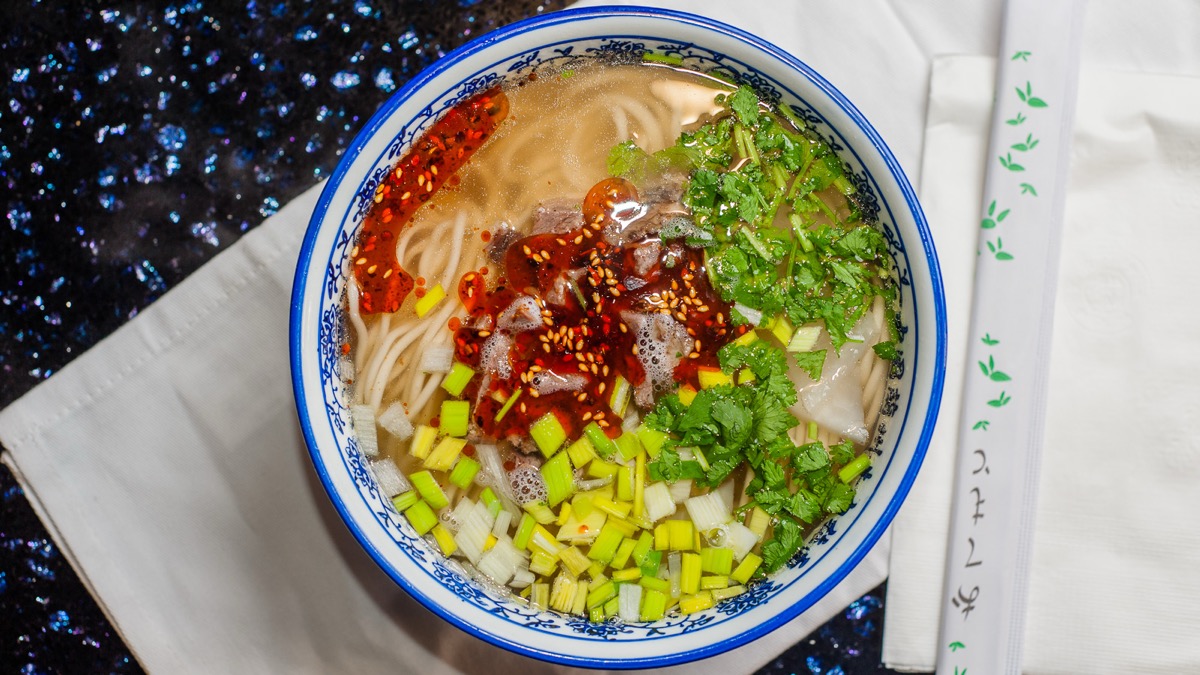
A proper bowl of Lanzhou lamian follows an old formula that locals take seriously:
- One clear — the beef broth, cooked until clear and savory.
- Two white — the sliced white radish.
- Three red — the chili oil, added to taste.
- Four green — cilantro and scallions on top.
- Five yellow — the wheat noodles themselves.
Hitting all five is the mark of a good shop. The bowl is mild at its base — the chili oil is on the side or added by you — which is why it’s so friendly to first-time noodle eaters.
Noodles pulled fresh to order
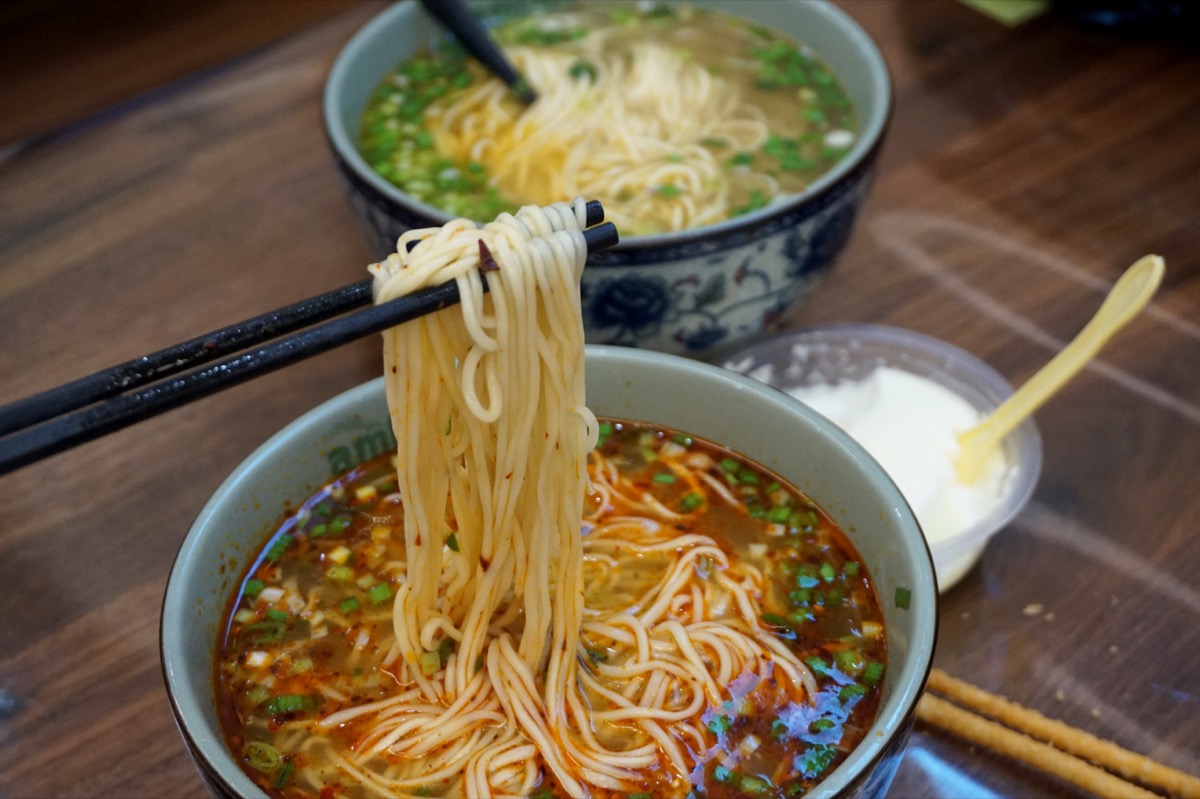
The ‘la’ in lamian means pull, and the pulling is the performance. The cook takes a lump of dough, works it into a thick rope, and then stretches and folds it repeatedly — slapping it on the counter and pulling it into finer and finer strands until they’re ready for the pot. In seconds a ball of dough becomes a bowl’s worth of noodles. Watch the kitchen and you’ll see it happen dozens of times an hour.
How to pick your noodle
Lanzhou lamian is one of the few noodles where you choose the shape. The shop will ask (or you can ask):
- Capillary (毛细) — very fine strands, delicate and quick to cook.
- Thin (细) — the classic everyday noodle.
- Medium (二细) — a slightly fuller chew.
- Wide (宽) — broad ribbons for a heartier bite.
- Belt (大宽) — the widest, a real chew.
If you don’t specify, medium-thin is the safe default. Saying ‘xikuai’ (thin) or ‘kuan’ (wide) is enough if you have a preference.
Where to eat Lanzhou lamian
The beauty of this noodle is that you don’t have to travel to Gansu — lamian shops are everywhere, from every provincial capital to small towns, usually easy to spot by the glass noodle-pulling window. In Lanzhou itself you’ll find the deepest bench, but for most travelers the convenient version is a lamian shop near where you’re staying. For a wider regional map, see our noodles in China guide, and the regional cuisines overview for how northwest Chinese food fits together.
How to order like a local
- Walk in, watch the kitchen — the window is your menu; many shops have picture menus too.
- Pick your noodle — ‘xikuai’ (thin), ‘erxi’ (medium), or ‘kuan’ (wide).
- Spice to taste — the chili oil is usually at the table or added by you; ‘bula’ (no spice) is always fine.
- Extras — ask for extra beef (‘jiarou’) or an egg (‘jiage dan’) to make it heartier.
- Payment — cashless is standard.
What it costs
A bowl of Lanzhou lamian is typically ¥15–30 (estimate), making it one of the best-value meals in China. Add an egg or extra beef and it still stays well within a budget meal.
A few practical notes
- Halal: this is a Hui dish — beef lamian shops are traditionally halal, making it a reliable option for Muslim travelers. See our halal food guide for the wider picture.
- Vegetarian: the classic is beef, but many shops can serve a vegetable-only bowl — ask for ‘sude’ (vegetarian) or ‘bu yao rou’ (no meat).
- Quick meal: lamian is a fast, casual lunch — the perfect one-bowl meal between sights.
- Texture: if your noodles are chewy and springy, that’s the point — fresh-pulled noodles have a bounce dried ones can’t match.
The Hui heritage and how lamian spread
Lanzhou lamian comes out of Hui (Chinese Muslim) noodle culture, and that heritage shapes the bowl in ways that matter to travelers. Because the dish is halal at its core — beef, clear broth, no pork — lamian shops are one of the most reliable halal dining options in any Chinese city. The modern bowl was shaped in Lanzhou in the early 20th century, when Hui chefs refined the clear beef broth and the hand-pulling technique into the standardized version we know today. In the 1990s the shops exploded across China, and today you’ll find a lamian restaurant in nearly every town in the country — often under the same recognizable red-and-yellow signage. It’s the most democratic noodle in China precisely because this tradition made it a national institution.
Reading the bowl like a local
Beyond the ‘one clear, two white, three red’ formula, there’s a local grammar to how the bowl is composed. The broth is made from beef bones simmered with a carefully guarded spice blend — star anise, ginger and others — until it’s clear and deeply savory, not cloudy. The beef itself is sliced thin and layered on top, usually with a few pieces of white radish for sweetness and a handful of cilantro and scallion for freshness. The chili oil is added last, at the table, in the amount you choose. Shops that nail all the details — the clarity of the broth, the bounce of the fresh-pulled noodles, the balance of toppings — are the ones with the queues.
Lamian and its international cousins
If lamian feels familiar, that’s because it has traveled. The Chinese word for hand-pulled noodles, ‘lamian’, shares its root with the Japanese ‘ramen’ — the Japanese dish is widely thought to descend from the same Chinese noodle tradition, and in China you’ll sometimes hear lamian called ‘the Chinese ramen’. The connection is a nice conversation starter, and it puts the dish in context: this is the original of a worldwide noodle family. For how lamian sits alongside the other great Chinese noodles, see the noodles in China map and the halal food guide for more of the Hui food tradition.
When to go
Lamian is an all-day food, and each window has its own character. Breakfast lamian — a lighter bowl to start the day — is a growing habit in many cities, and the morning shops are quiet and relaxed. Lunch is the classic peak, when office crowds queue at the glass windows and the pulling reaches full speed. Evening is calmer again, ideal if you want to watch the technique without the rush. Whichever hour you choose, the rule is the same: a busy counter means fresh noodles, so follow the crowd and you’ll never eat a stale bowl.
The honest takeaway
Lanzhou lamian is the safest great noodle in China — mild, cheap, everywhere, and made fresh in front of you. If you’re new to Chinese noodles, it’s the perfect first bowl: clean broth, gentle spice, and a performance at the counter that makes the meal memorable. Watch the pull, pick your thickness, and enjoy the most democratic noodle in the country.
Last updated: August 2026. Prices are estimates and change — confirm before you go.
Frequently Asked Questions
What is Lanzhou lamian?
Lanzhou lamian is China's most widespread noodle: hand-pulled wheat noodles in a clear, savory beef broth, topped with sliced beef, radish, cilantro and a spoonful of chili oil. 'La' means to pull or stretch — the noodles are made fresh to order by stretching a lump of dough into strands in seconds.
What does 'one clear, two white, three red' mean?
It's the traditional formula for a proper bowl of Lanzhou lamian: one clear (the beef broth), two white (the radish), three red (the chili oil), four green (cilantro and scallions), and five yellow (the wheat noodles). A shop that hits all five is doing it right.
How spicy is Lanzhou lamian?
Mild by default. The broth is clean and savory, and the chili oil is served on the side or added to taste — you control the heat completely. This makes it one of the friendliest noodles in China for travelers who are cautious about spice.
What are the different noodle thicknesses?
Lanzhou lamian shops let you pick your noodle: from fine 'capillary' strands to medium widths to broad, belt-like ribbons. If you don't specify, you'll usually get a medium thin noodle. It's the one part of ordering where you can tailor the bowl to your taste.
Is Lanzhou lamian halal?
Yes — the dish comes from Hui (Chinese Muslim) noodle culture, and beef lamian shops traditionally serve halal food. It's one of the most reliable halal options for travelers; see our halal food guide for the wider picture.