
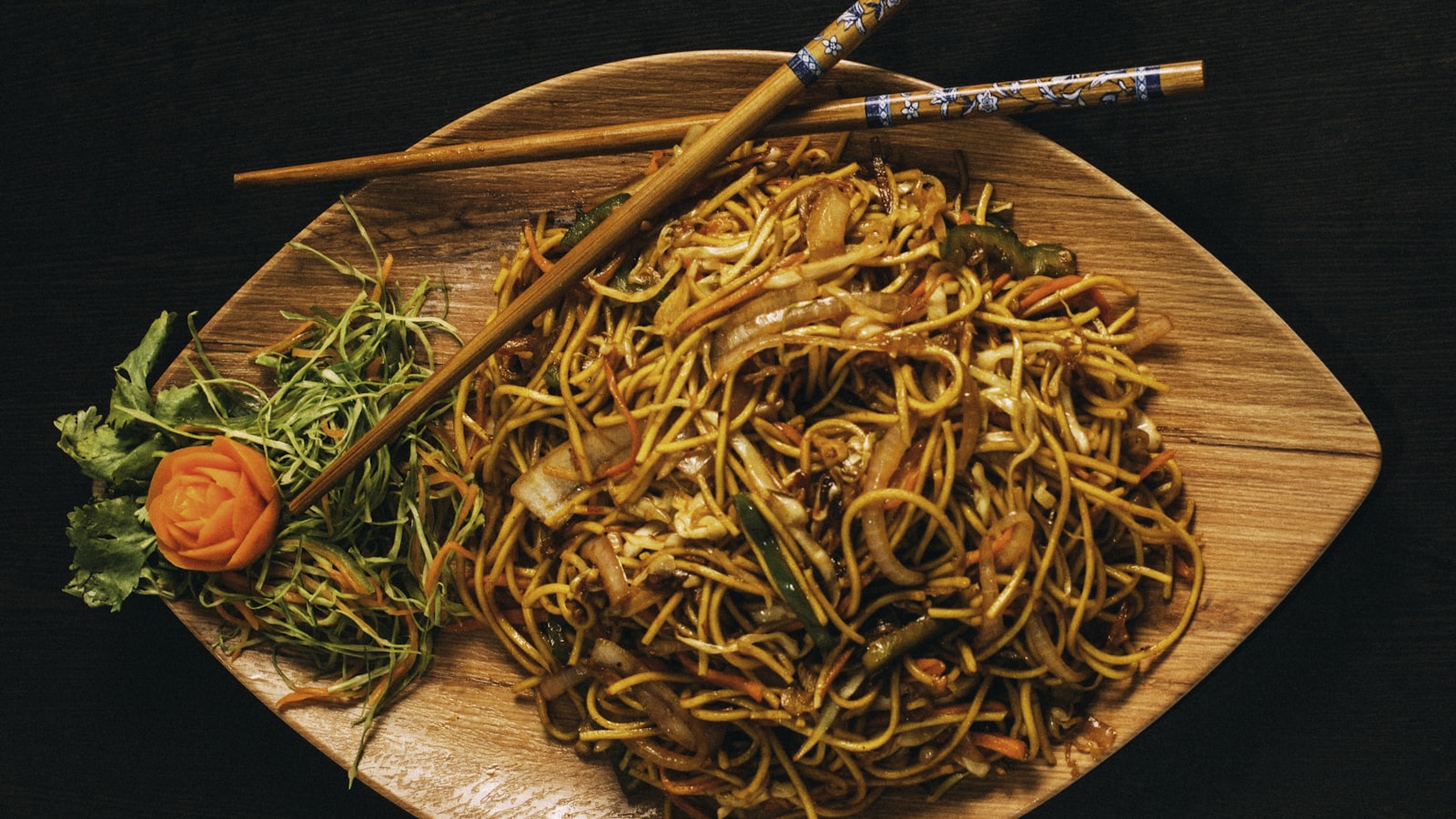
Noodles in China: A Regional Map of the Best Bowls
China's great noodle dishes by region — Lanzhou lamian, Beijing zhajiangmian, Chongqing xiaomian, Shanxi daoxiaomian, and more.
China’s noodle culture is deep and regional — every province has a signature bowl, and half the fun is comparing them. Here’s the map.
Noodles are China’s great everyday food. They’re cheap, fast, filling, and endlessly varied. For travelers, a good noodle shop is the friendliest introduction to Chinese food — picture menus, visible cooking, and a bowl that costs less than a sandwich back home. This guide maps the classics by region so you know what to look for.
The national icon: Lanzhou lamian
Lanzhou lamian (兰州拉面) — hand-pulled beef noodles — is the most widespread noodle in China. The cook slaps and stretches a ball of dough into thin strands in seconds, then drops them in a clear beef broth with sliced beef, cilantro and a spoonful of chili oil on the side. It’s mild, fresh and everywhere. If you try one noodle dish in China, make it this.
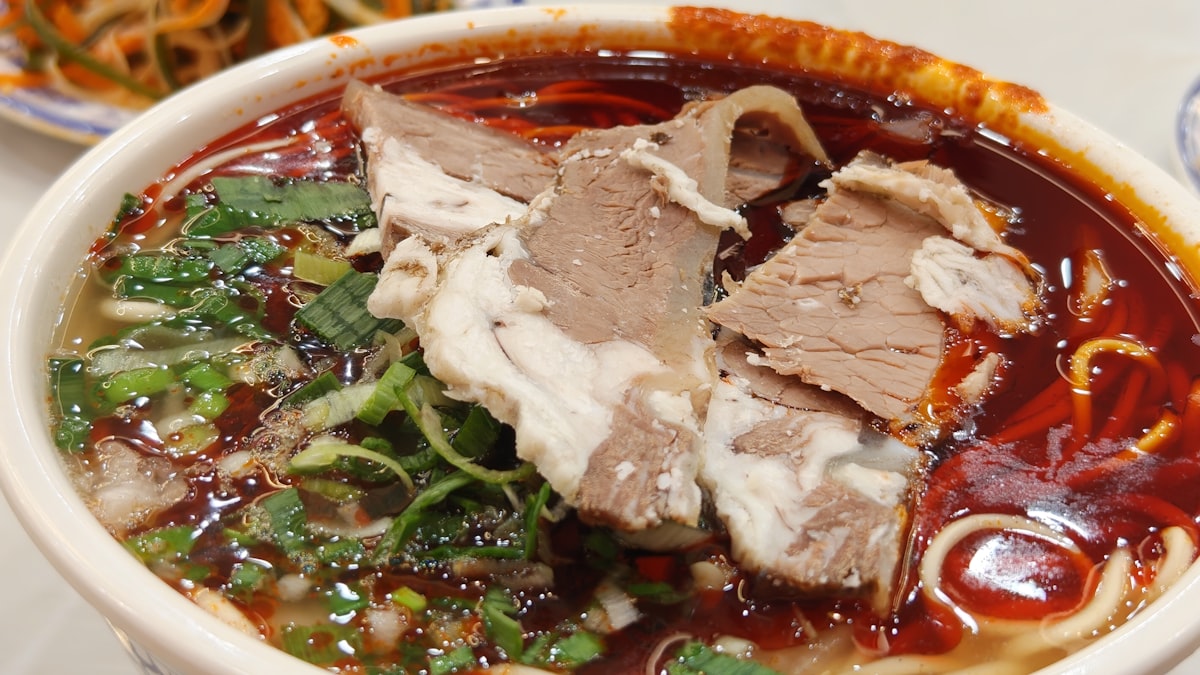
Lanzhou lamian — thin springy noodles in a clear beef broth with sliced beef and cilantro — is China’s most widespread noodle bowl.
The regional classics
- Beijing: zhajiangmian (炸酱面) — chewy noodles in a dark, savory fried soybean-paste sauce with cucumber, bean sprouts and shredded radish on top. Hearty and not spicy. See our zhajiangmian guide and the Beijing guide.
- Chongqing: xiaomian (小面) — a fiery bowl of thin noodles in a sauce of chili, Sichuan peppercorn and garlic. Genuinely spicy, and a local institution. See our xiaomian guide and the Chongqing guide.
- Wuhan: re’ganmian (热干面) — ‘hot dry noodles’ tossed in a sesame paste with chili and scallions. Breakfast of a city. See our hot dry noodles guide.
- Shanxi: daoxiaomian (刀削面) — knife-cut noodles with irregular, chewy shapes, usually in a tomato or meat broth. See our knife-cut noodles guide.
- Chengdu: dan dan noodles (担担面) — thin noodles in a numbing-spicy chili-sesame sauce, Chengdu’s most famous bowl. See our dan dan noodles guide.
- Lanzhou: lamian (兰州拉面) — hand-pulled beef noodles in a clear broth, the national icon. See our lamian guide.
- Shaanxi: biangbiangmian (biangbiang面) — wide, belt-like hand-torn noodles, a Xi’an specialty worth hunting down. See our biangbiang noodles guide and the Xi’an guide.
Zhajiangmian — chewy noodles in a savory fried soybean-paste sauce with cucumber and bean sprouts — is Beijing’s signature bowl, hearty and not spicy.
How to order like a local
Noodle shops are the easiest restaurants in China to navigate:
- Picture menus are standard — point and say ‘zhe ge’ (this one).
- Spice control: ‘shaola’ (less spicy) and ‘bu la’ (not spicy) work.
- Portion size: ‘xiaowan’ (small bowl) or ‘dawan’ (large bowl).
- Watch the cooking: in hand-pulled shops the kitchen is often open; it’s part of the show.
Beginner-friendly picks
If you’re cautious about spice or texture, the safest bowls are beef lamian (mild, fresh), zhajiangmian (savory, no heat), and any clear-broth noodle soup with vegetables. Skip the Chongqing xiaomian and Sichuan cold noodles until you’re ready for heat — or order them with ‘shaola’ and be pleasantly surprised.
The noodle scene, beyond the bowl
Noodles also appear as street snacks — stir-fried noodles (chaomian) from night-market stalls are a late-night staple. And in fine dining, noodles turn up in banquets as a course meant to be slurped. Everywhere, slurping is normal and a compliment. See our street food guide for the wider picture.
Practical notes
- Cost: a bowl is typically ¥15–40 (estimate) — one of the best value meals in China.
- Payment: cashless — have Alipay ready.
- Lunchtime: noodle shops peak at lunch; go slightly early to beat the queue.
- Vegetarian: ask for ‘bujia rou’ (no meat) — many noodle soups have a veggie option.
The noodle, made by hand
Part of the magic of Chinese noodles is watching them get made. In a hand-pulled noodle shop, the cook takes a lump of dough and slaps, stretches and folds it into dozens of thin strands in under a minute — a performance you can watch from the counter. Knife-cut noodles (daoxiaomian) are shaved directly from a dough block into the pot. The noodle’s texture — springy, chewy, irregular in the knife-cut versions — is as much the point as the broth. If a shop has an open kitchen, watch; it’s free entertainment and dinner at once.
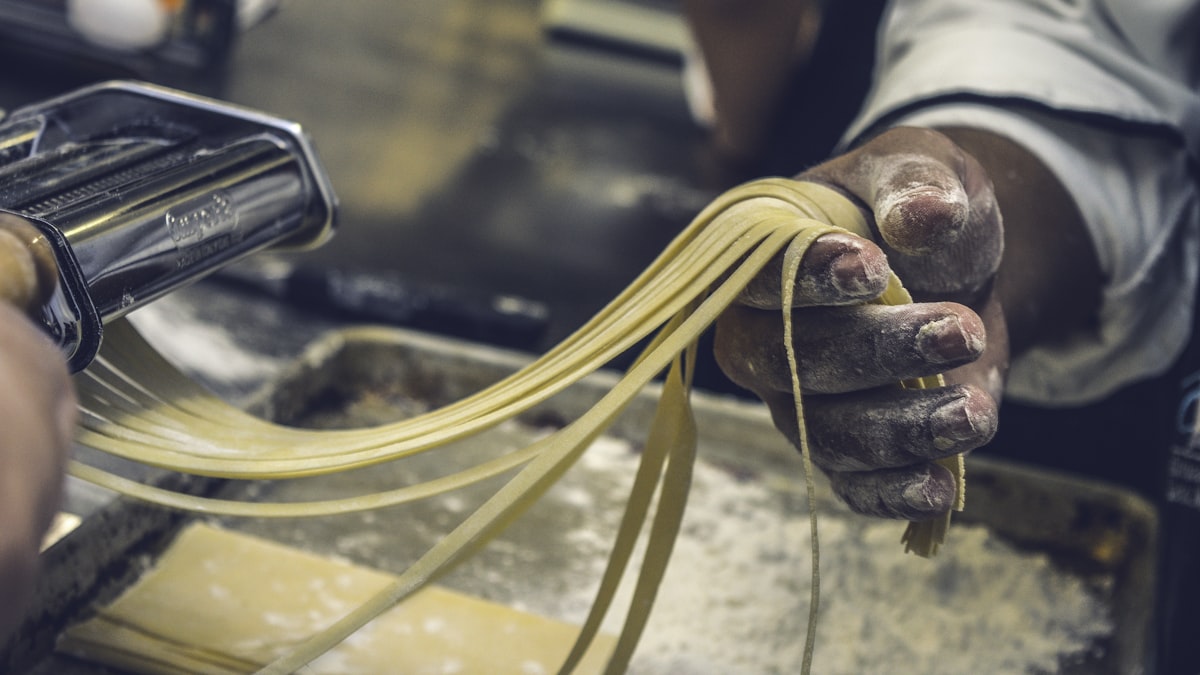
In a hand-pulled noodle shop the cook stretches and folds a lump of dough into dozens of thin strands in under a minute — part of the show.
A noodle map for your itinerary
If you’re following a classic route, the noodles line up nicely: Beijing — zhajiangmian (soy-paste noodles). Xi’an — hand-pulled lamian and biangbiangmian. Chengdu — dan dan noodles and spicy chongqing-style xiaomian. Shanghai — the city’s soy-sauced noodle bowls. Guilin — rice noodles with a savory broth. Each city guide links to its own bowl, so eating your way across China doubles as a noodle tour.
The great noodle vs rice divide
Noodles are the food of the north, rice the food of the south — the single most useful food fact in China. The north grows wheat, so meals center on noodles, dumplings and flatbreads; the south grows rice, so the table is rice, seafood and light cooking. Neither is ‘better’ — they’re two great traditions. Understanding the divide tells you what to expect before you sit down. See our regional cuisines guide for the full map.
Ordering and eating tips
- Slurping is a compliment — noodles are meant to be slurped.
- ‘Shaola’ (less spicy) — for the fiery bowls.
- Lunch is peak — go slightly early.
- A bowl is a meal — no side dishes needed.
- Cold noodles in summer — a Sichuan staple worth hunting for.
- Payment: cashless — Alipay.
Noodle vocabulary you’ll hear
A few words smooth the way at any noodle shop. Lamian is hand-pulled; daoxiaomian is knife-cut; xiaomian is the small (spicy) noodles of Chongqing; re’ganmian is Wuhan’s hot dry noodles; zhajiangmian is Beijing’s soybean-paste noodles. ‘Tang’ means soup, so a ‘tang mian’ is a soupy noodle bowl; ‘ban mian’ is a dry tossed noodle. Knowing a few of these lets you order with confidence even before the translation app loads.
The best noodle cities
If noodles are your goal, plan your route around them. Lanzhou is the home of lamian — the hand-pulled beef noodle. Xi’an does biangbiangmian and the Muslim Quarter’s cumin-heavy noodles. Chongqing owns the fiery xiaomian. Wuhan breakfasts on re’ganmian. Beijing does zhajiangmian. Guilin has its famous rice noodles. Each city’s noodle is a local point of pride, and tasting them across a trip is one of China’s great food journeys. See our Xi’an guide for where to start.
Noodles in fine dining and street life
Noodles aren’t only street food. In the north, a hand-pulled noodle bowl is an art form at mid-range restaurants; in fine dining, noodles appear as a final course meant to be slurped. And at night markets, stir-fried noodles (chao mian) from a screaming-hot wok are a late-night staple. Wherever you eat them, the noodle’s springy texture and the broth’s depth are the same obsession — China’s noodles are a craft, not a convenience. See our night market guide.
A few noodle myths, cleared up
Two things travelers often get wrong. First, noodles aren’t always spicy — the famous ones (lamian, zhajiangmian, re’ganmian) are mild until you add chili oil. Second, noodles and rice aren’t either-or — a noodle shop and a rice place sit side by side, and both are normal. The north-south divide is real, but in practice every city has both. Order with an open mind and you’ll eat well regardless.
Noodles as a travel hack
Noodles are quietly the best-value meal in China, and they double as a travel hack: a bowl is a full meal for ¥15–40, it’s fast (most places serve in under five minutes), and it works at any time of day. If you’re on a tight budget, on a tight schedule, or just want a reliable meal in an unfamiliar neighborhood, a noodle shop is always the answer. It’s the food you can fall back on anywhere in China and never be disappointed.
Prices as of August 2026 — confirm current rates before you go.
Frequently Asked Questions
What is the most famous noodle dish in China?
Lanzhou lamian — hand-pulled beef noodles from the northwestern city of Lanzhou — is the most famous single noodle dish. Thin, springy wheat noodles in a clear beef broth with slices of beef, cilantro and chili oil. It's served everywhere in China and a safe, delicious first bowl.
What are the regional noodle classics I should try?
Beijing's zhajiangmian (noodles in fried soybean sauce), Chongqing's xiaomian (spicy peppercorn noodles), Wuhan's re'ganmian (hot dry sesame noodles), Shanxi's daoxiaomian (knife-cut noodles), and the sweet-and-sour cold noodles of Sichuan. Each city has a signature bowl worth seeking out.
How do I order noodles if I can't read Chinese?
Most noodle shops have picture menus. Point at the dish and say 'zhe ge' (this one). For spice, say 'shaola' (less spicy) or 'bu la' (not spicy). For size, 'xiaowan' (small bowl) and 'dawan' (large bowl) are the words you need.
Are Chinese noodle dishes spicy?
It varies. Beef lamian is mild until you add chili oil. Chongqing xiaomian and Sichuan cold noodles are genuinely spicy. Beijing zhajiangmian is savory with fermented bean paste, not spicy. Ask for less spice if unsure — it's a normal request.
How much does a bowl of noodles cost?
A generous estimate: ¥15–40 per bowl depending on the city and the shop. Street-level noodle shops are the cheapest; you eat well and fill up for under ¥40 almost anywhere in China. It's one of the best value meals in the country.