
Chinese Dumplings Guide: Jiaozi, Xiaolongbao & More
China's dumpling family decoded — boiled jiaozi, Shanghai xiaolongbao, pan-fried guotie, and how to eat each one properly.
Dumplings are China’s comfort food — and they come in more shapes than you’d guess. This guide sorts out the whole family and how to eat each one.
From a bowl of boiled jiaozi on a cold night to the perfect Shanghai soup dumpling, China’s dumpling culture is deep and delicious. The good news for travelers: they’re cheap, everywhere, and easy to order by pointing at a picture. The challenge is just knowing the family tree. Here’s the map.
The dumpling family, decoded
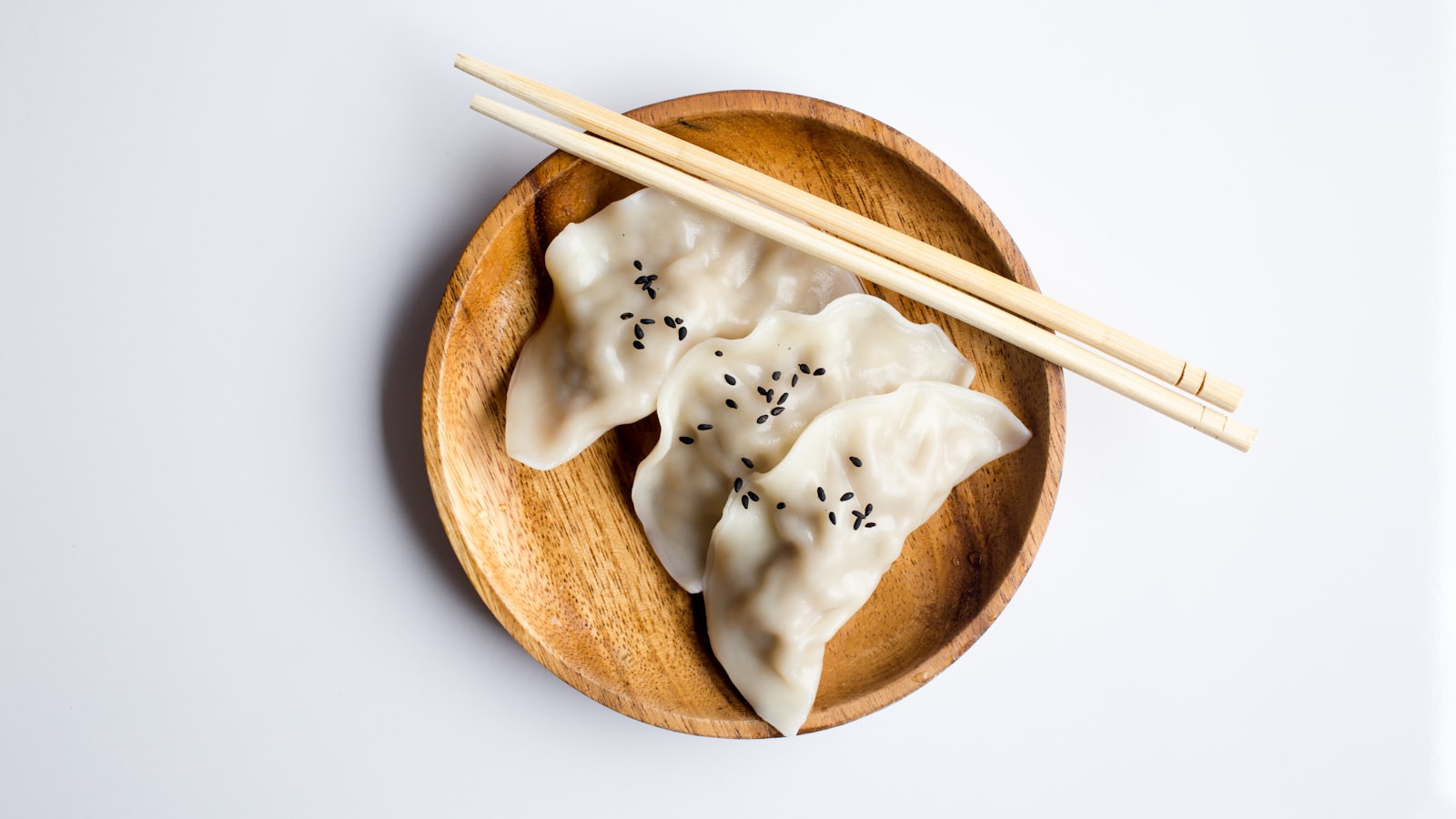
- Jiaozi (饺子) — the classic northern dumpling: a simple wheat wrapper folded into a half-moon, boiled, steamed or pan-fried, filled with pork and cabbage, chives, or vegetables. Eaten with black vinegar and sometimes chili oil.
- Xiaolongbao (小笼包) — Shanghai’s soup dumplings: thin wrappers pleated at the top, holding a parcel of hot soup and a pork (or crab) filling. A whole skill in eating them.
- Guotie (锅贴) — pan-fried jiaozi, crispy on the bottom, soft on top. Also called ‘potstickers’ in the West.
- Wonton / huotun (馄饨) — thinner wrappers in a clear broth, often with dried shrimp and seaweed. A gentle, soupy dumpling.
- Baozi (包子) — larger steamed buns, fluffy and bread-like, filled with pork, vegetables or red bean paste. Technically a bun, but in the family.
The north: jiaozi country
Jiaozi are a northern institution — especially in Beijing and the northeast, where families make them together on Chinese New Year. In restaurants, order by the basket and dip in black vinegar. A classic filling is pork and Chinese cabbage; the chive-and-egg version is a favorite vegetarian pick. See the Beijing guide for where to start.
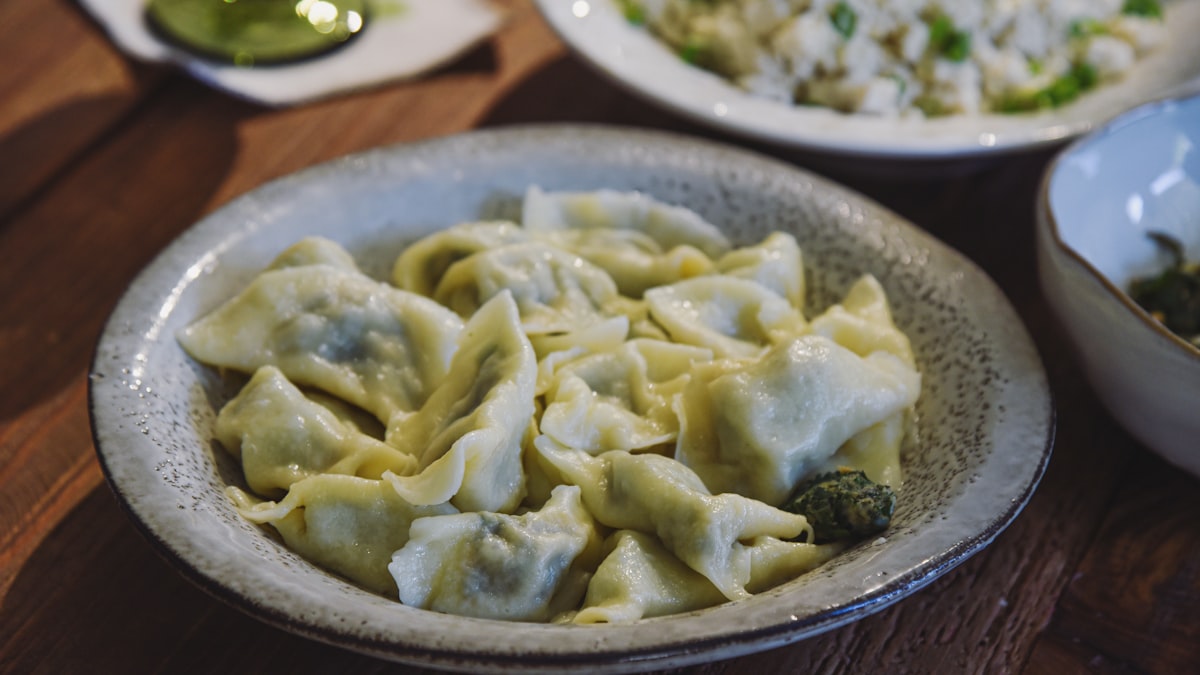
A plate of freshly boiled jiaozi, dipped in black vinegar, is the northern everyday classic — simple, hearty and cheap.
The Shanghai signature: xiaolongbao
Xiaolongbao are the star of Shanghai and the Jiangnan region. The key skill is eating one without scalding yourself:
- Pick one up with chopsticks (or a spoon).
- Bite a small hole in the wrapper.
- Sip the hot soup out.
- Eat the rest, dipped in black vinegar and a sliver of ginger.
Never pop a whole one in your mouth — the soup is boiling hot. A well-known chain like Din Tai Fung is a reliable introduction, but a busy local shop is the real experience. See the Shanghai guide for neighborhoods.
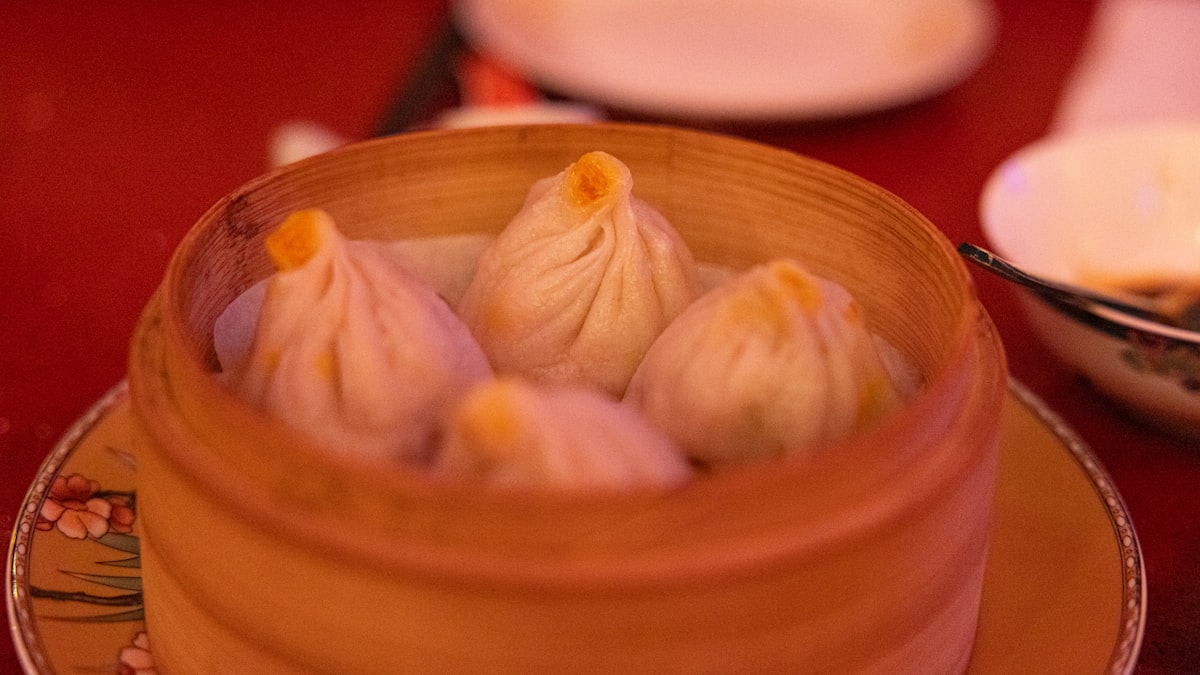
Xiaolongbao arrive in bamboo steamers, their thin pleated wrappers holding a parcel of hot soup — sip the broth before you eat the rest.
How to order without a translator
- Point and count: most dumpling places have picture menus. Point at the filling and say how many you want — jiaozi are often sold by portion (e.g., a basket of 12–15).
- Dipping: black vinegar (cu) is the default; add chili oil for heat.
- Payment: cashless — have Alipay ready.
Vegetarian and allergy notes
Vegetarian dumplings are easy to find: chive-and-egg and vegetable fillings are common. Be explicit with ‘sude’ (vegetarian) or ‘bu yao rou’ (no meat), since some ‘vegetable’ fillings contain pork. For gluten allergies, note that the wrappers are wheat — most dumplings aren’t gluten-free. For other allergies, carry a Chinese allergy card.
Practical notes
- Cost: ¥20–60 for a filling order (estimate), depending on venue.
- Timing: dumpling shops are busy at lunch and dinner; go early to avoid queues.
- New Year: jiaozi are the traditional New Year’s dish — the winter period is when the best handmade ones appear.
- Try them all: a jiaozi, a xiaolongbao, a guotie and a wonton soup together give you the full picture in one meal.
Dumplings and the New Year
Jiaozi have a special place in Chinese culture: they’re the traditional Chinese New Year dish, made by hand in family kitchens across the north on the eve of the festival. The folded shape is said to resemble ancient silver ingots, so eating them at the New Year is an act of wishing for prosperity. You’ll see the handmade versions around the festival, but year-round, dumpling shops serve them fresh all day. If you happen to be in Beijing around the New Year, the dumpling houses are at their liveliest.
Northern dumplings vs southern dim sum
China’s two dumpling families are easy to mix up. Northern jiaozi are the everyday boiled or pan-fried dumplings — pork and cabbage, chives, simple and hearty, eaten with black vinegar. Southern dim sum — from the Cantonese world — is the small-plate tea-house tradition: har gow, siu mai, steamed buns and rolls. Both involve wrappers and fillings, but they’re separate worlds. If you want both, the dim sum guide covers the southern family.
Eating a full dumpling meal
A proper dumpling meal for one or two: order a basket or two of boiled jiaozi, a plate of pan-fried guotie for the crispy contrast, and a small dish of black vinegar with a few slivers of ginger for dipping. Add a bowl of the dumpling soup or a plate of cold cucumber if you want more. It’s simple, filling and exactly how locals eat it — there’s no ceremony, just good food at a fast pace.
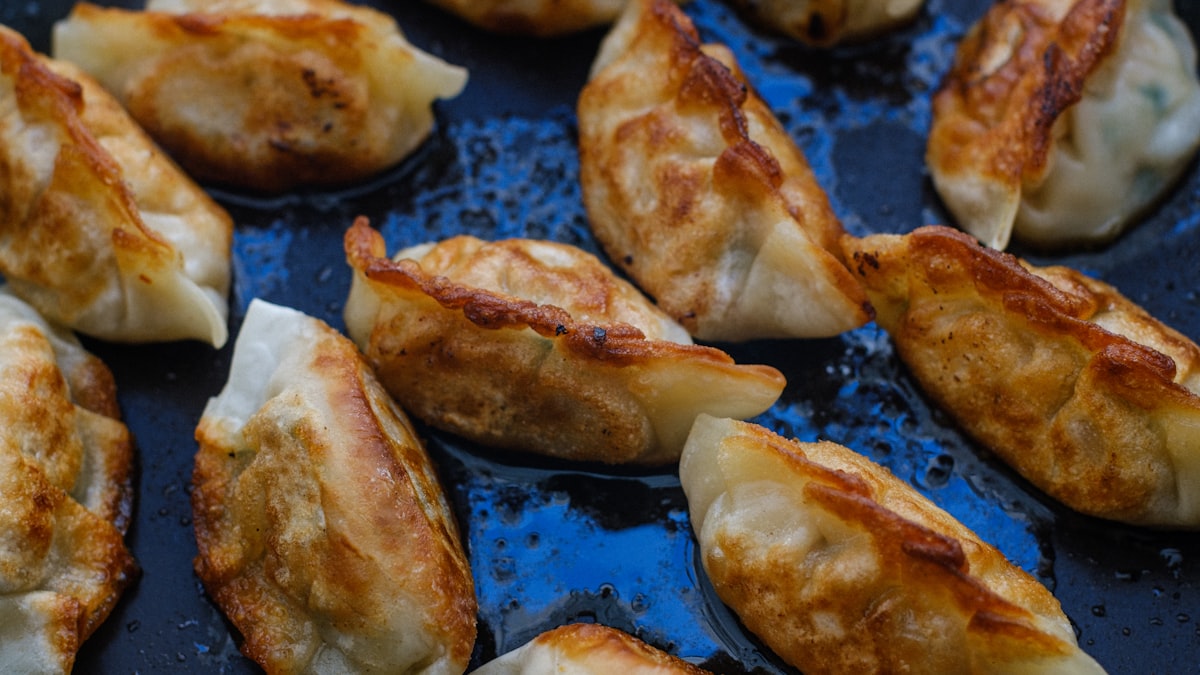
Guotie — pan-fried jiaozi — give you the crispy contrast: golden and crackling underneath, soft and juicy on top.
The essential tips
- Xiaolongbao are scalding — sip the soup out first, then eat. Never pop one whole.
- Vinegar, not soy — black vinegar is the classic dip for jiaozi.
- ‘Sude’ (vegetarian) — chive-and-egg fillings exist, but confirm no pork.
- Point and count — order by portion; a basket is usually 12–15.
- Payment: cashless — Alipay.
How dumplings are made
The dumpling is a small art form. The wrapper is a disc of wheat dough, rolled thin at the edges; the filling is chopped and seasoned; and the fold — the little pleats on top of a jiaozi, the twisted top of a xiaolongbao — is the maker’s signature. In northern homes, families sit around a table on New Year’s Eve making hundreds by hand. In restaurants, skilled wrappers work so fast it’s hard to follow. Watching a dumpling being made is part of the pleasure; many shops have open counters.
Where to find the best
- Beijing — jiaozi houses everywhere; the city’s dumplings are the northern standard.
- Shanghai — xiaolongbao is the signature; famous shops have queues for a reason. See the Shanghai guide.
- Northeast China — big, hearty jiaozi, often served with a garlic-vinegar dip.
- Any city’s old quarter — dumpling shops cluster where there’s foot traffic; the busy ones are the good ones.
A dumpling glossary
- Jiaozi (饺子) — boiled or pan-fried, half-moon, the northern classic.
- Guotie (锅贴) — pan-fried, crispy bottom.
- Xiaolongbao (小笼包) — soup dumplings, Shanghai style.
- Shengjianbao (生煎包) — pan-fried pork buns, Shanghai breakfast.
- Wonton (馄饨) — thin-skinned, in soup.
- Baozi (包子) — steamed buns, larger and bread-like.
Knowing the difference means ordering exactly what you want.
The etiquette, briefly
A few small rules make dumpling eating smooth: dip in the shared vinegar dish with your own chopsticks is fine (unlike hotpot, dumplings are pre-cooked and individual), sip the soup out of xiaolongbao first, and don’t be afraid to use your hands for jiaozi if that’s easier — many locals do. There’s no tipping and no fuss; dumplings are casual food meant to be enjoyed.
Dumplings for any meal
Dumplings work at any time of day, which makes them a perfect travel food. Breakfast: a small basket with congee. Lunch: a filling bowl of jiaozi. Late night: a plate of guotie after a night market. They’re sold by the portion, they’re cheap, and every city has a dumpling shop within walking distance. If you ever can’t decide what to eat, dumplings are the answer — no menu stress, no surprises, always satisfying.
Prices as of August 2026 — confirm current rates before you go.
Frequently Asked Questions
What's the difference between jiaozi, xiaolongbao and baozi?
Jiaozi are boiled or pan-fried dumplings with a simple wheat wrapper, usually filled with pork and cabbage or chives. Xiaolongbao are Shanghai-style soup dumplings — thin wrappers holding hot soup and a filling. Baozi are larger steamed buns, more bread-like. All three are dumplings in the broad sense, but they're eaten differently.
How do I eat xiaolongbao without burning myself?
The classic trick: pick one up with chopsticks, bite a small hole in the wrapper, sip the hot soup out, then eat the rest dipped in vinegar. If it's too hot, rest it on the spoon for a moment. Never pop a whole one in your mouth straight away — the soup is scalding.
Where is the best dumpling food in China?
Jiaozi are a northern staple — Beijing and the northeast. Xiaolongbao are the signature of Shanghai and nearby Jiangnan. Wontons (huotun) are everywhere but especially good in the south. For the widest choice, start in Beijing and Shanghai, then explore from there.
Are dumplings vegetarian-friendly?
Often. Many places make chive-and-egg (jiucai jidan) or vegetable fillings. Ask for 'sude' (vegetarian) or 'bu yao rou' (no meat). Watch out: some 'vegetable' fillings sneak in pork stock or ground meat, so be explicit.
How much does a dumpling meal cost?
A rough estimate: ¥20–60 for a generous order of jiaozi or a basket of xiaolongbao, depending on the city and whether it's a street shop or a restaurant. It's one of the cheapest filling meals in China.