
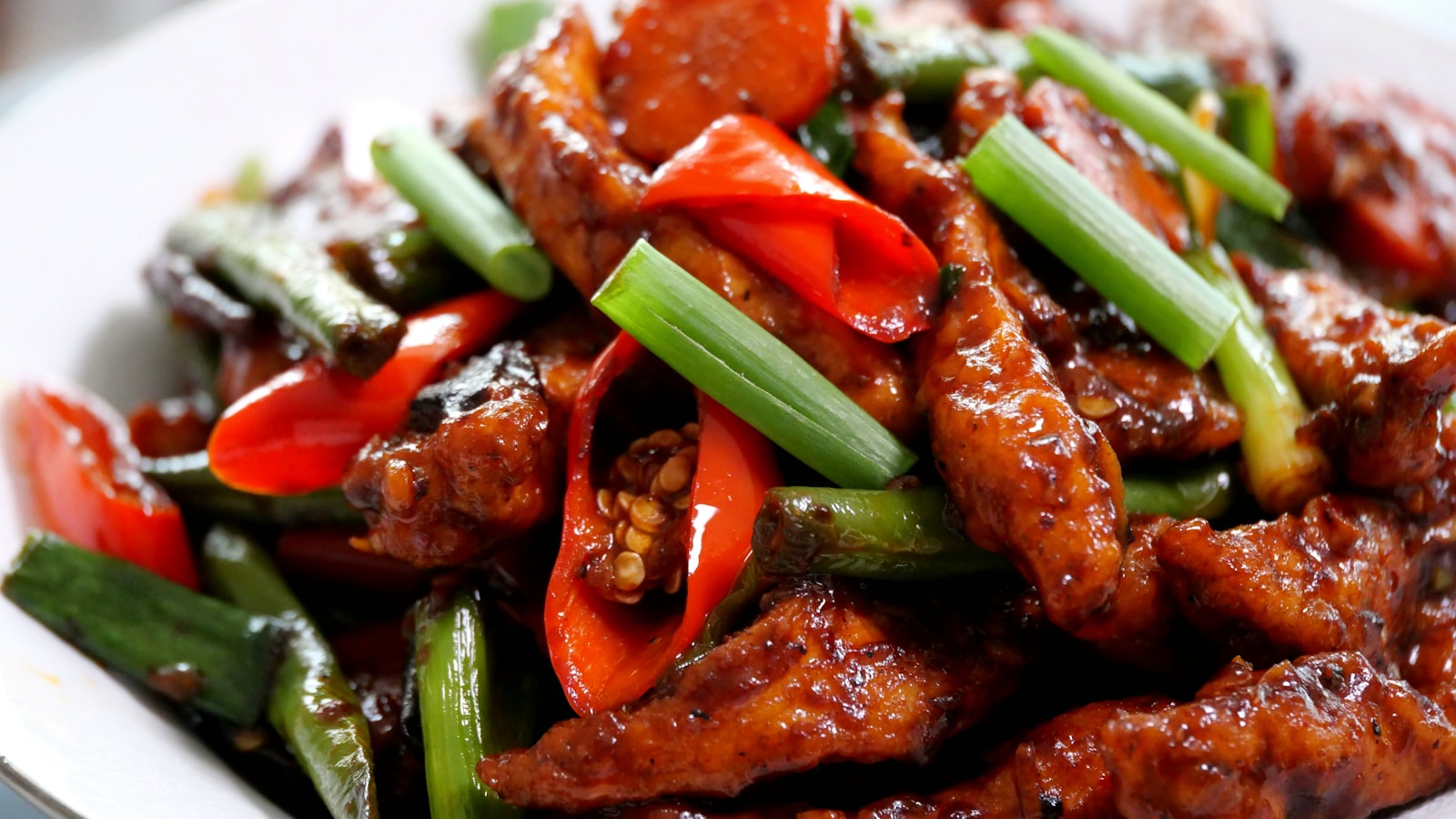
China Halal Food Guide: Eating Well as a Muslim Traveler
How to find halal food in China — the qingzhen sign, Lanzhou noodles, Muslim quarters, key phrases, and the most halal-friendly cities.
Eating halal in China is very doable — a nationwide network of 清真 (qingzhen) restaurants, Lanzhou noodle shops and Muslim quarters makes it one of the easier dietary needs to meet. The key is knowing how to spot halal places, which dishes to order, and the handful of phrases that clear up doubt. This guide covers all of it.
The essentials: what 清真 means on the ground
Halal food in China is marked with the Chinese character 清真 (qīngzhēn), literally “pure and true.” You will see it on restaurant signs, storefronts and packaged foods, and it is your single most useful tool for eating safely.
- 清真 restaurant sign — usually green with white characters, often alongside Arabic script. It means the establishment serves halal food.
- 清真 product label — printed on packaged snacks, instant noodles and frozen food, certifying that specific product.
- What it covers — meat slaughtered per Islamic rules, no pork, no alcohol in cooking. Standards are set by local Islamic associations, so they are consistent nationwide but not identical to every international halal certification.
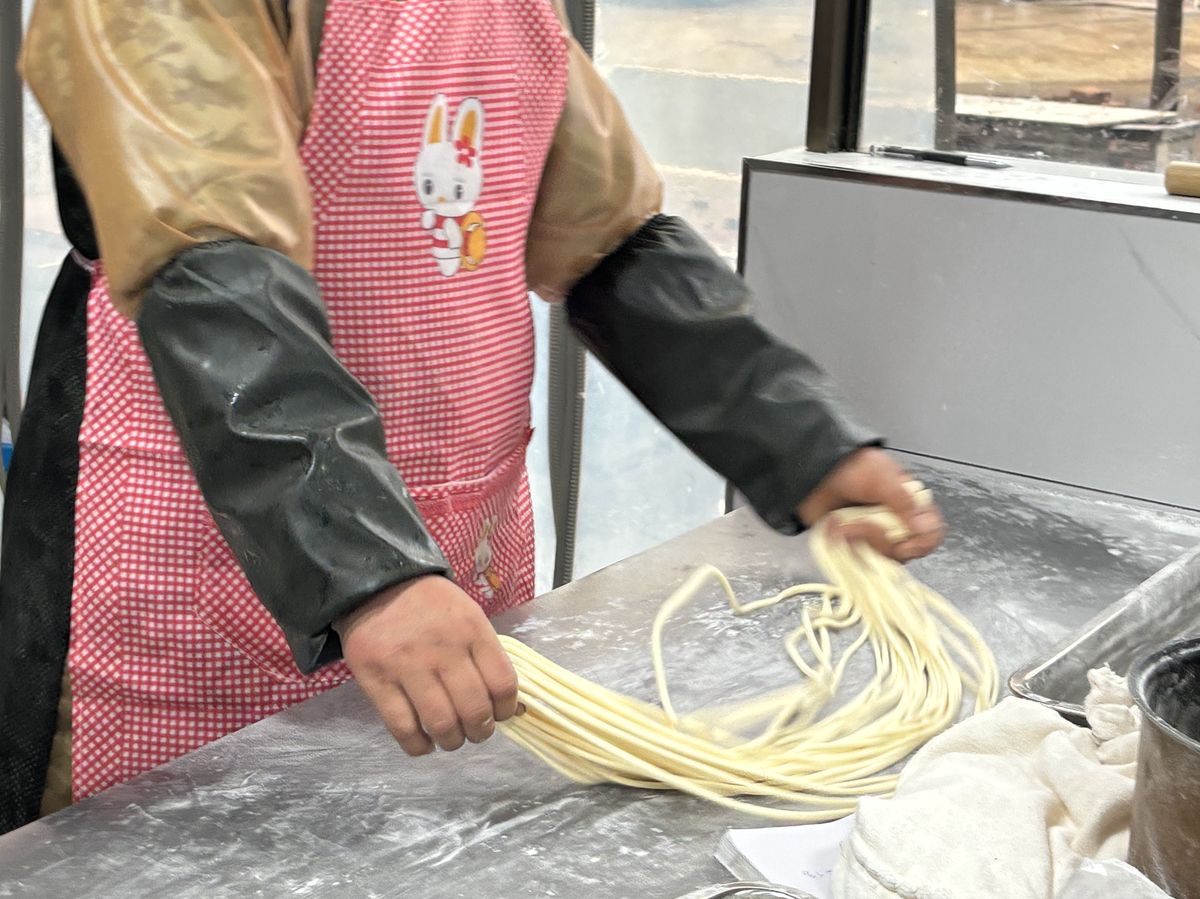
Lanzhou lamian (hand-pulled beef noodle soup) shops are the most reliable halal meal in China — they exist in almost every city and town.
How halal food works in China
China’s Muslim community is large — around 20 to 25 million people, mostly Hui and Uyghur — and halal food is a mainstream category, not a niche. That creates a practical advantage for Muslim travelers: a genuine restaurant infrastructure that covers everything from street snacks to sit-down banquets.
The most common halal formats you will encounter:
- Lanzhou lamian shops (兰州拉面) — the workhorse. Hand-pulled beef noodle soup, thin or thick noodles, clear beef broth, chili oil on the side. Found in every city, cheap (roughly ¥15–30 per bowl — estimate, prices change) and almost always run by halal-observant families.
- Xinjiang restaurants (新疆餐厅) — lamb-forward Uyghur cooking: lamb kebabs (羊肉串), hand-pulled laghman noodles, big rice pilaf plates, naan bread and milk tea. Common in every major city and across the northwest.
- Muslim quarters and streets — historic neighborhoods where halal food concentrates: Xi’an’s Muslim Quarter, Beijing’s Niujie, Shanghai’s Huxi Muslim Quarter, Lanzhou’s city center and Kashgar’s old town.
- Halal hotel restaurants — many international and Chinese chain hotels either have a halal kitchen or will arrange one with notice; useful in smaller cities.
- Halal hotpot — beef and lamb hotpot is common in cities with large Muslim populations; ask for a clear broth and confirm the dipping sauce contains no pork or alcohol.
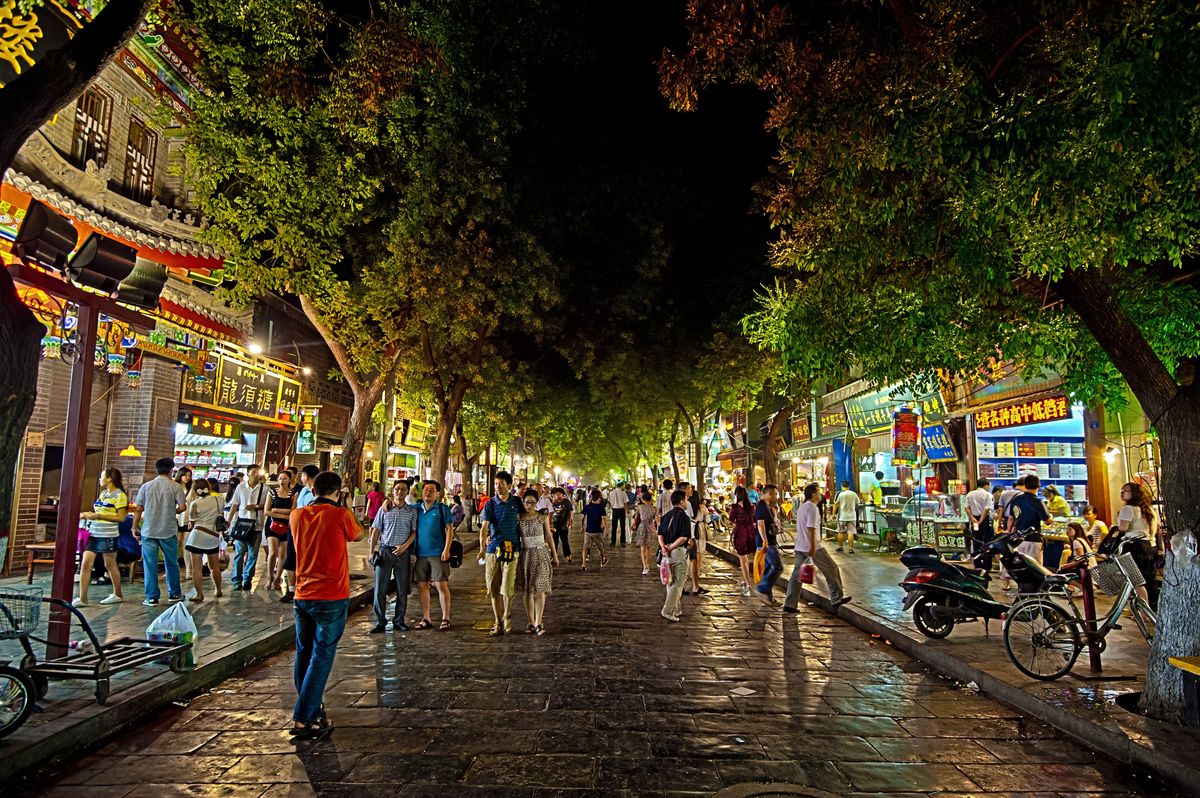
Xi’an’s Muslim Quarter is the country’s most famous halal food street — lamb kebabs, steamed buns and sweets line the alleys around the Drum Tower.
What to know before you go
A few realities of halal dining in China are worth understanding up front, because they change how you should order.
- Certification varies. A 清真 sign in a chain restaurant in one city does not guarantee the same standard in another branch. Confirm at the counter when it matters.
- Cooking oil and stock. Some restaurants fry or cook with lard or pork-based stock even when the meat on the plate is beef or lamb. Saying 不要猪油 (no lard) and asking 是清真的吗?(is this halal?) clears this up.
- Pork sneaks in. Even in “vegetable” dishes and some sauces, small amounts of pork or pork fat can appear. This matters if you follow strict halal; it is exactly why the confirmation phrases below are worth memorizing.
- English is limited outside big cities. The written phrases and the 清真 search on Dianping do the heavy lifting.
- Alcohol — even in many non-halal restaurants, cooking wine (料酒) appears in marinades. At 清真 places it should not, but asking 没有料酒吧?(no cooking wine?) is a useful extra check in places that aren’t clearly halal.
For the broader picture of traveling as a Muslim visitor — mosques, prayer facilities and cultural notes — see our dedicated guide to Muslim travelers in China.
Practical tips: phrases that work
Save these to your phone or write them on a card:
- 清真餐厅 — halal restaurant
- 我不吃猪肉 — I don’t eat pork
- 不要猪油 — no lard / pork fat
- 是清真的吗?— is this halal?
- 不要料酒 — no cooking wine
- 谢谢 — thank you
Ordering pattern that works: point at the 清真 sign, say 清真? (halal?) and 不要猪肉 (no pork). In a Lanzhou noodle shop this is usually unnecessary — the place is halal by definition — but in a restaurant that serves mixed menus, the confirmation takes five seconds and removes the doubt.
Using Dianping: open the app, search 清真, and filter by rating and distance. The reviews are in Chinese, but the rating stars and photo-heavy menus are universal. Pair it with a translation app that reads Chinese text live from your camera.
Where halal is easiest: the northwest (Xinjiang, Gansu, Ningxia, Qinghai) has the densest halal food culture; the old Silk Road cities of Kashgar and Xi’an are halal strongholds. Beijing’s Niujie area and Shanghai’s Huxi Muslim Quarter are the best bets in the two biggest cities.
A day of halal eating in practice
To make this concrete, here is what a realistic halal food day looks like on the road:
- Breakfast — at a hotel that serves halal (ask at check-in), or at a nearby 清真 bakery or Lanzhou noodle shop. Many halal restaurants serve a simple breakfast of noodles, soup or flatbread; several Chinese hotel chains now mark halal breakfast corners.
- Lunch — a Lanzhou lamian bowl or a Xinjiang pilaf-and-kebab plate. Both are quick, cheap and filling, and the shops are everywhere. If you are in Xi’an, the Muslim Quarter lunch scene — lamb paomo (羊肉泡馍, a lamb-and-bread stew you crumble yourself) and roujiamo — is unmissable.
- Dinner — halal hotpot with a clear broth and lamb, or a sit-down Xinjiang restaurant with kebabs, laghman noodles and naan. In big cities, halal restaurants also serve versions of Sichuan classics like cumin lamb and dry-fried beef.
- Snacks — supermarkets and convenience stores carry a surprising range of 清真-labeled instant noodles, biscuits and drinks. Reading the label is easy: look for the 清真 mark on the front.
One more practical note: in Muslim-majority regions of the northwest — Xinjiang, Gansu, Ningxia and Qinghai — nearly every restaurant is halal, and the food culture is outstanding. If halal dining is a big priority for you, weighting your itinerary toward the Silk Road cities of Kashgar and Xi’an rewards the effort.
Common mistakes to avoid
- Assuming every noodle shop is halal. Lanzhou lamian shops are, but generic noodle restaurants are not — look for the 清真 sign before sitting down.
- Trusting the sign without confirming the dish. A restaurant can be 清真 overall and still have a dish that surprises you. If a specific dish matters, confirm it.
- Forgetting that “vegetable” dishes may use pork fat. Strictly halal diners should treat any unmarked dish as potentially cooked with lard until confirmed.
- Not carrying a written card in smaller towns. English and even Chinese pronunciation can fail you; a printed card with 清真餐厅 and 我不吃猪肉 works everywhere.
- Skipping Dianping. It is the fastest way to find well-rated halal places in any city — worth installing before you land. For other app setup, see our China apps guide.
Where halal food fits in your China trip
Halal dining rarely limits your itinerary. In practice, it changes three things:
- City selection — you will eat best along the Silk Road and in cities with Muslim quarters, but you will never go hungry in Beijing, Shanghai, Chengdu or Guangzhou.
- Meal planning — a little planning helps for long train days. Pack a few halal snacks (many instant noodles and biscuits carry 清真 labels) in case the only option at a station is a pork-heavy canteen.
- Language prep — the five phrases above remove almost all friction. If you plan to eat out frequently, our dietary needs guide has the fuller phrase list and covers halal, vegetarian and allergy communication together.
Costs are similar to eating out generally: a Lanzhou noodle bowl runs about ¥15–30, a Xinjiang kebab meal around ¥30–60, and a nicer halal restaurant meal ¥60–120 per person (estimates — prices change and vary by city). The main premium is in hotel restaurants, which are convenient but cost more than street-level places.
Last updated: August 2026. Halal certification and restaurant standards vary by establishment — confirm with the restaurant and check current guidance for your travel dates before you go.
Frequently Asked Questions
Is halal food easy to find in China?
Yes, much easier than many travelers expect. China has a large Muslim population and a nationwide network of 清真 (qingzhen) restaurants. Lanzhou beef noodle shops and Xinjiang restaurants are the most reliable, and cities with historic Muslim quarters — Xi'an, Beijing, Shanghai, Lanzhou and Kashgar — have the densest halal options. See our full guide to Muslim travel in China for more.
What does the 清真 sign actually mean?
清真 (qīngzhēn) is the Chinese term for halal, and the sign marks food prepared to Islamic standards. On restaurants it usually means the whole kitchen is halal; on individual products or menu items it certifies that dish or product. When in doubt, confirm with the staff that there is no pork, and remember that certification bodies vary, so standards can differ between places.
Which dishes are safest to order?
Beef and lamb noodle soups from Lanzhou lamian shops, Xinjiang kebabs (羊肉串, yang rou chuan), pulled noodles, hand-pulled beef noodles, naan bread, and halal hotpot. Stick to beef, lamb, chicken and fish and ask about the cooking oil — some kitchens fry with pork fat even in non-pork dishes.
Are there halal restaurants in every Chinese city?
Lanzhou lamian shops, which are widely halal, exist in almost every city and town in China — there are tens of thousands of them. Dedicated Muslim restaurants and halal hotel restaurants are common in big cities and along the old Silk Road. In small towns, the Lanzhou noodle shop is usually your safest bet.
Can I use apps to find halal food?
Yes. Dianping (大众点评), the main restaurant review app, lets you search 清真 near your location and read Chinese reviews. TripAdvisor and HalalTrip also have China coverage. For a backup, carry a card that says 清真餐厅 (halal restaurant) and 我不吃猪肉 (I don't eat pork) to show taxi drivers and restaurant staff.