
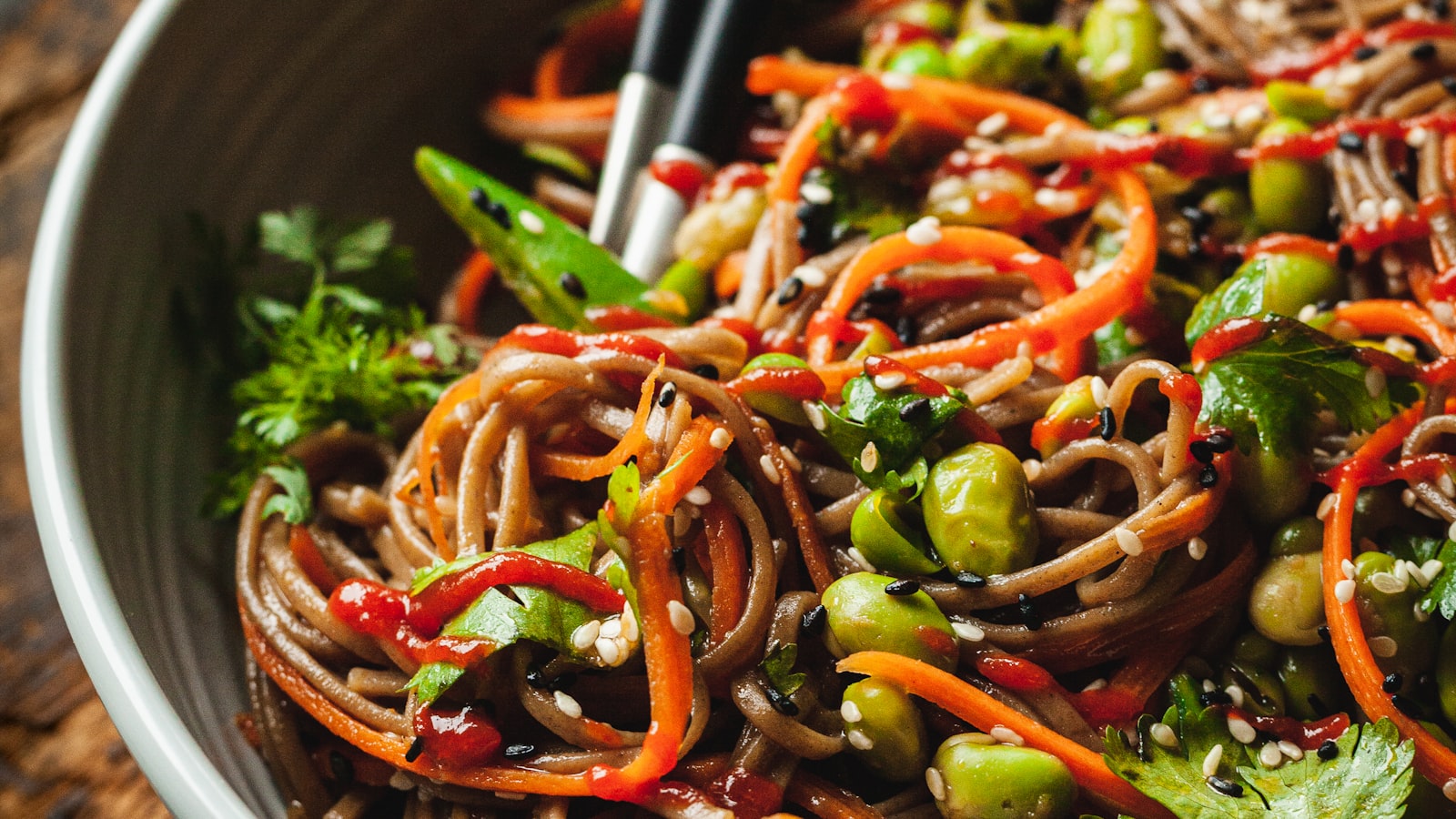
Wuhan Hot Dry Noodles (Reganmian): A City in a Bowl
Wuhan hot dry noodles — reganmian — are the breakfast heart of the city: sesame-paste noodles, no broth, and a ritual every local knows. Here's what they are and where to eat them.
Wuhan hot dry noodles — reganmian — are the breakfast heart of the city: sesame-coated noodles with no broth, eaten standing at a street stall by millions every morning. Here’s what they are and where to try them.
Wuhan hot dry noodles (热干面, reganmian) are to Wuhan what a bowl of pho is to Hanoi: the city’s essential morning meal, eaten daily by locals and sold at breakfast stalls on almost every street. The formula is simple — wheat noodles, boiled, dried, and dressed in a rich sesame-paste sauce with soy, chili and pickled radish — but the execution is everything. The noodles must be springy, the sesame paste nutty, and the whole bowl finished in seconds at the stall before you eat it standing up.
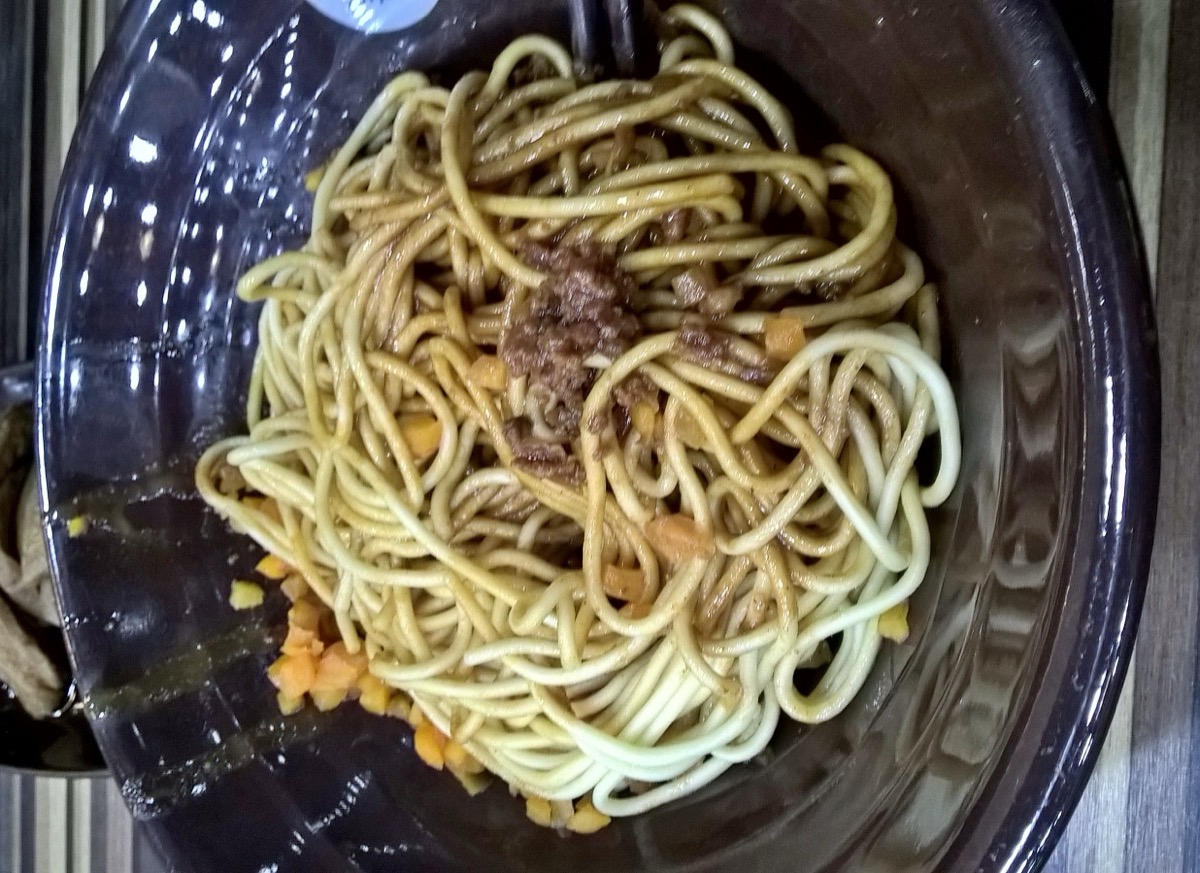
What’s actually in the bowl
Hot dry noodles are all about the coating:
- The noodle — wheat noodles, boiled then tossed in sesame oil so they stay separate and springy.
- The sesame paste — the soul of the dish; rich, nutty, and clinging.
- Soy sauce and sesame oil — the savory base.
- Chili oil — optional heat, added to taste.
- Pickled radish and scallion — the crunch and freshness on top.
- The mix — every strand gets coated at the stall, so you eat it as-is, quickly.
Why Wuhan claims this bowl
Hot dry noodles were born in Wuhan in the 1920s, a product of the city’s humid climate and fast street life. The story goes that a vendor’s noodles dried out on a busy day, and rather than waste them he coated them in sesame oil and dressed them with sesame paste — the result caught on, and a city icon was born. The famous brand Cai Lin Ji (蔡林记) has been selling the noodles since 1928, and today hot dry noodles are the standard answer to ‘what’s for breakfast in Wuhan?’ — a bowl most locals eat several times a week.
How to eat them like a local
- Go early — hot dry noodles are a morning dish; the best bowls sell out of the breakfast rush.
- Eat standing — many stalls serve you a bowl to eat right there at the counter; it’s part of the ritual.
- Mix fast — the sesame paste sits on top; stir it through thoroughly before the noodles cool.
- Add chili to taste — start with a little; you can always ask for more.
- Pair with soy milk — a cold glass of doujiang (soy milk) is the classic side to wash it down.
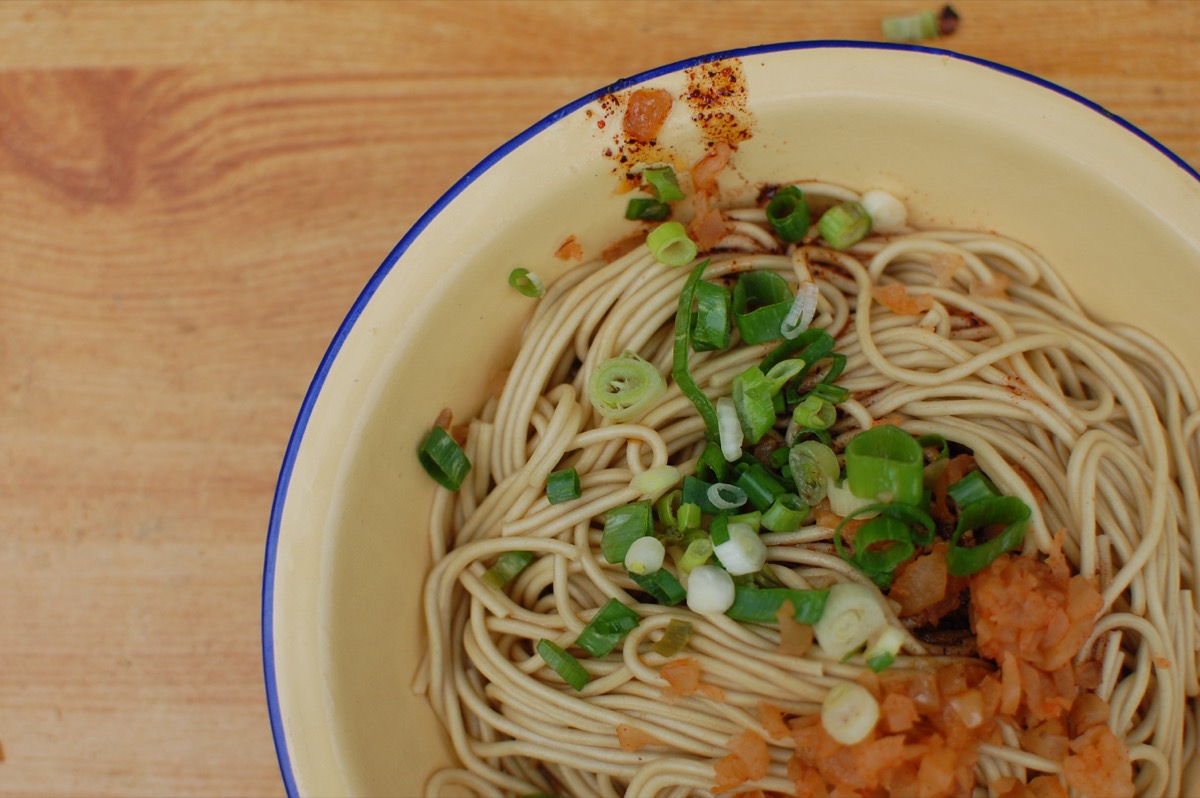
Where to eat hot dry noodles in Wuhan
Wuhan’s breakfast culture means you’re never far from a good bowl. The most famous snack destination is Hubu Alley (户部巷), a narrow street of food stalls in the old city where hot dry noodles are front and center — tourist-friendly with picture menus and plenty of seating. The historic Cai Lin Ji brand has outlets across the city if you want the classic version with the story attached. Beyond the famous spots, the real Wuhan ritual is a neighborhood breakfast stall at 7 or 8 a.m., where the queue of office workers is your quality guarantee. See the Wuhan guide for the wider food picture.
What it costs
A bowl of hot dry noodles in Wuhan is remarkably cheap — typically ¥8–15 (estimate). It’s designed as a fast, affordable breakfast, and even the fanciest versions stay well under a meal price in a restaurant. Cashless payment is standard at the stalls.
A few practical notes
- Vegetarian: the classic is already meat-free — sesame paste, pickled radish and seasonings. It’s one of the friendliest breakfast options for vegetarian travelers.
- Meal timing: breakfast is the window — roughly 6 to 10 a.m. at most stalls. Some shops serve it all day, but early is the authentic experience.
- Texture: the noodles are chewy and slightly firm; that’s the intended texture, not undercooking.
- Explore wider: for more breakfast classics see our Chinese breakfast guide, and for where Wuhan sits among China’s noodle bowls, the noodles in China map.
A morning on a Wuhan breakfast street
To understand hot dry noodles, stand on a Wuhan street between seven and nine in the morning. Vendors work from mobile carts and tiny storefronts, boiling batches of noodles on demand, coating them in sesame oil, and tossing each bowl in sesame paste with a practiced flick of the wrist. Office workers queue with their phones out, collect their bowl, and eat standing on the curb or walking to the metro. The whole exchange takes under a minute. It’s the most efficient, most loved breakfast ritual in China, and it’s happening on thousands of streets at once — a city that moves to the rhythm of the noodle.
The bigger Wuhan breakfast spread
Hot dry noodles anchor the Wuhan breakfast, but locals rarely stop at just one thing. The full spread is a sampler: hot dry noodles for the main event, a doupi (glutinous rice wrapped around mushrooms and pork, pan-fried into a golden square), a bowl of mianwo (a crispy fried dough spiral), and a glass of laojiu (sweet rice wine) to drink. You can graze your way down a street collecting pieces from different stalls — that’s the Wuhan way. Our Chinese breakfast guide covers the full national breakfast scene, and the Wuhan guide maps where to try the spread.
Why sesame, why dry
The genius of hot dry noodles is in the engineering. Wuhan is one of China’s hottest cities, and a broth noodle sits heavy in the summer humidity — so the city built its signature bowl without broth, relying on sesame paste to carry richness instead. The sesame oil coating does double duty: it keeps the boiled noodles from sticking together as they wait, and it lets the vendor dress a bowl in seconds, which is exactly what a morning rush demands. It’s a dish that was designed, in effect, around the constraints of a fast, hot, working city — and that’s why it feels so inevitable in Wuhan.
When to go
Hot dry noodles are a morning dish, so your timing decides the experience. Between 6 and 8 a.m. you’ll see the true ritual — the stalls at full speed, the queues of office workers, the city waking up bowl by bowl. Arrive by 9 a.m. and the best shops start winding down, though many sell through the late morning. If you sleep in, you can still find the day-long snack stalls that serve hot dry noodles as a quick bite at any hour, but they won’t have the same morning energy. Go early, go hungry, and you’ll understand why this city lines up before work.
The honest takeaway
Hot dry noodles are the simplest bowl on this list and one of the most memorable — a sesame-coated, broth-free noodle that explains a whole city’s morning rhythm in one bite. They’re cheap, fast, vegetarian-friendly, and easy to order. Find a busy stall in Wuhan, mix your bowl, and join the queue of locals who eat this every single day.
Last updated: August 2026. Prices are estimates and change — confirm before you go.
Frequently Asked Questions
What are Wuhan hot dry noodles?
Hot dry noodles (reganmian) are Wuhan's signature breakfast: wheat noodles that are boiled, drained and coated in sesame oil, then tossed with sesame paste, soy sauce, chili oil, pickled radish and scallions. The name means exactly what it says — served hot, and dry, with no broth — and the sesame paste gives every strand a rich, nutty coating.
Why are they called 'hot dry' noodles?
Because they're eaten hot and served dry — the noodles are cooked, coated in sesame oil so they don't stick, and then dressed with sesame paste and seasonings rather than a soup. It's a breakfast built for speed: a vendor can hand you a dressed bowl in seconds, and it travels well on a busy street.
Where is the best place to eat hot dry noodles in Wuhan?
You'll find them at breakfast stalls and shops all over Wuhan — it's the city's default morning meal. Hubu Alley (户部巷) is the most famous snack street, and the old brand Cai Lin Ji (蔡林记) has outlets across the city. Any shop with a busy breakfast queue is doing it right; follow the locals.
How spicy are hot dry noodles?
Mild to medium, depending on how much chili you add. The base is nutty sesame paste with a savory soy backbone — the chili oil is a finishing touch you control. It's a much friendlier breakfast than Sichuan's numbing-spicy bowls, which makes it a great first stop for travelers.
Are hot dry noodles served with soup?
No — the classic is completely dry. Many locals pair their bowl with a side of soy milk (doujiang) or a small soup to wash it down, but the noodles themselves are broth-free. The dried noodles are the point: the sesame paste clings to every strand.