
Beijing Zhajiangmian: The City's Signature Noodles, Explained
Zhajiangmian is Beijing's signature noodle — chewy noodles in a savory fried soybean-paste sauce, piled with fresh vegetables. What it is and where to eat it.
Beijing zhajiangmian — fried sauce noodles — is the city’s own bowl: chewy noodles in a dark, savory soybean-paste sauce, piled high with fresh vegetables. It’s rich, mild, and one of the friendliest noodles in China.
Zhajiangmian (炸酱面) is the noodle that Beijing locals grew up on. The star is the sauce — a dark, intensely savory paste made by slowly frying fermented soybean paste with minced pork until it turns deep and glossy. The noodles are thick and chewy, and on top come fresh vegetables: cucumber shreds, bean sprouts, radish and soybeans, which you stir into the bowl yourself. It’s hearty, completely mild, and utterly Beijing.
The sauce is everything
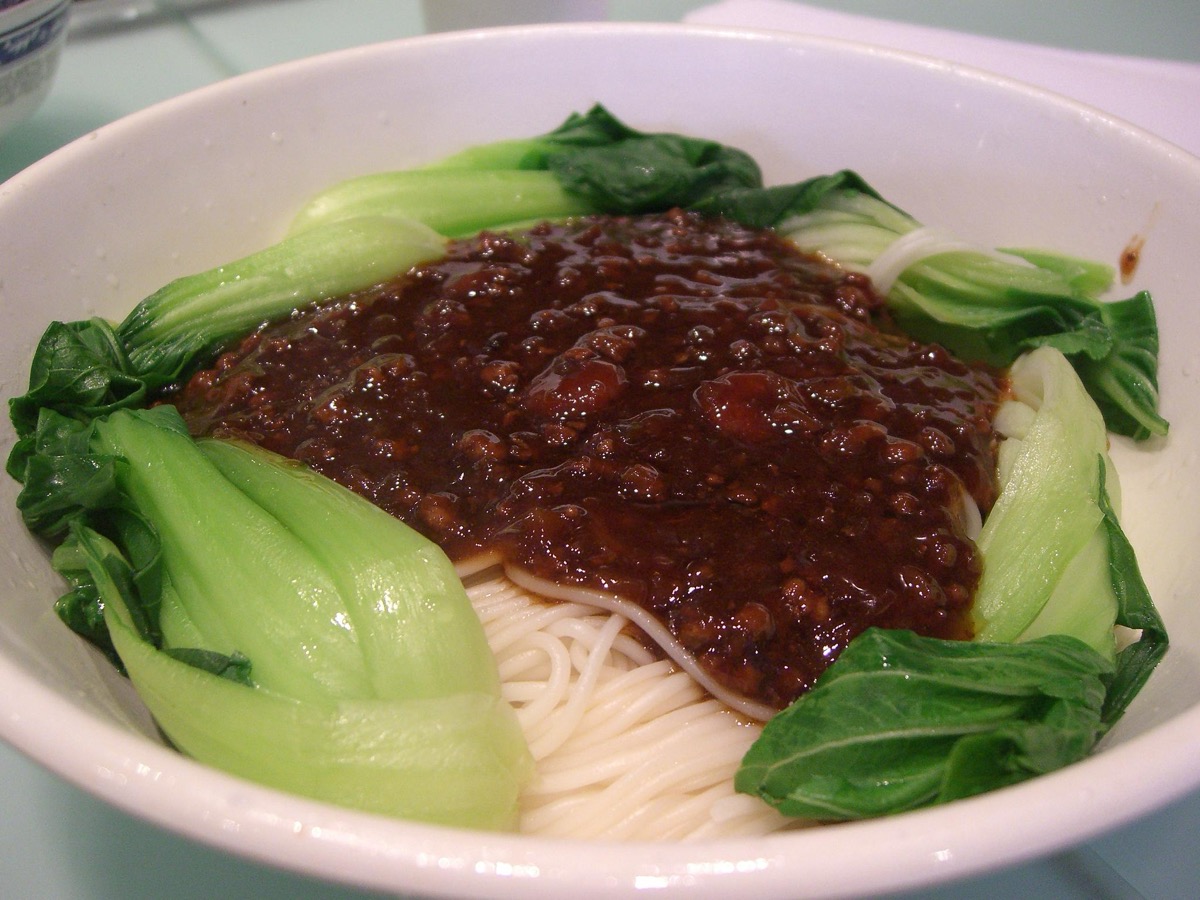
The heart of zhajiangmian is the ‘zha jiang’ — the fried paste. It’s made by cooking fermented soybean paste (huangdou jiang) with minced pork and often some scallion and ginger, slowly, until the paste darkens and the oil separates slightly. The result is thick, savory, and slightly salty, with a deep fermented umami you won’t find in any other noodle sauce. Good zhajiangmian is defined by this sauce — dark, glossy and rich enough to coat every strand.
The vegetable ritual
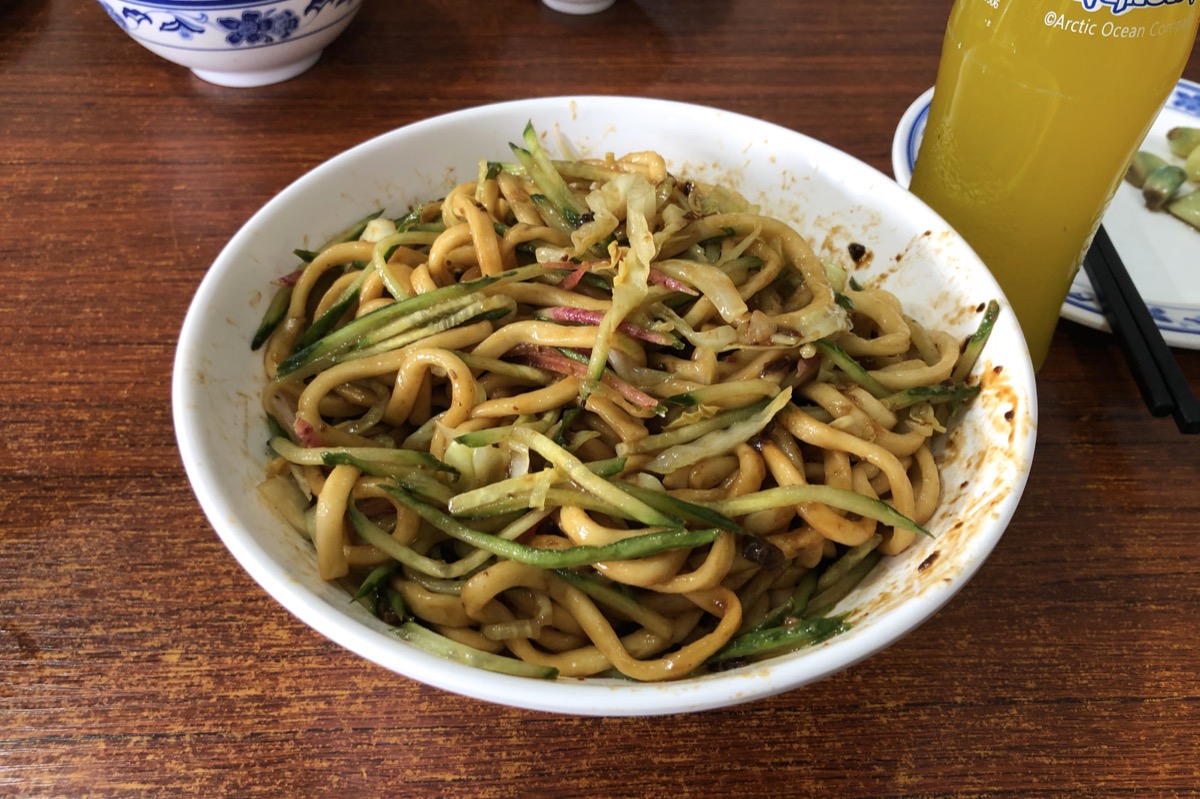
Part of the charm is how you eat it. The bowl arrives with the sauce and noodles underneath and a colorful pile of fresh vegetables on top — cucumber (shredded), bean sprouts, white radish and green soybean are the classic four, sometimes with chives or coriander. You stir everything together at the table, coating the noodles in sauce and picking up the crunch of the vegetables in every bite. The fresh toppings balance the rich, salty sauce — that contrast is the whole point.
Where zhajiangmian comes from
Zhajiangmian is a home-style Beijing dish with roots in northern Chinese noodle tradition — the fermented soybean paste that anchors it is a staple of northern cooking. It’s the kind of bowl families made at home, and it became a restaurant classic as Beijing’s noodle shops grew. Today you’ll find it across the city, from casual counters to old Beijing-flavor restaurants, and it’s one of the dishes locals order when they want comfort food.
Where to eat zhajiangmian in Beijing
You won’t have to hunt — zhajiangmian is on the menu at most Beijing restaurants and all the city’s noodle shops. For the traditional version, look for shops that advertise ‘lao Beijing’ (old Beijing) style, where the dish is treated with respect: proper hand-cut noodles, a sauce made to order, and the full vegetable platter. Busy noodle shops with picture menus are always a safe bet for a solid, cheap bowl. The Beijing guide has the full food map, and our northern China food guide covers how zhajiangmian fits the region’s bigger picture.
How to order like a local
- Order the classic — ‘zhajiangmian’ is the dish; most shops also offer a smaller or larger size.
- Mix it yourself — stir the sauce and vegetables through the noodles thoroughly before eating.
- Add vinegar if you like — a splash of Chinese vinegar is a common, optional twist.
- Pair it — zhajiangmian is often served with a side of Chinese pickles or a bowl of soup.
- Payment — cashless is standard.
What it costs
A bowl of zhajiangmian in Beijing is typically ¥20–45 (estimate). Casual noodle shops sit at the lower end; old Beijing-flavor restaurants run higher, with more elaborate versions and a bigger vegetable spread.
A few practical notes
- Mild and family-friendly: no chili, rich and savory — the easiest noodle for kids or spice-averse eaters.
- Vegetarian: the sauce usually has pork, but a soybean-only version is often available; ask for ‘sude’.
- Substantial: a bowl is a full meal — thick noodles and rich sauce are filling.
- Explore more: for the full noodle map of China, see our noodles in China guide.
The technique behind the paste
The ‘zha’ (fry) in zhajiangmian is the whole art. The cook starts with fermented soybean paste, thins it slightly, and slowly fries it with minced pork, scallion and ginger over gentle heat. The slow fry is what transforms the paste: it deepens in color from tan to a dark, glossy mahogany, and the oil separates out around the edges — the signal that the sauce is done. This is a sauce that can’t be rushed, and a good shop treats it as a point of pride. When you see that dark, glistening sauce, you’re looking at half an hour of careful cooking that elevates a simple bowl into something you remember.
Zhajiangmian across northern China
While Beijing claims zhajiangmian, the dish has close relatives all over the north. The fermented soybean paste that anchors it is a northern staple, and variations appear from Tianjin to the northeast, each with a slightly different paste or topping. What unites them is the same logic: rich, salty, fermented sauce over chewy wheat noodles, balanced by fresh vegetables. It’s home-style northern cooking in its purest form. For the wider northern picture — the dumplings, flatbreads and other wheat classics — see our northern China food guide and the noodles in China map.
The complete bowl, course by course
A proper zhajiangmian meal is more than the noodles. The bowl arrives with the sauce and noodles beneath and the vegetable platter arranged on top; you stir it all together yourself, then eat the chewy noodles coated in dark sauce with crunchy vegetables in every bite. Alongside, a Beijing restaurant will often bring a bowl of light soup and a small dish of pickles to reset the palate between bites. That structure — rich main, fresh crunch, clean soup — is classic Beijing table logic, and it’s why zhajiangmian feels complete rather than heavy.
When to go
Zhajiangmian is a lunch-and-dinner dish, and Beijing’s noodle shops are busiest at midday. Go for lunch and you’ll join the office-worker crowd ordering the classic; it’s fast, filling and served quickly, so even a busy shop turns the tables fast. Evening service is calmer and often a touch more relaxed — a good window for the old Beijing-flavor restaurants where the bowl is treated with ceremony. Whichever time you pick, a short queue at a zhajiangmian shop is a good sign: the sauce is made in batches, and a busy shop guarantees a fresh one.
How to eat it like a local
A few habits separate a first bite from a local one. Stir the bowl completely — sauce and vegetables should coat every strand evenly before you start. Eat the noodles in steady pulls rather than a hurried bite, so the thick sauce doesn’t overwhelm. Save a little of the vegetable crunch for the last mouthful, where it balances the sauce’s richness. And if the table has Chinese vinegar, a splash cuts the salt and brightens the whole bowl. Order a small dish of pickles or a bowl of soup alongside, and you’ll be eating the way Beijingers have for generations.
The honest takeaway
Zhajiangmian is Beijing comfort food — rich, mild, and satisfying in a way that needs no explanation. The dark fried sauce is unlike anything else in Chinese noodles, and the fresh vegetable toppings keep it from being heavy. It’s easy to find, easy to order, and easy to love. When you want a bowl that tastes like home in Beijing, this is it.
Last updated: August 2026. Prices are estimates and change — confirm before you go.
Frequently Asked Questions
What is zhajiangmian?
Zhajiangmian is Beijing's signature noodle dish: chewy wheat noodles topped with a dark, savory fried sauce made from fermented soybean paste and minced pork, then piled with fresh vegetable toppings like cucumber, bean sprouts, radish and soybean. 'Zha' means fried, 'jiang' means paste — the sauce is slowly fried until it turns dark and intensely savory.
Is zhajiangmian spicy?
No — it's completely mild. The sauce is savory and earthy from the fermented soybean paste, with no chili at all. That makes it one of the most approachable noodle dishes in China, especially for travelers who want big flavor without heat.
What are the vegetable toppings for?
The fresh vegetables — cucumber, bean sprouts, radish and soybean — are mixed into the noodles to balance the rich, salty sauce. It's the classic Beijing way: stir everything together so each bite gets crunch, freshness and the deep sauce flavor.
Where can I eat zhajiangmian in Beijing?
It's on almost every Beijing restaurant menu, from casual noodle shops to traditional Beijing-flavor restaurants. Look for 'lao Beijing' (old Beijing) style places, and don't overthink it — a busy noodle shop with picture menus is a safe bet. See the Beijing guide for the wider food map.
Is zhajiangmian a vegetarian dish?
The classic version has minced pork in the sauce, but the sauce itself is soybean-based and many shops can serve a meat-free version. Ask for 'bu yao rou' (no meat) or 'sude' (vegetarian) and it's usually easy to arrange.