
Northern Chinese Food: Wheat, Meat & Hearty Classics
Northern Chinese cuisine explained — Peking duck, jiaozi, hand-pulled noodles, lamb hotpot and the bread-and-dumpling heart of Beijing and beyond.
Northern Chinese food is the food of wheat and fire — dumplings, noodles, flatbreads and roast duck, built to feed through cold winters. It’s also the friendliest Chinese cuisine for a first visit.
For many travelers, northern Chinese food is their first taste of China — the Beijing tables of Peking duck, the dumpling shops on every corner, the hand-pulled noodles of Xi’an. It’s hearty, savory and deeply satisfying, and it rewards anyone who loves bread and meat. Here’s the map of the north’s table.
The foundation: wheat
The north grows wheat, and everything follows from that. Noodles, dumplings, flatbreads and steamed buns are the backbone of every meal — not rice. This is the biggest difference from the south, and the reason northern food feels familiar and filling. A northern table is built on starch in its most satisfying forms.
The classics of Beijing
- Peking duck (北京烤鸭) — the showpiece: lacquered, roasted, carved tableside, wrapped in thin pancakes with scallion and sweet bean sauce. A Beijing institution. See the Beijing guide.
- Jiaozi (饺子) — boiled dumplings, the northern comfort food. See our dumplings guide.
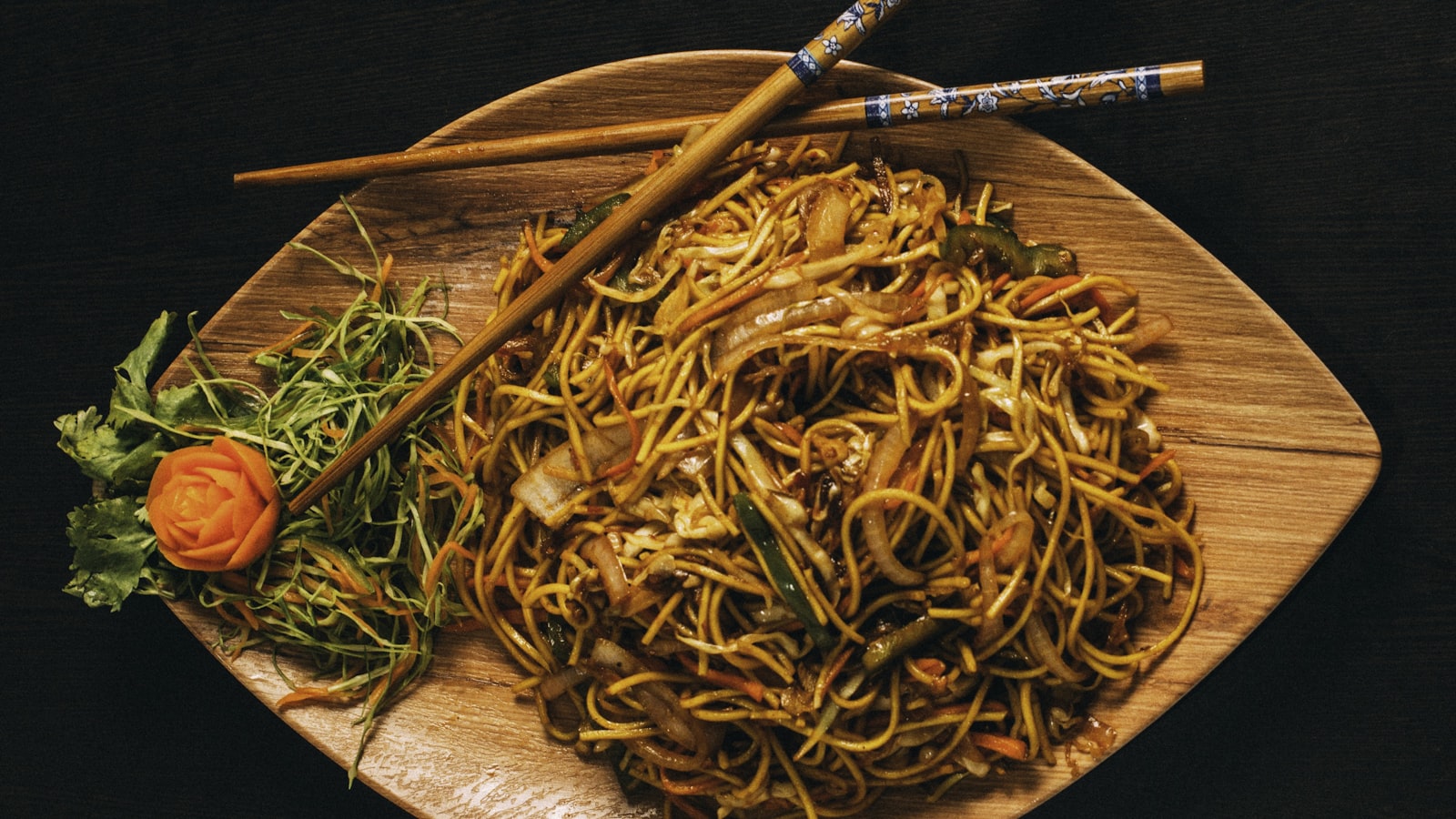
- Zhajiangmian (炸酱面) — chewy wheat noodles in a dark, savory fried soybean-paste sauce.
- Lamb hotpot (涮羊肉) — Beijing-style hotpot with a clear broth and a sesame-sauce dip; a winter classic. See our hotpot guide.
The noodle and barbecue heartland: the northwest
Heading west toward Xi’an and Lanzhou, the north gets its boldest flavors:
- Hand-pulled beef noodles (兰州拉面) — the national noodle icon. See our noodles guide.
- Roujiamo (肉夹馍) — ‘Chinese hamburgers’: shredded pork in a griddled flatbread.
- Lamb skewers — cumin-and-chili grilled lamb, especially in Xi’an’s Muslim Quarter.
- Biangbiangmian — the wide, hand-torn noodles of Shaanxi.
See the Xi’an guide for where to eat all of it.
The mother cuisine: Shandong
Shandong (Lu) cuisine is called the ‘mother of northern cooking’ — it shaped much of imperial cuisine. It’s hearty and garlic-forward: braised dishes, seafood along the coast (Qingdao’s oysters and clams), and the vinegar-and-garlic flavors of the interior. It’s less famous abroad but essential to understanding northern food.
A northern meal, top to bottom
A classic northern dinner might be: a plate of dumplings to start, a bowl of noodle soup or a braised meat main, and Peking duck as the centerpiece if you’re splurging. Everything is shared, portions are generous, and the flavors are savory and comforting. For dessert, try a sweet fermented rice or a red-bean pastry.
Practical notes
- Cost: a dumpling meal ¥20–60, a full duck dinner ¥100–200 per person (estimates).
- Payment: cashless — Alipay is the norm.
- Vegetarian: doable — vegetable jiaozi, cold noodles, stir-fried greens; say ‘sude’ (vegetarian).
- Pair with: a Cantonese meal for the southern contrast — see our Cantonese guide.
The cold-winter logic
Northern food makes sense once you feel a Beijing winter. Wheat, meat and fat are the fuel for cold months: dumplings, braised pork, lamb hotpot, and hearty soups designed to warm you from the inside. The generosity of portions and the richness of the cooking are a response to the climate. In summer the same food is lighter, but the northern table keeps its hearty character year-round — a point of pride for the region.
A day of northern eating
A good northern day starts with a savoury breakfast (jianbing or congee — see our breakfast guide), moves to a lunch of noodles or dumplings (see noodles and dumplings), and peaks at a dinner of Peking duck or a shared table of northern classics. Lamb hotpot fills a winter evening. The arc of the day is the cuisine in miniature: wheat, meat, warmth.
The north vs the south, once more
Northern food is the counterpoint to southern lightness. Where Guangzhou steams, Beijing roasts and braises; where the south seasons with freshness, the north seasons with soy, garlic and fermented bean paste. It’s the most useful comparison in Chinese food, and it explains why a northern meal feels so different from a Cantonese one. See our regional cuisines guide for the full map.
Practical northern tips
- Vinegar and garlic are the north’s seasoning signature — embrace them.
- Dumplings by the basket — the north’s best comfort food.
- Lamb hotpot in winter is a must.
- Xi’an’s Muslim Quarter — the northwest’s food highlight.
- Payment: cashless — Alipay.
The northern table, decoded
A northern meal is built on starch and meat, and the portions are generous. The structure: a starch (noodles, dumplings, flatbread), a meat dish (braised pork, roast duck, lamb), a simple vegetable dish, and often a soup. Garlic and vinegar appear more than chili. It’s hearty, direct cooking that feeds you properly — the food of a region that knows cold winters. Understanding this makes northern menus easy to read: you’re choosing a starch, a meat and a green.
Northern breakfasts
The north’s breakfast is savoury and substantial. Congee with pickles and a boiled egg is the gentle classic. Jianbing — the street crêpe — is the on-the-go staple. Baozi and youtiao with soy milk round out the morning. In the northeast, breakfast can be as hearty as lunch. See our breakfast guide for the full picture — northern breakfasts are the most filling in China.
Where the north gets bold
The boldest northern food comes from the northwest — Xi’an, Lanzhou, and the Muslim-influenced cooking of Shaanxi and Xinjiang. Here, cumin and chili appear on lamb skewers, in roujiamo and in the region’s noodle bowls. It’s the spiciest and most aromatic corner of the north, and a food highlight of any trip. See the Xi’an guide for the Muslim Quarter, which is the best single street for it.
Northern food for the seasons
Northern food shifts with the weather. Winter is the heart of the cuisine: lamb hotpot, braised dishes and rich soups are built for the cold. Summer turns lighter — cold noodles, cucumber salads and beer. Spring and autumn are the mild middle. If you’re visiting Beijing in winter, a lamb hotpot or a bowl of braised pork is the perfect warm-up; in summer, the cold noodle shops come into their own. Season matters more here than in the temperate south.
A northern food memory to take home
Most travelers leave the north with one dish they’ll never forget — usually Peking duck, carved tableside and wrapped in pancakes. But the quieter souvenirs are just as good: the dumpling shop that becomes your regular, the lamb hotpot that warms a Beijing evening, the hand-pulled noodle you watched get made. Northern food is hearty and honest, and it lingers in memory precisely because it’s so unpretentious. Eat it like a local and it’ll be one of the best parts of your trip. And whatever you order, the north’s generous portions and hearty flavors will stay with you long after the trip. A northern meal is a warm, generous welcome to China — and one you’ll want to repeat. That hearty welcome is exactly why the north is where many China food memories begin.
Prices as of August 2026 — confirm current rates before you go.
Frequently Asked Questions
What defines northern Chinese food?
Geography. The north grows wheat, so the diet is built on noodles, dumplings, flatbreads and steamed buns — with meat (pork, lamb, beef) and simple, savory sauces. It's heartier and more filling than southern food, designed for cold winters. Think Peking duck, jiaozi, hand-pulled noodles and lamb hotpot.
Is northern Chinese food spicy?
Generally no. Northern cooking favors savory, hearty flavors — soy, garlic, fermented bean paste — over chili. Beijing and Shandong food is mild compared to Sichuan and Hunan. The exception is the northwest (Xi'an, Lanzhou, Xinjiang), where cumin and chili appear in the lamb and noodle dishes.
What are the must-try northern dishes?
Peking duck (the showpiece), jiaozi (boiled dumplings), zhajiangmian (noodles in fried soybean sauce), lamb hotpot (Beijing-style clear broth), roujiamo ('Chinese hamburgers') and hand-pulled noodles in Xi'an, and the hearty braised dishes of Shandong. See our [dumplings guide](https://chinotrips.com/culture/dumplings-guide/) and [noodles guide](https://chinotrips.com/culture/noodles-in-china/) for details.
Where should I eat northern food?
Beijing is the anchor — Peking duck, jiaozi and lamb hotpot are at their best there. Xi'an and the northwest are the noodle and barbecue heartland. Shandong (Qingdao, Jinan) is the home of the 'mother cuisine' of the north. See our [Beijing guide](https://chinotrips.com/beijing/) and [Xi'an guide](https://chinotrips.com/xian/).
Is northern food good for a first-timer?
Very. The flavors are approachable — savory rather than fiery — and the dishes are familiar in concept: dumplings, noodles, duck, bread. If you're easing into Chinese food, the north is a gentle place to start, and the food is hearty enough to keep you full.