
Terracotta Army Visiting Guide (2026): Getting There & Route
A complete Terracotta Army visiting guide — getting from Xi'an, what to see in the three pits, a sensible route and practical tips.
The Terracotta Army is China’s greatest archaeological spectacle — thousands of life-size warriors guarding an emperor’s tomb for over 2,000 years.
Discovered by farmers in 1974 near Xi’an, the site is the reason many travelers visit the ancient capital at all. This guide covers the logistics: getting there, what you’ll see, and how to make the visit easy.
Overview
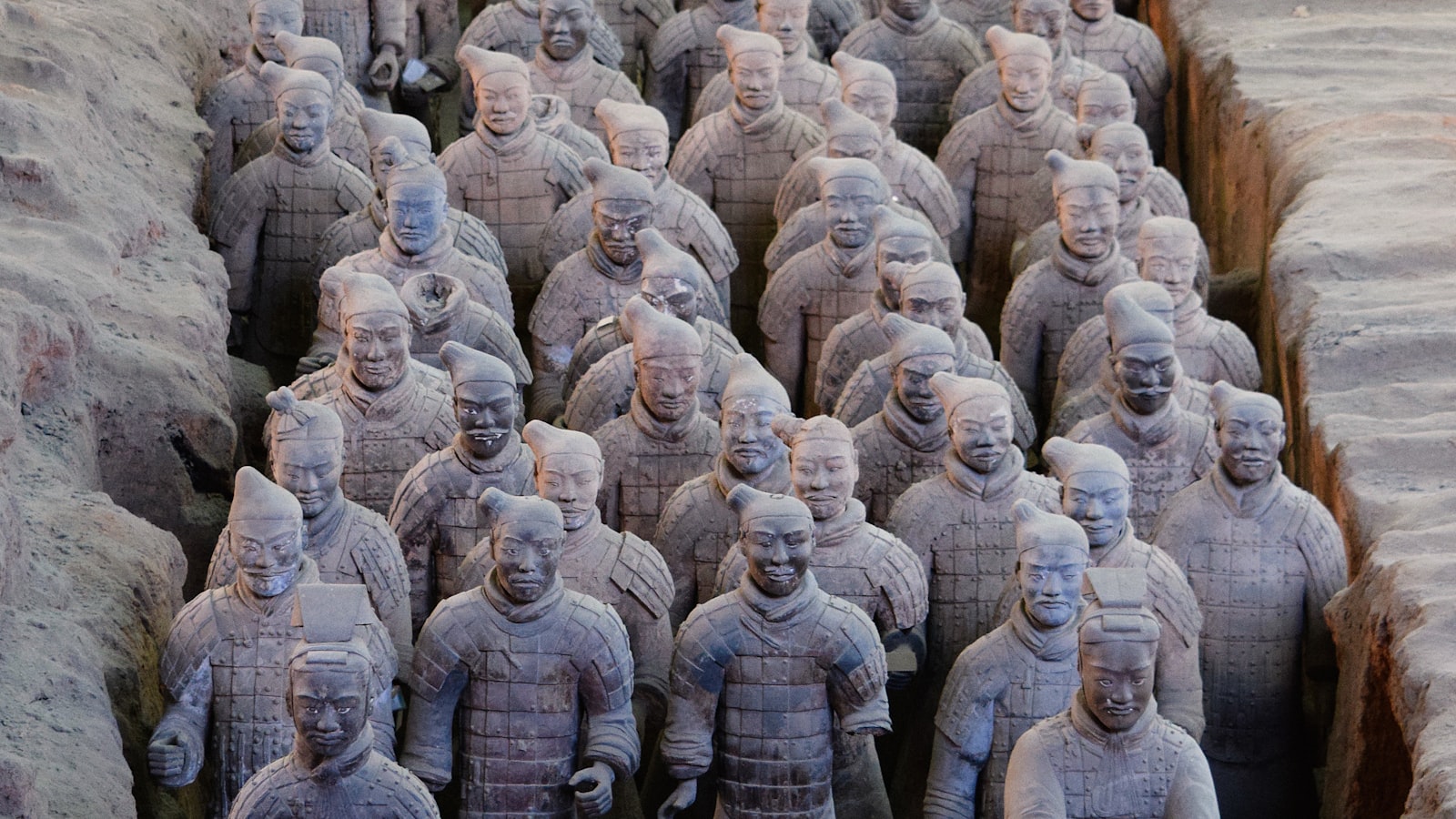
The Terracotta Army is part of the Mausoleum of the First Qin Emperor in Lintong, about 40km east of Xi’an. The emperor Qin Shi Huang, who unified China in 221 BC, built himself an underground army of thousands of clay soldiers, chariots and horses — each with individual features. Much of the site remains unexcavated; what you see today is a fraction of the whole.
Getting there
- Tourist bus: the straightforward option — direct buses run from Xi’an city to the site.
- Metro + bus: take Metro Line 9 to Huaqingchi station, then a short bus or taxi to the site. Cheap and reliable.
- Ride-hailing (Didi): about an hour from central Xi’an and convenient if you’re in a group.
- Tour: many travelers visit with a half-day or full-day tour that combines the pits with the Huaqing Pool or the evening show.
History in brief
In 221 BC, Qin Shi Huang unified warring states into the first empire of China, standardizing script, weights and roads, and building the early Great Wall. His tomb project was on the same scale: an underground palace guarded by an army of clay soldiers, each with distinct facial features, arranged in battle formation. In 1974 farmers digging a well near Lintong unearthed the first fragments — and archaeologists realized the legend of the buried army was real. Excavation and conservation continue today, and much of the mausoleum complex remains deliberately unopened, waiting for methods that won’t damage the fragile paint and lacquer.
What you’ll see
- Pit 1 — the main event: the largest pit, with rows upon rows of soldiers, many still in formation. This is the image everyone knows.
- Pit 2 — smaller and more complex: archers, cavalry and chariots, including the famous ‘kneeling archer’.
- Pit 3 — the command post: the smallest pit, thought to be the army’s headquarters, with the high-ranking figures.
- The Bronze Chariots — half-size bronze chariots in the exhibition hall, among the finest artifacts from the site.
- The site museum — background on the emperor, the excavation and the ongoing conservation work.
Suggested route
Arrive, pass security with your passport, and head to Pit 1 first while it’s still calm. Then Pit 3 (quick), then Pit 2, then the bronze chariots exhibition. Leave time for the exit walkway of shops and the shuttle back to the gate.
Practical tips
- Go early or late — at opening time or in the last hour before closing, the pits are dramatically quieter.
- It’s a big site — comfortable shoes and time for the long entrance walk matter.
- No need to join a ‘VIP’ queue-jump — the viewing is the same for everyone; an official guide adds value, a private ‘fast lane’ usually doesn’t.
- Book mobile payment for tickets, shuttles and souvenirs.
- Combine with Xi’an — the city wall, Muslim Quarter and Big Wild Goose Pagoda deserve at least two days.
Combining with Huaqing Pool
Most visitors pair the pits with Huaqing Pool, a historic hot-spring palace complex about 10 minutes away, famous for its Tang-dynasty bathing pools and the tragic love story of Emperor Xuanzong and Yang Guifei. A common plan is the pits in the morning, Huaqing Pool after lunch, then a return to Xi’an by the same metro or tourist bus. In the evening, several large shows stage historical performances around the site — worth a look if you’re staying nearby, though they add a late finish to a long day.
Getting back & timing
Returning is the reverse of arriving — metro, bus or ride-hailing back to central Xi’an, about 40–60 minutes. Watch the clock: the last buses and the metro don’t run especially late, so leave the site by late afternoon unless you’ve arranged a car. If you want the pits nearly to yourself, the window just after opening in the morning or the last hour before closing is your best bet, though both mean a busier commute at the edges of the day.
Hours & booking
The site typically opens around 8:30am and last entry is late afternoon — exact hours vary by season. Tickets are real-name, online and passport-linked, and advance booking is strongly advised. Prices are roughly in the ¥120–150 range, but always check the official channels for the current figure.
Where to go next
The Terracotta Army is the anchor of a Xi’an visit, which pairs naturally with Beijing and Chengdu on the classic first-timer route. Book your intercity trains with your passport — see our train guide.
A step-by-step visiting plan
- Arrive early or late — aim for opening time or the final hour before closing, when the pits are calmest.
- Book online first — tickets are real-name and passport-linked; buy in advance and carry that passport.
- Pass security and walk to Pit 1 while it’s still quiet.
- Do Pit 1, then Pit 3, then Pit 2, then the bronze chariots and the site museum.
- Stop for a rest — the site is large and mostly outdoors; build in a drink break.
- Leave by late afternoon unless you’ve arranged a car, since the last buses and metro don’t run late.
Total time on site is usually three to four hours, plus the 40–60 minutes each way from Xi’an.
Food, drink & practical bits
There are restaurants and snack stalls near the entrance and along the exit walkway, but they’re aimed at tour groups and priced accordingly — a better plan is a proper breakfast in Xi’an before you leave and dinner back in the city after. Carry water (you’ll walk a lot) and comfortable shoes; the distance from the gate to Pit 1 is longer than most people expect. The pits are indoors but the connecting paths are open-air, so dress for the season. Photography is generally fine without flash, but you view the warriors from raised walkways — you can’t get close, and rules can change, so watch for signs. Set up mobile payment for tickets, shuttles and souvenirs, since cash is rare.
If you can stretch the day, consider a guide — the difference between “rows of warriors” and the full story is large, and an audio guide is a cheap compromise. The site is spread out, so wear comfortable shoes and allow for the long entrance walk, which surprises most first-time visitors. Even if you’re pressed for time, the warriors are one of those sights that justify the trip to Xi’an on their own.
Common mistakes to avoid
- Turning up without a booking — peak-season slots sell out.
- Rushing the pits — the detail is in the rows of soldiers and their individual faces; three hours flies by.
- Skipping the bronze chariots — they’re among the finest artifacts on site and easy to miss if you only tick the pits.
- Paying for a ‘VIP’ fast lane — the viewing is the same for everyone; spend on a guide, not a queue-jump.
- Leaving too late — transport back to Xi’an thins out by early evening.
Last updated: August 2026. Ticket prices and hours change — confirm before you go.
Frequently Asked Questions
How do I get from Xi'an to the Terracotta Army?
The easiest options are a tourist bus from Xi'an, the metro (Line 9 to Huaqingchi) plus a short connecting bus, or a ride-hailing ride of about an hour. All drop you near the main entrance. Plan for 40–60 minutes each way.
How long do I need at the Terracotta Army?
Plan for 3–4 hours: the three pits, the bronze chariots exhibition, and the small museum. Most people spend about half a day, and it's often combined with the nearby Huaqing Pool or the evening show in a single day.
Should I book tickets in advance?
Yes — buy online with your passport details before you go, especially on weekends and holidays. Ticket sales are real-name and timed, and peak-season slots can sell out. Your passport is checked at entry.
Is a guide worth it at the Terracotta Army?
Yes, for context. Without a guide the pits are just rows of warriors; with one you get the story of Emperor Qin, the discovery in 1974, and the detail of the different soldier types. An audio guide or a licensed on-site guide both work.
Can I take photos inside the pits?
Generally yes for the pits themselves, with no flash — photography rules can change, so follow the site's signs. You can't get close to the warriors; viewing is from raised walkways around the pits.
More in Shaanxi
Shaanxi Travel Guide (2026) — Shaanxi travel guide