
Wuyuan & Huangling Guide (2026): Rapeseed Fields & Autumn Sun-Drying
Wuyuan and Huangling — the rapeseed fields in spring, the sun-dried harvest on the rooftops in autumn, the ancient villages, and how to plan a visit to Jiangxi's idyll.
Wuyuan, Jiangxi, China
Open an external map for this location.
OpenStreetMap Google Maps (opens externally)
Wuyuan is China’s most photogenic countryside — the rapeseed fields of spring, the sun-dried rooftops of autumn, and the ancient villages among the hills. It’s the rural idyll at its most beautiful.
Wuyuan is the China of the photographs — the countryside idyll that defines rural beauty in the national imagination. In spring, the rapeseed fields spread yellow across the terraces and valleys; in autumn, the harvest covers the rooftops of Huangling in a brilliant patchwork of color. Between the two great seasons, the ancient Hui-style villages sit quietly among the fields and the streams. It’s the most photographed countryside in China, and it earns it.
The two great seasons
- Spring (March–early April) — the rapeseed fields in full yellow bloom across the terraces; the classic Wuyuan image.
- Autumn (October–November) — the sun-drying harvest across the rooftops of Huangling; the other iconic scene.
- The light — the morning mist and the golden light make both seasons unforgettable.
- The villages — the ancient settlements set among the fields, beautiful in either season.
Wuyuan has two faces — the yellow spring and the colorful autumn — and both are among the best scenery in China.
Huangling: the sun-drying village
- The tradition — the autumn harvest spread across the rooftops and the drying racks; the famous shaiqiu.
- The scene — the cliffside village with the color patchwork built into the terraces.
- The access — the village is reached by cable car, with the drying racks on the slopes.
- The image — the most iconic photograph of rural China.
Huangling is the image that made Wuyuan famous — and it’s as striking in person as in the photographs.
The ancient villages
- Likeng — the most classic riverside village, with the Hui-style houses along the stream.
- The county’s villages — the white-walled, black-tiled settlements across the countryside.
- The daily life — working villages, not museums, with the countryside’s rhythms around them.
- The terraces — the stepped fields that frame the villages and give the county its shape.
The villages are the setting — and the daily life among the fields is part of the appeal.
Planning the visit
- Base — Wuyuan town or a village guesthouse; the county is spread out.
- Transport — a driver or a day tour is the practical way to reach the villages and Huangling.
- Time — 2 days for the seasons and the villages; more for the deep countryside.
- Season — spring for the rapeseed, autumn for the sun-drying; both are essential.
The county rewards a relaxed pace and the right season — the photographs come with the light.
Practical notes
- Getting there — high-speed rail to Shangrao, then a driver; or directly from Huangshan.
- Getting around — a driver or day tour for the spread-out villages.
- Get connected — set up Alipay and an eSIM for payment and tickets.
- Combining — pairs with Huangshan for a superb photography route through the region.
Spring in Wuyuan: the rapeseed season
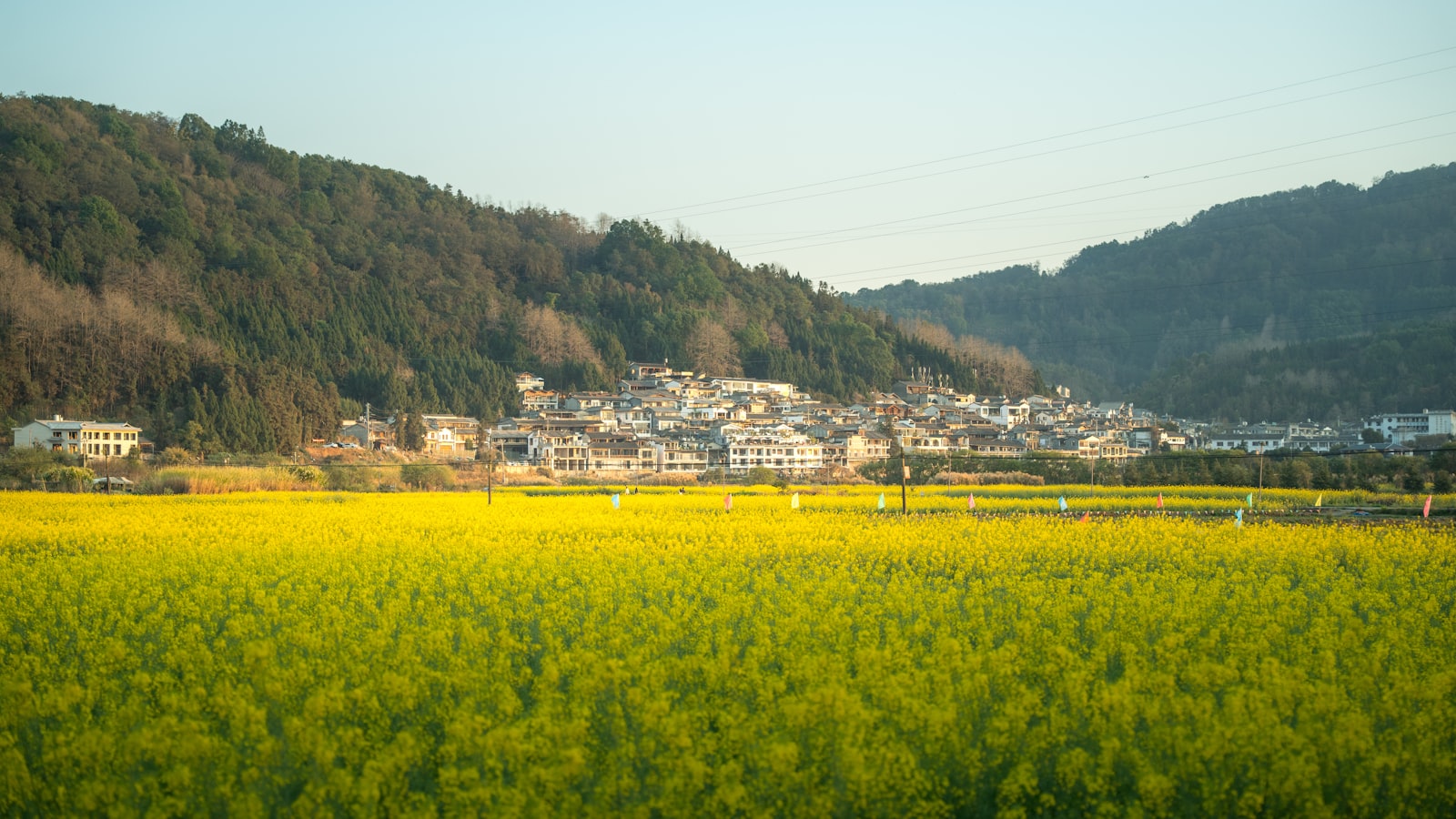
The spring rapeseed bloom is Wuyuan’s most famous face, and it is a short, intense window — roughly mid-March to early April, peaking in the last week of March, depending on the weather and the altitude of the fields. The yellow flowers cover the terraces and the valley floors, and the classic image is the contrast of the bright yellow against the white-walled, black-tiled Hui-style houses. The best-known viewpoints are the Jiangling terraces, where the fields climb the hills in stepped bands, and the hillsides around the villages where the flowers frame the rooftops. The mornings matter most: the mist that settles in the valleys at dawn softens the scene and gives the photographs their atmospheric depth, so photographers rise early and shoot before the sun burns the mist off. Expect company — the rapeseed season is Wuyuan’s busiest, and the main viewpoints fill with tripods and tour groups by mid-morning. Arrive early, work the edges and the less-famous viewpoints, and you will find the images that made the county famous.
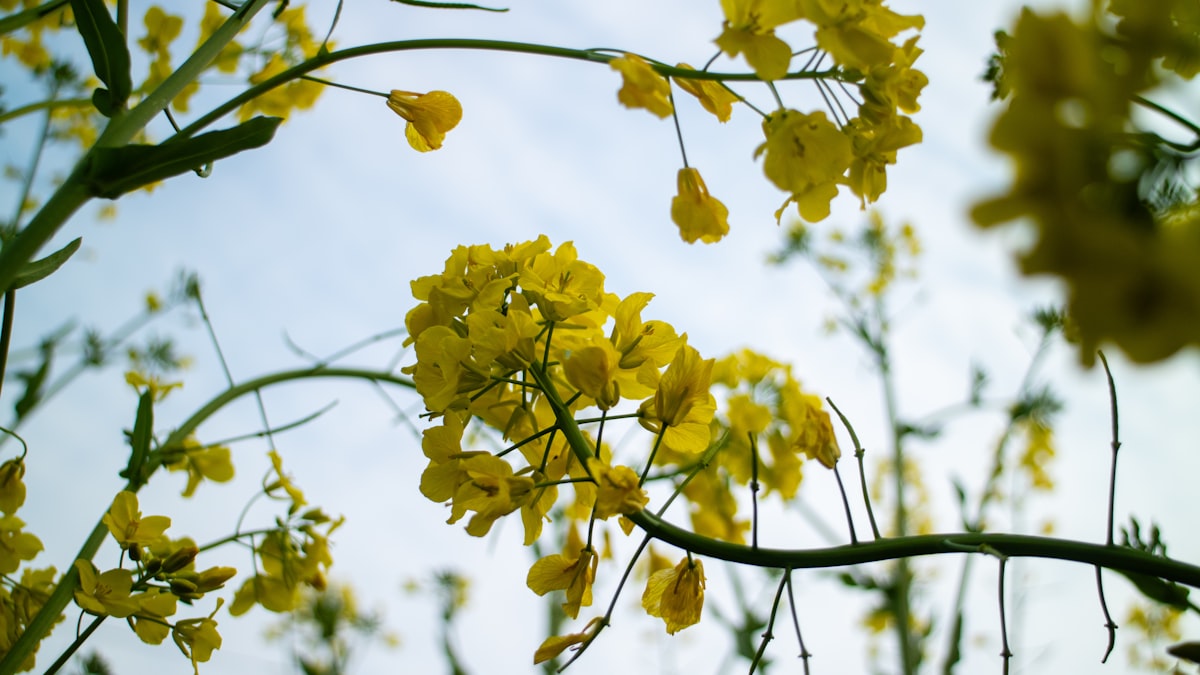
In spring the rapeseed bloom turns Wuyuan’s terraces and valley floors bright yellow, framed by white-walled Hui-style villages.
Autumn in Wuyuan: the sun-drying season
In autumn, Wuyuan’s famous image changes from yellow fields to a patchwork of rooftop color. The tradition is shaiqiu — sun-drying — and it is practical as much as beautiful: the harvest of chilies, corn, pumpkins, peppers and other produce is spread across the rooftops and the bamboo drying racks to preserve it for the winter. In Huangling, the cliffside village reached by cable car, the drying racks are built into the terraces and the slopes, so the color climbs the whole village. The season runs roughly from October into November, and the peak color varies with the harvest — the chilies and the corn come first, the pumpkins later. The light again is the key: the late-afternoon golden hour turns the drying racks into glowing bands of red and orange against the white walls. The tradition is now partly staged for visitors — Huangling is a developed attraction — but the harvest is real, and the scene is as striking in person as in the photographs that made it famous.
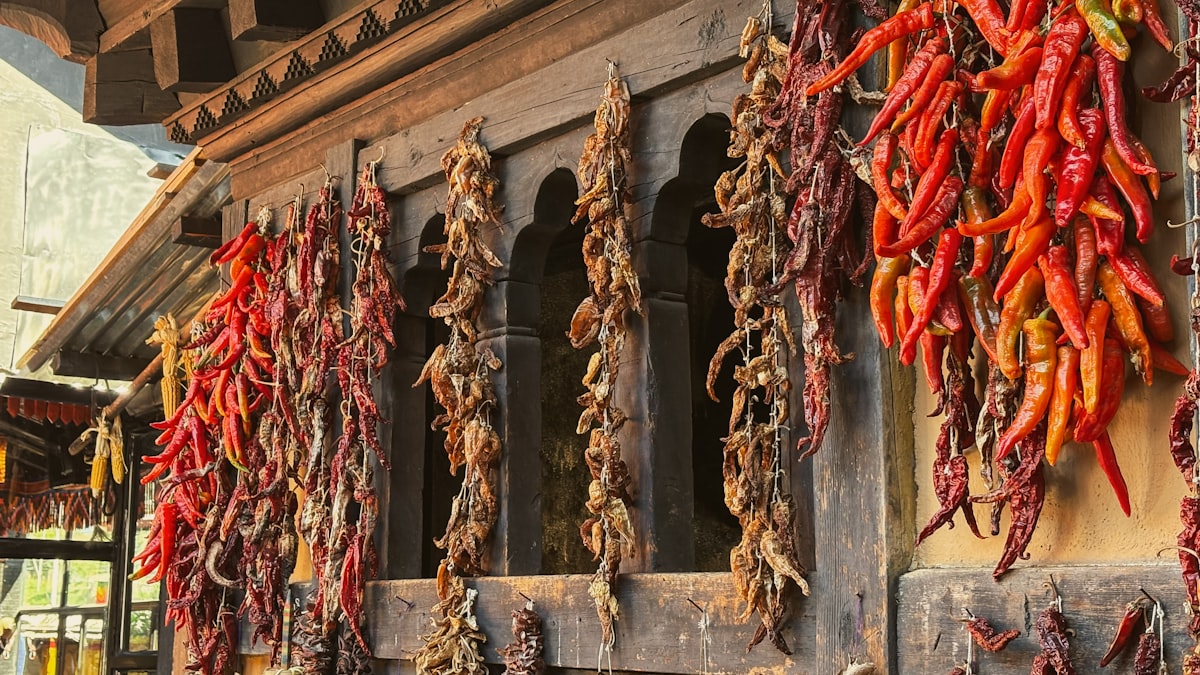
In autumn the shaiqiu sun-drying tradition spreads the harvest — chilies, corn and peppers — across the rooftops and drying racks of Huangling.
The ancient villages in detail
Beyond the two great seasons, the villages themselves are the constant draw of Wuyuan. They belong to the Hui-style tradition — the white plastered walls, the black-tiled roofs, the carved wooden beams and the courtyards that the region shares with nearby Huangshan — and they sit in the landscape with a settled, centuries-old grace. Likeng is the most classic: a stream runs through the center, the old houses line both banks, and the stone bridges and the washing steps give it a working, lived-in atmosphere. Xiaoqi, Wangkou and the villages along the county’s scenic routes are quieter and less visited, and many offer simple guesthouses where you can stay among the rice fields. The villages are not museums — farmers still work the terraces, women still wash in the streams, and the daily rhythms of the countryside run around you. That is the appeal: Wuyuan offers not a preserved spectacle but a living landscape, and the longer you stay, the more the villages open up.
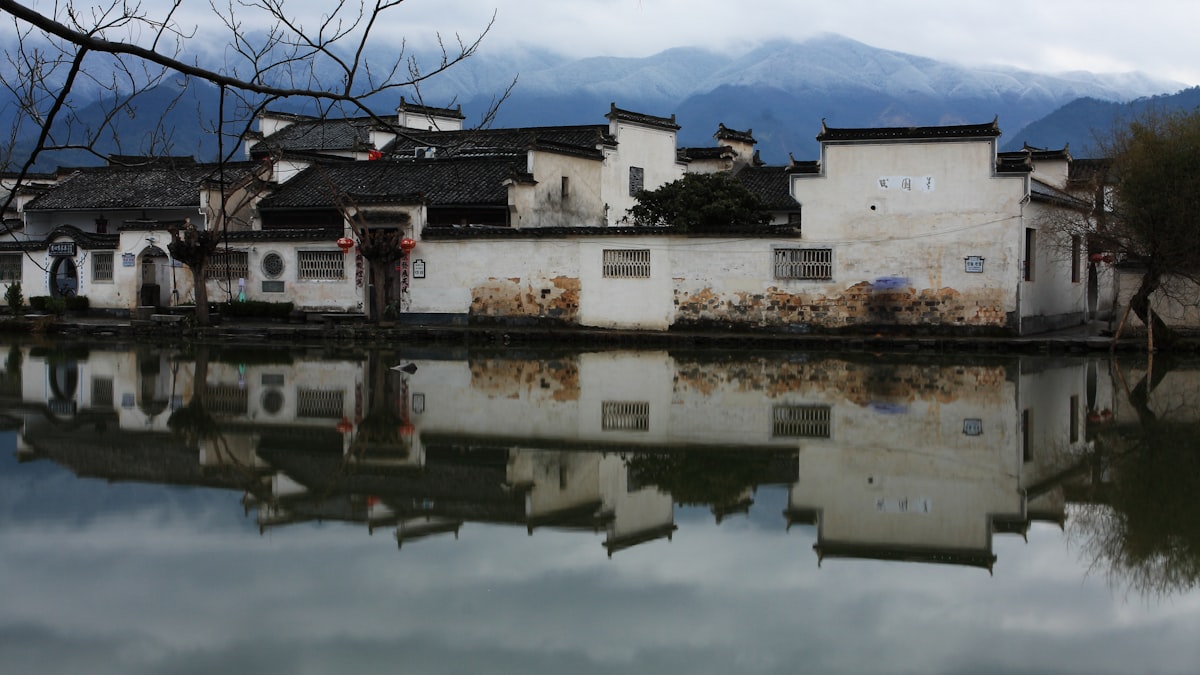
In Likeng, the most classic of Wuyuan’s riverside villages, a stream runs through the center with old Hui-style houses lining both banks.
Budget and practicalities
Wuyuan is an inexpensive destination. The main costs are transport and the scenic-area tickets: Huangling runs roughly 100–150 RMB including the cable car, the county’s scenic spots are a few tens of yuan each, and a private driver for the day typically runs 300–500 RMB — the practical way to cover the spread-out sites. Guesthouses in the villages are excellent value at about 150–300 RMB a night, and a meal of local Jiangxi cooking runs 30–60 RMB per person. Set up Alipay and an eSIM before you arrive so you can pay by QR code at the small guesthouses and the village stalls, and book your driver and tickets online. The countryside is hilly, so pack comfortable walking shoes, and note that weekends and the two peak seasons bring crowds and higher guesthouse prices — book ahead.
Common mistakes to avoid
The most common mistake in Wuyuan is arriving in the wrong season for the image you want: the rapeseed fields bloom for only a few weeks in spring, and the sun-drying peaks in autumn, so check the timing carefully before booking. A second mistake is spending all the time at Huangling and missing the villages — the county’s quieter settlements hold much of the charm. A third is skipping the early morning: the mist and the low light that make the classic photographs are gone by mid-morning, and travelers who sleep in see the flat, crowded version of the scenery. Finally, do not underestimate the spread — the county is large, and without a driver or a plan you can spend more time in transit than in the scenery. Give the county two days, chase the light, and let the villages and the seasons do the work.
The bottom line
Wuyuan is China’s most photogenic countryside — the rapeseed fields of spring, the sun-dried rooftops of autumn and the ancient villages among the hills. Plan for the season you want to see, allow two days, and you’ll understand why this corner of Jiangxi is the image of rural China at its most beautiful.
Last updated: August 2026. Access and season dates change — confirm current details before you go.
Frequently Asked Questions
What is Wuyuan known for?
Wuyuan, in the north of Jiangxi, is China's most famous rural idyll — a county of **ancient Hui-style villages** set among rice fields, hills and streams, famous above all for two things: the **rapeseed fields** that bloom yellow across the countryside in spring, and the **sun-drying tradition** of Huangling, where the autumn harvest is spread across the rooftops in a brilliant patchwork of color. It's the most photographed countryside in China.
When is the best time to visit Wuyuan?
**Spring (March–early April)** for the rapeseed fields — the yellow flowers covering the terraces and the valleys, the classic Wuyuan image. **Autumn (October–November)** for the sun-drying — the harvest laid out across the rooftops of Huangling in red, orange and yellow, the other famous scene. Between the two, the villages are beautiful year-round but the two great photographic seasons are spring and autumn.
What is Huangling?
**Huangling** is the hillside village famous for its **sun-drying (shaiqiu)** tradition: every autumn, the harvest — chilies, corn, pumpkins, peppers — is spread across the rooftops and the drying racks in a brilliant patchwork of color, creating the most iconic image of rural China. It's a cliffside village, accessible by cable car, with the drying racks built into the terraces. In spring it's the rapeseed; in autumn it's the sun-drying — both unmissable.
What are the ancient villages like in Wuyuan?
The villages of Wuyuan are **ancient Hui-style settlements** — the white-walled, black-tiled houses and courtyards typical of the region, set among the fields and the streams. The best-known include **Likeng** (the most classic riverside village), **Xiaoqi** and the villages along the county's scenic routes. They're living villages, not museums, with the daily life of the countryside around them. See our [Huangshan guide](https://chinotrips.com/huangshan/) for the region's context.
How do I get to Wuyuan?
The practical routes: **high-speed rail to Shangrao** (about 1 hour from Huangshan or Nanchang) then a bus or driver to Wuyuan; or **from Huangshan** directly, about 1–2 hours by road. The county is spread out, so a **driver or a day tour** is the practical way to see the villages and the countryside. It works as a 2-day stop between Huangshan and the wider Jiangxi region.
How much time do I need in Wuyuan?
**Two days** is the right amount: one day for the spring rapeseed or the autumn sun-drying (Huangling), and one for the ancient villages and the countryside. A single day is possible but rushed — the county is spread out and the two seasons are the draw. It pairs naturally with a **Huangshan trip** (about 1–2 hours away), making a superb 4–5 day photography route of the region.
Is Wuyuan good for photography?
It's China's most photographed countryside for a reason. The two signature subjects — the **rapeseed fields in spring** and the **sun-drying in autumn** — are world-class photo subjects, and the villages, the terraces and the misty mornings add layer after layer. The classic images come early: the morning mist over the fields, the golden light on the rooftops. See our [photography guide](https://chinotrips.com/how-to/photography-lake-mountains/) for the technique.