
Zhengzhou & Shaolin Temple: The Complete Guide (2026)
Zhengzhou and the Shaolin Temple — the cradle of kung fu at Mount Song, the kung fu performances, the ancient pagoda forest, and how to plan the visit.
Shaolin Temple, Zhengzhou, Henan, China
Open an external map for this location.
OpenStreetMap Google Maps (opens externally)
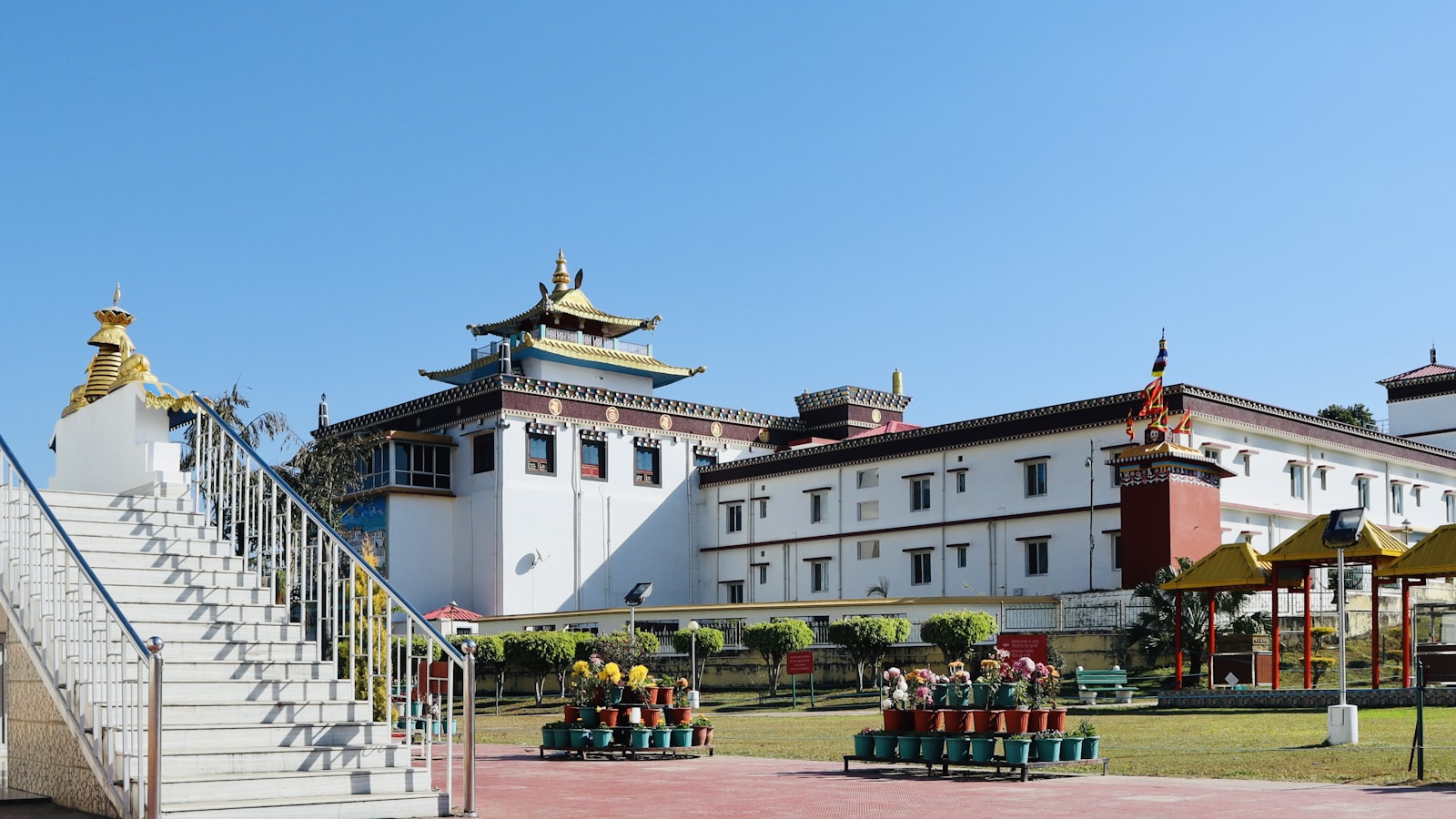
The Shaolin Temple at Mount Song is the cradle of Chinese martial arts — the kung fu performances, the ancient halls and the Forest of Pagodas. Here’s the complete guide to the visit from Zhengzhou.
In the hills east of Zhengzhou, the Shaolin Temple guards the tradition that made Chinese martial arts famous across the world. It’s where the monks developed their kung fu a thousand years ago, and where the living practice still draws visitors from every continent. The visit combines the spectacular kung fu performances, the history of the temple halls and the quiet Forest of Pagodas — one of the most extraordinary excursions in central China.
The temple
- The cradle of kung fu — the Buddhist temple where the martial arts were developed.
- The temple halls — the history of a thousand years of Buddhism and martial tradition.
- The training halls — the monks and the students of the martial arts schools.
- The setting — at the foot of Mount Song, the central sacred peak of China.
The temple is the heart of the visit — the place where Chinese martial arts were born.
The kung fu performances
- The arena — the monks’ demonstrations of the martial arts.
- The forms and the weapons — the classic Shaolin repertoire.
- The feats — strength, balance and the discipline of the training.
- The times — check the schedule on arrival; plan the visit around the performances.
The performances are the highlight — the living practice of the martial tradition, world-famous and astonishing.
The Forest of Pagodas
- The burial site — the field of stone pagodas marking the monks’ graves.
- Over 200 towers — the largest pagoda forest in China.
- The centuries — the abbots and the masters, commemorated through the dynasties.
- The quiet — the contemplative half of the visit.
The Forest of Pagodas is the quieter wonder — a unique, atmospheric field of the monks’ monuments.
The story of Shaolin
The Shaolin Temple’s history is as extraordinary as its kung fu. According to tradition, the temple was founded in the fifth century, and its martial tradition began with the legendary monk Bodhidharma, who arrived from India, sat in meditation facing a cave wall for nine years, and is credited with founding both Zen (Chan) Buddhism and the temple’s fighting arts. The temple’s fame grew through the centuries: the monks are said to have saved the Tang dynasty’s founding emperor, earning the temple imperial favor, and Shaolin kung fu spread across China as the standard of martial practice. The temple was repeatedly destroyed and rebuilt — most recently rebuilt after a fire in the 1920s and again restored in the 1980s — and today it guards both the faith and the martial tradition that made it famous.
- Bodhidharma — the legendary founder of both the temple’s Zen and its martial arts.
- The Tang legend — the monks’ famous service to the founding emperor.
- The rebuildings — destroyed and restored across the centuries, most recently in the 1980s.
- The living tradition — the training halls still full of students from across the world.
Mount Song and the wider sacred mountain
The temple sits at the foot of Mount Song — the “central” of China’s five sacred mountains, the peak that has drawn pilgrims for over two thousand years. The mountain and its foothills hold more than the temple: the Zhongyue Temple, the largest of the sacred mountain temples, with its ancient halls and cypresses; the Songyang Academy, one of the great academies of Chinese learning; and the ancient Dengfeng observatory, an early astronomical site. Together they make the area around Shaolin a remarkable concentration of history, and a visit that pairs the temple with the wider sacred mountain gives the day a second layer.
- Mount Song — the central sacred peak of China, a pilgrimage destination for millennia.
- The Zhongyue Temple — the grand temple of the sacred mountain, with the ancient cypresses.
- The Songyang Academy — the historic school of Chinese learning.
- The observatory — the early astronomical site of Dengfeng.
The kung fu schools
Around the temple, the hills are dotted with martial arts schools — the largest concentration of kung fu training in the world. Tens of thousands of students, many of them children sent from across China and the world, live and train in these academies, following a daily discipline of dawn workouts, forms practice and physical conditioning. It is a remarkable sight in its own right: the ranks of students in their training suits filling the courtyards and the fields, a living tradition on a scale found nowhere else. The schools are also where the temple’s professional performers are drawn.
- The academies — the martial arts schools that ring the temple, training thousands.
- The discipline — the dawn workouts and the long days of the students.
- The scale — the world’s largest concentration of kung fu training.
- The connection — the temple’s performers are drawn from these schools.
Practical tips for the visit
The Shaolin visit rewards a little planning. The kung fu performance has set times — check them on arrival and build the day around the show. The temple and the Forest of Pagodas involve a fair amount of walking, and the site is large; comfortable shoes matter. The site is one of China’s most popular, so come early to beat the tour groups, especially in the season. And the day combines naturally with Luoyang, which sits about an hour away — many travelers visit Shaolin on the way between the two cities, making it the hinge of the Central Plains route.
- The performance times — check on arrival and plan the visit around the show.
- Come early — the site fills with tour groups by mid-morning.
- The walking — the temple, the pagodas and the grounds are large; wear good shoes.
- Combine with Luoyang — an hour away, the natural pairing for the day.
Food around Zhengzhou and Dengfeng
The food of the region is the robust, wheat-based cooking of the Central Plains. The essential breakfast is hulatang — the peppery hot and sour soup that locals swear cures whatever ails you. Braised noodle soup (huimian), the hearty wheat noodles in a rich broth, is Henan’s comfort dish, and the pan-fried dumplings and steamed buns appear everywhere. The water banquet of Luoyang, the multi-course feast said to date to the Tang court, is the region’s grandest meal — a fine way to end a day at the temple.
- Hulatang — the peppery soup that starts the day across the region.
- Huimian — the hearty braised noodle soup, Henan’s comfort dish.
- The dumplings and the buns — the daily staples, cheap and excellent.
- Luoyang’s water banquet — the historic feast, a fine way to celebrate the trip.
Practical notes
- Getting there — about 1.5 hours from Zhengzhou or Luoyang; day tours and drivers handle it.
- Best season — spring and autumn; the temple works year-round.
- Get connected — set up Alipay and an eSIM for tickets and transport.
- See our Central Capitals route for the region.
The bottom line
The Shaolin Temple is the cradle of Chinese martial arts — the kung fu performances, the ancient halls and the Forest of Pagodas at the foot of Mount Song. Spend a day from Zhengzhou or Luoyang, plan the visit around the performances, and you’ll have seen the living heart of Chinese kung fu.
Last updated: August 2026. Performance times and access change — confirm current details before you go.
Frequently Asked Questions
What is the Shaolin Temple?
The **Shaolin Temple** at the foot of Mount Song is the cradle of Chinese martial arts — the Buddhist temple where the monks developed the kung fu that spread across China and the world. It's one of the most famous temples in China, and the visit combines the temple halls, the **kung fu performances**, the training halls and the **Forest of Pagodas** (the monks' burial site). It's the essential excursion of the Zhengzhou region.
Is the Shaolin Temple worth visiting?
Yes — for the kung fu heritage and the temple's extraordinary history. The kung fu performances are the highlight (the monks' demonstrations of the martial arts are world-famous), the temple halls are rich with history, and the Forest of Pagodas is a unique site. It's about 1.5 hours from Zhengzhou (and similar from Luoyang), and it works as a full day or a long half day. See our [Central Capitals route](https://chinotrips.com/itineraries/central-ancient-capitals-route/) for the region.
What are the kung fu performances like?
The **kung fu performances** are the heart of the visit — the Shaolin monks demonstrating their martial arts in the arena: the forms, the weapons, the feats of strength and balance. They're spectacular, world-famous and genuinely astonishing. Check the performance times when you arrive and plan the visit around them. It's the moment most visitors remember — the living practice of a thousand-year martial tradition.
What is the Forest of Pagodas?
The **Forest of Pagodas** is the burial site of the Shaolin monks — a field of over 200 stone pagodas, the brick towers that mark the graves of the abbots and the masters through the centuries. It's the largest such forest in China, a unique and atmospheric site among the trees below the temple. It's the quieter, more contemplative half of the Shaolin visit, and it's unforgettable.
How do I get to the Shaolin Temple?
The temple is about **1.5 hours from Zhengzhou** (and about the same from Luoyang), at the foot of Mount Song. Day tours from either city handle the transport and the tickets; a **private driver** gives more flexibility; public buses also run. It's the region's most popular excursion, and the tours are well set up. Set up [Alipay](https://chinotrips.com/how-to/set-up-alipay/) and an [eSIM](https://chinotrips.com/how-to/esim-china/) before you go.
Is there more to Zhengzhou?
Zhengzhou is primarily the **transport hub** of the Central Plains, but it has its own layers: the **Shang dynasty ruins** (the ancient city beneath the modern one), the museums and the old city. It's the practical base for the Shaolin Temple and the wider region, and it connects easily to Luoyang, Kaifeng and Xi'an. See our [Central Capitals route](https://chinotrips.com/itineraries/central-ancient-capitals-route/) for the region.
How much time do I need?
**A full day** covers the temple comfortably: the kung fu performance, the temple halls, the Forest of Pagodas and the return. A **long half day** is possible with an early start, but the performance times and the travel make a full day the relaxed choice. It works well as a day trip from Zhengzhou, Luoyang or on the [Central Capitals route](https://chinotrips.com/itineraries/central-ancient-capitals-route/).