
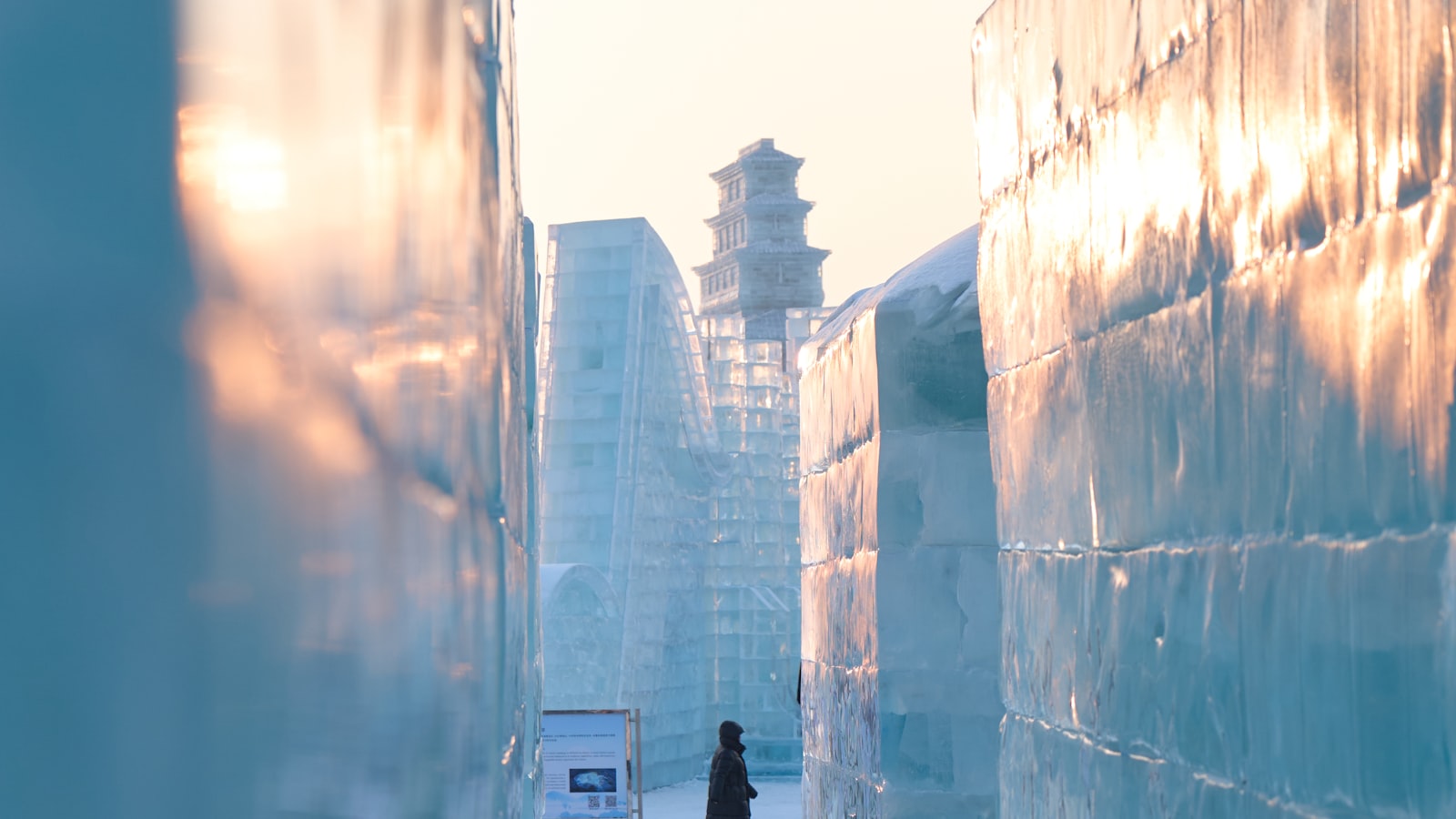
Harbin Travel Guide (2026): Ice Festival & Russian Flair
Harbin — China's winter capital: the Ice and Snow World, Saint Sophia Cathedral, Central Street's Russian flavor, and the January ice festival.
OpenStreetMap Google Maps (opens externally)
Harbin is China’s winter capital — a city that turns into a frozen wonderland every January, with enormous illuminated ice palaces and a Russian-influenced heart. Here’s how to visit it in 2026.
Overview
Harbin, in the far northeast, grew rich as a junction of the Chinese Eastern Railway at the start of the 20th century, and its Russian heritage is still visible everywhere — onion-domed churches, European-style boulevards and a hearty, beer-loving culture. In winter it becomes one of the world’s great seasonal spectacles: the Harbin International Ice and Snow Festival, where a whole city is built from ice and lit up after dark. For travelers who love winter, there’s nowhere else in China quite like it.
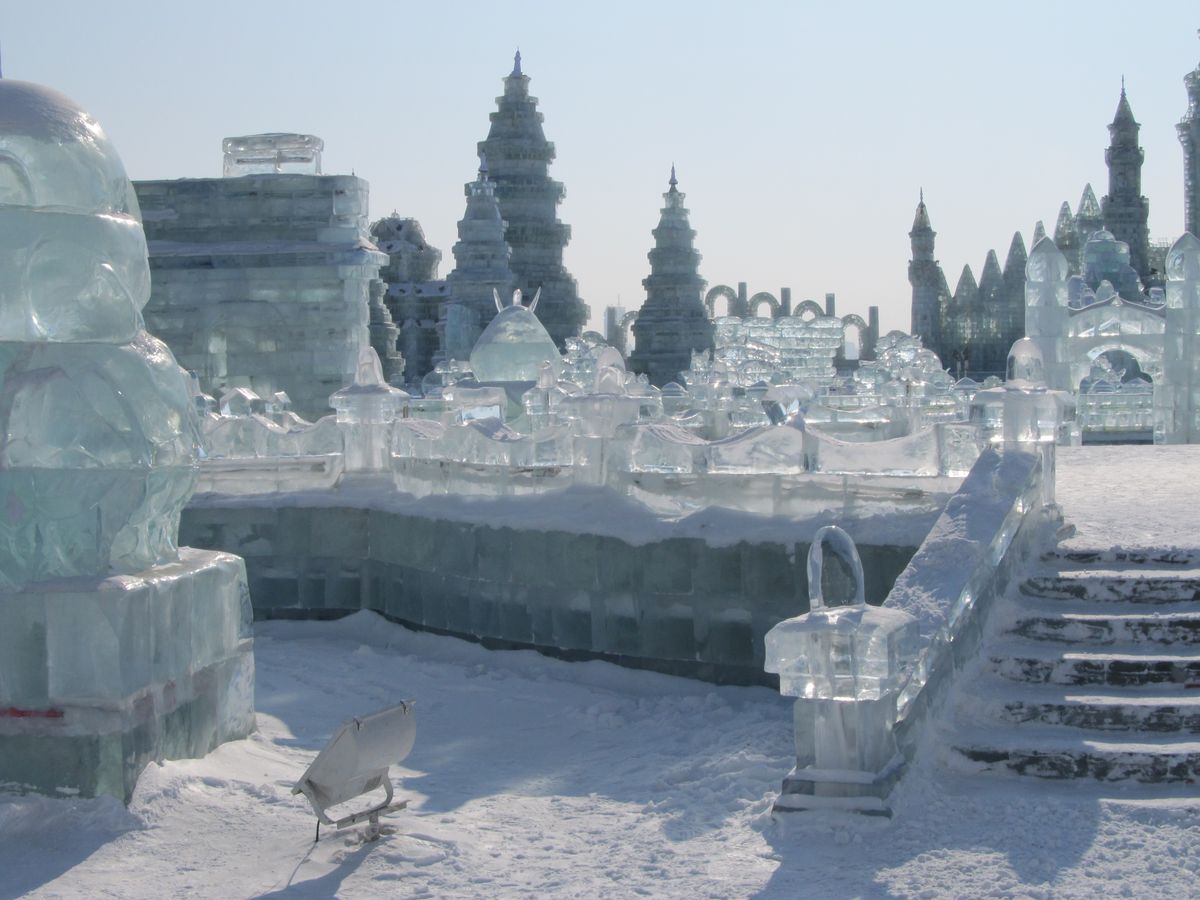
The ice palaces and sculptures of the Harbin Ice and Snow Festival are best seen after dark, lit from within.
How many days
2–3 days is right for the essentials: an evening at the Ice and Snow World, a day for the city’s Russian-era sights, and a half day for the snow sculptures on Sun Island. Add a day for Yabuli skiing or the tiger park if they appeal.
Suggested itinerary
A 2-day winter plan:
- Day 1 — The ice festival: the Ice and Snow World in the evening — go as it gets dark so the illuminated ice castles are at their best.
- Day 2 — Old Harbin: Central Street (Zhongyang Dajie) in the morning, Saint Sophia Cathedral, and the Russian-era lanes; Sun Island’s snow sculptures if you have time.
Have more time? Add a day for the Yabuli ski area (about 2 hours out) or the Siberian tiger park. In summer, the same itinerary works without the ice — the streets and churches are the draw.
Best time to visit
- Winter (December–February): the season that matters — the festival, the ice and the cold. January is the peak.
- The cold: expect minus 20–30°C. Layer properly, cover exposed skin, and keep your phone warm (batteries drain fast in deep cold).
- Summer (June–August): green, mild and uncrowded — a quieter, cheaper Harbin.
- Spring/autumn: transitional and quiet; the ice is gone and the summer greenery hasn’t arrived.
Top sights
- Ice and Snow World — the enormous illuminated ice city, the heart of the festival. Go after dark.
- Saint Sophia Cathedral — the city’s iconic onion-domed church, now a museum.
- Central Street (Zhongyang Dajie) — the pedestrian European-style boulevard with shops and food.
- Sun Island — the snow-sculpture park across the river, part of the festival.
- The old Russian quarter — the lanes and buildings from the railway era.
Getting there & around
- High-speed rail: about 4 hours from Beijing — a straightforward ride to the far northeast. Book with your passport — see our train guide.
- Flights: Harbin Taiping (HRB) serves major domestic routes.
- Metro & taxis: the metro covers the center; Didi works well for the colder stretches.
- Winter transport: allow extra time outdoors — the cold slows everything down.
Food & the hearty northeast
- Harbin sausage — the city’s signature cured sausage.
- Chinese-Russian fusion — along Central Street, the city’s unique culinary hybrid.
- Hotpot and dumplings — the winter comfort food.
- Beer — Harbin beer is a local institution; the city even has a beer culture from its Russian days.
Practical tips
- Dress for the cold — layers, hat, gloves, scarf; the ice festival is genuinely cold.
- Keep your phone warm — batteries die fast in deep cold; keep it in an inner pocket.
- Set up Alipay and an eSIM before you arrive.
- Book ahead in January — the festival is peak season; hotels fill.
Where to go next
Harbin is the far-northeast destination, often paired with the other northeast cities or reached from Beijing. From here, the route continues to Changchun and Shenyang, or back to the Beijing–Shanghai corridor. It’s also the gateway to China’s winter sports. See our Beijing guide for the route back south.
The Russian heritage, in depth
Harbin’s Russian past isn’t a theme-park overlay — it’s built into the city. The Chinese Eastern Railway, built by the Russians in the 1890s, made Harbin a boomtown, and the city grew as a Russian enclave for decades. That’s why the architecture is so different from the rest of China: the onion-domed churches, the European boulevards, the old railway buildings. Walking the city’s historic lanes is like visiting a slice of turn-of-the-century Russia that China preserved.
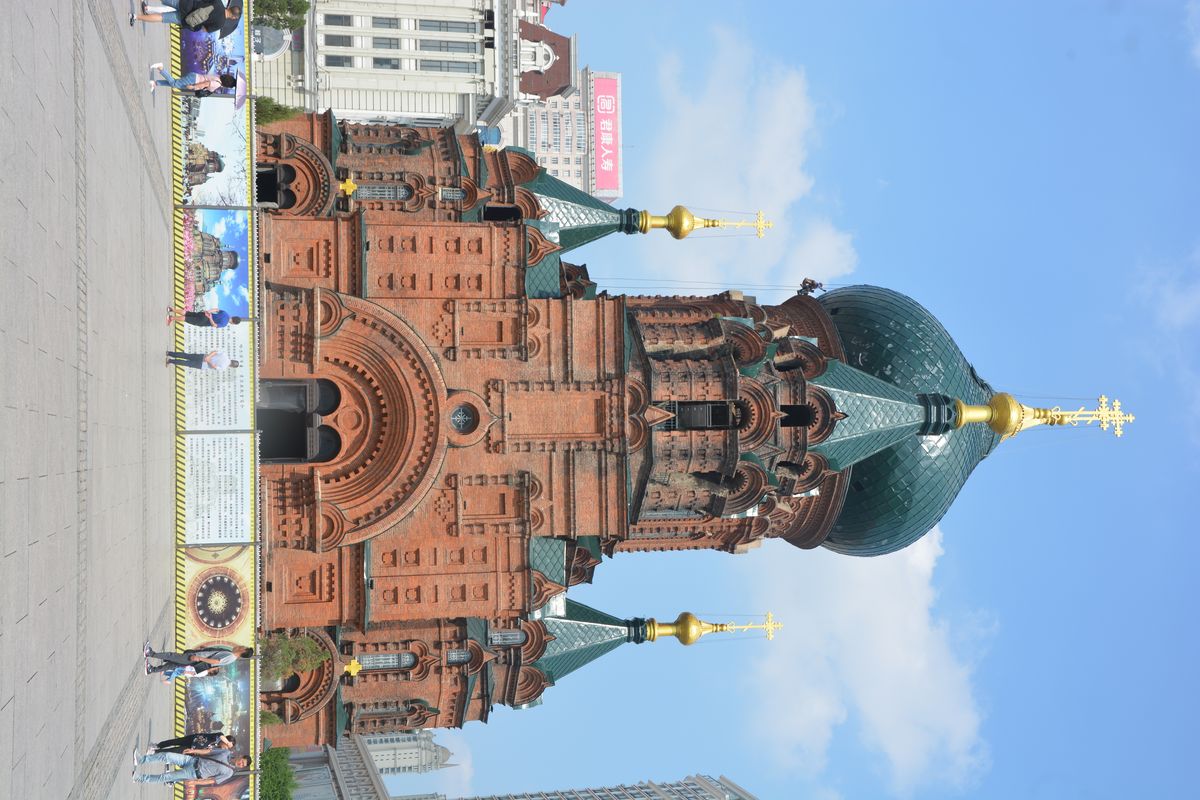
Saint Sophia Cathedral is the landmark of Harbin’s Russian-influenced old quarter.
The festival, explained
The Harbin Ice and Snow Festival is more than a sculpture park. Workers cut massive blocks of ice from the frozen Songhua River, then build an entire city — palaces, towers, figures — that’s illuminated after dark in dazzling colors. The Ice and Snow World is the main venue; Sun Island across the river hosts the snow-sculpture competition; and smaller ice displays dot the city. It’s cold, it’s crowded, and it’s genuinely one of the world’s great winter spectacles. Go in the evening for the lights, and dress for serious cold.
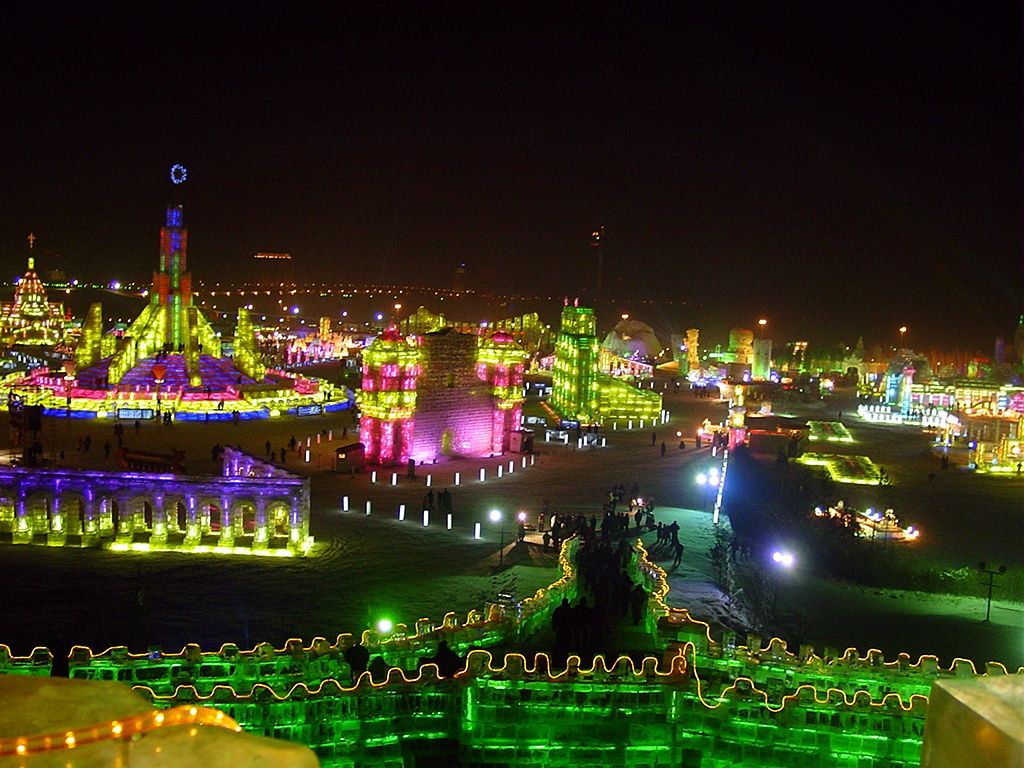
Each winter an entire temporary city of ice rises at Harbin’s Ice and Snow World.
Winter travel essentials
Harbin in January is a cold-weather test: expect minus 20–30°C. The essentials: thermal layers under a windproof coat, a hat that covers your ears, gloves, and a scarf for the face. Batteries die fast in deep cold — keep your phone in an inner pocket. Cover exposed skin — frostbite risk is real but easily avoided with sensible clothing. And warm up indoors regularly; the shops and malls are warm and the festival venues have heated buildings.
A budget for Harbin
Harbin in winter is a cold-weather destination with winter-weather prices. Rough daily figures for planning (per person, CNY, and prices change): accommodation budget ¥150–250/night, mid-range ¥300–600 (higher in January); attractions the Ice and Snow World is the big ticket (typically ¥300+), Saint Sophia Cathedral is free, Sun Island snow sculptures are extra; food hearty northeastern meals ¥40–80, sausage and street snacks cheap; transport metro and taxis affordable. Winter clothing is an extra cost if you’re not prepared — budget for a proper jacket, hat and gloves.
The cold, honestly
Harbin in January is genuinely cold — expect minus 20–30°C, and sometimes colder with the wind. It’s manageable if you respect it: layer (thermal base, warm mid, windproof shell), cover all exposed skin (ears, face, hands), and keep moving or step inside regularly. The festival venues and malls are warm. A useful tip: hand warmers are cheap in China and worth carrying. The cold is part of the experience — it’s what makes the ice possible — but it’s real, so dress for it properly.
When winter isn’t the plan
If you can’t do January, Harbin is still worth considering in the shoulder seasons. Late December has the festival setting up and fewer crowds. February has the ice before it melts and the crowds thinning. And if you’re traveling in summer, Harbin is a cool, green, genuinely pleasant city — a different Harbin, but a good one. The key is matching your expectation to the season: come for the ice in winter, or for the pleasant city in summer. And whether you come for the ice or the city, Harbin rewards the traveler who dresses for the cold and slows down to enjoy it.
The ice festival, in depth
The scale of the Harbin International Ice and Snow Festival is genuinely hard to grasp until you see it. Work crews cut massive blocks of ice from the frozen Songhua River, then carve and assemble an entire temporary city — palaces, pagodas, towers, slides and figures — that’s lit from within after dark in dazzling colors. The Ice and Snow World is the main venue and the evening showpiece; Sun Island, across the river, hosts the snow-sculpture competition, where artists carve enormous blocks of compacted snow into detailed works; and smaller ice displays appear around the city. The festival typically runs from late December to the end of February, with the ice at its best in January. It’s cold, crowded and unforgettable — the single strongest argument for a winter trip to China.
Northeastern food, beyond the sausage
Harbin’s food is the heartiest in China, and there’s more to it than the famous sausage. The local staples are generous and warming: guo bao rou (sweet-and-sour pork with a crackling batter), braised pork and potatoes, big pots of stew, and endless dumplings — eaten year-round but especially in winter. The Harbin sausage is a real institution, smoky and dense, best from the stalls on Central Street. The city’s Russian history adds a unique layer: Chinese-Russian restaurants along Central Street serve borscht, rye bread and a local take on Russian stews, and Harbin beer — a legacy of the city’s railway-era brewing culture — is served everywhere. In January, a bowl of hot noodle soup or a plate of dumplings after hours in the cold is one of the most satisfying meals in China.
Skiing and the outdoors around Harbin
Harbin is the gateway to China’s winter sports. The Yabuli ski area, about two hours out by car or bus, is the country’s largest ski resort, with runs from beginner to expert and full rental and lift infrastructure. Also nearby is the Siberian Tiger Park, where large numbers of tigers roam in open enclosures and you view them from a bus — a striking and slightly surreal stop. If you’re combining winter sports with the festival, budget one full day for Yabuli and keep the evenings for the ice. For a broader winter itinerary across the northeast, see our winter China route.
Last updated: August 2026. Festival dates and prices change — confirm before you go.
Frequently Asked Questions
Why visit Harbin?
Harbin is China's winter capital — home of the world-famous Harbin International Ice and Snow Festival, where a city of enormous illuminated ice sculptures rises each winter. Beyond the ice, it's a city with a Russian-influenced past: onion-domed churches, European-style streets and hearty northeastern food. It's the country's definitive winter destination.
When is the ice festival?
The Harbin International Ice and Snow Festival runs roughly from late December to the end of February, with the Ice and Snow World usually opening in early January and closing in February as the weather warms. January is the peak — the ice is at its best and the cold is at its fiercest. Dress for minus 20–30°C.
How many days do I need in Harbin?
Two to three days: an evening at the Ice and Snow World (the ice is best after dark), a day for Central Street, Saint Sophia Cathedral and the city's Russian-era streets, and a half day at Sun Island's snow sculptures. Add a day if you want to visit the Yabuli ski area or the Siberian tiger park.
What should I eat in Harbin?
Northeastern food is hearty and generous: the famous Harbin sausage, pot-stewed dishes, Chinese-Russian fusion restaurants along Central Street, and of course the local beers. Hotpot and dumplings warm you up. It's a serious food city for cold-weather comfort.
Is Harbin worth visiting outside winter?
It's a different city in summer — green, quieter and cheaper, with the same churches and streets minus the ice. But the festival is the reason most people come, and if you're chasing the ice experience, winter is the only time it makes sense. The city is best understood as a winter destination.