
How to Buy Jade in China: A Practical Guide
How to buy jade in China — jadeite vs nephrite, spotting fake or treated jade, getting a certificate, where to shop in Kashgar and Yunnan, and prices.
Jade is China’s most treasured stone — a symbol of virtue and luck for 8,000 years. This guide shows you how to buy it well: the two kinds of jade, the A/B/C grades that decide value, and where to shop without being cheated.
In China, jade is not just a beautiful stone; it is a cultural obsession. Confucius compared a gentleman’s virtues to jade’s qualities — its warmth, its hardness, its patience in being shaped. Jade has been buried with emperors, traded along the Silk Road, and worn as a talisman for good fortune. Today it is still the gift Chinese people give for births, weddings and milestones. Buying jade is a meaningful purchase, but it is also the most scam-prone souvenir market in the country. Learn the basics and you can shop with the confidence the stone deserves.
The two jades: jadeite and nephrite
Westerners tend to think of jade as one thing — green. In China, “yu” (玉) covers two very different minerals.
- Jadeite (硬玉) — the harder, rarer mineral. Its highest grade is “imperial jade”: a vivid, translucent emerald green that can be worth more per gram than gold. Jadeite comes from Myanmar and enters China through Yunnan, which is why the southwest is the jadeite heartland.
- Nephrite (软玉) — softer, with a creamy, waxy texture. The most famous Chinese nephrite is Hetian jade from Xinjiang in the far west: white, milky and prized for carving. Most traditional Chinese jade carvings — pendants, bangles, figurines — are nephrite.
For most travelers, nephrite is the more accessible purchase: it is culturally Chinese, beautifully carved, and affordable. Jadeite is the collector’s stone, where the big prices and the big scams live.
Why jade matters in China
Jade’s status is ancient. Chinese archaeologists have found jade objects from cultures that flourished 8,000 years ago, long before writing. Confucius praised jade for embodying the virtues: its gentle lustre is benevolence, its hardness is wisdom, its edges that never cut are justice, its sound when struck is music. Jade was believed to protect the body in life and accompany the soul in death — the famous burial suit of Prince Liu Sheng, made of over 2,000 jade pieces, is one of China’s great treasures.
This cultural weight means jade is not valued the way Westerners value diamonds — on cut and clarity — but on warmth, translucency and the quality of the surface. A smooth, warm, unblemished stone with an even colour is the ideal. The Chinese saying “a beautiful jade is worth more than gold” (黄金有价玉无价) captures the attitude.
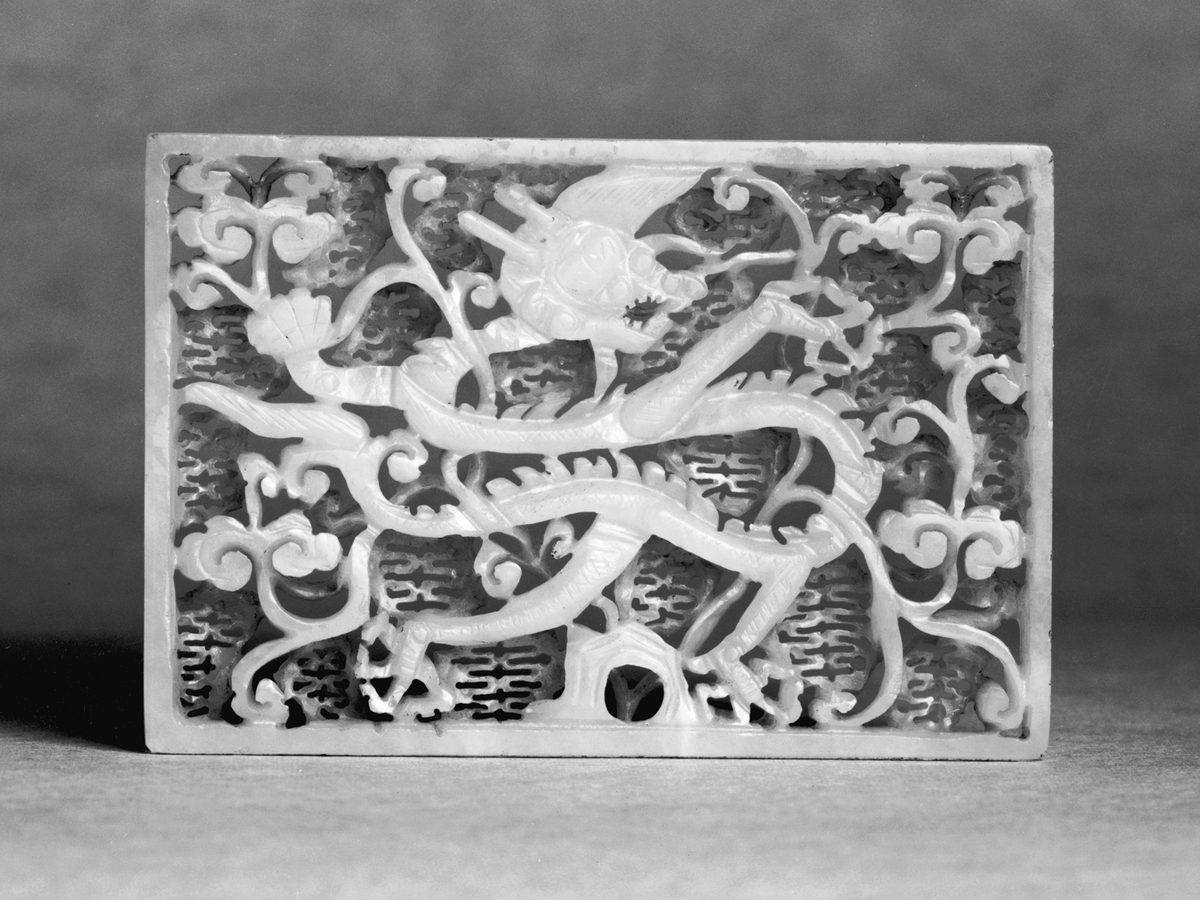
Jade pendants and amulets are the classic purchase — nephrite carving is an art form in its own right.
The A, B and C grades
This is the single most important thing to understand before buying. Chinese jade is graded by treatment, and only one grade counts as genuine natural jade.
- A-grade (A货) — natural jade that has only been cut and polished. This is the real thing, and the only grade worth paying for.
- B-grade (B货) — jade that has been bleached with acid and soaked in resin to remove brown spots and improve clarity. It looks cleaner, but it is weakened and can turn yellow or cloudy with time. Honest shops label it clearly; dishonest ones sell it as natural.
- C-grade (C货) — jade that has been dyed to deepen or fake colour. The dye often concentrates in cracks and along the edges.
There is also plenty of outright fake “jade” — glass, plastic, soapstone and serpentine. The practical defences are the physical tests below, plus a certificate from a proper lab.
How to test jade in the shop
You cannot verify a grade by eye alone, but you can screen out the worst fakes in the stall.
- Temperature. Real jade is a dense stone and feels cool to the touch, warming slowly in your hand. Glass and plastic warm up quickly.
- Weight. Real jade is heavier than it looks. Pick it up; if a “jade” bangle feels suspiciously light, it is probably resin or glass.
- Texture. Hold it to the light. Natural jade has a subtle, fibrous or granular interior texture. Glass shows tiny air bubbles; dyed jade shows colour pooled in cracks.
- Sound. Tap a bangle gently — real jade has a clear, ringing tone, while glass and resin sound dull. (Do this delicately, and only with the seller’s blessing.)
- Scratch resistance. Real jadeite will scratch glass and steel; but don’t scratch the piece — scratch the seller’s test piece if offered.
None of these replaces a certificate, but together they make you a much harder target for a scam.
The certificate: your only real guarantee
For anything beyond souvenir money, insist on a certificate of authenticity from a recognised gem-testing laboratory. The most respected is NGTC — the National Gemstone Testing Centre (国家珠宝玉石质量监督检验中心), China’s state testing body. Other national and provincial labs issue similar reports.
A proper certificate states the stone’s identity (jadeite or nephrite), whether it is natural A-grade or treated, its colour, and often its weight and dimensions. Check the stone against the certificate — a piece swapped after certification is a classic trick. Reputable shops provide certificates as a matter of course and will point you to the lab’s verification website or QR code.
Where to buy jade in China
Jade is sold across the country, but the trade runs along two historic routes.
- Kashgar and Xinjiang — the source of Hetian nephrite. Kashgar’s markets and bazaars, part of the old Silk Road, are atmospheric places to buy nephrite carvings and raw stones. Our Kashgar guide covers the bazaars and how to approach them. The broader Silk Road route takes in the stone markets of the west.
- Yunnan and the Myanmar border — the entry point for jadeite. Kunming’s large jade emporiums are the most tourist-friendly, while the border city of Ruili is the wholesale heartland — not a first-timer’s market. See our Yunnan guide for the region.
- Guangzhou — China’s biggest jade wholesale district, near the city’s jade market; serious buyers come here.
- Beijing and Shanghai — major shops and department-store jade counters are the safest for travelers, with clear certificates and fair (if not bargain) prices.
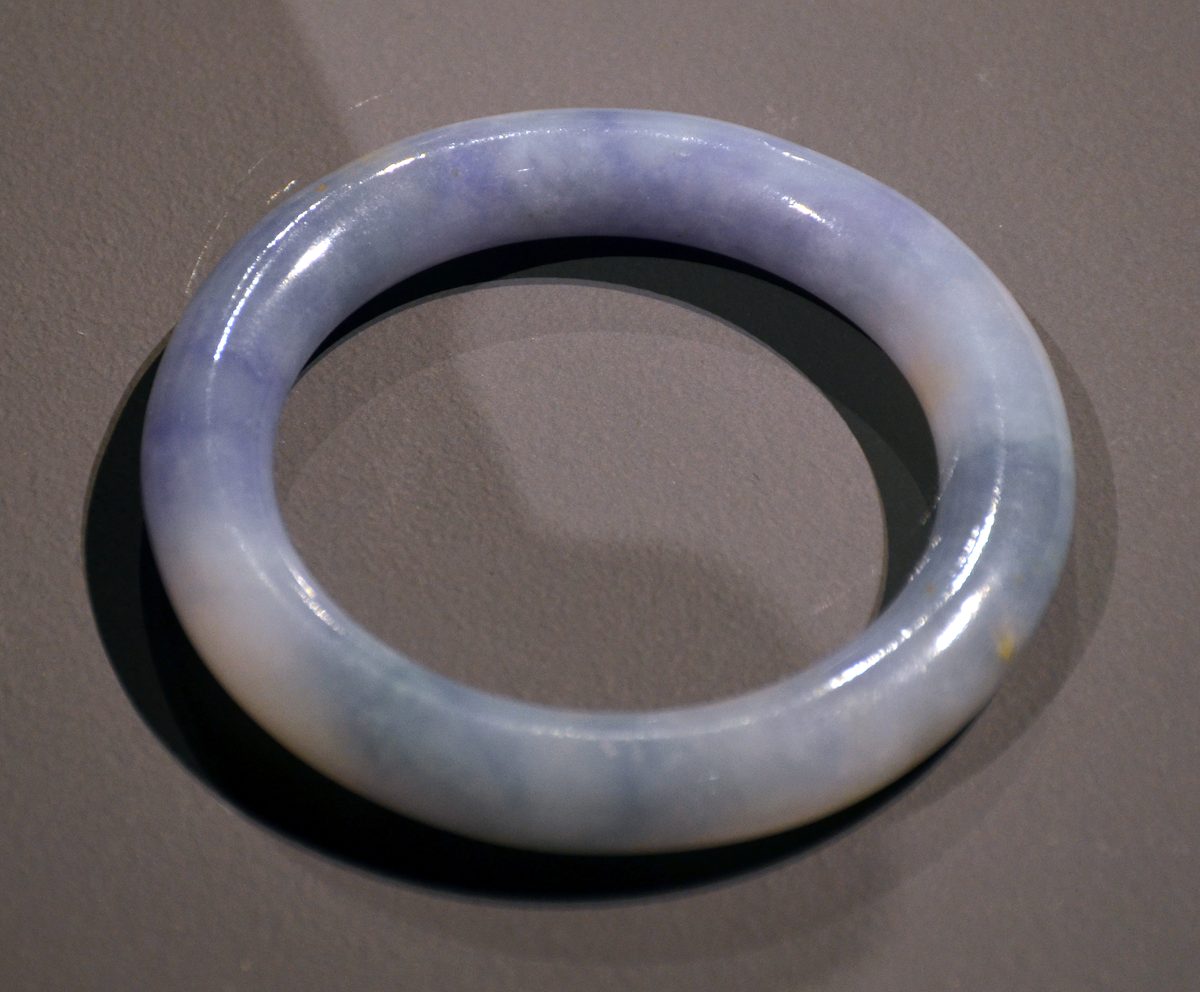
Jade bangles at a market — a classic purchase, and exactly where the A/B/C-grade and counterfeit traps hide.
What to buy and what it costs
Prices vary enormously by quality, so treat these as rough mental ranges, not fixed values.
- Souvenir-grade nephrite pendant or small carving — ¥50–300 (estimate). Fine for a memento; don’t expect investment quality.
- Nephrite bangle, decent quality with certificate — ¥500–3,000 (estimate).
- Hetian white-nephrite pieces of genuine quality — ¥1,000–10,000+ (estimate), far more for the best white grades.
- Jadeite: low-grade grey-green pieces from ¥200–2,000; genuine “imperial green” with certificate — priced like fine jewellery, from several thousand yuan well into six figures.
The rule that protects you: fine jade is never cheap. If the price is a fraction of what the stone should cost, the stone is treated, synthetic or glass.
Practical shopping tips
- Set a budget before you enter a shop, and stick to it. The emotional pull of a beautiful stone is real.
- Bring your bargaining manners. Jade in markets is negotiable — our bargaining guide explains the technique.
- Pay by Alipay where possible — it gives you a payment record, which matters if you later discover a problem.
- Ask for a receipt with the piece’s details, not just the amount.
- Keep certificates with the stone. If you buy fine jade, the certificate is part of the value.
- Declare valuable purchases if you’re leaving China — see our customs guide for the duty-free allowance and departure tax refund.
- Be especially careful at street stalls and around touts who approach you with “special jade for a special price” — these are almost always fakes or heavily treated stones.
The bottom line
Buy jade for the right reason — because you love it — and protect yourself with the right tools: know jadeite from nephrite, insist on A-grade natural stone, get a certificate from a lab like NGTC, and favour established shops in Kashgar, Yunnan or the big cities over street touts. A certified piece of real Chinese jade is a purchase you’ll keep for a lifetime — and with the A/B/C system understood, you can be confident it is the genuine article.
Last updated: August 2026. Jade prices and grading practices change — confirm current details and certification standards before you go.
Frequently Asked Questions
Is the jade sold in China genuine?
Genuine jade is widely available, but so are imitations and treated stones, especially at tourist markets and street stalls. The real risk is not glass pretending to be jade — that is easy to spot — but 'B-grade' and 'C-grade' jade: stones that have been bleached, resin-impregnated or dyed to look better than they are, then sold as natural. Buy from a reputable shop that provides a lab certificate, and treat bargain-priced street 'jade' with deep suspicion.
What is the difference between jadeite and nephrite?
Both are called 'yu' (玉) in Chinese, but they are different minerals. Jadeite (硬玉) is harder, rarer, and the source of the vivid emerald-green 'imperial jade' that commands the highest prices. Nephrite (软玉) is softer and creamier — the famous white Hetian jade from Xinjiang is nephrite, as is most of the pale green jade of traditional Chinese carving. For most travelers, nephrite is the more affordable and more culturally 'Chinese' purchase, while fine jadeite is an investment-grade stone.
What does A-grade, B-grade and C-grade jade mean?
This grading refers to treatment, not quality. A-grade (A货) jade is natural: it has only been cut and polished. B-grade (B货) has been bleached with acid and impregnated with resin to remove impurities and improve clarity — it looks better but is weakened and may yellow over time. C-grade (C货) has been dyed to enhance colour. Only A-grade is considered genuine, natural jade. The treatments are not always declared on cheap labels, which is why a certificate from a testing lab matters.
How do I spot fake jade?
A few quick checks. Real jade feels dense and cool to the touch, and warms slowly in your hand; glass imitations warm quickly and often contain tiny air bubbles. Real jade is heavier than it looks — it has a high density. Light held behind a genuine stone shows a natural, slightly fibrous or mottled texture, while dyed jade tends to concentrate colour in cracks and along edges. The most reliable safeguard is to buy from a shop that gives a certificate from a recognised lab such as NGTC, the National Gemstone Testing Centre.
Where should I buy jade in China?
The classic destinations are on the old trade routes. In the west, Kashgar's bazaars sell nephrite and stones from Xinjiang and Central Asia — our [Kashgar guide](https://chinotrips.com/kashgar/) points to the main markets. In the southwest, Yunnan sits on the Myanmar border where most jadeite enters China — [Yunnan](https://chinotrips.com/yunnan/) and the border town of Ruili are jade hubs, and Kunming has large jade emporiums. Guangzhou also has huge jade wholesale districts. In every case, favour established shops with certificates over street stalls.
How much should I pay for jade?
Prices range enormously. A simple souvenir-grade nephrite pendant or bangle can start around ¥50–300 (estimate). A well-finished nephrite piece with a certificate might run ¥500–2,000. Fine jadeite — especially 'imperial green' — is priced like jewellery or a luxury watch, from several thousand to hundreds of thousands of yuan. As a rule of thumb, if a supposedly fine piece is cheap, it is not fine. Use your certificate and your gut, and never spend a large amount on impulse.