
How to Use the Metro in China: A Tourist's Guide (2026)
Step-by-step metro guide for tourists in China — security checks, tickets vs QR codes, English signs, fares, transfers, and peak-hour tips.
China’s metros are fast, clean and cheap — and within ten minutes of your first ride you’ll wonder why all cities aren’t like this.
Whether you’re hopping between sights in Beijing, crossing the river in Shanghai or exploring Guangzhou, the metro is the backbone of getting around. This guide walks through the whole process, from the security check at the entrance to scanning out at your destination.
The short answer
- Walk in and put your bags through the security X-ray machine.
- Pay — buy a single-ride ticket from a vending machine, or skip tickets and scan an Alipay/WeChat transit QR at the gate.
- Ride and transfer following the bilingual signs.
- Scan or insert again at the exit gate — the fare is charged based on distance.
Step 1: enter and pass security
Every metro station in China has a security check at the entrance, before the fare gates:
- Put bags, backpacks and shopping through the X-ray machine; walk through the metal detector.
- Staff may ask you to open a bag or test a water bottle — it’s routine and takes seconds.
- Don’t carry prohibited items (knives, large aerosols, lighters above the allowed size). If in doubt, leave it at the hotel.
- Have your Alipay or WeChat transit code ready on your phone so you can scan straight through after security.
Security is quick even in busy stations; during peak hours the queue is the longest part of the trip.
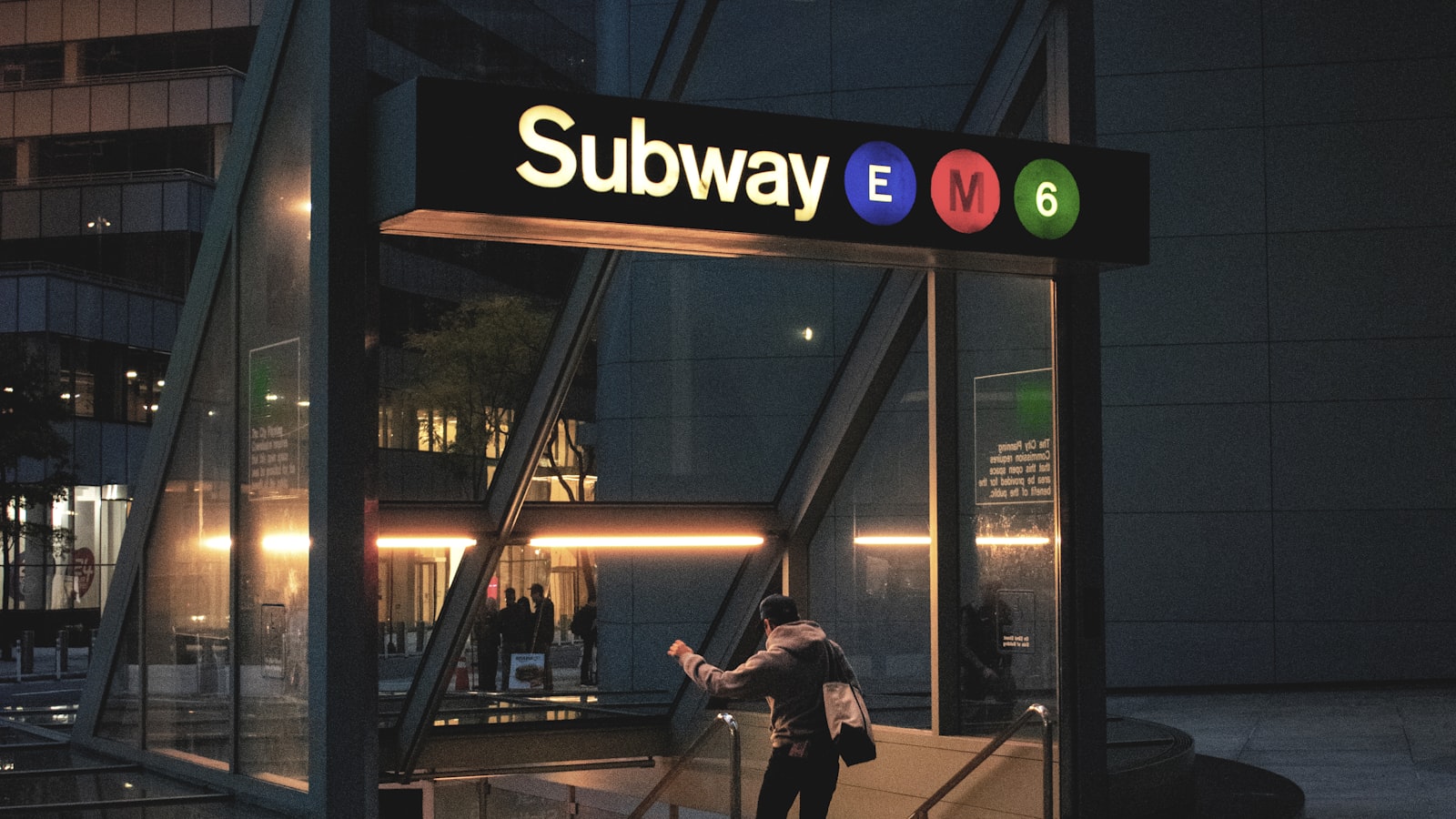
Every metro station in China screens your bags at the entrance — have your Alipay transit QR ready so you scan straight through after security.
Step 2: pay — ticket machine or QR code
You have three ways to pay:
Option A — transit QR code (fastest). Open Alipay’s transport section (出行) or the WeChat metro mini program, select the city, and a QR code appears. Scan it at the entrance gate. Do this once your Alipay or WeChat Pay is set up with a payment method.
Option B — ticket vending machine. Machines at every station accept cash (small notes and coins) and QR payment. Select your destination or the fare amount, pay, and collect a single-journey token or card. Keep it for the exit.
Option C — transit card. A stored-value transport card (Beijing’s Yikatong, Shanghai’s Public Transportation Card and similar) can be bought and topped up at station counters or machines. It also works on buses. Some cities now accept foreign-issued bank cards or phone NFC at the gates, but that varies by city — don’t rely on it as your only method.
Step 3: scan in and ride
- Scan your QR code or token/card at the entrance gate and walk through.
- Find your line number and direction — follow signs to the correct platform. Most cities color-code and number their lines (Line 1, 2, 3…).
- Trains arrive every few minutes during the day. Let passengers off before you board.
- Hold onto the handrails, keep bags clear of the doors, and note that eating and drinking are not allowed on most systems.
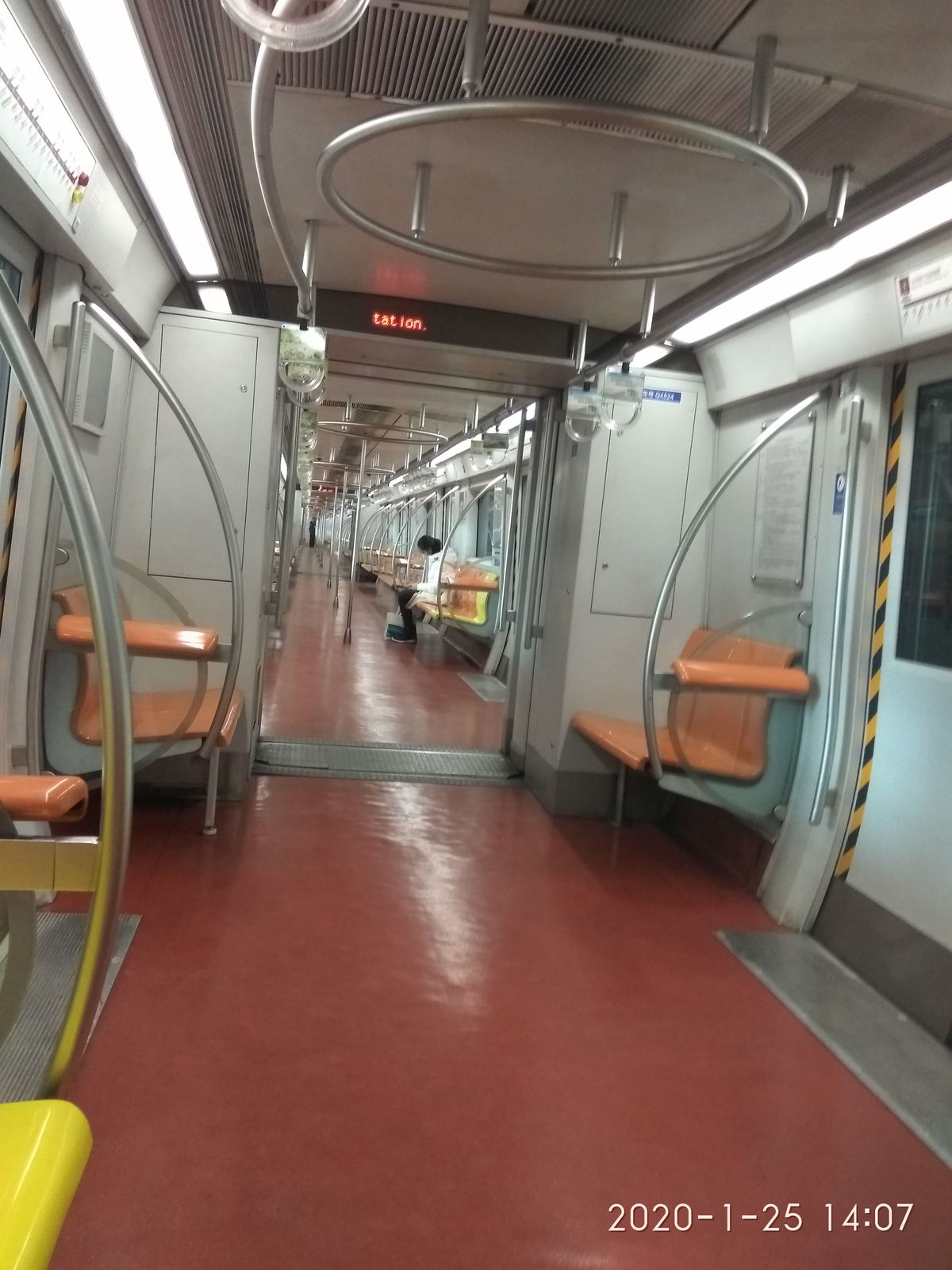
China’s metro trains run every few minutes during the day and are clean and air-conditioned — hold the handrail and keep your bags clear of the doors.
Step 4: transfer
Changing lines is where the network opens up:
- Follow the “Transfer” (换乘) signs — most are bilingual with pictograms.
- You normally stay inside the paid area, so no extra fare is charged as long as you exit at your final station.
- Walking between platforms can take 5–10 minutes in the biggest stations, so leave a buffer if you’re catching a high-speed train afterwards.
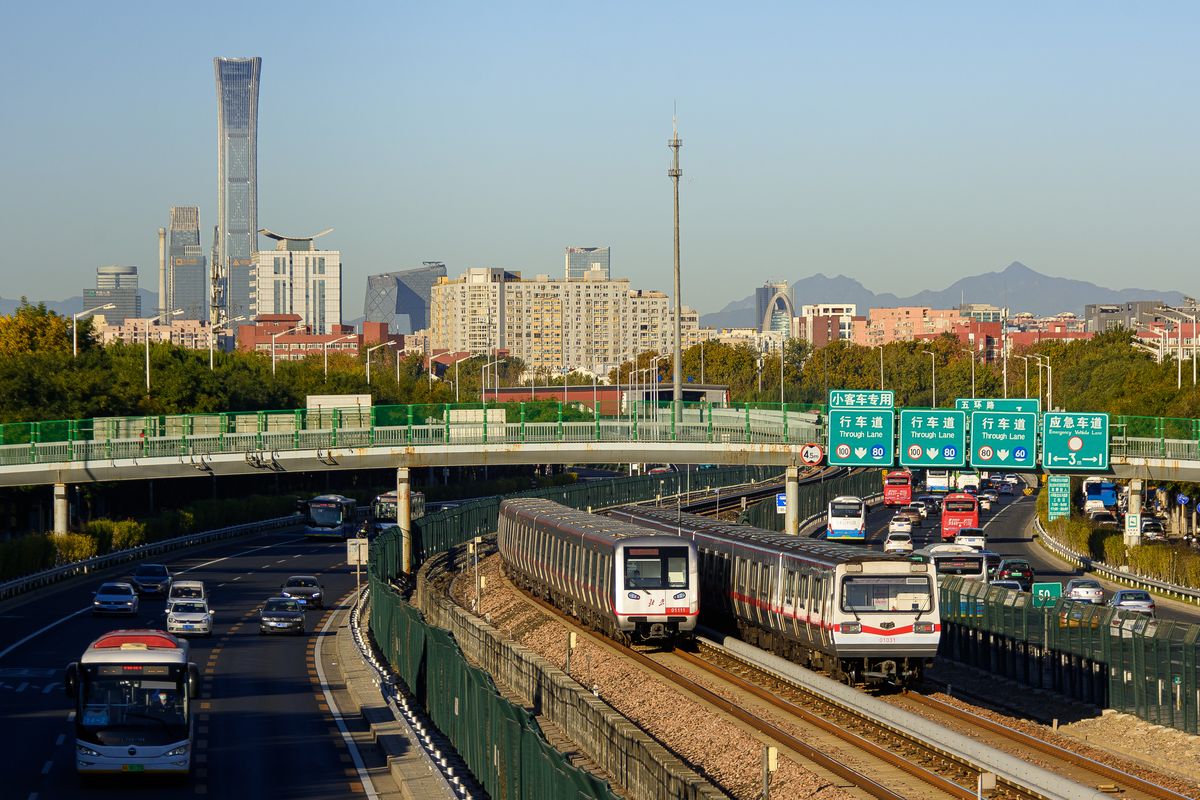
Transfers keep you inside the paid area, so the whole journey is one fare — follow the bilingual “Transfer” (换乘) signs and check the line number and direction.
Step 5: scan out
At your destination, scan your QR code or insert your token/card at the exit gate. If you used a QR code, the fare is deducted from your linked payment automatically. Leave through the A, B, C or D exit that suits your destination — navigation apps tell you which letter gets you closest to the sights.
English signage and announcements
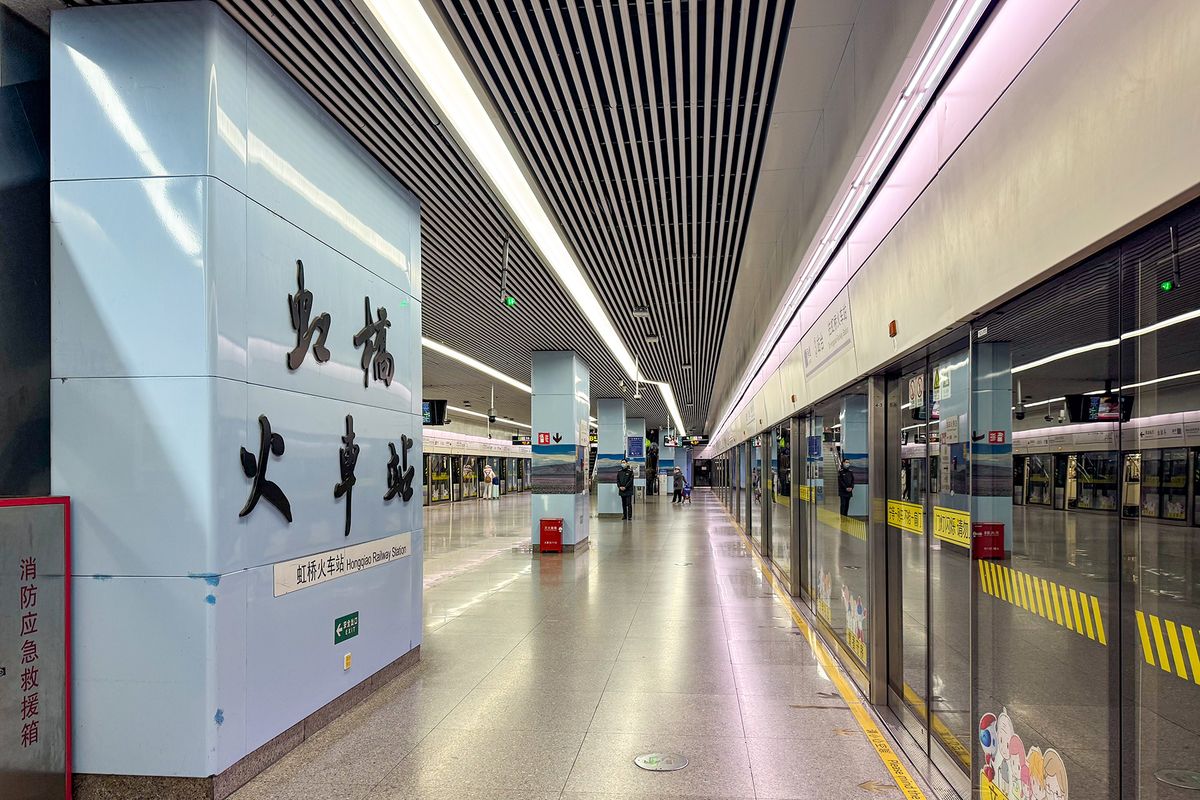
- Station names appear in Chinese with pinyin (English letters) below — easy to match to your map.
- Next-stop announcements are bilingual in Beijing, Shanghai, Guangzhou, Shenzhen and most large cities.
- On smaller-city systems, English may be limited. Save the Chinese name of your station in a translation app so you can recognize it.
Fares and hours
- Fares are distance-based and cheap: most urban rides cost roughly ¥3–9, and even a full cross-city journey stays modest. Children under a certain height ride free — rules vary by city.
- First trains depart around 5:30–6 am; last trains leave central stations around 10:30–11:30 pm, depending on the line.
- Transfers are included in the fare for the whole journey inside the paid area. Some cities sell day passes if you’re riding constantly, though per-ride fares are low enough that most tourists just pay as they go.
Peak hours and luggage
- Rush hour is roughly 7–9 am and 5–7 pm on weekdays. Trains are packed and platforms can be shoulder-to-shoulder. If you can, ride outside these windows.
- Luggage is allowed but goes through the X-ray at every station. With a large suitcase, avoid peak hours and stand clear of the doors.
- If a train is full, don’t force your way on — the next one is usually minutes away.
Metro etiquette and unspoken rules
China’s metros are orderly, and a few local conventions make rides smoother for everyone.
- Let passengers off first. Boarding crowds wait for the stream of exiting passengers to finish before pushing in — a rule that applies everywhere.
- Give up seats when asked, and use priority seats for those who need them. Priority seating near the doors is clearly marked, and it is normal for passengers to offer seats to the elderly, parents with children and pregnant travelers.
- Stand on the right of escalators. In most Chinese cities, escalator users stand on the right and walk on the left, though this is less strictly observed than in some other countries.
- Keep bags on the floor, not on seats. A seat taken by a backpack in rush hour will attract looks; stow luggage by your feet or in the overhead racks on intercity lines.
- No eating or drinking. Most systems ban food and drink inside the paid area, and staff will quietly remind you.
- Keep your voice down. Phone calls and music are usually kept discreet, and loud conversation stands out on an otherwise quiet train.
Common mistakes to avoid
- Not having your QR code ready. Fumbling for Alipay at the gate while a queue forms behind you is the classic first-ride mistake — open the transit code before you reach security.
- Riding during peak hours with luggage. A large suitcase in a 7–9 am Beijing train is a misery for everyone; take a taxi or ride after 9:30 am.
- Buying a single-ride ticket for a transfer-heavy day. If you are crossing the city with two or three line changes, the single fare still covers it, but a stored-value card or transit QR is more convenient for frequent rides.
- Following the wrong exit letter. Stations are large; using your map app’s recommended exit (A, B, C, D) saves a long detour above ground.
- Missing the last train. Most lines stop around 10:30–11:30 pm; if you are out late, check the last-train time for your line and your direction.
- Forgetting that the fare is deducted at exit. With a QR code, you scan in and scan out; skipping the exit scan can leave the gate closed for the next passenger and complicate your ride history.
Using the metro for airport and rail transfers
China’s metros connect seamlessly with its airports and high-speed rail stations, and knowing the transfer makes a trip much smoother.
- Airports: Beijing Capital, Shanghai Hongqiao, Guangzhou and many other major airports have metro stations directly in the terminals. The ride into the center takes 30–60 minutes and costs a few yuan versus a ¥100–200 taxi. Night flights often land after the last train, so check the schedule or plan a taxi for late arrivals.
- High-speed rail stations: Beijing South, Xi’an North, Shanghai Hongqiao and similar hubs are metro-served, with the platform level clearly signed. When you arrive by train, follow the “Metro” (地铁) signs in the station hall rather than heading for the street.
- Leaving a buffer: the biggest transfer stations can take 5–10 minutes to walk between platforms, and security checks add time — allow 20–30 minutes between a metro arrival and catching a high-speed train.
If something goes wrong
If your QR code fails to scan or your ticket gets stuck, stay calm and head to the staff booth near the gates — station staff are used to helping foreigners, and the gates will not trap you if you explain. Lost your exit ticket? You can usually pay the maximum fare for your line and leave. And if you take the wrong direction, simply ride to the next stop, cross the platform and come back — the fare adjusts at exit, not at the gate.
Before you go
- Set up Alipay (and ideally WeChat Pay) with a foreign card, and practice opening the transit QR.
- Download Amap or Baidu Maps offline packs, and sort out your connectivity with an eSIM or tourist SIM so your maps and transit codes work on the street.
- Note the last-train time for your line if you’ll be out late.
Last updated: August 2026. Transit rules and fares change — confirm before you go.
Frequently Asked Questions
Is the metro in China easy for foreign tourists?
Yes. Major cities run modern, air-conditioned, bilingual systems that reach almost every sight. The routine is simple: pass security, scan a QR code or ticket at the gate, ride, then scan or insert again at your destination. Fares are cheap and trains are frequent.
How do I pay for the metro as a tourist?
Three ways: use a ticket vending machine with cash or QR payment, scan an Alipay or WeChat transit code at the gate, or use a stored-value transit card. Scanning a phone QR is the fastest — the fare is deducted automatically when you scan out.
Are metro signs and announcements in English?
In Beijing, Shanghai, Guangzhou, Shenzhen and most other big cities, station names appear in Chinese with pinyin underneath, and next-stop announcements are bilingual. Smaller systems may have less English, so save the Chinese name of your station before you go.
Can I take luggage on the metro?
Yes, within reason — it just goes through the station X-ray check with everything else. Avoid rush hour with big bags, and keep suitcases out of the aisles and clear of the doors so they don't block other passengers.
How do transfers work?
You usually stay inside the gates when changing lines and follow the colored transfer signs. The fare covers the whole journey, so transferring normally doesn't cost extra — you simply scan or insert your ticket or QR once at the exit of your final station.
Do I need a passport to ride the metro?
Generally no. You just pass through the security check with your bags. Keep your passport on you in case a staff member asks for ID, but it is rarely required for a routine metro ride.