
14-Day China Itinerary: Golden Triangle, Guilin & Chengdu
A 14-day China itinerary covering Beijing, Xi'an, Shanghai, Guilin and Chengdu — a day-by-day plan with slow days and transfer times.
OpenStreetMap Google Maps (opens externally)
The full first-timer tour — the golden triangle plus pandas, karst peaks and teahouses, with slow days built in.
Fourteen days is enough to see China’s greatest hits without rushing. This route runs from north to south and east to west: Beijing for imperial history, Xi’an for the Terracotta Army, Chengdu for pandas and Sichuan food, Guilin and Yangshuo for dreamlike scenery, and Shanghai for a futuristic finale. If you’d rather trade rivers for cliffs, Zhangjiajie can stand in for Guilin.
The route at a glance
- Beijing — 4 days. Forbidden City, Great Wall, Temple of Heaven, and one slow day.
- Xi’an — 2 days. Terracotta Army and the Muslim Quarter.
- Chengdu — 2 days. Panda Base, teahouse afternoon, Sichuan food.
- Guilin & Yangshuo — 2 days. Li River cruise and countryside.
- Shanghai — 3 days. Bund, old town, museums, and a relaxed final day.
The plan deliberately spreads transfers so no single day is just travel.
Day-by-day plan
Day 1 — Arrive in Beijing. Land, clear immigration, and sort out Alipay and your connectivity while you have free Wi-Fi. Keep the evening light.
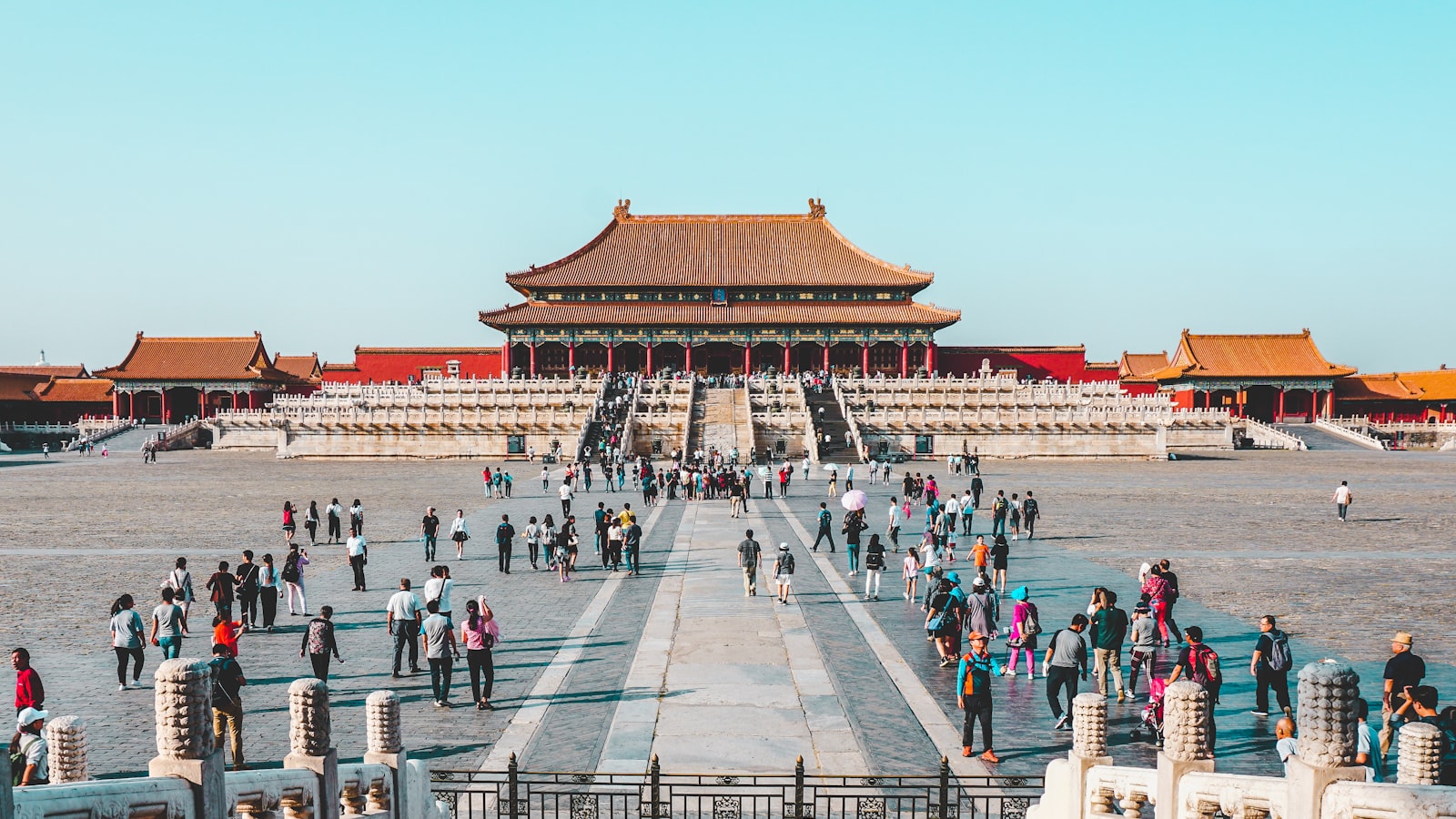
Day 2 — Forbidden City and Tiananmen. Book Forbidden City tickets online weeks ahead — timed slots sell out. Spend the morning in the palace complex, cross into Tiananmen Square, then climb Jingshan Park for the rooftop panorama. Evening: Peking duck.
Day 3 — The Great Wall (Mutianyu). Restored, cable car up, toboggan down — the best first-timer section. Allow a full day, including about 1.5 hours of driving each way from central Beijing.
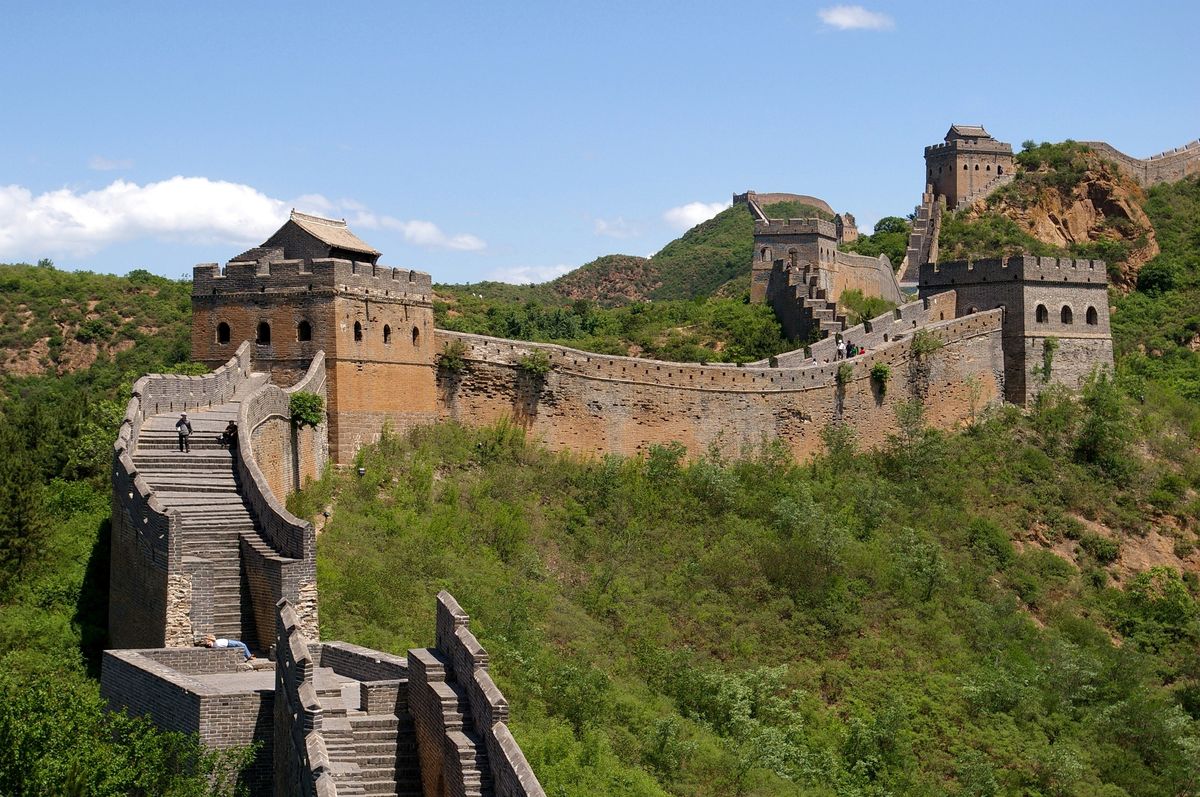
The restored ramparts of Mutianyu are the most first-timer-friendly section of the Great Wall — and the toboggan ride down is the reward.
Day 4 — Slow day in Beijing. Sleep in. Visit the Temple of Heaven in the morning, then spend a lazy afternoon in the hutongs around Houhai — courtyard cafés, rickshaw rides, and people-watching.
Day 5 — Train to Xi’an. Take the morning high-speed train, about 4.5 hours from Beijing West to Xi’an North. After checking in, walk the old city wall as it lights up at dusk.
Day 6 — Terracotta Army. The pits are about an hour outside the city. Spend the morning with the warriors, then return for the Shaanxi History Museum (book ahead) or the Big Wild Goose Pagoda. Evening in the Muslim Quarter for lamb skewers and rou jia mo.
Day 7 — Fly to Chengdu. A short morning flight, about 1.5 hours. Afternoon at Wuhou Shrine and the lively rebuilt lanes of Jinli Street. Try Sichuan hotpot for dinner — start mild if you’re new to the numbing spice.
Day 8 — Pandas and teahouses (slow day). Go to the Chengdu Panda Base at opening — pandas nap by mid-morning. In the afternoon, claim a bamboo chair in People’s Park, order a pot of jasmine tea, and watch locals play cards and get their ears cleaned. This is the trip’s most relaxing day.
Day 9 — Fly to Guilin. About 1.5–2 hours. Afternoon at Reed Flute Cave’s illuminated stalactites or a walk along the Li River at dusk, then the Two Rivers and Four Lakes night cruise.
Day 10 — Li River cruise to Yangshuo. The classic cruise passes the karst peaks printed on the ¥20 banknote. Stay the night in Yangshuo and eat street food on West Street.
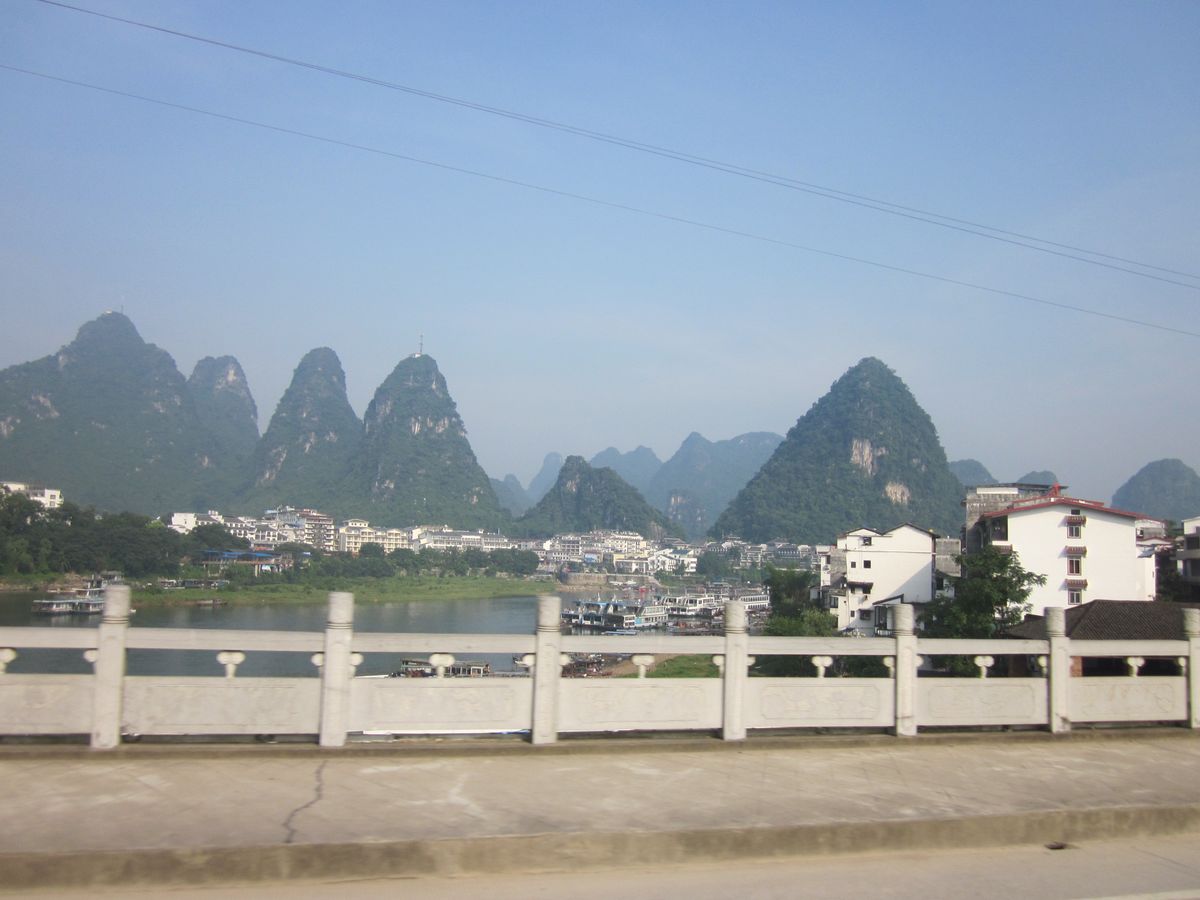
The Li River cruise from Guilin to Yangshuo passes the rounded karst peaks printed on the ¥20 banknote — misty mornings are the classic look.
Day 11 — Yangshuo countryside, then fly to Shanghai. Rent a bike and ride the rice-paddy lanes in the morning, or take a short bamboo raft trip. Transfer back to Guilin airport for an evening flight to Shanghai, about 2.5 hours.
Day 12 — Shanghai. The Bund promenade at sunrise, Yu Garden and the old town, and the French Concession’s plane-tree-lined lanes. Evening: xiaolongbao (soup dumplings).
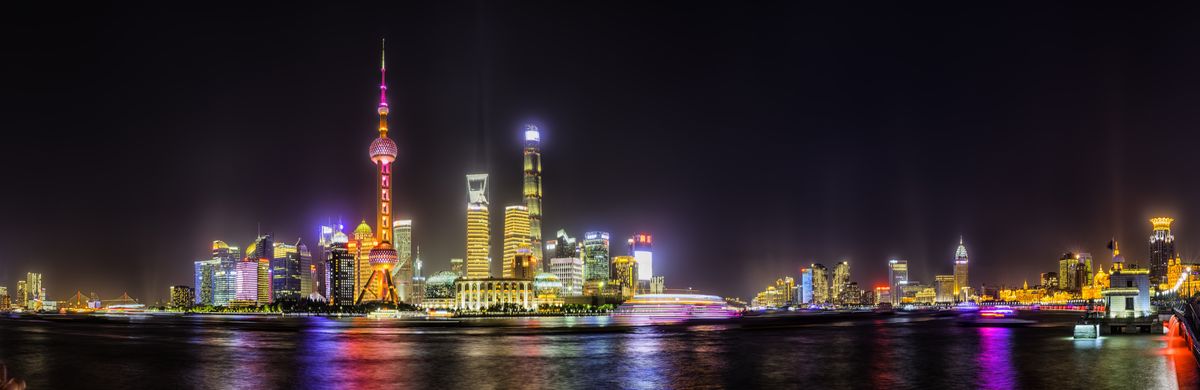
The Bund promenade and the Pudong skyline across the Huangpu River are Shanghai’s signature view — best at sunrise and after dark.
Day 13 — Museums and a night cruise (slow day). Spend the morning at the Shanghai Museum or the contemporary art scene in West Bund, shop in Tianzifang’s alley studios, then cap the trip with a Huangpu River cruise and the skyline lit up.
Day 14 — Depart. If your flight is late, squeeze in one last meal of noodles or jianbing for breakfast, then head to the airport.
A realistic budget for 14 days
Fourteen days across five cities is a serious trip, and it pays to budget in advance. A mid-range traveler should plan for roughly ¥400–800 per day excluding international flights — that covers a comfortable hotel, all meals, internal transport and entry tickets.
- Hotels: ¥250–600 per night for a mid-range double in most cities; Yangshuo and Guilin are slightly cheaper, Shanghai slightly dearer. Budget options start around ¥100–150.
- Trains and flights: rail legs between Beijing, Xi’an and Shanghai run roughly ¥500–600 per leg in second class; the internal flights (Xi’an–Chengdu, Chengdu–Guilin, Guilin–Shanghai) typically cost ¥600–1,200 each if booked early. Booking flights as soon as your dates are fixed makes the biggest single dent in the total.
- Food: ¥60–150 per day is comfortable, with the Chengdu and Xi’an street-food scenes among the cheapest places to eat well anywhere in China.
- Sights and activities: entry tickets (Forbidden City, Terracotta Army, the Li River cruise, the Chengdu Panda Base) each cost ¥60–200, with the Li River cruise at the top end.
- Booking fees and tours: a Great Wall day trip from Beijing and a Yangshuo bike rental add a few hundred yuan across the trip.
Treat these as planning estimates — prices change, and peak-season rates are higher.
When to go, season by season
- Spring (April–May): mild and green across the whole route; the classic choice, with flowers in Beijing and clear karst scenery in Guilin. The early-May holiday is busy.
- Summer (June–August): hot and humid in the cities, with monsoon rain in Guilin and Yangshuo; the Li River runs high and the karst is lush, but crowds and prices peak with school holidays.
- Autumn (September–October): the other sweet spot — crisp, clear and dry almost everywhere, with golden rice in the paddies around Yangshuo. Avoid the October 1–7 National Day week.
- Winter (November–February): cold in the north but mild in Guilin and Yangshuo; the quietest and cheapest season, though the Li River cruise can be chilly and some mountain areas close.
What really needs to be booked ahead
With five cities in fourteen days, three things deserve your attention before you fly: the Forbidden City (timed tickets sell out), the Terracotta Army (book entry and consider a morning guide), and the Li River cruise (a specific date and departure, popular with tour groups). Beyond those, book the internal flights as early as possible, and on peak-season dates reserve hotels in Yangshuo and Guilin in advance. Everything else — most meals, bike rentals, day activities — can be arranged on the fly with a translation app and Alipay.
Packing and phone prep for five cities
Five cities in fourteen days means packing for movement. A carry-on and a daypack are the right size — you will change hotels five times, and trains and flights are far easier without a heavy suitcase. Choose one comfortable pair of walking shoes that works for both city streets and the Great Wall’s steps. Plan to do laundry mid-trip: most mid-range hotels wash clothes cheaply, so five days of outfits plus one layer for cooler weather is plenty.
On the phone side, the essentials are a VPN set up before you fly, offline translation packs downloaded at home, and Alipay linked to a foreign card. Download offline maps for every city you will visit while you still have Wi-Fi, and bring a power bank — five cities is five long days of navigation and payment on a single battery.
Connectivity and payment on the move
Across five cities, your phone is your wallet, map and translator, so set it up properly once. A China eSIM or tourist SIM gives you data for live navigation, ride-hailing and payments; a VPN set up before you fly unlocks the Western apps that are blocked on local networks. Link Alipay to a foreign card before departure, download offline maps and translation packs on home Wi-Fi, and keep your passport handy for every hotel check-in and train booking.
Transport notes
- Rail: Beijing–Xi’an about 4.5h; Xi’an–Shanghai about 5h. Book with your passport via Trip.com or 12306.
- Flights: Xi’an–Chengdu about 1.5h; Chengdu–Guilin about 1.5–2h; Guilin–Shanghai about 2.5h. Book early for better fares.
- Hotels: base yourself near Beijing West or Xi’an North on transfer days to cut commute time; in Shanghai, stay close to the Bund or People’s Square.
Practical tips
- Visa: most eligible travelers get up to 30 days visa-free — check the visa-free country list before booking.
- Payments: Alipay with a foreign card covers trains, taxis, food and entry tickets; carry a little cash as backup.
- Pack light: five cities means five hotels; a carry-on keeps the fast legs painless.
- Book the big three early: Forbidden City, Terracotta Army, and the Li River cruise.
- Build in slack: every transfer day has only a half-day activity planned — don’t overstuff it.
Variations
- Swap Guilin for Zhangjiajie if you prefer towering sandstone pillars and glass walkways; add a day for hiking and drop one slow day.
- Cut Chengdu, add a Yangtze or Longji rice terraces stop if food and pandas matter less than landscape.
- Prefer a shorter version? The 10-day itinerary covers the golden triangle plus one extra city, and the 7-day plan distills it to the essentials.
Last updated: August 2026. Train and flight schedules change — confirm before you go.
Frequently Asked Questions
Is 14 days too much or too little for China?
For a first visit, 14 days is a comfortable sweet spot. You can cover the golden triangle plus two more destinations without sprinting — this plan includes three slower half-days so you never feel you've spent the whole trip on trains and flights.
Which order should the cities go in?
Beijing → Xi'an → Chengdu → Guilin → Shanghai works well geographically and keeps flights short. Flying west-east also lets you end in Shanghai, which is the easiest city from which to depart on an international flight.
Guilin or Zhangjiajie in a 14-day trip?
This plan uses Guilin for its Li River cruise and easy, restful couple of days. If you prefer dramatic sandstone pillars and glass skywalks, swap Guilin for Zhangjiajie — but note it's more physical and the hiking schedule needs a little more energy.
Are the transfer times realistic?
Yes. Rail legs are about 4.5–5 hours between Beijing, Xi'an and Shanghai, and the internal flights (Xi'an–Chengdu, Chengdu–Guilin, Guilin–Shanghai) are roughly 1.5–3 hours. Each transfer day is kept deliberately light.
Do I need to book everything in advance?
Book the Forbidden City, the Terracotta Army entry, long-distance rail tickets and all flights ahead of time. Domestic hotels and most day activities can be arranged on the go, though hotels in Yangshuo and Guilin fill up in peak season.
Does the visa-free policy cover 14 days?
Citizens of roughly 50 countries get up to 30 days visa-free, which comfortably covers two weeks. Confirm your nationality on the visa-free country list before booking flights and trains.